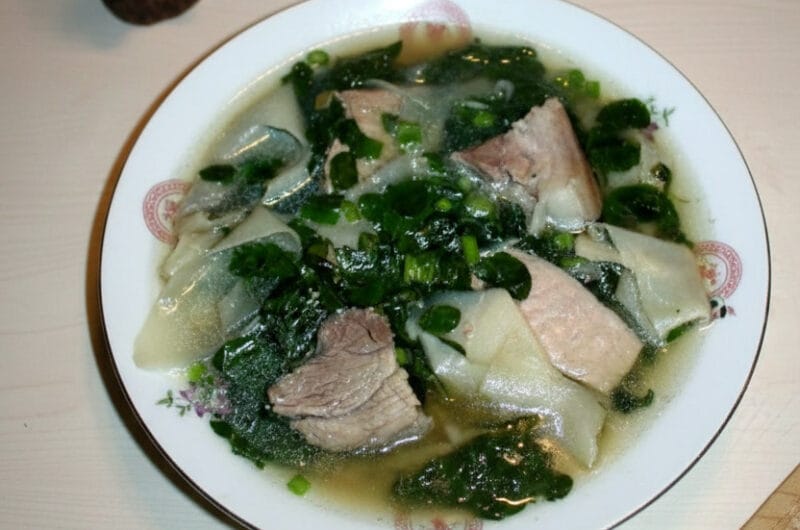
There are some soups you cook because you are hungry. And then there are soups you cook because you miss something.
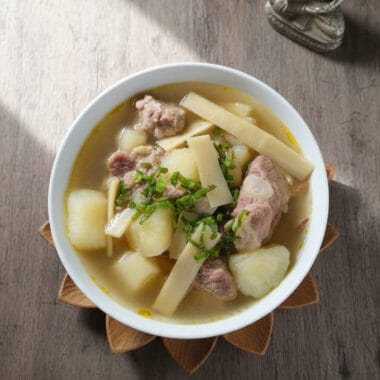
This Bamboo Shoot and Slirk Ngup Soup is one of those recipes that lives quietly in my memory. It is not flashy. It does not try to impress. But once it is simmering on the stove, the smell alone tells a story of home, of village kitchens, of simple meals shared slowly with family.
When I make this soup now, far from the place where I first tasted it, I always pause for a moment before serving. The steam rises, carrying the gentle sourness of bamboo shoot and the earthy green smell of slirk ngup. It feels like being called back, just for a second.
This Khmer Bamboo Shoot and Slirk Ngup Soup is easy to cook, very forgiving, and deeply comforting. It uses humble ingredients, yet the flavor is full and honest. If you grew up with Khmer food, this soup may already feel familiar. If you didn’t, I hope it becomes a gentle introduction to something meaningful.
Why You’ll Love This Soup
This soup is light but satisfying. It does not feel heavy in the stomach, even when eaten with a full plate of rice.
The sourness from the bamboo shoot balances beautifully with the mild sweetness of pork. The slirk ngup adds a soft bitterness that wakes up the whole bowl without being too strong.
It is also very simple to cook. There are no complicated steps, no rushing, no stress. You mostly let the pot do the work while you wait.
Most of all, this soup feels honest. It tastes like something made with care, not money. And those are often the best kinds of meals.
My Personal Experience With This Soup
Back home, this soup was not something we ate every day. Meat was expensive. Many poor Khmer Krom villagers cooked this soup with whatever they could catch—fish, eel, or even rice field crabs. Pork was for special days.
During Bonn Pchum Ben, when families prepare food offerings for ancestors, people would try their best to buy meat, even if it meant spending what little they had. This soup would be cooked early in the morning, quietly, with respect.
I remember watching elders taste the broth carefully, adjusting the salt just a little, never rushing. The soup was not just food. It was part of something bigger.
Now when I cook it in my own kitchen, I still keep that slow feeling. I don’t rush it. I let the broth simmer gently. I taste. I adjust. I remember.
Easy-to-Find Ingredients
Most of the ingredients for this soup are simple and easy to find, especially if you shop at Asian grocery stores.
Fresh bamboo shoots are best if you can find them, but packaged bamboo shoots work very well too. Just rinse them properly.
Slirk ngup may be harder to find depending on where you live. In some areas, it is also called bu ngot. When you find it, treat it gently. The leaves are tender and cook quickly.
Everything else is likely already in your kitchen or easy to get.
Ingredients List
- 1 lb (450 g) boneless pork shanks, cut into bite-size chunks
- 1 stalk lemongrass, cut into 4-inch pieces
- 6 cups water
- 1 medium fresh bamboo shoot, thinly sliced
- 1 package (16 oz) sliced bamboo shoot, rinsed and drained
- 1 lb (450 g) slirk ngup, leaves removed from stems, rinsed and drained
- 2 tablespoons roasted rice powder
- 2 tablespoons fish sauce
- 1 tablespoon sugar
- 1/2 teaspoon salt
- 1/4 teaspoon black pepper
- 3 stalks green onion, chopped
Why These Ingredients Are Used
- Pork shanks – Add richness and gentle sweetness to the broth
- Lemongrass – Brings a clean, fresh aroma without overpowering
- Bamboo shoots – Provide sourness and a crunchy-soft texture
- Slirk ngup – Adds a mild bitterness that balances the soup
- Roasted rice powder – Thickens the soup slightly and adds nutty depth
- Fish sauce – Gives savory, umami flavor
- Sugar – Softens the sour notes just enough
- Green onion – Adds freshness at the end
Cooking Equipment Needed
- Large soup pot – Big enough for simmering everything comfortably
- Sharp knife – For cutting meat and vegetables
- Cutting board – Keeps prep safe and easy
- Ladle – For stirring and serving the soup
Cooking Instructions
Start by placing the pork, lemongrass, and water into a large pot. Turn the heat to medium and let it come to a gentle boil. As it cooks, you may notice foam rising to the top. This is normal. You can skim it off if you like a clearer broth.
Let the meat simmer until it becomes tender. This takes patience. Don’t rush it. Once the pork is tender, remove the lemongrass stalks. They have already done their job.
Add the bamboo shoots to the pot and let them cook until soft. The smell will change slightly here, becoming warm and sour. Then add the slirk ngup and roasted rice powder. Stir gently. The leaves will wilt quickly.
Season with fish sauce, sugar, salt, and black pepper. Taste the broth and adjust slowly. Finish by sprinkling green onion on top. Turn off the heat and let the soup rest for a minute before serving.
Step-by-Step Directions
- Add pork, lemongrass, and water to a large pot
- Bring to a gentle boil and simmer until pork is tender
- Remove lemongrass stalks
- Add bamboo shoots and cook until soft
- Add slirk ngup and roasted rice powder
- Season with fish sauce, sugar, salt, and black pepper
- Taste and adjust seasoning
- Top with green onion
- Serve hot with rice
Tips for Best Flavor
- Use fresh bamboo shoots if possible for cleaner sourness
- Do not overcook slirk ngup; it becomes bitter
- Taste slowly when seasoning
- Let the soup rest for a few minutes before serving
Serving Suggestions
- Serve hot with steamed jasmine rice
- Pair with simple grilled fish
- Enjoy with fresh herbs on the side
- Eat slowly while the soup is still steaming
Final Thoughts From My Kitchen
This Bamboo Shoot and Slirk Ngup Soup is not just a recipe to me. It is a reminder of where I come from and how food carries memory. Every time I cook it, I feel grounded. It brings me back to early mornings, quiet kitchens, and shared meals.
If you enjoy traditional soups, you may also like Chicken Sweet Sour Soup with Water Spinach or Bamboo Shoots and Yucca Soup, both of which carry similar comfort and cultural roots.
For readers who want to understand more about Khmer ingredients, I recommend learning about bamboo shoots from Traditional Fish Sauce Uses in Southeast Asia. This resource helps deepen appreciation for simple dishes like this one.
Frequently Asked Questions (FAQs)
Q: Can I use fish instead of pork?
A: Yes. Fish, eel, or even crabs are traditional options.
Q: Is slirk ngup necessary?
A: It is traditional, but you can substitute with other mild leafy greens.
Q: Can I add pahok?
A: Yes, some people add a small amount for extra depth.
Q: Is this soup spicy?
A: No, it is mild unless you add chili.
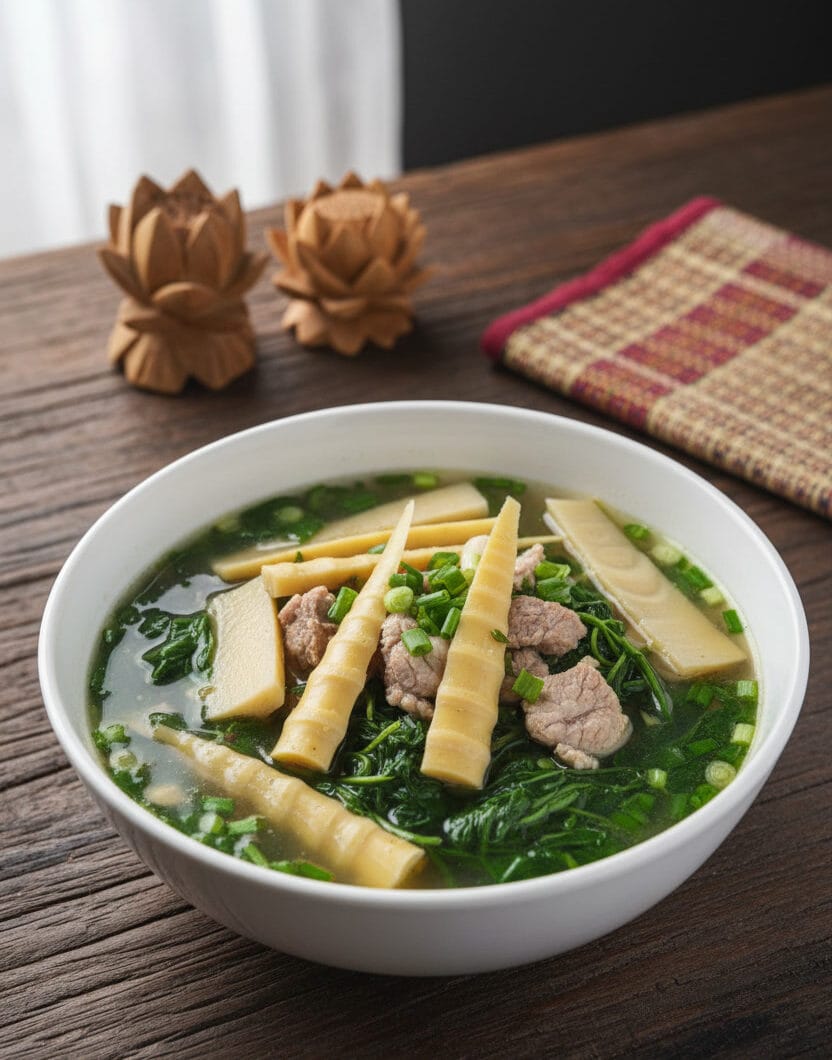
Bamboo Shoot & Slirk Ngup Soup
2
servings20
minutes45
minutes320
kcal1
hour5
minutesA traditional Khmer soup made with pork, bamboo shoots, and slirk ngup, gently simmered for a light, sour, comforting bowl best served with rice.
Ingredients
1 lb 1 (450 gram) of boneless pork shanks, cut chunks bite sizes
1 1 stalk of lemon grass, cut stalk to 4 inches in length
6 cups 6 water
1 medium 1 size fresh bamboo shoot, sliced thin or 1-package, 16 oz sliced bamboo shoot, rinsed well and drained
1 lb 1 (450 gram) of *Slirk ngup*, removed leaves from stems, rinsed and drained
2 tablespoons 2 roasted rice powder
2 tablespoons 2 fish sauce
1 tablespoon 1 sugar
1/2 teaspoon 1/2 salt
1/4 teaspoon 1/4 black pepper
3 3 stalks of green onion, chopped
Directions
- Put meat,lemon grass and water in a large soup pot, cook till meat tender, removed lemon grass stalks from the broth.
- Add bamboo shoot to boiling broth, cook till bamboo shoot tender.
- Add green leaves *slirk ngup* and roasted rice powder.
- Seasoning with fish sauce, sugar, salt and black pepper.
- Top with green onion.
Equipment
 Large Soup PotBuy on Amazon
 Cutting boardBuy on Amazon
 Sharp Kitchen KnifeBuy on Amazon
 LadleBuy on Amazon



Recipe Video
Recipe Notes
- Rinse bamboo shoots well to remove bitterness
- Adjust sourness by adding more bamboo shoot
- Best eaten fresh, same day
- Leftovers can be reheated gently
Nutrition Facts
- Serving Size: 1
- Total number of serves: 4
- Calories: 150kcal
- Fat: 5g
- Saturated Fat: 1g
- Trans Fat: 0g
- Polyunsaturated Fat: 1g
- Monounsaturated Fat: 2g
- Cholesterol: 10mg
- Sodium: 500mg
- Potassium: 300mg
- Carbohydrates: 20g
- Fiber: 3g
- Sugar: 2g
- Protein: 8g
- Vitamin A: 500IU
- Vitamin C: 20mg
- Calcium: 30mg
- Iron: 1mg
- Vitamin D: 0mg
- Vitamin E: 1mg
- Vitamin K: 15mg
- Thiamin: 0.1mg
- Riboflavin: 0.1mg
- Niacin: 2mg
- Vitamin B6: 0.2mg
- Vitamin B12: 0mg
- Folate: 50mg
- Biotin: -mg
- Pantothenic Acid: 0.5mg
- Phosphorus: 100mg
- Iodine: -mg
- Magnesium: 20mg
- Zinc: 1mg
- Selenium: 2mg
- Copper: 0.1mg
- Manganese: 0.5mg
- Chromium: -mg
- Molybdenum: -mg
- Chloride: -mg
Did you make this recipe?
Tag @cambodiarecipe on Instagram and hashtag it
Like this recipe?
Follow us @cambodiarecipe on Pinterest
Did you make this recipe?
Follow us on Facebook