Khmer Red Chicken Curry: A Mild, Coconut-Rich Cambodian Curry
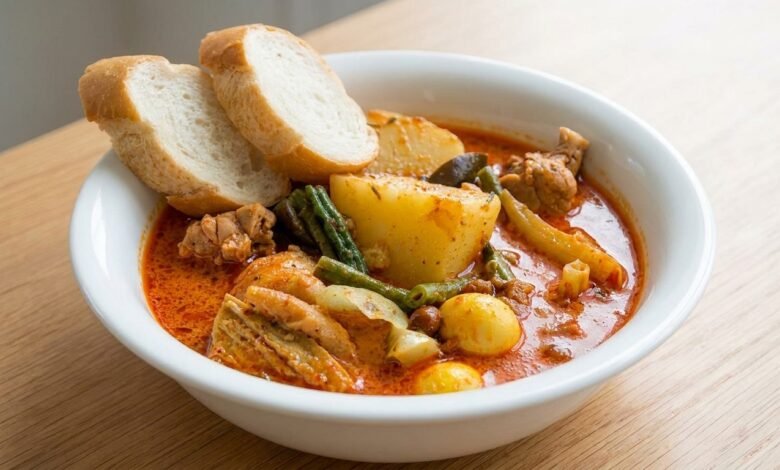
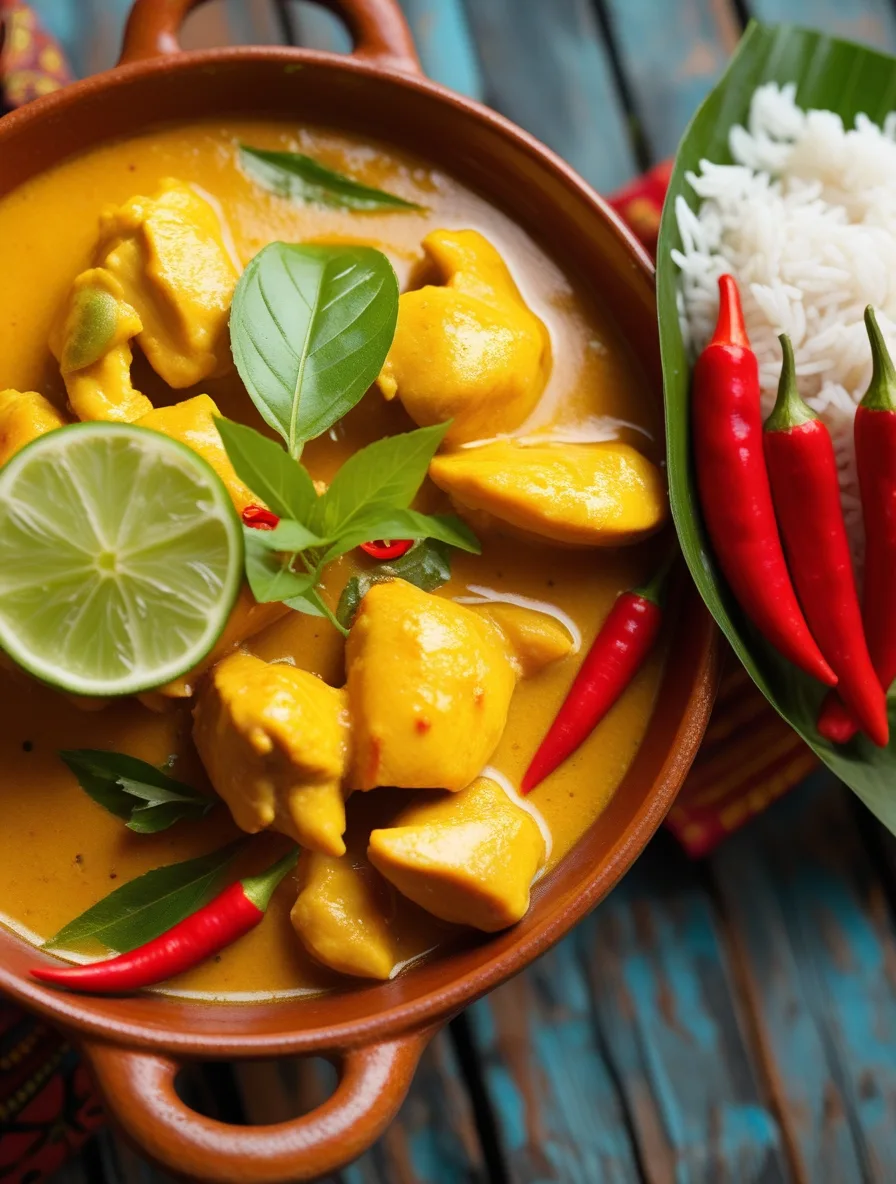
Khmer red chicken curry is the kind of dish that fills a kitchen with warmth before anyone takes a bite. The red kroeung paste hits the hot oil first, releasing a lemongrass-heavy aroma that signals something good is coming. Then the coconut milk goes in, turning the pot creamy and gently sweet.
Unlike some curries that rely on heat, this one builds its flavor from aroma, richness, and balance. It is mild enough for children and elders to enjoy at the same table, which is exactly how Khmer home cooking tends to work. The sauce is made for soaking into rice or tearing bread into.
What You Need
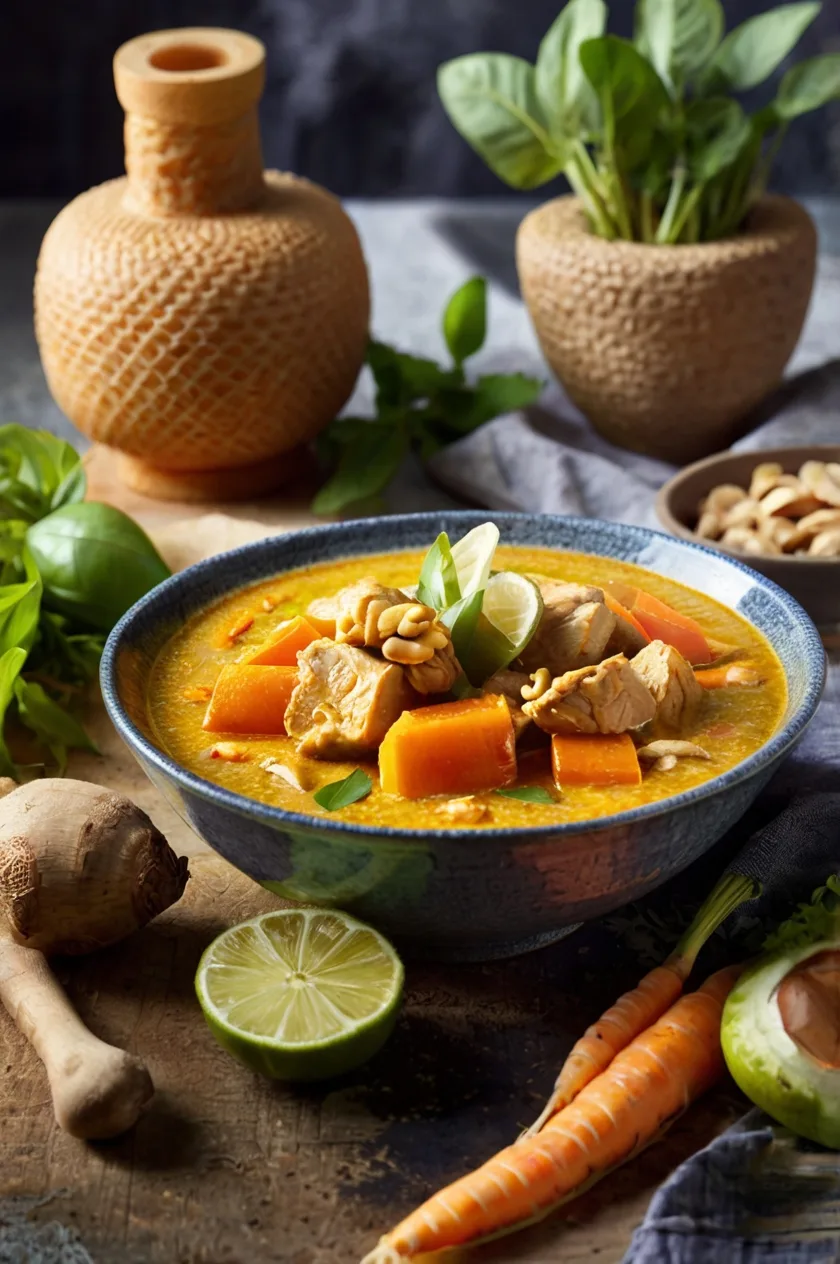
This curry uses bone-in chicken, which gives the sauce a deeper, more savory base than boneless meat. The vegetables are sturdy ones—snake beans, aubergine, and two kinds of potato—that hold their shape through a gentle simmer and soak up the coconut broth without turning to mush.
The flavor foundation is red kroeung paste, the Cambodian herb paste that appears in curries and stews across the country. If you are new to it, the guide to core Cambodian ingredients explains what kroeung is and why it sits at the center of so many Khmer dishes. A small amount of shrimp paste adds depth, while fish sauce and palm sugar balance the pot with salt and a soft sweetness.
Equipment
- Large pot: To hold the chicken, vegetables, and three cups of water without crowding, so everything simmers evenly.
- Wooden spoon or cooking spoon: To stir the kroeung into the oil and to keep the vegetables moving as they soften.
- Chef’s knife: To cut the chicken Maryland into chunky pieces and to prepare the onions, beans, aubergine, and potatoes.
- Cutting board: To give you a steady surface for cutting the chicken and vegetables into even pieces.
- Vegetable peeler: To peel the sweet potato and white potato before cutting them.
- Measuring spoons: To measure the red kroeung paste, shrimp paste, fish sauce, palm sugar, and salt.
- Measuring cup: To measure the coconut milk and water.
- Ladle or serving spoon: To transfer the finished curry and sauce into serving bowls.
How to Make Khmer Red Chicken Curry
Step 1: Bloom the Kroeung
Heat the vegetable oil in a large pot over medium heat. Add the red kroeung paste and stir for about 1 minute, until it smells fragrant and loosens slightly in the oil. Keep the heat moderate so the paste softens without catching.
Step 2: Cook the Chicken with Coconut Milk
Add the chicken pieces and half of the coconut milk. Stir to coat the chicken, then cook for 2 minutes. The coconut milk will loosen the paste further and start to build the sauce around the chicken.
Step 3: Add the Vegetables
Add the quartered onions, snake beans, aubergine, sweet potato, and white potato. Stir well so the vegetables are mixed through the chicken and sauce. The pot will look quite full at this stage; that is fine.
Step 4: Simmer Until Tender
Pour in the water and the remaining coconut milk. Season with the fish sauce, salt, and palm sugar, then stir to combine. Bring the pot to a gentle simmer, lower the heat, and let it cook for 20 minutes, until the chicken is cooked through and the potatoes are tender when pierced with a knife.
For chicken food safety, the USDA Food Safety and Inspection Service recommends cooking poultry to a safe minimum internal temperature of 165°F (74°C) . If you have an instant-read thermometer, check the thickest part of a piece of chicken before serving.
Cooking Tips
- Keep the simmer gentle. A hard boil can break up the potatoes and make the sauce cloudy. A soft bubble is enough to cook the chicken and soften the vegetables in 20 minutes.
- Stir only occasionally near the end. The potatoes are at their most fragile in the last five minutes. A gentle stir prevents them from crumbling while still keeping the sauce from sticking.
- Taste after the chicken is cooked. The sauce reduces slightly during the simmer. If it tastes a little flat, a small extra splash of fish sauce will sharpen it; if it tastes too sharp, a pinch more palm sugar will round it out.
How to Serve
Serve the curry hot, ladled into bowls with plenty of sauce. Steamed jasmine rice is the most common partner at a Cambodian table, but the sauce also works with fresh noodles or a piece of baguette for dipping. If you want a fuller spread, a simple cucumber or herb salad on the side adds a fresh contrast to the creamy coconut base.
This curry is a special-occasion dish in Cambodia, often prepared for gatherings and holidays alongside other shared dishes . At home, it works just as well as a weekend meal when you want something that feels generous without being complicated.
Recipe Notes
- The supplied recipe uses 2 chicken Maryland pieces (about 1800 g total), cut into chunky bone-in pieces. Bone-in chicken gives the sauce more flavor, so keep the bones in if you can.
- Red kroeung paste is the defining ingredient here. If you are using a store-bought paste, the curry’s color and aroma will vary slightly by brand. That is normal.
- The recipe does not include a garnish. If you want a little freshness at the end, a few torn cilantro leaves or sliced red chili can go on top, but they are optional and not required for the dish to taste complete.
Frequently Asked Questions
Can I use boneless chicken instead of bone-in Maryland?
Yes, but the sauce will be slightly less savory. Bone-in chicken releases more flavor into the coconut broth during the 20-minute simmer. If you use boneless thigh or breast, keep the pieces chunky and check that they are cooked through before serving.
Is this curry spicy?
No. Red kroeung paste gives the curry its color and aroma, but this recipe uses a modest 2 teaspoons, and the coconut milk softens what little heat there is. The result is mild and aromatic rather than hot.
How should I store leftovers?
Cool the curry and keep it in a covered container in the refrigerator for up to 3 days. Reheat gently on the stovetop with a splash of water if the sauce has thickened. The potatoes will soften further on the second day, which is normal.
Can I make this curry ahead of time?
Yes. The flavor deepens overnight. If you plan to make it ahead, undercook the potatoes by a few minutes so they do not become too soft when you reheat the curry the next day.
Final Thoughts
Khmer red chicken curry is a forgiving pot of food. It does not ask for precision knife work or a long list of spices. It asks for a little patience while the kroeung blooms, the coconut milk settles, and the chicken and vegetables come together in a sauce that is creamy, gentle, and deeply aromatic. Serve it with rice, tear off a piece of bread, and let the sauce do the rest.
For another mild, aromatic Khmer curry to try next, this Cambodian classic yellow chicken curry uses a similar kroeung-based approach with a different color and character. And if you want to understand how soups and curries fit into the daily Cambodian table, the guide to Cambodian soup family meals explains why these dishes are central to the way Khmer families eat. You can also browse more Cambodian red curry recipes for related ideas.
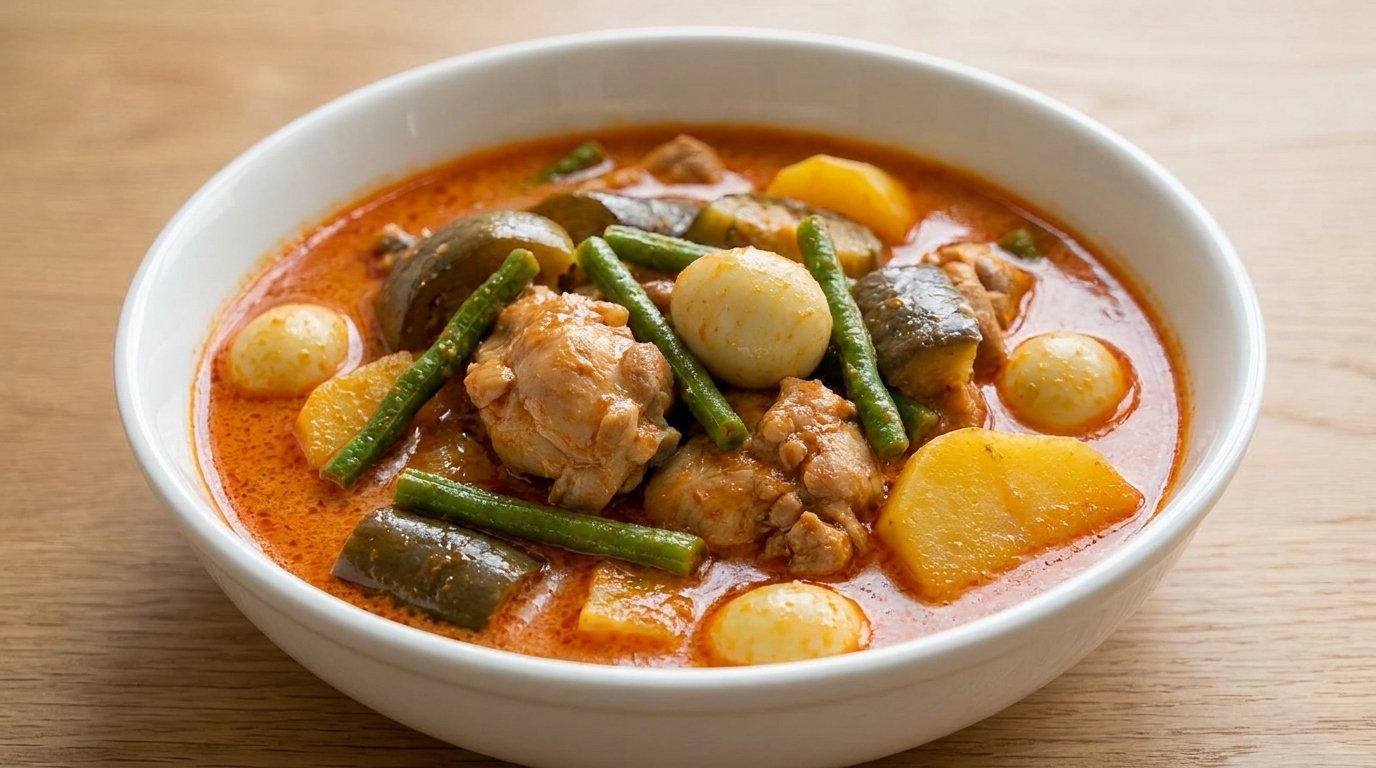
Khmer Red Chicken Curry
4
servings30
minutes30
minutes4338
1
hourKhmer red chicken curry (samlor kari) is a traditional Cambodian curry built on red kroeung paste, coconut milk, fish sauce, and palm sugar. This version uses bone-in chicken Maryland, snake beans, aubergine, sweet potato, and white potato for a complete one-pot meal.
Ingredients
2 chicken (1800 gram) Maryland cut into chunky pieces with bones
3 teaspoons vegetable oil
2 teaspoons red kreoung paste (curry paste)
1 teaspoon shrimp paste
3 teaspoons fish sauce
2 teaspoons palm sugar
1 teaspoon salt
1 cup coconut milk/cream
3 cups water
2 brown onions cut into quarters
4 snake beans cut into 2 inch pieces
1 small aubergine cut lengthwise into 2 inch pieces
1 sweet potato
1 white potato
Directions
- In a large heated pot, add oil and kroeung paste. Stir for 1 min on medium temperature.
- Add Cambodia village chicken and half the coconut. Cook for 2 mins.
- Add potatoes, beans, aubergine and onion. Stir well.
- Add water, remaining coconut and season with fish sauce, salt and sugar. Stir to combine and let it simmer for 20 mins on low temperature.
Equipment
 Large Soup PotCheck product details
 Wooden SpoonCheck product details
 Sharp Kitchen KnifeCheck product details
 Cutting boardCheck product details


Recipe Video
Nutrition Facts
- Serving Size: 1 g
- Total number of serves: 4
- Calories: 4338kcal
- Fat: 465.1g
- Saturated Fat: 145.5g
- Cholesterol: 397mg
- Sodium: 1037mg
- Potassium: 850mg
- Carbohydrates: 34.4g
- Net Carbs: 27.3g
- Fiber: 7.1g
- Sugar: 10.7g
- Protein: 5.8g
- Vitamin A: 421.9mcg
- Vitamin C: 17.1mg
- Calcium: 72mg
- Iron: 3mg
- Vitamin D: 21.6mcg
- Vitamin E: 12.9mg
- Vitamin K: 12.3mcg
- Thiamin: 0.2mg
- Riboflavin: 0.1mg
- Niacin: 2mg
- Vitamin B6: 0.4mg
- Folate: 59mcg
- Pantothenic Acid: 1.1mg
- Phosphorus: 149mg
- Magnesium: 81mg
- Zinc: 1mg
- Selenium: 2.4mcg
- Copper: 0.4mg
- Manganese: 1mg
Did you make this recipe?
Tag @cambodiarecipe on Instagram and hashtag it
Like this recipe?
Follow us @cambodiarecipe on Pinterest
Did you make this recipe?
Follow us on Facebook