Mekong Food in Cambodia: How the Great River Shapes Local Cuisine
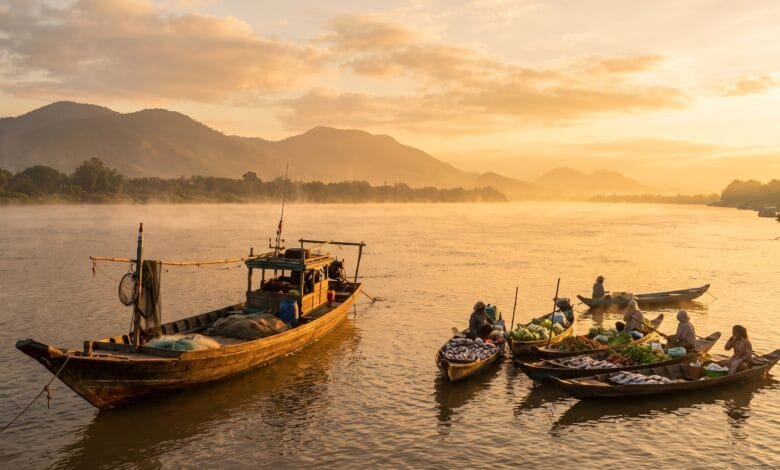
Mekong food in Cambodia is more than a category of dishes—it is a story of a river and the people who live beside it. The Mekong River flows through the heart of Cambodia, and along its banks, millions of people depend on its waters for their daily meals. The river provides fish, water for rice paddies, and a way of life that has shaped Khmer cuisine for centuries.
In Cambodia, rice is the staple food, and the Khmer word for “to eat”—nam bai—literally translates as “eat rice”. But rice is only half the story. The other half is fish. Freshwater fish from the Mekong River and Tonle Sap Lake are the backbone of Cambodian cooking. They are dried, fermented into prahok, or cooked in the classic steamed fish curry called amok.
This article explores how the Mekong River shapes the food of Cambodia—from the ingredients that come from its waters to the traditions that have been passed down through generations. Whether you are planning a culinary journey along the Mekong or simply curious about Cambodian food, this guide will help you understand the deep connection between the river and the plate.
Quick Regional Food Facts
What Makes Mekong Food in Cambodia Special?
Mekong food in Cambodia is defined by one simple fact: the river provides. Unlike the coastal cuisine of places like Kep or Koh Kong, which relies on saltwater seafood, Mekong cuisine is built around freshwater fish. The fish from the Mekong have a clean, sweet flavor that is distinct from fish caught in the Tonle Sap Lake.
The river also shapes when people eat. The Mekong’s seasonal floods bring different fish species at different times of the year. Some fish, like the prized Mekongina erythrospila, are only available for a few months each year, making them a seasonal delicacy.
But what truly makes Mekong food special is the preservation tradition. Before refrigeration, people along the Mekong needed ways to preserve their catch. This gave birth to prahok—a fermented fish paste that is often called “Cambodian cheese”—and smoked fish, a centuries-old tradition that continues today. These preserved foods are not just practical; they are the foundation of Khmer flavor.
The Landscape Behind the Food
The Mekong River enters Cambodia from Laos and flows south through the provinces of Stung Treng, Kratie, Kampong Cham, and Prey Veng before reaching Phnom Penh, where it meets the Tonle Sap River and the Bassac River. From there, it continues into Vietnam and the Mekong Delta.
The landscape along the river varies dramatically. In Stung Treng, the Mekong meets two tributaries—the Sesan and Sekong rivers—creating a rich fishing ground. In Kratie, the river bends and widens, home to the rare Irrawaddy dolphins and exceptional freshwater fish. In Kampong Cham, the river is a thoroughfare for trade and daily life.
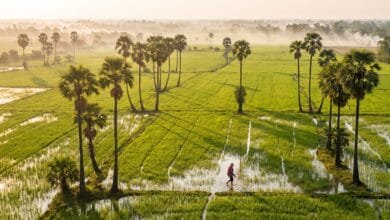
The seasonal flooding of the Mekong is essential to the region’s food production. During the rainy season, the river swells and floods the surrounding plains, creating breeding grounds for fish and enriching the soil for rice cultivation. During the dry season, the water recedes, and the fish are easier to catch.
Ingredients That Define the Region
The ingredients of Mekong cuisine come directly from the river and its banks:
Fish – The Mekong is home to around 475 freshwater fish species. Common varieties include snakehead fish, catfish, Siamese mud carp, silver barb, giant barb, and the prized Mekongina. Fish are used fresh, smoked, dried, or fermented.
Prahok – This fermented fish paste is the soul of Cambodian cooking. Made by fermenting fish with salt, prahok adds a pungent, savory depth to soups, stir-fries, and dipping sauces.
Kroeung – A fragrant herb paste made from lemongrass, turmeric, garlic, galangal, and kaffir lime leaves. Kroeung is the flavor base for many Mekong dishes, including fish amok and samlar korko.
Rice – Grown in the floodplains along the Mekong, rice is the foundation of every meal. It is eaten plain, made into noodles, or cooked in bamboo as kralan.
Coconut milk – Used in curries and creamy dishes like fish amok.
Local herbs and vegetables – Water spinach, morning glory, bitter melon leaves, and wild herbs gathered near the river.
Mekong shrimp and grapefruit – A refreshing combination found in salads, particularly in Kratie.
Regional Foods and Dishes to Know
Fish Amok (Amok Trey)
Often called the national dish of Cambodia, fish amok is a creamy, aromatic curry made with freshwater fish, coconut milk, and kroeung, steamed in banana leaves. The dish is believed to have originated along the Mekong, where freshwater fish is abundant.
Kratie River Fish Curry
This regional specialty uses locally caught Mekong fish simmered in a coconut-based curry with kroeung paste and indigenous river herbs. The Mekong fish varieties used in this dish have a clean, sweet flavor distinct from Tonle Sap fish. It is often served at riverside restaurants overlooking the Mekong dolphin habitat.
Smoked Fish
Smoked fish has been a staple food of Cambodians for centuries. Made by dwellers along the Mekong River and around the Tonle Sap Lake, it is a traditional way of preserving fish for eating or selling later. The fish is cleaned, skewered on bamboo, dried in the sun for about two hours, and then smoked over a fire for four to five hours. Smoked fish can be kept for up to six months.
Samlar Korko
A traditional Cambodian soup with fish, vegetables, and prahok. This hearty soup reflects the river’s abundance, combining fish with seasonal vegetables and the fermented flavor of prahok.
Kralan (Bamboo Sticky Rice)
A specialty snack of provinces along the Mekong, made from glutinous rice and beans mixed with coconut milk, stuffed into bamboo tubes, and grilled over charcoal.
Mekong Shrimp and Grapefruit Salad
A refreshing dish from Kratie that combines Mekong shrimp with grapefruit and traditional rice cakes.
People Behind the Food
The people who produce Mekong food in Cambodia are the fishing communities that have lived along the river for generations. In Stung Treng, locals are deeply connected to fishing and the river itself. In villages like Spean Veng in Kampong Khleanng commune, families have been making smoked fish for centuries, passing the tradition from grandparents to parents to children.
According to Touch Bunthoeun, a communal councillor, approximately 30 families in the commune are fish smokers. “Producing smoked fish is a business for some villagers here for generations,” he says. “Since I was born, I always saw them making smoked fish”.
The fisheries sector supports about 2 million jobs nationwide. For many families along the Mekong, fishing and fish processing are not just livelihoods—they are a way of life that defines their identity and their community.
How Food Traditions Developed
The food traditions of the Mekong developed out of necessity. Before refrigeration, people needed ways to preserve fish. This led to the creation of:
Smoked fish – A method that allowed fish to be stored for up to six months. The smoking process also adds a distinctive flavor that Cambodians have come to love.
Prahok – Fermented fish paste that could be kept for long periods and used to add flavor to otherwise bland meals.
Dried fish – Another preservation method that remains popular today.
These preservation techniques are not just practical—they are a form of cultural knowledge passed down through generations. When a grandmother teaches her granddaughter how to smoke fish or make prahok, she is passing on more than a recipe. She is passing on the history and identity of her community.
Food Through the Seasons
Mekong food in Cambodia changes with the seasons:
Rainy Season (May–October) – The Mekong swells, flooding the plains. Fish are abundant and breed in the flooded forests. This is a time of plenty.
Dry Season (November–April) – The water recedes, and fish are easier to catch. Some species, like the Mekongina, are only available during this season. The dry season is also the time for smoking and drying fish to preserve them for the next rainy season.
The seasonal rhythm of the river determines what people eat, when they fish, and how they preserve their catch. This connection between the river and the calendar is central to Mekong food culture.
Where Travelers Can Experience the Food
Travelers can experience Mekong food in Cambodia in several ways:
Riverside restaurants – In Kratie, visitors can enjoy Kratie River Fish Curry while watching for Irrawaddy dolphins in the Mekong.
Floating villages – The floating communities on Tonle Sap Lake, such as Kampong Khleang and Chong Khneas, offer a glimpse into life on the water. Visitors can see how fish is processed and try local specialties.
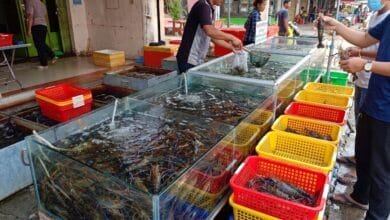
Local markets – Morning markets along the Mekong, like those in Kampong Cham, sell fresh fish, produce, and prepared foods.
Homestays – Staying with a family in a Mekong village offers the most authentic food experience. Guests can learn how to cook traditional dishes and eat with the family.
What to Eat or Look For
When exploring Mekong food in Cambodia, look for:
- Fish amok – Steamed fish curry in banana leaves
- Kratie River Fish Curry – Coconut-based curry with Mekong fish
- Smoked fish – Eaten with unripe mango and fish sauce
- Kralan – Bamboo sticky rice
- Prahok – Try it in soups and dipping sauces
- Kuy Teav – Rice noodle soup with pork, a Mekong breakfast staple
- Mekong shrimp – Freshwater shrimp, often in salads
A Food-Focused Way to Explore the Region
Day 1: Kratie – Start in Kratie, where the Mekong bends and dolphins swim. Visit a riverside restaurant for fish curry, then explore the local market.
Day 2: Kampong Cham – Head south to Kampong Cham. Start your morning with kuy teav at the riverside market, then explore the town by bicycle.
Day 3: Stung Treng – Travel north to Stung Treng, where the Mekong meets the Sesan and Sekong rivers. Try kralan and ask about the seasonal Mekongina fish.
Day 4: Tonle Sap – Visit a floating village to see how smoked fish and prahok are made.
Best Time to Experience the Food
The best time to experience Mekong food in Cambodia is during the dry season (November to April) when fish are abundant and river travel is easiest. However, the rainy season offers its own rewards—the flooded forests are at their most dramatic, and the fish are plentiful.
How to Get There
- Kratie – 4–5 hours by bus or car from Phnom Penh
- Kampong Cham – 2 hours by bus or car from Phnom Penh
- Stung Treng – 6–7 hours by bus or car from Phnom Penh
Responsible Food Travel
When experiencing Mekong food in Cambodia, travelers can support local communities by:
- Eating at locally owned restaurants
- Buying from market vendors
- Staying in homestays
- Learning about sustainable fishing practices
- Avoiding overfished species when possible
Frequently Asked Questions
What is Mekong food in Cambodia?
Mekong food in Cambodia refers to the cuisine of communities living along the Mekong River, built around freshwater fish, rice, and traditional preservation methods like smoking and fermentation.
What is the most famous dish from the Mekong region?
Fish amok (amok trey) is the most famous dish, a steamed fish curry in banana leaves that is considered Cambodia’s national dish
What is prahok?
What fish are caught in the Mekong River?
The Mekong is home to around 475 fish species, including snakehead fish, catfish, Siamese mud carp, silver barb, giant barb, and the prized Mekongina.
When is the best time to visit the Mekong for food experiences?
The dry season from November to April is the best time, when fish are abundant and river travel is easiest.
Can travelers visit fishing villages along the Mekong?
Yes, many fishing villages welcome visitors. Floating villages on Tonle Sap Lake, like Kampong Khleang, are popular destinations.
What is kroeung?
Kroeung is a fragrant herb paste made from lemongrass, turmeric, garlic, galangal, and kaffir lime leaves. It is the flavor base for many Cambodian dishes.
Final Thoughts
Mekong food in Cambodia is a reflection of the river itself—ever-changing, abundant, and deeply connected to the people who call its banks home. From the simple pleasure of smoked fish eaten with unripe mango to the complex flavors of fish amok steamed in banana leaves, every dish tells a story of place, tradition, and survival.
The Mekong is more than a waterway. It is the heart of Cambodian food culture. And for travelers willing to follow its course, it offers a culinary journey unlike any other—one that reveals the true taste of Cambodia.