Kampong Khleang Prahok: Inside the Floating Village Where Siem Reap’s Legendary Fish Paste Is Made
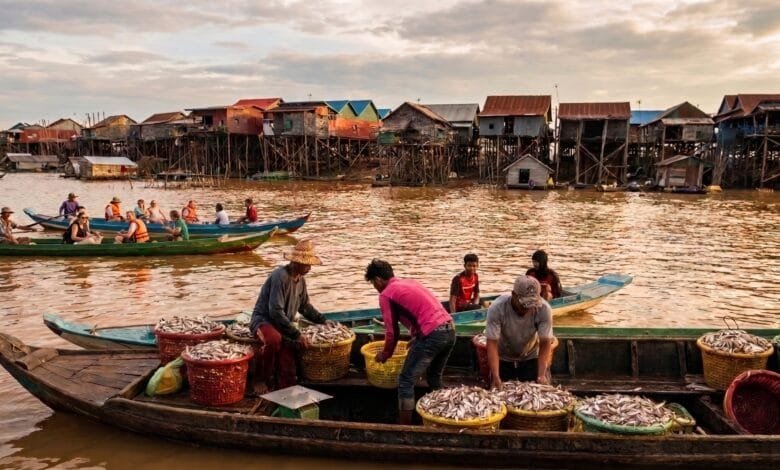
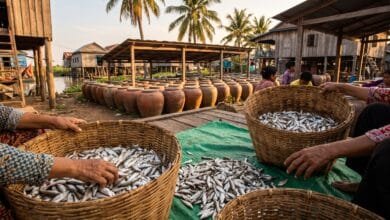
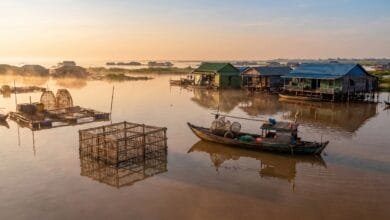
The wooden boats glide silently between stilt houses as the morning sun breaks over Tonle Sap. On the decks, women sort through glistening piles of trey riel — tiny mud carp — while children splash in the lake below. This is Kampong Khleang, and this is where Cambodia’s most iconic fermented fish paste begins its journey.
For over a thousand years, since the days of the Angkor Empire, Cambodians have been preserving fish through fermentation. Today, that tradition has earned international recognition. In May 2025, Siem Reap prahok was officially registered as a Protected Geographical Indication (PGI) product — and Kampong Khleang stands at the heart of this story.
What Is Kampong Khleang Prahok?
Kampong Khleang prahok is a salted and fermented fish paste made from freshwater fish caught in the Tonle Sap lake. The Khmer word “prahok” (ប្រហុក) refers to this pungent, protein-rich paste that has sustained Cambodian communities for centuries.
What makes Kampong Khleang prahok special is not just the product itself — it’s the place. Kampong Khleang is one of the largest floating villages on Tonle Sap, Southeast Asia’s largest lake. The community’s entire economy revolves around fishing and fish processing, with prahok production as a cornerstone.
Where This Story Begins
Location: Kampong Khleang commune, Sotr Nikum district, Siem Reap province
Kampong Khleang sits approximately 45 kilometers southeast of Angkor Wat, adjacent to the Tonle Sap lake. This is not a village you’ll find on every tourist itinerary — and that’s precisely what makes it special.
The Tonle Sap is a hydrological wonder. Each year, the Mekong River’s rising waters push into the lake, expanding its surface area from around 2,500 to over 16,000 square kilometers. When the waters recede, they leave behind nutrient-rich sediment and millions of fish — creating one of the world’s most productive inland fisheries.
This annual flood pulse is what makes Kampong Khleang the ideal place for prahok production. The lake provides an abundant supply of small freshwater fish — particularly trey riel (small mud carp) and trey kamphleanh (moonlight gourami) — that form the raw material for prahok.
Meet the Producers
The prahok makers of Kampong Khleang are not a single factory or corporation — they are families, communities, and generations of knowledge holders.
Local producers have been making prahok in this area for decades, passing down techniques from parents to children. In 2009, the Kampong Khlaing Prahok Orb Association was established by 50 families from Kampong Khlaing commune to formalize and promote their craft.
More recently, the Siem Reap Prahok Tonle Sap Conservation Promotion Association (SPTA) was formed to manage, protect, and promote the newly recognized PGI product. The association brings together 49 producer representatives, along with collectors, processors, and exporters.
One producer, 69-year-old Roeun Rom, captured the spirit of this community when she said: “Siem Reap Prahok is special because of its long-standing culture, traditions, and unique taste”.
The work is demanding. A typical day during prahok season might begin before sunrise, with families heading out on boats to collect the day’s catch. Back on the stilt houses, the real work begins — cleaning, salting, and preparing the fish for fermentation.
Women play a central role in this production system, serving as cultural custodians of prahok-making knowledge. Their skills — knowing exactly how much salt to add, how long to ferment, when the paste is ready — represent generations of accumulated wisdom.
How Kampong Khleang Prahok Is Made
The production of prahok is a patient process that transforms fresh fish into a product that can last for months or even years.
Step 1: Catching the Fish
The prahok season typically runs from November or December through to March, during the dry season when fish are most abundant. The fish — primarily small species like trey riel (mud carp) and trey kamphleanh (moonlight gourami) — are caught using traditional methods in the Tonle Sap.
Step 2: Cleaning and Preparation
The fish are cleaned — heads, guts, and scales removed. In some traditional methods, the fish are then sun-dried for one to three days before further processing.
Step 3: Salting
Salt is the essential preservative. The fish are mixed with salt at a ratio of approximately 3:1 to 5:1 fish to salt. The salt draws out moisture, inhibits harmful bacteria, and creates the environment where beneficial salt-tolerant bacteria can thrive.
Step 4: Crushing
The salted fish are crushed into a paste. Traditionally, this was done by pounding with tools or even by foot — a method still used in some communities. The result is a thick, coarse paste.
Step 5: Fermentation
The paste is packed into large jars or containers and left to ferment. Fermentation typically lasts from three to twelve months, though some producers ferment for even longer. The most common fermentation period is around six months.
During this time, salt-tolerant bacteria break down the fish proteins, creating the complex, umami-rich flavor that prahok is known for. The longer the fermentation, the deeper and more intense the flavor becomes.
Two Main Varieties
There are two principal types of prahok:
| Type | Description | Salt Content |
|---|---|---|
| Prahok Cha-oeung | Contains fish bones throughout; coarser texture | 15–20% salt |
| Prahok Sach | Bones removed; smoother, more refined paste | 25–30% salt |
The Season Behind the Product
The prahok-making calendar is dictated by the rhythms of Tonle Sap.
October to February: Main prahok season, when fish catches are highest.
December to January: Peak period for commercial fishing, when the famous “dai” stationary trawl fisheries can yield substantial catches.
January to March: Primary production window for fermented and dried fish.
If you visit Kampong Khleang during the rainy season (roughly June to October), you may see stored fermentation jars but you’ll miss the active processing. The real action happens in the dry season when the fish are running and the work is in full swing.
The Ingredient: What Kampong Khleang Prahok Looks and Tastes Like
Kampong Khleang prahok is not for the faint of heart. It is:
- Appearance: A thick, coarse paste ranging from grayish to reddish-brown, depending on the fish used and fermentation time.
- Aroma: Pungent, salty, and deeply savory — an acquired smell that announces itself from across the room.
- Flavor: Intensely umami, salty, with a complex fermented depth that adds richness to any dish.
- Texture: Ranges from coarse (prahok cha-oeung with bones) to smooth (prahok sach, boneless).
As one description puts it: “Think of it as Cambodia’s answer to anchovy paste — but way more intense”.
From Kampong Khleang to Cambodian Table
Prahok is not just an ingredient — it is the backbone of Cambodian cuisine. For many Cambodians, a meal without prahok is like a day without rice.
How It’s Used:
- As a seasoning: A small amount is added to stir-fries, soups, and curries to provide depth and umami.
- As a condiment: Prahok is often served alongside fresh vegetables as a dipping sauce.
- In prahok ktis: A classic Cambodian dish where prahok is simmered with coconut milk, pork, and spices.
- With rice: Many Cambodians eat a small amount of prahok with plain rice as a simple, satisfying meal.
The paste connects the floating villages of Tonle Sap to kitchens across Cambodia — from humble rural homes to the finest restaurants in Phnom Penh and Siem Reap.
Why Kampong Khleang Prahok Matters
The PGI recognition of Siem Reap prahok in May 2025 was a milestone not just for the product, but for the people who make it.
Cultural Value: Prahok is deeply rooted in the history of the Angkor Empire, where local ingredients and flavors were cherished. It represents over a thousand years of continuous culinary tradition.
Economic Value: The PGI status helps protect traditional knowledge and enhances the marketability and competitiveness of local products at both national and international levels. As Minister of Commerce Cham Nimul stated: “This milestone not only safeguards traditional knowledge but also enhances the marketability and competitiveness of local products”.
Community Value: The SPTA association brings together producers, providing training, governance support, and traceability systems to ensure long-term sustainability. The EU-funded CAPFISH-Capture project has provided targeted support to strengthen organizational management.
Environmental Value: As Minister of Agriculture Dith Tina noted, Siem Reap Prahok “symbolizes the linkage between our traditions and sustainable development, ensuring quality for consumers and bolstering the competitiveness of Cambodia’s agricultural sector”.
What a Visit to Kampong Khleang Is Like
For travelers, Kampong Khleang offers a rare window into traditional Cambodian life. This is not a polished tourist attraction — it’s a working community where people fish, make prahok, and go about their daily lives.
What You’ll See:
- Stilt houses rising from the lake
- Wooden boats as the primary mode of transport
- Families sorting and cleaning fish on their decks
- Large fermentation jars containing aging prahok
- The daily rhythm of a fishing community
What You’ll Learn:
- How prahok has been made for over a thousand years
- The importance of Tonle Sap to Cambodian food culture
- The traditional techniques passed down through generations
What You Might Taste:
- Fresh prahok (if you’re adventurous!)
- Local dishes made with prahok
- Dried and smoked fish products
Important Note: Kampong Khleang is a living community, not a theme park. Visitors should be respectful, ask before photographing people, and avoid disrupting daily work. Some tours include visits to prahok producers, but these should be arranged through responsible operators.
Best Time to Visit Kampong Khleang
| Purpose | Best Time |
|---|---|
| To see active prahok production | January–March (dry season) |
| For comfortable travel | November–February (cooler dry season) |
| For photography | Early morning or late afternoon for best light |
| To see the floating village at its most dramatic | During high water (roughly August–November) |
Prahok production peaks between January and March when Tonle Sap fish catches are highest. Visit during the monsoon and you’ll see the stored jars but miss the active process.
How to Get to Kampong Khleang
Starting Point: Siem Reap city
Distance: Approximately 45 kilometers southeast of Siem Reap
Transportation Options:
- By road: Take a tuk-tuk or private car from Siem Reap to the village (approximately 1–1.5 hours)
- By boat: From Siem Reap, you can take a boat tour to the floating village (check with local operators)
Note: Travel times and conditions vary. It’s always best to confirm arrangements with a local tour operator or your accommodation.
What to Bring
- Water: Stay hydrated
- Sun protection: Hat, sunscreen, sunglasses
- Comfortable shoes: For walking on stilt houses and boats
- Insect repellent: Especially during wetter months
- Camera: For capturing the stunning lake and village scenes
- Respect: This is a community, not a tourist attraction
Responsible Farm and Producer Tourism
Visiting Kampong Khleang is a privilege, not a right. Here’s how to be a responsible visitor:
- Ask before entering private areas — these are people’s homes
- Ask before photographing people — always seek permission first
- Do not damage crops or property
- Do not pick or take anything without permission
- Buy directly from producers when possible — it supports the local economy
- Respect working spaces — don’t get in the way of people doing their jobs
- Follow local instructions from your guide or community members
- Do not treat farmers or producers as attractions — they are skilled workers and community members
Nearby Food and Travel Experiences
Suggested Internal Article Topics:
- Siem Reap Food Guide: Where to Eat Authentic Khmer Cuisine
- Tonle Sap Floating Villages: A Traveler’s Guide
- Cambodian Fermented Foods: From Prahok to Mam
- Prahok in Cambodian Cooking: Recipes and Traditions
- A Guide to Siem Reap’s Local Markets
Frequently Asked Questions
Where can I see prahok being made in Cambodia?
Kampong Khleang floating village in Siem Reap province is one of the best places to see traditional prahok production. Other villages around Tonle Sap also produce prahok, but Kampong Khleang is particularly known for it.
What is the best season to visit Kampong Khleang?
The dry season (November to March) offers the most comfortable travel conditions. For active prahok production, visit between January and March when fish catches are highest
Can travelers join the prahok harvest?
In most cases, no — the harvest and production are skilled work, not a tourist activity. However, visitors can observe and learn from producers through responsible tours.
What does prahok taste like?
Prahok has an intense, salty, umami flavor with a pungent aroma. It’s often compared to anchovy paste or fish sauce, but with a deeper, more complex fermented character.
How is prahok used in Cambodian food?
Prahok is used as a seasoning in stir-fries, soups, and curries, and as a condiment served with fresh vegetables. It’s a foundational ingredient in many classic Khmer dishes.
Is Kampong Khleang open to visitors?
Yes, Kampong Khleang receives visitors, but it’s a working community. Visitors should arrange tours through responsible operators and always respect local customs and privacy.
How long does a visit to Kampong Khleang take?
A typical visit might take 2–4 hours, depending on whether you’re combining it with a boat tour and other activities.
What should I bring to Kampong Khleang?
Water, sun protection, insect repellent, comfortable shoes, a camera, and respectful curiosity.
Final Thoughts
Kampong Khleang prahok is more than a fermented fish paste. It is a living connection to Cambodia’s past — a tradition that has survived empires, wars, and modernization. It represents the skill of generations of producers, the bounty of Tonle Sap, and the resilience of a community that has made its home on the water.
In May 2025, when Siem Reap prahok received its PGI certification, the world took notice. But for the people of Kampong Khleang, nothing changed. They still rise before dawn, still sort their fish on wooden decks, still pack their fermentation jars with salt and patience. The PGI status doesn’t change how they work — it simply acknowledges what they’ve always known: that what they make is special.
For travelers willing to venture beyond Angkor Wat, Kampong Khleang offers something rare: a genuine encounter with Cambodian food culture, a glimpse into a way of life that has endured for centuries, and a taste of the ingredient that truly defines Khmer cuisine.
The next time you taste prahok in a Cambodian dish — whether in a Siem Reap restaurant or a village kitchen — remember Kampong Khleang. Remember the stilt houses, the wooden boats, the hands that sorted the fish, and the patience that turned humble catch into Cambodia’s most essential ingredient. That is the story of Kampong Khleang prahok.