Daikon Soup with Pork Hock
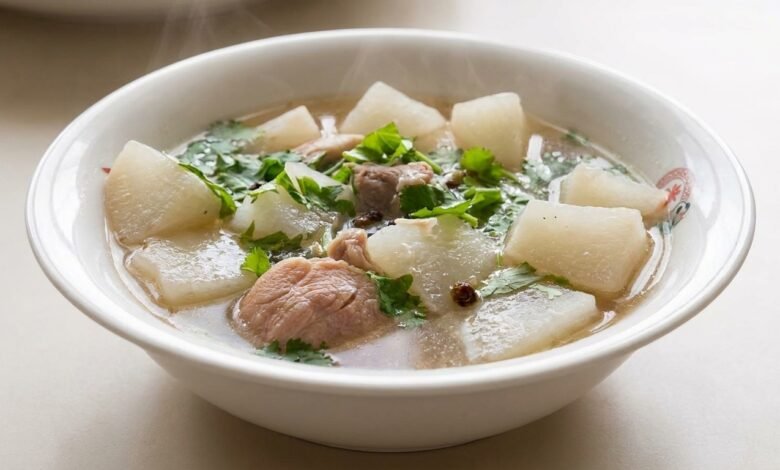
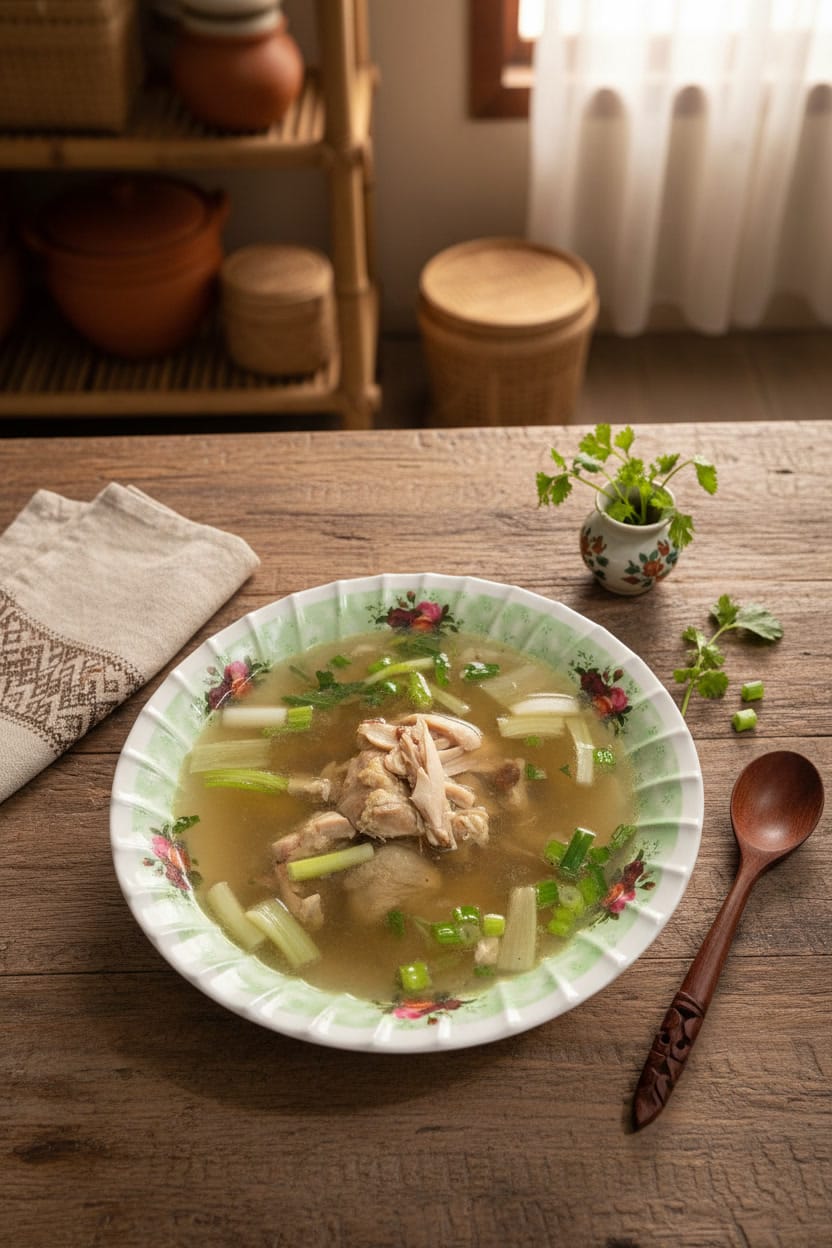
Daikon soup with pork hock is the kind of Cambodian home cooking that does not ask for much. A few everyday ingredients go into one pot, and the stove does the rest. As the pork hock simmers, its collagen gives the broth a soft, rounded body, while the daikon turns tender and slightly sweet. Whole black peppercorns add a gentle warmth that sits in the background rather than taking over. It is a simple soup, but it tastes deep and satisfying, especially with a bowl of hot rice. If you are new to daikon or pork hock, this is a forgiving place to start.
What You Need
Pork hock is the cut that gives this soup its richness. It contains bone, skin, and connective tissue, which break down during a long simmer and make the broth feel fuller. Daikon is a long white radish that is usually cooked rather than eaten raw, and it softens into a mild, slightly sweet vegetable in soup. Fish sauce provides most of the salt, sugar rounds the edges, and whole black pepper adds a quiet, warming note. Green onion and cilantro go in at the end so they stay fresh. If you enjoy pork hock in a clear broth, our pork hocks and cabbage soup follows a similar quiet path.
Equipment
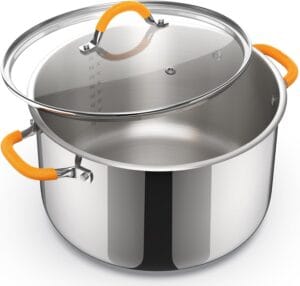
- Soup pot: To hold the pork hock, daikon, peppercorns, and water while they simmer.
- Chef’s knife: To cut the pork hock into 3-inch pieces and the daikon into bite-size cubes.
- Cutting board: To prepare the pork and daikon safely.
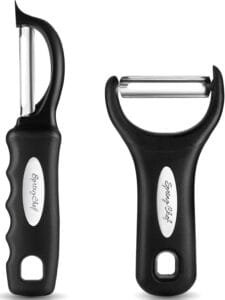
- Vegetable peeler: To remove the daikon skin before cutting it into cubes.
- Measuring cup: To measure the water for the soup.
- Measuring spoons: To measure the salt, sugar, and fish sauce.
- Wooden spoon: To stir the soup and check the pork as it cooks.
- Ladle: To serve the soup and broth into bowls.
How to Make Daikon Soup with Pork Hock
Step 1: Put the pork, daikon, and pepper in the pot
Put the pork hock pieces, daikon cubes, whole black peppercorns, and 6 cups of water into a large soup pot. The water should cover most of the ingredients. Set the pot over medium heat and bring it to a gentle simmer. You do not need a hard boil; small bubbles rising steadily are enough.
Step 2: Simmer until the pork is tender
Let the soup simmer gently until the pork hock is tender. The time depends on the size of the hocks and your pot, so check the meat rather than relying only on the clock. A knife or chopstick should slide into the meat near the bone without much resistance. Keep the pot at a gentle simmer and skim off any foam that rises to the surface.
Step 3: Season the broth
Once the pork is tender, add the salt, sugar, and fish sauce. Stir well and taste. The broth should be savory and slightly rounded, with the daikon’s sweetness coming through. If it needs more salt, add a little more fish sauce rather than salt, and stir again.
Step 4: Finish with herbs and serve
Turn off the heat. Scatter the chopped green onion and cilantro over the soup. Let them sit for a minute so they soften slightly in the hot broth. Ladle the soup into bowls, making sure each serving gets pork, daikon, and plenty of broth.
Cooking Tips
Skim the surface during the first part of cooking. The foam that rises is not harmful, but removing it helps keep the broth clearer.
Keep the heat low enough that the soup bubbles softly. A hard boil can make the pork tough and the broth cloudy. FoodSafety.gov’s safe minimum cooking temperatures
Pork hock is done when the meat pulls away from the bone easily but still holds its shape. If it resists, keep simmering and check again.
Fish sauce brands vary in saltiness. Add it gradually, taste, and adjust. For a tangier pork hock soup with a different vegetable, see our pork hock with pickle mustard green soup.
How to Serve
Serve the soup hot with steamed jasmine rice. A small bowl of extra fish sauce and some sliced fresh chilies on the side let each person season their own bowl. The soup is also good on its own as a light meal, especially on a cool evening. For a deeper, slow-braised pork hock dish, try our braised pork hock with straw mushroom.
Frequently Asked Questions
What does daikon taste like in soup?
Daikon is mild and slightly sweet when cooked. It absorbs the savory broth around it and becomes soft, almost like a tender vegetable dumpling. It does not taste sharp or peppery like small red radishes.
Can I make this soup ahead?
Yes. The soup can be cooled and stored in a sealed container in the refrigerator. Reheat it gently on the stove until steaming hot. The flavor often deepens after a day, and the daikon may soften further.
Is this soup gluten-free?
It can be, but fish sauce brands differ. Some fish sauces contain wheat or other additives. Check the label on your fish sauce if you need a gluten-free soup.
Final Thoughts
Daikon soup with pork hock is a reminder that Cambodian home cooking often gets its depth from patience rather than a long ingredient list. The pork needs only a gentle simmer, and the daikon does the rest. Once you have made it a few times, you will know how tender you like the meat and how strong you want the pepper. Serve it with rice, share it with someone, and keep the leftovers for a day when you want something warm and easy. Daikon also appears in our daikon beef stew recipe if you want another way to cook it, and you can browse more Cambodian soups and stews for similar comforting bowls.
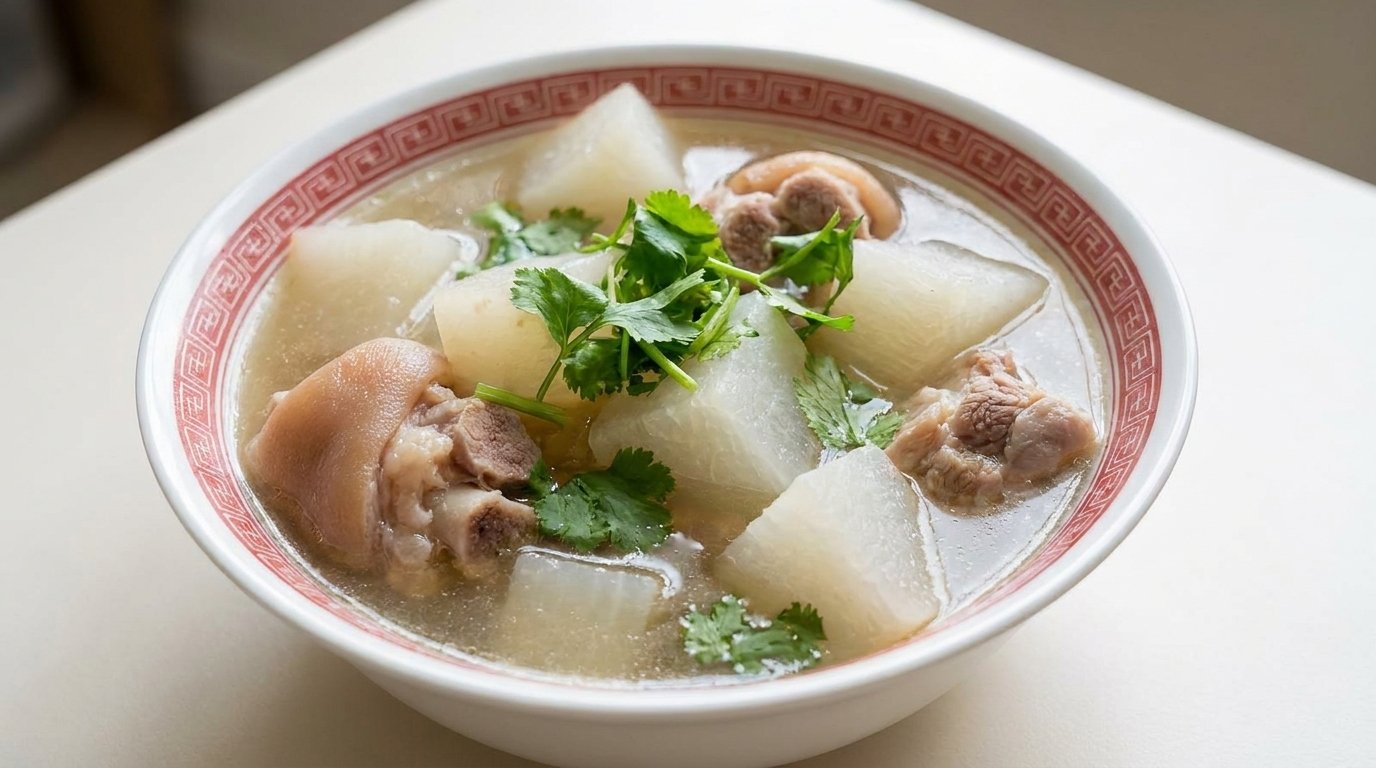
Daikon Soup with Pork Hock
4
servings15
minutes1
hour780
kcal1
hour15
minutesPork hock simmers with daikon and whole black peppercorns until the meat is tender and the radish is soft and sweet. Salt, sugar, and fish sauce season the broth at the end, and green onion and cilantro finish each bowl. Serve it hot with rice.
Ingredients
2 lbs (900 gram) of pork hock, cut in to 3 inches length
1 lb (450 gram) of daikon, peeled and cut bite sizes cubes
1 tablespoon whole black pepper
6 cups water
1/2 teaspoon salt
1 tablespoon sugar
2 tablespoons fish sauce
1 stalk green onion, chopped
A handful of chopped cilantro
Directions
- Put pork hocks , daikon, black pepper and water in a large soup pot and cook till meat tender.
- Seasoning soup with salt, sugar, and fish sauce, stirs well.
- Top with green onion and cilantro.
Equipment
 Large Soup PotCheck product details
 Sharp Kitchen KnifeCheck product details
 Cutting boardCheck product details
 Measuring Spoons & CupsCheck product details
 Vegetable PeelerCheck product details
 Wooden SpoonCheck product details




Recipe Video
Nutrition Facts
- Serving Size: 1 g
- Total number of serves: 4
- Calories: 780kcal
- Fat: 52g
- Saturated Fat: 19.2g
- Cholesterol: 245mg
- Sodium: 1603mg
- Potassium: 1154mg
- Carbohydrates: 9.8g
- Net Carbs: 7.3g
- Fiber: 2.5g
- Sugar: 6.2g
- Protein: 64.2g
- Vitamin A: 5.6mcg
- Vitamin C: 25.6mg
- Calcium: 104mg
- Iron: 4mg
- Vitamin K: 13.7mcg
- Niacin: 0.5mg
- Vitamin B6: 0.1mg
- Folate: 39.1mcg
- Pantothenic Acid: 0.2mg
- Phosphorus: 32mg
- Magnesium: 42mg
- Selenium: 1.8mcg
- Copper: 0.2mg
- Manganese: 0.4mg
Did you make this recipe?
Tag @cambodiarecipe on Instagram and hashtag it
Like this recipe?
Follow us @cambodiarecipe on Pinterest
Did you make this recipe?
Follow us on Facebook