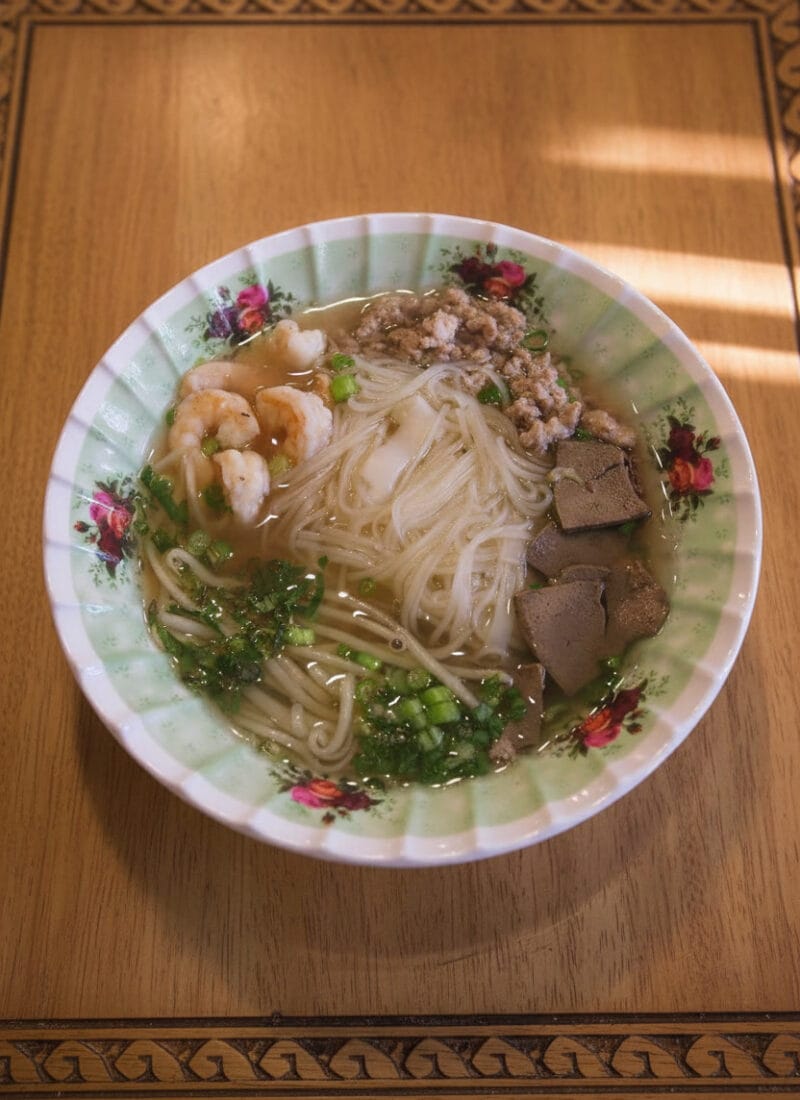
Some recipes stay with you for life. This Cambodian Phnom Penh Noodle Soup is one of those dishes for me. I don’t remember the first time I ate it, because it feels like it has always been there. Morning streets in Phnom Penh, steam rising from metal pots, the sound of noodles being shaken in a strainer, and that deep pork broth smell floating through the air.
This soup is called Keiv Teav Phnom Penh, and in Cambodia it is more than breakfast. It is comfort. It is routine. It is something you eat quietly before the day gets loud.
This is not a fast recipe. It takes time. But it is gentle work. The kind of cooking where you don’t rush, where you let the pot do most of the talking. I’ll explain everything slowly, step by step, like I would if you were standing next to me in the kitchen.
If this is your first time making Cambodian Phnom Penh Noodle Soup, don’t worry. I’ll walk you through it.
Why This Soup Is So Special
This soup is clear, but the flavor is deep. That’s what surprises people the most. You look at it and think it will be light. Then you taste it, and it feels rich and comforting.
I love this soup because it’s customizable. Everyone eats it a little differently. Some like more garlic oil. Some add extra pepper. Some squeeze a lot of lime. There’s no wrong way.
It’s also a soup that brings people together. The broth is shared. The toppings are shared. Everyone builds their own bowl, slowly, happily.
And honestly, once you make this broth at home, you’ll understand why Cambodians wake up early just to eat it.
My Personal Memory With This Soup
When I was younger, this soup meant early mornings. Someone would wake up before the sun. Bones would already be simmering when the house was still quiet. The smell would slowly pull everyone out of bed.
I remember watching adults taste the broth, adjusting salt and sugar little by little. No measuring cups. Just experience. Just feeling.
Now, when I make it myself, I feel calm. Even if life feels busy, this soup forces me to slow down. The broth needs time. You can’t rush it. And somehow, while waiting, your mind also rests.
This recipe is how I keep those memories alive.
Ingredients You Can Actually Find
I know some people worry about Cambodian recipes because they think the ingredients are hard to find. But this one is easier than it looks.
Most of the ingredients are simple: pork bones, onion, garlic, daikon. Dried shrimp and dried squid might be new for you, but many Asian markets carry them, and they last a long time in your pantry.
If you can’t find something, don’t panic. I’ll share simple swaps later.
Ingredients for the Broth
- 5 lbs pork bones
- 2 lbs pork shoulder, pork butt, or pork loin
- 2 onions, cut in half and grilled until brown
- 1 small daikon radish, cut into large pieces
- 1/2 cup dried shrimp, soaked and washed
- 4 small dried squid, soaked, washed, and cut
- 2 pieces rock sugar or 1/4 cup white sugar
- 7 garlic cloves, smashed
- 5 star anise
- 1 teaspoon black or white peppercorn
- 1–2 tablespoons salt
- 1/4 cup fish sauce
- 20 cups water
Meat and Toppings for Serving
- Cooked pork shoulder, thinly sliced
- Cooked pork liver, thinly sliced
- Cooked ground pork
- Cooked shrimp
- Quail eggs, boiled and peeled
Fresh Garnishes
- Bean sprouts
- Green onions
- Saw tooth coriander (Jee Bunlar)
- Cilantro
- Lime wedges
- Romaine lettuce, cut bite-size
Flavor Sauces and Oils
- Fried garlic and shallot oil
- Sriracha chili sauce
- Hoisin sauce
- Black pepper
Why Each Ingredient Matters
- Pork bones give the broth body and depth
- Pork shoulder adds natural sweetness
- Dried shrimp and squid bring umami and aroma
- Daikon softens the broth and balances richness
- Grilled onion adds smoky sweetness
- Rock sugar smooths the salty flavors
- Fish sauce gives authentic Cambodian taste
Equipment You’ll Need
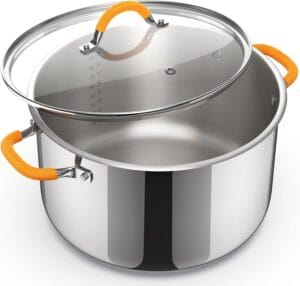
- Large soup pot – for long, gentle simmering
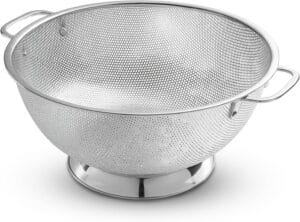
- Strainer – to keep the broth clear
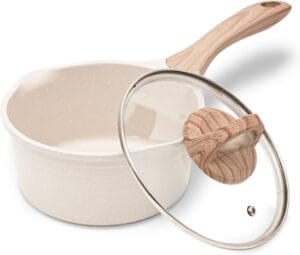
- Small pot – for cooking noodles
- Tongs or ladle – for serving
How the Broth Comes Together
First, you clean the bones. This step matters. Parboiling removes impurities and keeps the broth clear.
Then everything goes into the pot. When it starts simmering, the kitchen fills with a soft, meaty smell. Not heavy. Just warm.
The key is patience. Low heat. Small bubbles. Let time do the work.
Step-by-Step Directions
- Bring a pot of water to boil. Add pork bones and boil 5 minutes. Drain and rinse.
- Clean the pot. Add 20 cups of fresh water and bring to a boil.
- Add bones, pork shoulder, grilled onions, garlic, daikon, dried shrimp, dried squid, star anise, peppercorn, sugar, salt, and fish sauce.
- Boil 20 minutes, then lower heat and simmer 1½–2 hours.
- Remove pork shoulder early so it stays tender.
- Strain the broth. Return clear broth to the pot.
- Prepare noodles only when ready to eat.
- Assemble bowls with noodles, meats, and broth.
- Garnish and season to taste.
Tips for the Best Flavor
- Simmer gently, never hard boil
- Taste the broth often
- Add sugar slowly, not all at once
- Don’t overcook the pork shoulder
Variations You Can Try
- Chicken bones instead of pork
- No dried squid if unavailable
- Rice noodles or egg noodles
- Less sugar for lighter taste
How to Serve It
- Serve hot with fresh herbs
- Let everyone season their own bowl
- Pair with iced tea or hot tea
Storing Leftovers
- Store broth separately in fridge
- Keeps up to 3 days
- Reheat gently, never boil hard
Final Thoughts From My Kitchen
This Cambodian Phnom Penh Noodle Soup is not just food. It’s memory. It’s patience. It’s a quiet morning in a busy world.
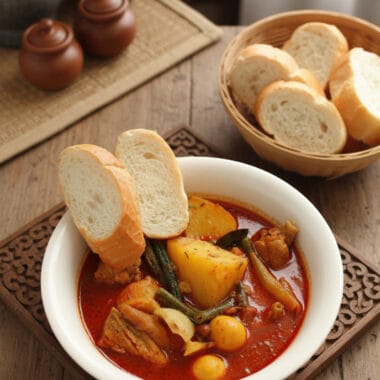
If you enjoyed this, you might also like my Khmer red chicken curry or Cambodian Chicken Wings on the blog. For more cultural background, I love this article from Saveur Magazine that talks about Southeast Asian breakfast soups.
Thank you for cooking with me today. I hope this soup brings warmth to your table, the way it always has to mine.
Frequently Asked Questions
Q: Can I make the broth ahead of time?
A: Yes, it tastes even better the next day.
Q: Is this soup spicy?
A: No, spice is added at the table.
Q: Can I freeze the broth?
A: Yes, freeze for up to 2 days.
Q: What noodles are best?
A: Phnom Penh noodles or rice noodles.
Q: Can I skip liver?
A: Absolutely.
Q: Why is my broth cloudy?
A: Bones were not parboiled or boiled too hard.
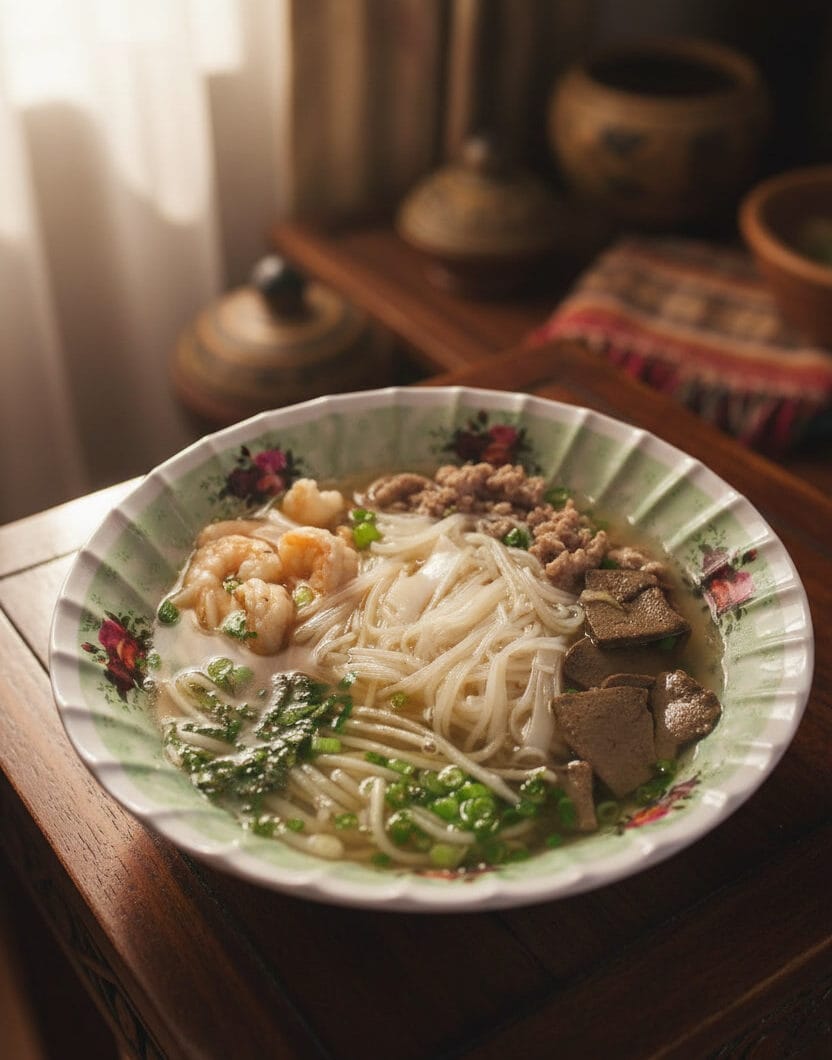
Cambodian Phnom Penh Noodle Soup
6
servings1
hour2
hours520
kcal3
hoursA clear yet deeply flavorful Cambodian noodle soup made with pork bones, dried seafood, fresh herbs, and rice noodles, perfect for a comforting homemade meal.
For the broth you need the following ingredients
5 lbs 5 pork bone any bone will do
2 lbs 2 pork shoulder or pork butt or loin
2 2 onions cut in half and grill until it turns brown in color
1 small 1 daikon radish cut to big bite size set aside
1/2 cup 1/2 dried shrimps soaks wash set aside
4 small 4 dried squid’s soaks wash and cut to bit size set aside
2 piece 2 rock sugar or ¼ cup of white sugar
7 cloves 7 garlic smash
5 5 star Anise
1 teaspoon 1 black or white pepper corn
1 1 to 2 tablespoon of salt
1/4 cup 1/4 fish sauce
20 cups 20 water
- For the meat
Cooked Pork shoulder sliced thin
Cooked Pork liver sliced thin
Cooked ground pork
Cooked shrimps
Quail eggs (make sure you put it in hot boiling for water or hot soup broth for a minute or so)
Set all the meat aside ready to serve
- To garnish the noodle bowl
Bean sprouts
Green onion
Saw tooth coriander (Jee Bunlar)
Cilantro
Lime wedges
Roman lettuce cut to bite size
- For the flavor sauce and Garlic shallots oil
Minced Fry shallots and garlic’s with oil set aside (you need to have it ready before hand)
Sriracha hot chili sauce
Hoisin sauce
Black pepper
Directions
- You have to parboil the bone wash and clean. In a big soup pot bring enough water to boil then add pork bone. Boil for 5 minutes on high heat then drain and wash the bone set aside, this will keep the broth clear, clean the pot.
- Now put 20 cups of water in the soup pot and turn the heat on high until the water is boiling then add the bone, pork shoulder and the rest of the ingredients into the boiling pot. Cook for 20 minutes on medium high heat then reduce the heat to low or simmer for 1 ½ hours to 2 hours. Do adjust everything to your taste bud. (Make sure you take out the pork shoulder ahead of time if you cook it too long the meat will be very tuff to chew on)
- When the soup is done take the bone out sliced any meat your want off the bone. Drain the broth and discharge everything else, put the clear broth back in the pot and set aside until ready to serve.
- For the noodle you can use fresh or dried Phnom Penh noodle if you use dried noodle make sure you soaked wash and drain the water then cook in hot boiling water for a minute or so. For Fresh noodle I also soak it for about 5 minutes in warm water so it cooks fast in boiling water. Do use strainer with handle to cook the noodle in hot boiling water. (Don’t cook it until you ready to eat or else the noodle will stick together.
Equipment
 Large Soup PotBuy on Amazon
 StrainerBuy on Amazon
 LadleBuy on Amazon
- LadleBuy on Amazon
 Small potBuy on Amazon

Recipe Video
Recipe Notes
- Always strain the broth
- Slice meat thin
- Cook noodles fresh
- Adjust seasoning slowly
- Use fresh herbs
- Taste before serving
Nutrition Facts
- Serving Size: 1
- Total number of serves: 4
- Calories: 350kcal
- Fat: 10g
- Saturated Fat: 2g
- Trans Fat: 0g
- Polyunsaturated Fat: 3g
- Monounsaturated Fat: 4g
- Cholesterol: 60mg
- Sodium: 950mg
- Potassium: 250mg
- Carbohydrates: 50g
- Fiber: 3g
- Sugar: 6g
- Protein: 20g
- Vitamin A: 10IU
- Vitamin C: 15mg
- Calcium: 8mg
- Iron: 15mg
- Vitamin D: 0mg
- Vitamin E: 1mg
- Vitamin K: 5mg
- Thiamin: 0.3mg
- Riboflavin: 0.2mg
- Niacin: 5mg
- Vitamin B6: 0.4mg
- Vitamin B12: 0.9mg
- Folate: 20mg
- Biotin: 2mg
- Pantothenic Acid: 1mg
- Phosphorus: 150mg
- Iodine: 20mg
- Magnesium: 30mg
- Zinc: 2mg
- Selenium: 10mg
- Copper: 0.1mg
- Manganese: 0.5mg
- Chromium: 12mg
- Molybdenum: 30mg
- Chloride: 400mg
Did you make this recipe?
Tag @cambodiarecipe on Instagram and hashtag it
Like this recipe?
Follow us @cambodiarecipe on Pinterest
Did you make this recipe?
Follow us on Facebook
Related Recipe: Khmer Red Chicken Curry