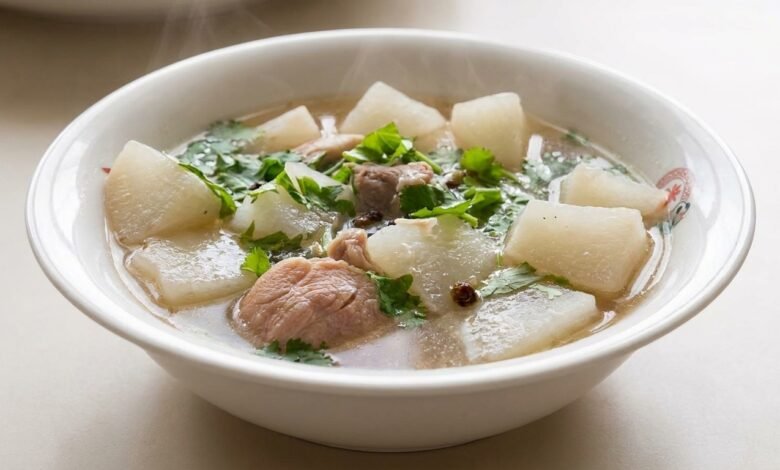
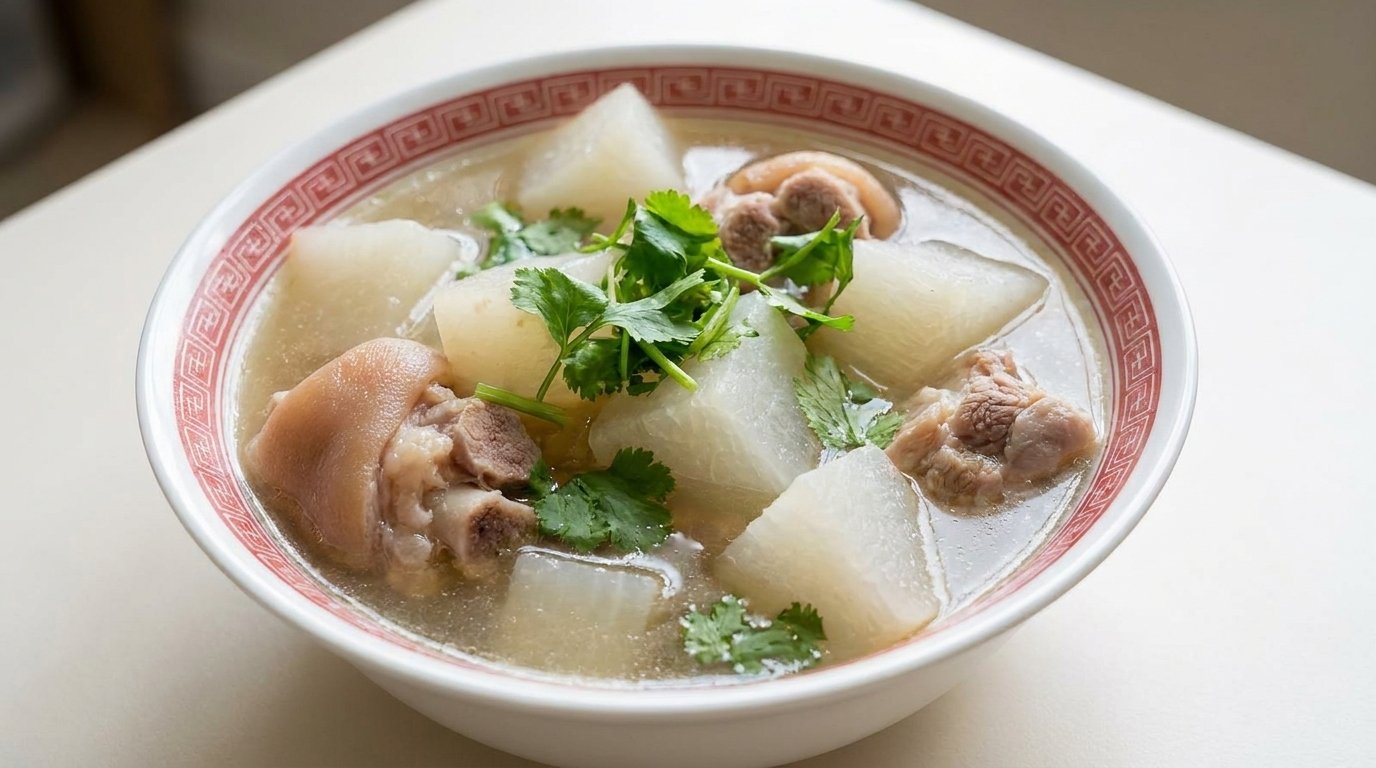
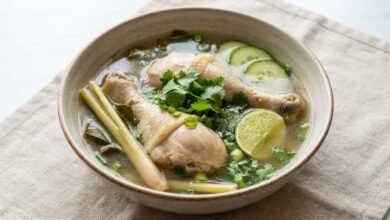
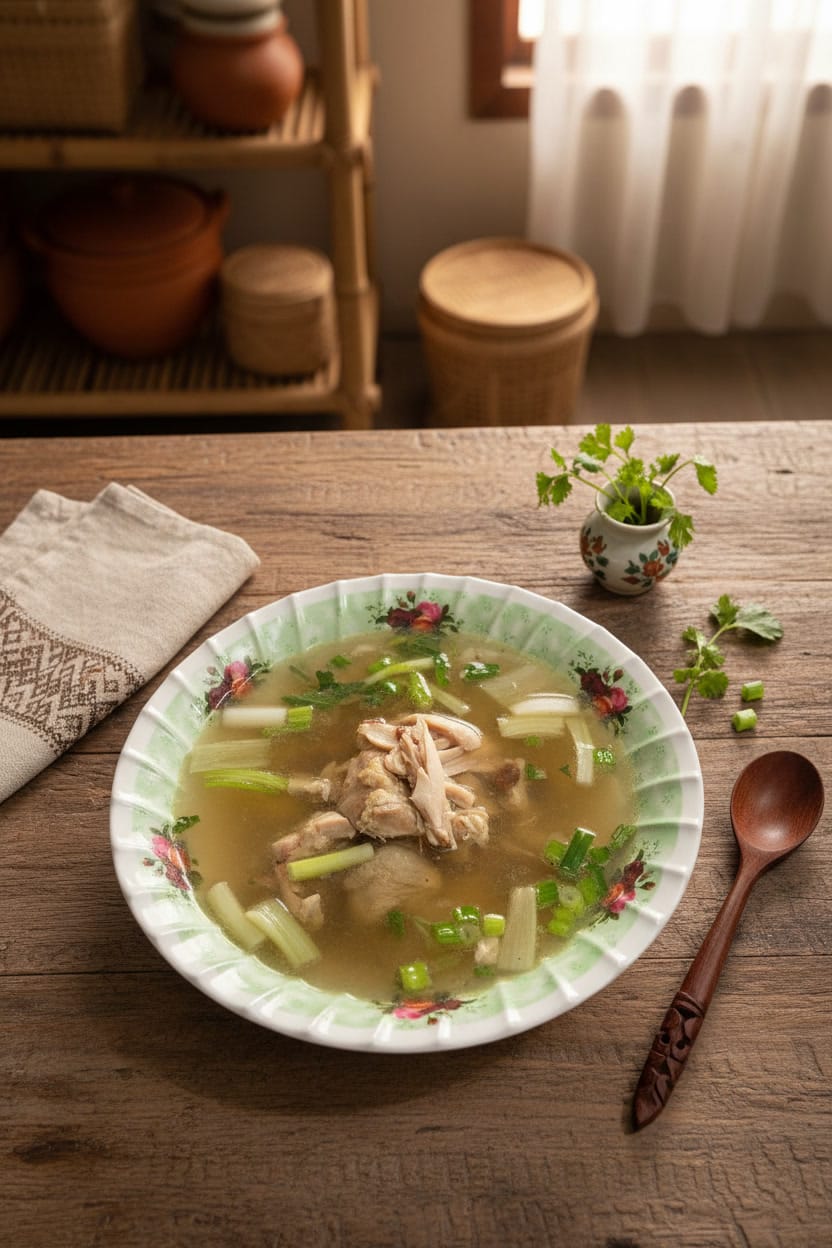
There are some meals that just feel like home the moment you take that first spoonful. This daikon soup with pork hock is exactly that kind of dish for me. It’s the kind of soup my grandmother would have simmering on the stove when I walked into her kitchen after school, the smell wrapping around me like a warm hug before I even made it through the door.
If you’ve never cooked with daikon before, or if pork hock seems a little intimidating, please don’t worry. I remember being exactly where you might be right now, staring at a vegetable that looked like an oversized white carrot and wondering what on earth I was supposed to do with it. This recipe is truly forgiving and simple, and I promise you can make it even if you’re just starting out in the kitchen.
What I love most about this soup is how something so simple can taste so deeply satisfying. The pork hock becomes incredibly tender as it cooks slowly, and the daikon soaks up all the lovely flavors from the broth while adding its own gentle sweetness. It’s the kind of meal that doesn’t rush you, that asks you to sit down with a bowl and just be present for a while.
Why You’ll Love This Soup
This isn’t one of those complicated recipes with a million steps and hard-to-find ingredients. You can literally put everything in one pot and let it do its thing while you go about your day. The stove does most of the work for you, which I think is the best kind of cooking.
The flavors are gentle and comforting without being boring. The pork makes the broth rich and satisfying, while the daikon adds this lovely mild sweetness that just works perfectly with the savory notes from the fish sauce. It’s the kind of soup that makes you feel good from the inside out.
Cambodian families have been making this soup for generations because it’s affordable, filling, and nourishing. A little bit of pork goes a long way here, and daikon is almost always very cheap at the market. When you’re feeding a family on a budget, recipes like this become absolute treasures.
And honestly? There’s something so satisfying about watching a tough cut of meat transform into something so tender and delicious. It feels like a small miracle every time.
My Personal Experience
I learned this recipe from my grandmother when I was maybe ten years old. Back then, I was more interested in running around outside than learning to cook, but she had this gentle way of teaching that made me want to stay in the kitchen with her. I remember sitting on a little wooden stool watching her peel daikon, the white strips falling in long curls onto the cutting board.
She never measured anything, of course. A pinch of this, a splash of that, a handful of something else. When I asked her how much fish sauce to add, she would say “enough” and smile. It took me years to understand what “enough” meant, and even now I sometimes have to taste and adjust. Cooking like that teaches you to trust yourself, to pay attention, to use your senses instead of just following rules.
The first time I made this soup on my own, I was in my tiny apartment far away from home. I missed my family so much that it hurt, and I needed something that would make my kitchen feel like my grandmother’s kitchen. I called her three times during that first attempt, asking questions she had already answered a hundred times. She never once got impatient with me.
When I finally sat down with that bowl of soup, the broth was a little too salty and the pork wasn’t quite as tender as hers, but you know what? It still tasted like home. It still made me feel connected to her and to Cambodia and to all the women in my family who had made this same soup for generations before me. That’s what food does, I think. It carries us across time and distance.
Now I make this soup whenever I need comfort, or when someone I love isn’t feeling well, or just on a cool rainy day when a warm bowl of something feels exactly right. My own children are starting to show interest in learning, and I try to be as patient with them as my grandmother was with me.
Easy-to-Find Ingredients
This is one of those recipes where you won’t have to hunt all over town for strange ingredients. The pork hock might be the thing you’re least familiar with, but it’s actually very common. Most grocery stores carry it, and if you have an Asian market near you, they’ll definitely have it. You can also ask your butcher, they’ll know exactly what you mean.
Daikon used to be harder to find outside of Asian grocery stores, but these days I see it in regular supermarkets all the time. It’s usually in the produce section near the other root vegetables, looking like a really enthusiastic white carrot. If you can’t find it for some reason, I’ll share some substitutions later, but I really hope you can find the real thing because it’s special.
Everything else is probably already in your kitchen. Black peppercorns, salt, sugar, fish sauce, green onions, cilantro. That’s it. Simple everyday things that come together to make something beautiful.
Ingredients List
- 2 pounds (about 900 grams) pork hock, cut into 3-inch pieces
- 1 pound (450 grams) daikon radish, peeled and cut into bite-sized cubes
- 1 tablespoon whole black peppercorns
- 6 cups water
- 1/2 teaspoon salt
- 1 tablespoon sugar
- 2 tablespoons fish sauce
- 1 stalk green onion, chopped
- A handful of fresh cilantro, chopped
Why These Ingredients Are Used
- Pork hock: This cut has lots of collagen and connective tissue that breaks down during cooking, making the broth rich and silky while the meat becomes incredibly tender. It’s also affordable, which is a nice bonus.
- Daikon radish: Adds a mild, slightly sweet flavor that’s gentler than regular radishes. It soaks up the pork broth beautifully and becomes soft and almost creamy when fully cooked.
- Whole black peppercorns: Infuse the broth with gentle warmth without making it spicy. The whole peppercorns release their flavor slowly as they simmer, creating depth you can’t get from ground pepper.
- Water: Simple and pure, lets all the other ingredients shine without competing with them.
- Salt: Enhances all the natural flavors in the soup. Start with less, you can always add more at the end.
- Sugar: Just a touch balances the savory and salty elements and brings out the natural sweetness in the daikon.
- Fish sauce: This is what gives the soup that authentic Cambodian flavor. It adds depth and umami that salt alone can’t achieve. Don’t skip it, and don’t be scared of the smell, it magically transforms as it cooks.
- Green onion and cilantro: Fresh herbs at the end add brightness and color, making the soup feel alive and finished.
Cooking Equipment Needed
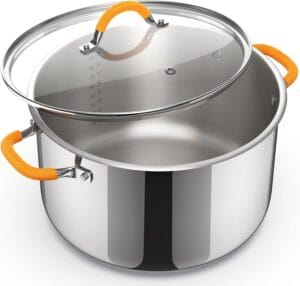
- Large soup pot or Dutch oven: You need something big enough to hold all the ingredients with room for the liquid to simmer. A 5 or 6 quart pot works perfectly.
- Sharp knife: For cutting the pork hock and vegetables. A dull knife is actually more dangerous than a sharp one because it can slip.
- Cutting board: Give yourself plenty of space to work. I like having one board for meat and another for vegetables.
- Measuring cups and spoons: Helpful for getting the proportions right, especially if you’re new to this recipe.
- Wooden spoon: For stirring and tasting. Wood won’t scratch your pot and feels nice in your hand.
- Small bowl: For holding your chopped herbs until you’re ready to use them.
- Ladle: Makes serving the soup much easier and less messy.
Cooking Instructions
Before you start anything, take a moment to get all your ingredients ready. This is what cooks call mise en place, though my grandmother just called it being prepared. Wash your vegetables, get your pot out, have everything within reach. It makes the actual cooking so much more relaxing.
The pork hock might need a rinse under cool water. Pat it dry with paper towels afterward. If your pieces are larger than about three inches, you might want to cut them smaller so they cook more evenly. Don’t worry about being perfect, rough is fine, this is home cooking, not a cooking competition.
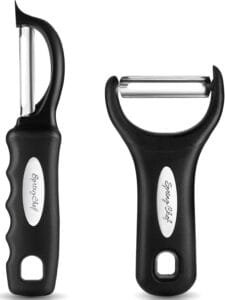
For the daikon, peel off the outer skin with a vegetable peeler or a small knife. Then cut it into cubes大概 an inch or so big. They don’t have to be exactly the same size, but try to keep them somewhat consistent so they cook at the same rate.
Now you’re ready to start cooking. Put the pork hock pieces, daikon cubes, whole black peppercorns, and water into your large pot. It might look like a lot of water, but trust the process. Turn the heat to high and bring everything to a boil.
Once it’s boiling, you’ll probably see some foam and impurities rise to the surface. You can skim this off with a spoon if you want a clearer broth. It’s not strictly necessary, but it does make the soup look prettier. My grandmother always did it, so I do it too out of habit and respect.
Now reduce the heat to low, put a lid on the pot, and let it simmer. This is the part where you get to relax for a while. Let it cook for about an hour and a half to two hours. You’ll know it’s done when the pork is so tender it’s almost falling off the bone and you can easily pierce the daikon with a fork.
When the meat is tender, it’s time to season. Add the salt, sugar, and fish sauce. Stir everything gently and let it simmer for another five to ten minutes so the flavors can meld together. Taste the broth and adjust if needed. Maybe it needs a tiny bit more salt, maybe another splash of fish sauce. Trust your taste buds.
Right before you’re ready to serve, turn off the heat and sprinkle the chopped green onion and cilantro over the top. The residual heat will wilt them just enough without cooking away their freshness.
Step-by-Step Directions
- Rinse the pork hock pieces under cool water and pat them dry with paper towels.
- Peel the daikon radish and cut it into bite-sized cubes, roughly 1 inch in size.
- Place the pork hock, daikon cubes, whole black peppercorns, and 6 cups of water into a large soup pot.
- Bring everything to a boil over high heat, then reduce the heat to low and cover the pot with a lid.
- Let the soup simmer gently for 1.5 to 2 hours, until the pork is very tender and the daikon is soft.
- Add the salt, sugar, and fish sauce to the pot. Stir well and let it simmer for another 5 to 10 minutes.
- Taste the broth and adjust the seasoning if needed. Everyone’s taste is different, so trust yourself here.
- Turn off the heat and sprinkle the chopped green onion and cilantro over the soup.
- Serve hot in bowls, preferably with steamed rice on the side.
Tips for Best Flavor
- Don’t rush the simmering. Low and slow is what makes the pork hock tender and the broth rich. If you boil it too hard, the meat can become tough and the broth will be cloudy.
- Skim the foam if you want. It won’t hurt anything if you leave it, but removing it gives you a clearer, cleaner-looking broth.
- Use good fish sauce. This is one of those ingredients where quality really matters. Look for a brand that lists just anchovies and salt as ingredients, no additives or sugar.
- Taste as you go. Recipes are just guidelines. Your soup should taste good to you, so adjust the seasoning until it does.
- Add the fresh herbs at the end. If you put them in too early, they’ll lose their bright color and fresh flavor.
- Let it rest off the heat for a few minutes before serving. This lets the flavors settle and come together.
Variations and Adaptations
- Can’t find daikon? Try using regular radishes for a spicier kick, or turnips for a similar mild sweetness. Even carrots can work in a pinch.
- Want more vegetables? Add some chunks of carrot along with the daikon, or throw in some napa cabbage during the last 15 minutes of cooking.
- Different protein options? Pork hock is traditional, but pork ribs work beautifully too. You could even use chicken thighs, just reduce the cooking time since chicken cooks faster.
- Make it spicy? Add a fresh chili or two along with the other ingredients, or serve with sliced fresh chilies and extra fish sauce on the side.
- Low-sodium version? Use less fish sauce and salt, and add more fresh herbs for flavor. You can also offer extra fish sauce at the table so everyone can season their own bowl.
- Garlic lovers? Add a few whole cloves of garlic along with the peppercorns. They’ll become soft and sweet as they cook.
Serving Suggestions
- Serve the soup hot in deep bowls with plenty of broth, meat, and daikon in each serving.
- Steamed jasmine rice is essential. Cambodians almost always eat soup with rice, either mixed in or on the side.
- A small dish of fish sauce with fresh chili slices makes a great dipping sauce for the pork.
- Fresh cucumber slices on the side add a nice cool crunch.
- This soup is perfect on its own as a light meal, or as part of a larger spread with other Cambodian dishes.
- A squeeze of fresh lime juice over each bowl right before eating brightens everything up beautifully.
Storing Leftovers
- Let the soup cool completely before storing. Don’t leave it out at room temperature for more than two hours.
- Store in airtight containers in the refrigerator for up to 4 days. The flavor often gets even better on the second day.
- You can freeze this soup for up to 3 months. The daikon might get a little softer after freezing, but it will still taste delicious.
- To reheat, warm gently on the stovetop over medium-low heat until hot throughout. Add a splash of water if the broth has thickened too much.
- If you’re reheating just one serving, the microwave works fine. Cover the bowl to prevent splattering.
- Always bring leftovers to a full boil if you’re planning to serve them again, just to be safe.
Final Thoughts
This daikon soup with pork hock is more than just a recipe to me. It’s a connection to my grandmother’s kitchen, to long afternoons spent watching her cook and listening to her stories. It’s the taste of home, of family, of love expressed through food. Every time I make it, I feel her there with me, nodding approvingly when I get the seasoning just right.
I hope this soup becomes something meaningful in your kitchen too. Maybe not in exactly the same way, but in your own way. Maybe it will be the dish you make when you need comfort, or the recipe you teach someone you love, or simply a new flavor to add to your regular rotation. Food is personal like that, it means different things to different people, and that’s exactly how it should be.
If you make this soup, I’d love to hear how it turns out. Did you add your own twist? Did it remind you of something from your own childhood? Did your family ask for seconds? Those are the moments that make cooking worthwhile, when food brings people together and creates new memories.
For more comforting Cambodian soups, you might also enjoy this simple Cambodian Chicken Soup or this Pork and Pickled Mustard Greens Soup. Both are family favorites that I think you’ll love. And if you want to learn more about daikon and its many uses, this guide from The Woks of Life has some wonderful information.
Thank you for spending time in my kitchen today. I hope you feel welcome here anytime. Now go make some soup, and don’t forget to taste as you go. Trust yourself. You’ve got this.
Take care, and happy cooking.
Frequently Asked Questions (FAQs)
Q: Can I use ground black pepper instead of whole peppercorns?
A: You can, but the flavor will be different. Whole peppercorns infuse the broth gently as they simmer, while ground pepper can become harsh and bitter with long cooking. If you only have ground, add it toward the end of cooking instead of at the beginning.
Q: How do I know when the pork hock is fully cooked?
A: The meat should be very tender and practically falling off the bone. If you poke it with a fork, it should shred easily. This usually takes about 1.5 to 2 hours of gentle simmering.
Q: Can I make this soup in a slow cooker or Instant Pot?
A: Absolutely. For slow cooker, cook on low for 6-8 hours or high for 4-5 hours. For Instant Pot, cook on high pressure for 45 minutes with natural release. Add the fresh herbs at the end either way.
Q: Is there a vegetarian version of this soup?
A: Yes! Use hearty mushrooms like shiitake or king oyster instead of pork, and use vegetable broth instead of water. Add a splash of soy sauce or vegetarian stir-fry sauce to replace the fish sauce depth.
Q: My soup tastes bland. What did I do wrong?
A: It probably just needs more seasoning. Try adding a little more fish sauce or salt. Sometimes soups need more salt than you expect because the large amount of water dilutes everything. Taste and adjust gradually until it tastes right to you.
Q: Can I use frozen daikon?
A: Fresh is best for texture, but frozen daikon will work in a pinch. Add it frozen directly to the pot without thawing first. Keep in mind it might be softer than fresh when cooked.
Q: Why is my broth cloudy?
A: Cloudy broth usually comes from boiling too vigorously. Next time, keep it at a gentle simmer, just a few small bubbles rising, not a rolling boil. Skimming the foam early on also helps.
Q: How do I cut pork hock if it comes in one large piece?
A: Use a sharp knife and cut between the bones to separate it into smaller sections. A heavy cleaver works well if you have one. If you’re not comfortable doing this, ask your butcher to cut it for you when you buy it.