Grounded Pork Stuffed Cabbage Soup
There are some meals that just wrap themselves around you like a warm blanket. This ground pork stuffed cabbage soup is exactly that kind of dish for my family. It’s the meal I turn to when I want something nourishing, when I miss home, or when I just need to feed my family something real and satisfying without a lot of fuss.
I still remember watching my grandmother make this in her little kitchen outside Battambang. She would sit on a low stool with a big bowl of cabbage leaves in her lap, her hands moving so quickly, tying each little bundle with a strip of green onion. She never measured anything. She just knew. And somehow, every single time, it was perfect.
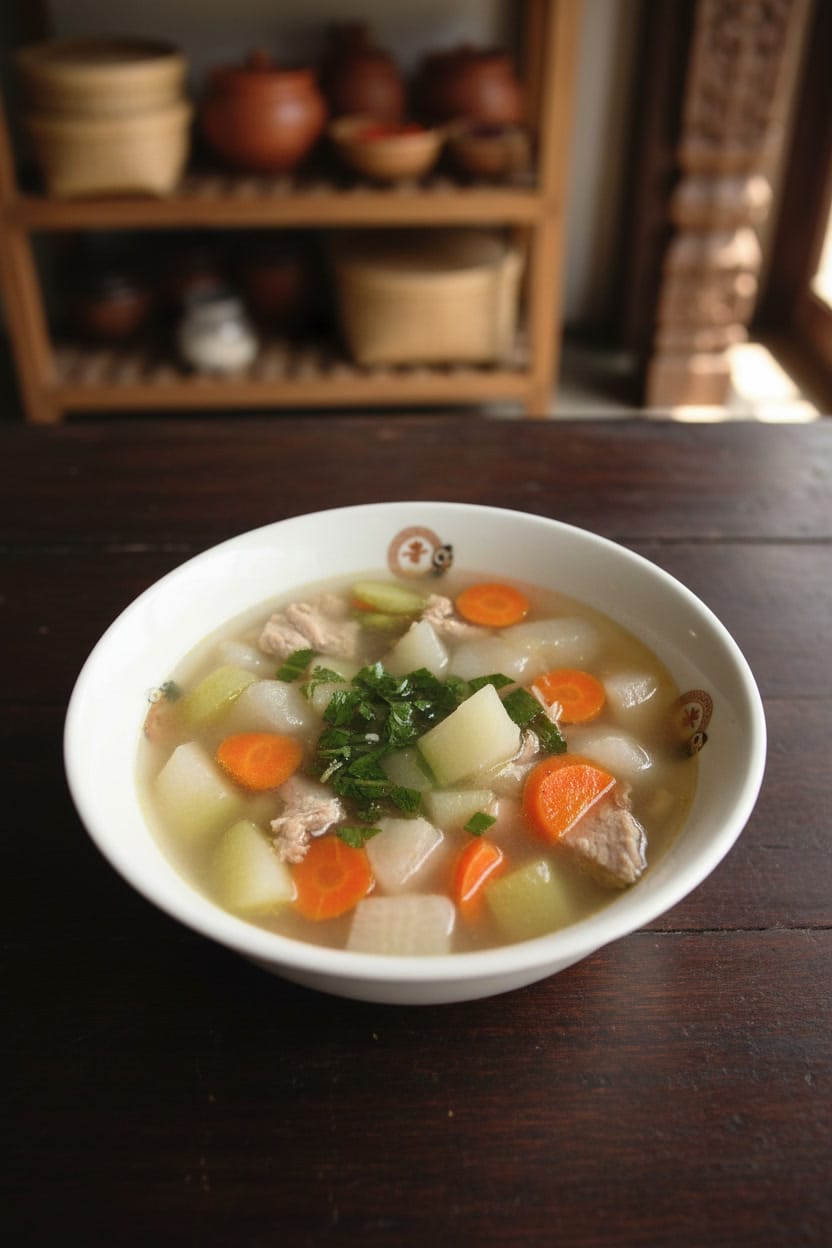
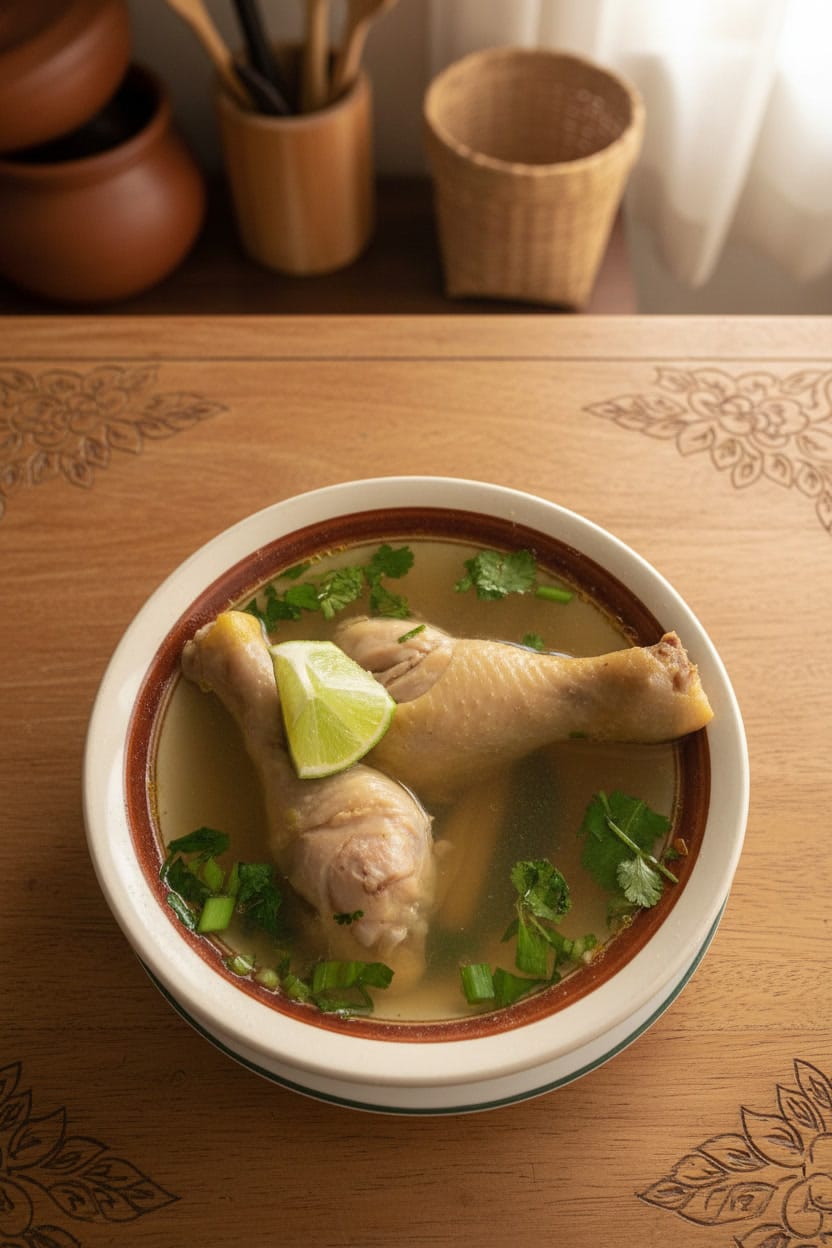
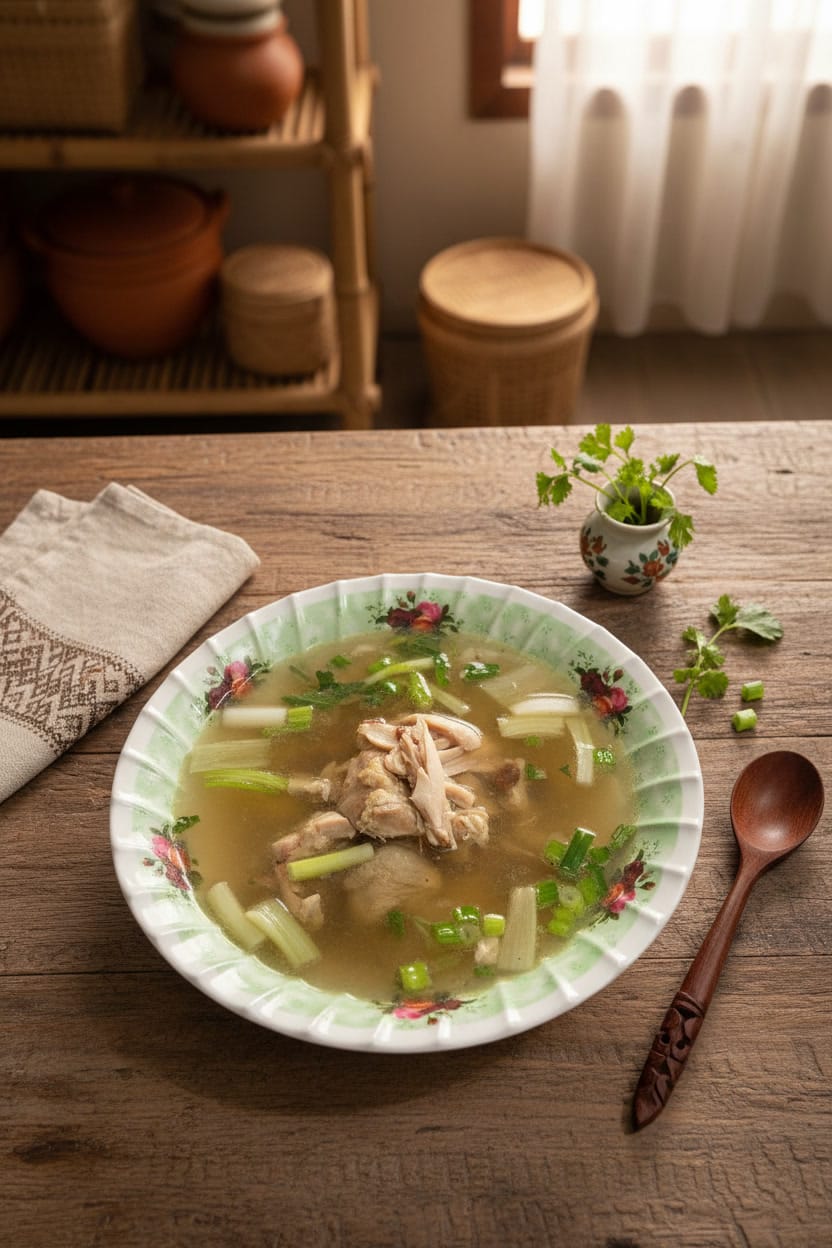
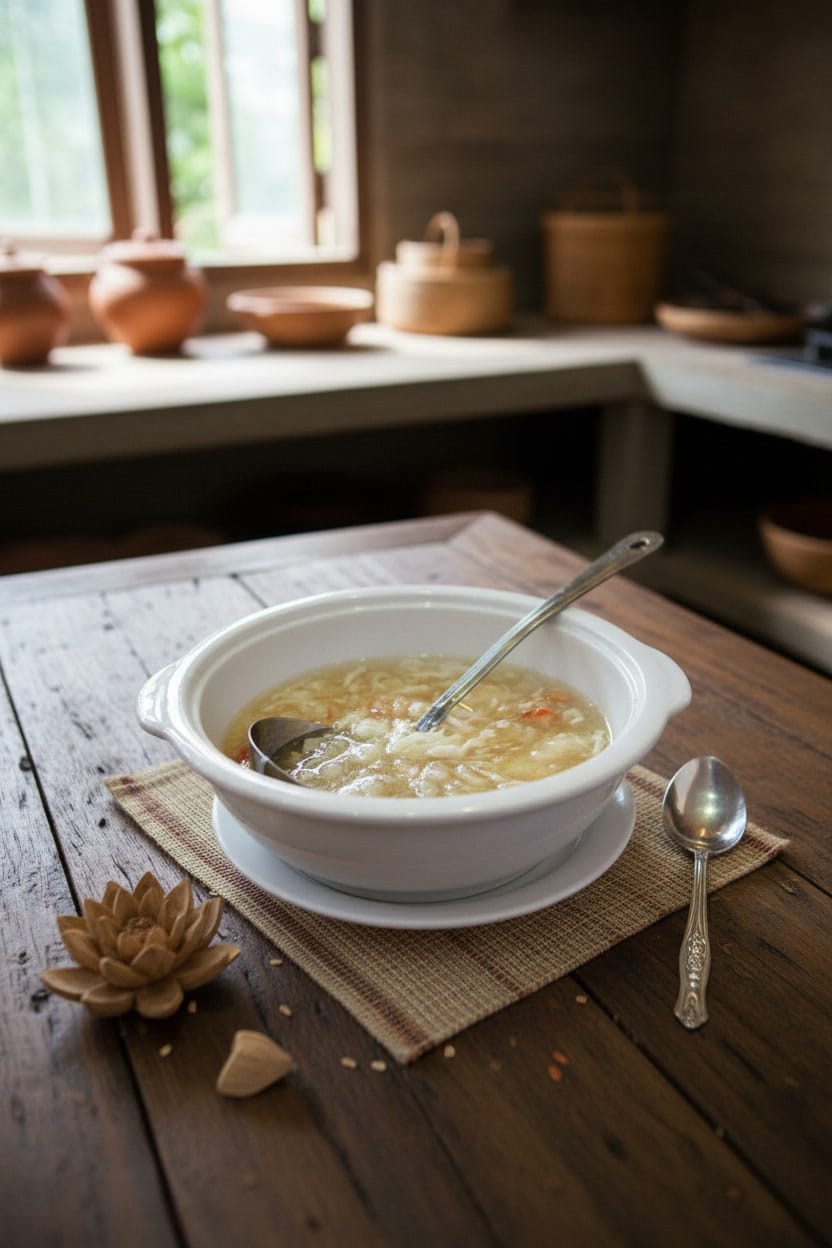
This soup is what we call “samlar mian” in Khmer, and it’s one of those dishes that shows up at family gatherings, during the cool rainy season, or whenever someone needs a little extra love. The cabbage leaves get tender from simmering, the pork filling stays juicy and flavorful, and the broth becomes this light, comforting liquid that you’ll want to drink right from the bowl.
If you’ve never made stuffed cabbage before, please don’t let it intimidate you. This is truly beginner-friendly cooking. We’re not aiming for perfect little packages that look like they came from a restaurant. We’re making food that tastes like someone cooked it with love in their own kitchen. The kind of food that makes people close their eyes when they take that first bite.
So come cook with me today. Let’s make something beautiful together.
Why You’ll Love This Soup
This isn’t one of those complicated recipes that leaves you with a mountain of dishes and a headache. It’s simple, honest food that comes together with basic ingredients you can find anywhere.
The cabbage gets soft and sweet as it simmers, almost melting in your mouth. The pork stays tender and juicy because we add bean thread noodles to the filling, which keeps everything moist. And the broth? It’s light and clear, with just a hint of black pepper and fish sauce that makes it deeply satisfying without being heavy.
You’ll love how forgiving this recipe is. If your cabbage leaves tear a little, it’s okay. If your rolls look a bit messy, that’s fine too. This isn’t food that needs to be perfect. It just needs to be made with care.
And here’s something wonderful about this soup – it fills your whole house with the most gentle, comforting smell. That soft cabbage simmering, the pork releasing its juices into the broth, the warmth of black pepper floating through the air. It smells like coming home.
My Personal Experience
The first time I tried to make this soup by myself, I was maybe nineteen years old, living in a tiny apartment far from my family. I called my mother in a panic because I couldn’t figure out how to get the cabbage leaves off without tearing them into a million pieces. She laughed at me, that gentle laugh that mothers have, and talked me through it step by step.
“You’re not supposed to be perfect,” she said. “Just be patient.”
And she was right. The cabbage leaves that tore? I used two of them together, overlapping the ripped parts. The ones that were too small? I made little half-size rolls that my brother ended up loving because they were like tiny surprises in his bowl. Nothing went to waste, and the soup was absolutely delicious.
That’s the thing about Khmer cooking. It’s practical. It’s resourceful. It’s about making something beautiful from simple ingredients and not worrying so much about perfection.
Now, years later, this soup has become one of my signatures. I make it when friends have babies, when neighbors are feeling under the weather, or just on a lazy Sunday when I want to fill my kitchen with good smells. Every time I tie those little green onion strings around the cabbage bundles, I think about my grandmother’s hands, my mother’s voice on the phone, and all the generations of Khmer women who made this same dish before me.
Easy-to-Find Ingredients
One of the things I love most about this recipe is that you don’t need to hunt down specialty ingredients at some faraway market. Everything here is simple and accessible.
The cabbage is just regular green cabbage – the kind you can get at any grocery store for maybe a dollar or two. You’ll want one that feels heavy for its size and doesn’t have too many loose outer leaves.
For the pork, I use regular ground pork from the store. Nothing fancy. If you want, you could ask the butcher to grind it fresh, but honestly, the packaged stuff works perfectly fine.
The bean thread noodles might be the one ingredient that feels a little unfamiliar if you haven’t cooked with them before. But you can find them in any Asian grocery store, and these days, even many regular supermarkets carry them in the international foods aisle. They’re sometimes called cellophane noodles or glass noodles, and they come in little bundles wrapped in plastic.
Everything else – fish sauce, green onions, black pepper, sugar – these are all pantry staples in my kitchen. If you don’t have fish sauce, I’ll share a substitute later, but I really hope you’ll give it a try. It’s one of those ingredients that makes Khmer food taste like Khmer food.
Ingredients List
For the Cabbage Prep:
- 1/2 large head green cabbage
- 1 bunch green onions (you’ll need the longest leaves for tying)
- Water for boiling
For the Pork Filling:
- 1 pound (450 grams) ground pork
- 1 tablespoon fish sauce
- 1 teaspoon sugar
- 1/4 teaspoon black pepper
- 1 small package (2 ounces or 56 grams) bean thread noodles, soaked in hot water and chopped
- 2 green onions, finely chopped (the white and light green parts)
For the Soup:
- 2 cans (250 grams each) chicken broth
- 2 cups water
- Fish sauce to taste (about 1-2 teaspoons)
- Sugar to taste (about 1/2 teaspoon)
- Salt to taste (about 1/4 teaspoon)
- Extra chopped green onions for garnish
Why These Ingredients Are Used
- Green cabbage – The large, sturdy leaves are perfect for wrapping. As they simmer, they become tender and sweet, almost like they’ve been braised.
- Green onions – We use the long green tops as natural strings to tie the bundles. It’s a beautiful, traditional touch that adds a mild onion flavor and makes the rolls look lovely.
- Ground pork – Pork is traditional in Khmer cooking for dishes like this. It has enough fat to keep the filling moist and flavorful as it simmers.
- Fish sauce – This is our salt and our soul. It adds that deep, savory flavor that makes Khmer food taste authentic. Don’t be afraid of the smell – it cooks away and leaves behind pure umami.
- Sugar – Just a tiny bit to balance the saltiness and bring out the natural sweetness of the pork and cabbage.
- Black pepper – Khmer food often uses more black pepper than you might expect. It adds warmth without heat.
- Bean thread noodles – These are the secret to tender, never-dry meatballs. They absorb juices and keep the filling light and moist.
- Chicken broth – Canned broth is perfectly fine and gives us a head start on flavor. If you have homemade, even better.
- Water – We dilute the broth just enough so the cabbage flavor can shine through.
Cooking Equipment Needed
- Large pot for boiling cabbage – You need something big enough to hold the cabbage leaves with water to cover them. Nothing fancy, just a regular soup pot.
- Large mixing bowl – For combining all the filling ingredients. Any bowl works.
- Cutting board – For laying out cabbage leaves and assembling your rolls.
- Sharp knife – For chopping green onions and trimming cabbage leaves if needed.
- Small bowl of water – Keep this nearby when you’re assembling. Wet fingers help handle the filling without sticking.
- Toothpicks – These are optional but helpful for securing any rolls that want to come undone. Just remember to remove them before serving.
- Soup pot – A separate pot for simmering the finished rolls. Any pot with a lid works.
- Slotted spoon – For gently lowering rolls into the broth and removing them later if needed.
Cooking Instructions
Let’s walk through this together, nice and easy. The first thing we need to do is prepare our cabbage leaves. This is the step that makes people nervous, but I promise it’s simple once you know how.
Take your half head of cabbage and look at how the leaves are attached at the base. You’re going to carefully remove them one by one, trying to keep them as whole as possible. The outer leaves will be biggest and best for wrapping. As you get closer to the center, the leaves get smaller – that’s fine, you can use two smaller leaves together or just make smaller rolls.
Once you have all your leaves separated, you’ll also want to pull off the longest, prettiest leaves from your green onions. These will be our natural strings to tie the bundles. Set them aside with the cabbage.
Now put all those cabbage leaves and green onion leaves into your large pot and cover them with water. Put the lid on and bring it to a boil. This step softens the cabbage just enough so it becomes flexible and easy to roll without cracking. Once the water comes to a boil, let it cook for maybe three to four minutes, then drain everything in a colander and set it aside to cool.
While the cabbage is cooling, let’s make our filling. This is the fun part.
In your large bowl, combine the ground pork, fish sauce, sugar, and black pepper. Now take those soaked bean thread noodles – you soaked them in hot water until soft, right? Good. Give them a rough chop so they’re not in long, stringy pieces, and add them to the bowl. Finally, add your chopped green onions.
Now use your hands to mix everything together. Yes, your hands. This is the best way to make sure everything is evenly combined without overworking the meat. Squeeze it gently through your fingers, fold it over itself, just until everything comes together in a cohesive mixture. Set this aside.
Now we assemble. This is the peaceful, meditative part of cooking.
Take a cabbage leaf and lay it flat on your cutting board with the inside facing up. If there’s a thick, tough part of the stem, you can trim it down a little with your knife to make rolling easier. Spoon some of the pork mixture onto the leaf, about a heaping tablespoon or so, depending on the size of your leaf. You want to place it near the bottom third of the leaf, not in the center.
Now fold the bottom of the leaf up over the filling, then fold the sides in, and roll it up away from you, like you’re wrapping a little package. It should look sort of like a small egg roll or a burrito. Don’t worry if it’s not perfect – the green onion tie will hold everything together.
Take one of your softened green onion leaves and tie it gently around the middle of your cabbage roll. Not too tight or it might cut through the cabbage as it cooks. Just a nice, secure little bow. If you want, you can secure it with a toothpick too, but usually the green onion is enough.
Repeat until all your filling is used up. This recipe should make about 14 rolls, give or take.
Now get your soup pot. Place all your beautiful little cabbage rolls inside, nestling them together. Pour in the chicken broth and the water. They should be mostly covered by liquid – if not, add a little more water.
Put the lid on and bring it to a simmer over medium heat. Once it’s simmering gently, turn the heat down to low and let it cook for about 40 minutes. This long, slow simmer is what makes the cabbage tender and allows all the flavors to meld together.
After 40 minutes, taste the broth. This is where you become the cook. Does it need more salt? Add a little fish sauce. Does it need to be balanced? A tiny pinch of sugar. Everyone’s taste is different, so trust yourself.
Ladle the soup into bowls, making sure each person gets a few rolls and plenty of broth. Sprinkle with fresh chopped green onions and serve immediately with steamed rice on the side.
And please, please remember to remove any toothpicks before you serve. I’ve made that mistake before, and it’s not fun for anyone.
Step-by-Step Directions
- Carefully separate the leaves from half a head of cabbage, trying to keep them as whole as possible. Also pull off the longest leaves from a bunch of green onions and set aside.
- Place cabbage leaves and green onion leaves in a large pot, cover with water, and bring to a boil. Cook for 3-4 minutes until cabbage is softened, then drain and set aside to cool.
- While cabbage cools, soak bean thread noodles in hot water until soft, about 5-10 minutes. Drain and chop roughly.
- In a large bowl, combine ground pork, fish sauce, sugar, black pepper, chopped bean thread noodles, and chopped green onions. Mix well with your hands until everything is combined.
- Lay a cabbage leaf flat on your cutting board. Place a spoonful of pork mixture near the bottom of the leaf.
- Fold the bottom up over the filling, fold in the sides, and roll up tightly like a small package.
- Tie a softened green onion leaf around the middle of the roll to secure it. Add a toothpick if needed for extra security.
- Repeat with remaining cabbage leaves and filling until all pork mixture is used.
- Place all cabbage rolls in a soup pot. Add chicken broth and water. Liquid should mostly cover the rolls.
- Cover pot with lid and bring to a gentle simmer over medium heat. Reduce heat to low and cook for 40 minutes.
- Taste broth and adjust seasoning with additional fish sauce, sugar, or salt as needed.
- Ladle into bowls, garnish with fresh chopped green onions, and serve hot with rice. Remember to remove any toothpicks before eating.
Tips for Best Flavor
- Don’t skip boiling the cabbage leaves first. This step makes them flexible and prevents tearing when you roll.
- Soak your bean thread noodles in really hot water, almost boiling, so they soften completely before going into the filling.
- Use your hands to mix the filling. It’s the best way to ensure everything is combined without overworking the meat.
- Taste your broth at the end and adjust. Different brands of fish sauce have different salt levels, so trust your own taste buds.
- Let the soup rest for about 10 minutes after cooking if you can. The flavors continue to develop as it sits.
- Don’t rush the simmer. That 40 minutes of gentle cooking is what makes the cabbage melt-in-your-mouth tender.
Variations and Adaptations
- Make it with chicken – Ground chicken or turkey works beautifully instead of pork. Just add a tiny bit of oil to keep it moist.
- Vegetarian version – Use firm tofu, mashed and crumbled, with lots of mushrooms for that savory flavor. Substitute vegetable broth and use soy sauce instead of fish sauce.
- Add more vegetables – Shredded carrot or water chestnuts in the filling add nice texture and sweetness.
- Spice it up – Add a tiny chopped Thai chili to the filling if you want some heat, or serve with fresh chilies on the side.
- Rice paper option – If cabbage leaves are giving you trouble, you can use rice paper wrappers instead. Just dip in warm water to soften, fill, and roll. These cook much faster though, so only simmer for about 10-15 minutes.
- Make it a meal in a bowl – Add some cooked rice noodles directly to the soup bowls before ladling the broth over.
Serving Suggestions
- Serve with a small bowl of steamed jasmine rice on the side. The rice soaks up that beautiful broth.
- A simple dipping sauce of fish sauce, lime juice, garlic, and a tiny bit of sugar is wonderful on the side.
- Fresh herbs like cilantro, Thai basil, or mint scattered on top add brightness.
- A squeeze of fresh lime juice over each bowl right before eating really wakes up all the flavors.
- Sliced fresh chilies on the table for anyone who wants extra heat.
- This soup is a complete meal on its own, but if you want to round it out, a simple cucumber salad on the side is lovely.
Storing Leftovers
- Let the soup cool completely before storing. This is important for food safety.
- Store in an airtight container in the refrigerator for up to 4 days.
- The cabbage rolls will continue to soften as they sit, and the flavors actually get better the next day.
- To reheat, gently warm on the stovetop over medium-low heat until heated through. The microwave works too, but the stovetop gives better results.
- You can freeze this soup for up to 3 months. The texture of the cabbage will be softer when thawed, but it’s still delicious.
- When freezing, portion into individual containers for easy meals later. Leave a little space at the top as liquid expands when frozen.
Final Thoughts
This ground pork stuffed cabbage soup is more than just a recipe to me. It’s a connection to my grandmother’s kitchen, to my mother’s voice guiding me through my first attempt, to all the family gatherings where a big pot of this soup sat in the center of the table while everyone laughed and talked and dipped their bread or rice into the broth.
I hope that when you make this, you’ll feel some of that warmth too. I hope your kitchen will fill with those gentle smells, and that the people you feed will feel cared for. Because that’s what this food is really about – caring for people in the most basic, essential way, by giving them something nourishing and delicious.
If you’re new to Khmer cooking, this is a wonderful place to start. It’s forgiving, it’s simple, and it tastes like something special even though it’s made from everyday ingredients. And if you’re already familiar with our food, I hope this recipe feels like coming home.
Before you go, you might also enjoy my recipe for Khmer Ginger Chicken Stir-Fry – it’s another one of those simple, everyday dishes that my family loves. And if you’re in the mood for something sweet, my Coconut Sticky Rice with Mango is always a hit.
For more about traditional Cambodian ingredients and where to find them, I really love this guide to Khmer pantry staples from a fellow food writer who explains everything so clearly.
Thank you for spending this time with me today. Now go make some soup, and don’t forget to taste as you go. Trust yourself. You’ve got this.
Frequently Asked Questions (FAQs)
Q: Can I use a different type of cabbage?
A: Yes, you can use savoy cabbage, which has softer, more wrinkled leaves that are very pliable. Napa cabbage works too, but the leaves are more delicate, so be extra gentle. Green cabbage is traditional and holds up best for longer simmering.
Q: My cabbage leaves keep tearing when I try to roll them. What am I doing wrong?
A: This happens to everyone sometimes! Make sure you boiled them long enough – they should be completely flexible. Also, if the thick stem at the bottom is too bulky, you can shave it down a little with a knife or even cut it out completely in a V-shape. And if a leaf tears, just use two smaller leaves together, overlapping them to cover the filling.
Q: Can I make these ahead of time and cook them later?
A: Absolutely. You can assemble all the rolls, arrange them in a container with parchment paper between layers, and keep them in the refrigerator for up to 24 hours before cooking. You can also freeze them uncooked for up to 3 months. Just add a few extra minutes to the cooking time if cooking from frozen.
Q: I don’t have fish sauce. What can I use instead?
A: Soy sauce is the closest substitute, though the flavor will be different. Use about half the amount of soy sauce as fish sauce, then taste and adjust. For a more authentic flavor, I really do recommend getting fish sauce if you can – a bottle lasts forever in the fridge and you’ll use it in so many dishes.
Q: The bean thread noodles are so slippery and hard to chop. Any tips?
A: Yes! After soaking, drain them really well. Then use kitchen scissors to snip them right in the bowl – it’s much easier than trying to chop with a knife. You want them in roughly 1-inch pieces so they mix evenly through the pork.
Q: Can I add other vegetables to the soup?
A: Of course! Thinly sliced carrots, napa cabbage, or bok choy would all be lovely added to the broth during the last 10-15 minutes of cooking. Just don’t overcrowd the pot – you still want those cabbage rolls to be the star.
Q: How do I know when the soup is done cooking?
A: The cabbage should be very tender when pierced with a fork, and the pork filling should be cooked through (165°F if you’re using a thermometer). The broth will also look a little richer and have developed more flavor. Forty minutes at a gentle simmer is usually perfect.
Q: My broth tastes bland. What should I do?
A: Don’t panic! This is an easy fix. First, try adding a little more fish sauce – it adds saltiness and depth. Sometimes just a tiny pinch of sugar helps balance everything. If it still needs something, a squeeze of fresh lime juice right before serving can brighten everything up.
Grounded Pork Stuffed Cabbage Soup
4
servings30
minutes40
minutes320
kcal1
hour10
minutesThis Ground Pork Stuffed Cabbage Soup is a traditional Khmer dish featuring tender cabbage leaves wrapped around seasoned ground pork and bean thread noodles, gently simmered in a light chicken broth until perfectly tender and flavorful.
Ingredients
1/2 large 1/2 head cabbage, peeled out the leaves from cabbage heart
2 2 stalks green onions, peeled out the longest leaves
water (just enough to cover cabbage and green onion)
1 lb 1 (450 gram) of grounded pork
1 tablespoon 1 fish sauce
1 teaspoon 1 sugar
1/4 teaspoon 1/4 black pepper
1 small 1 package( 2 oz or 56 gram )bean thread noodles, soaked in hot water and chopped
2 2 canned chicken broth (250 gram)
2 cups 2 water
1/4 teaspoon 1/4 salt
Directions
- Put cabbage and green onion leaves in a large pot with enough water to covered it, covered pot with lid and cook till water boiled, drained and set a side.
- In a large bowl, mix grounded pork with fish sauce, sugar, black pepper, bean threat noodles and green onion, mix well and set a side.
- Take a piece of cabbage lay it flat on the cutting board, spoons some prepared grounded pork stuffing and put it on 1/3 of cabbage’s leaf and wraps it like eggroll .
- Used green onion leaf to tie and secures it with toothpick if needed, set a side and continue till done. This recipe for 14 cabbage rolls.
- Put cabbage rolls, chicken broth and water in a soup pot, covered it with lid and simmering for 40 minutes.
- Seasoning soup with fish sauce, sugar and salt.
- Top with chopped green onion before server.
- Don’t forget to removed tooth pick before serve.
Recipe Video
Recipe Notes
- The cabbage leaves from the outer part of the head are largest and best for wrapping. Save smaller inner leaves to chop and add to the broth if you like.
- If your green onion leaves are too short to tie around the rolls, you can use kitchen twine instead. Just remember to remove it before serving.
- Don’t overfill your cabbage rolls or they’ll be difficult to close. A heaping tablespoon is plenty for most leaves.
- The bean thread noodles expand slightly as they cook, so don’t worry if the filling seems a little loose before cooking.
- This soup is very forgiving – if a roll comes apart during cooking, just fish out the pieces and serve them anyway. The flavor is still there.
- Leftovers make an excellent lunch the next day. The cabbage continues to absorb the broth and becomes even more flavorful.
- You can double this recipe easily and freeze half for later. It’s perfect for meal prep.
Nutrition Facts
- Serving Size: 1
- Total number of serves: 8
- Calories: 250kcal
- Fat: 12g
- Saturated Fat: 4g
- Trans Fat: 0g
- Polyunsaturated Fat: 1g
- Monounsaturated Fat: 5g
- Cholesterol: 50mg
- Sodium: 600mg
- Potassium: 350mg
- Carbohydrates: 15g
- Fiber: 4g
- Sugar: 6g
- Protein: 20g
- Vitamin A: 800IU
- Vitamin C: 60mg
- Calcium: 100mg
- Iron: 2mg
- Vitamin D: 1mg
- Vitamin E: 1mg
- Vitamin K: 50mg
- Thiamin: 0.3mg
- Riboflavin: 0.4mg
- Niacin: 5mg
- Vitamin B6: 0.5mg
- Vitamin B12: 0.8mg
- Folate: 40mg
- Biotin: 2mg
- Pantothenic Acid: 1.5mg
- Phosphorus: 150mg
- Iodine: 10mg
- Magnesium: 30mg
- Zinc: 2mg
- Selenium: 10mg
- Copper: 0.2mg
- Manganese: 0.5mg
- Chromium: 0mg
- Molybdenum: 5mg
- Chloride: 0mg
Did you make this recipe?
Tag @cambodiarecipe on Instagram and hashtag it
Like this recipe?
Follow us @cambodiarecipe on Pinterest
Did you make this recipe?
Follow us on Facebook