Independence Monument Phnom Penh: What to Know Before You Visit
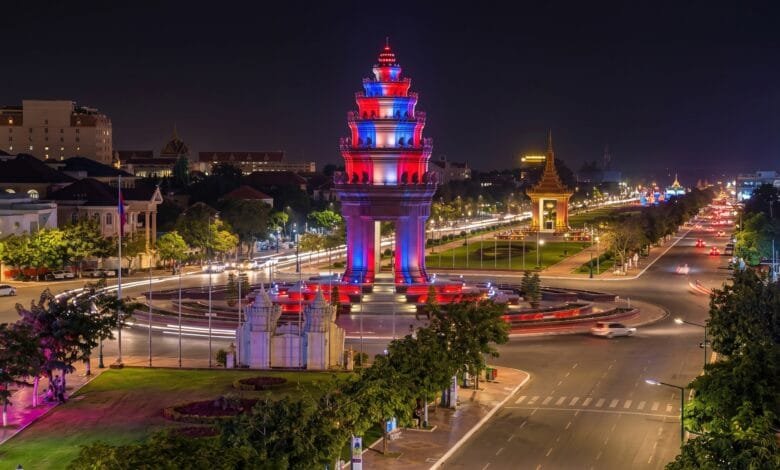
In the middle of a busy roundabout in central Phnom Penh, a dark red tower rises above the traffic. It looks like a giant lotus bud carved from stone, with hundreds of small snake heads curling around its edges.
This is the Independence Monument — known in Khmer as Vimean Ekareach. It is one of the most recognizable structures in Cambodia’s capital, and it holds a central place in the country’s modern history.
If you are planning a trip to Phnom Penh, you have probably seen photos of it. But what is it actually for? Is it worth visiting? And what should you know before you go?
This guide will help you understand the monument, its meaning, and how to visit it respectfully and practically.
Quick Travel Information
| Information | Details |
|---|---|
| Location | Intersection of Norodom Boulevard and Sihanouk Boulevard, Phnom Penh |
| Type of Destination | Public monument and memorial |
| Province/City | Phnom Penh |
| Known For | Symbol of Cambodia’s independence from France; lotus-shaped stupa design |
| Main Experience | Viewing the monument, walking in the surrounding park, photography |
| Main Access | Tuk-tuk, taxi, or walking from nearby areas |
| Recommended Visit Time | 30 minutes to 1 hour |
| Best Time to Visit | Early morning or late afternoon/evening |
| Entrance Fee | Free |
| Opening Hours | Open 24/7 (exterior viewing only) |
| Useful to Know | Visitors cannot enter the monument; it is viewed from the outside |
Note: Opening hours and access are variable. Check locally before visiting, especially during national holidays.
What Is the Independence Monument?
The Independence Monument is a public monument in Phnom Penh, Cambodia’s capital city. It stands at the intersection of Norodom Boulevard and Sihanouk Boulevard, right in the center of the city.
It was built to commemorate Cambodia’s independence from French colonial rule, which was achieved on November 9, 1953. The monument was designed by Vann Molyvann, one of Cambodia’s most important modern architects.
Construction began in 1958, and the monument was inaugurated on November 9, 1962. It also serves as a memorial to Cambodian soldiers who died for the country.
The monument is 37 meters tall and is shaped like a lotus-shaped stupa, a design that echoes the ancient temples of Angkor. It is decorated with 100 naga heads — the naga is a mythical snake that appears often in Khmer art and culture.
Why Visit the Independence Monument?
The Independence Monument is worth visiting for several reasons.
First, it is a central piece of modern Cambodian history. It marks the end of nearly a century of French colonial rule and the beginning of Cambodia as an independent nation. For anyone interested in Southeast Asian history, it is a meaningful place to see.
Second, it is an architectural landmark. Vann Molyvann is a celebrated figure in Cambodian architecture, and this monument is one of his most famous works. It blends ancient Khmer motifs with modern construction techniques.
Third, it is easy to visit. It sits in the middle of the city, surrounded by parks and fountains. You do not need a ticket, and you can stop by as part of a walk through central Phnom Penh.
Finally, it is a lively public space. Locals come here to jog, walk, and relax, especially in the cooler evenings. Watching the monument light up at night is a memorable experience for many visitors.
What to See
The Monument Itself
The monument is the main attraction. It is a tall, dark-red structure with five levels, each decorated with naga heads. The top is shaped like a lotus bud, a symbol of purity and enlightenment in Buddhist culture. The monument is not open for entry, but you can walk around it and view it from all sides.
The Naga Motif
The naga is a recurring figure in Khmer art. On this monument, the naga heads line the edges of each level. There are 100 of them in total. They are a visual link to Cambodia’s ancient temples, especially those at Angkor.
The Park and Fountains
The monument is surrounded by a large open park with fountains. This area is popular with locals and visitors alike. It is a good place to sit, take photos, and watch the city go by. At night, the fountains and the monument are illuminated with red, blue, and white lights — the colors of the Cambodian flag.
The Statue of Norodom Sihanouk
Just east of the Independence Monument, in a nearby park, stands a bronze statue of King Norodom Sihanouk. The statue is 4.5 meters tall and is housed under a 27-meter-high stupa. King Sihanouk is often called the “Father of Independence” for his role in achieving Cambodia’s freedom from France. The statue is a short walk from the monument and is worth a look if you are in the area.
What to Do
Visiting the Independence Monument is a simple, low-key experience. There is no guided tour inside, and you cannot climb the monument.
What you can do is walk around the roundabout and through the surrounding park. Take photos from different angles, especially in the late afternoon when the light is soft. In the evening, come back to see the monument lit up against the night sky.
Many visitors combine a stop here with a walk to nearby attractions. The monument is within walking distance of the Royal Palace and the National Museum, so it fits easily into a half-day of sightseeing.
The Story and History of the Independence Monument
Cambodia became a French protectorate in 1863. Over the following decades, French influence shaped the country’s politics, education, and infrastructure. But Cambodians never stopped wanting independence.
In the years after World War II, the movement for independence grew stronger. King Norodom Sihanouk, who became king in 1941, played a key role in negotiating with France. On November 9, 1953, Cambodia gained full independence.
To commemorate this achievement, the government commissioned a monument. Vann Molyvann, who had studied architecture in France and returned to Cambodia, was chosen to design it. According to the Ministry of Tourism, Sihanouk personally selected Molyvann and instructed him on how the monument should look.
The design was inspired by the lotus-shaped towers of Angkor, particularly the Bakong Temple in the Roluos group. Construction began in 1958. The monument was inaugurated on November 9, 1962 — exactly nine years after independence.
Since then, the monument has been the site of national celebrations. On Independence Day each year, the King or a high official lights a ceremonial flame inside the monument. Floral tributes line the stairs, and military and police officers march in front of it.
The monument also serves as a memorial to Cambodia’s war dead. It is a place of remembrance as well as celebration.
Culture and Local Meaning
For Cambodians, the Independence Monument is more than a piece of architecture. It represents the end of colonial rule and the beginning of self-governance. It is a symbol of national pride.
The monument’s design reflects Khmer cultural identity. The lotus shape is a Buddhist symbol. The naga motif connects the modern monument to the ancient Khmer empire. The height and central location give it a sense of importance that is hard to miss.
Visitors should treat the monument with respect. It is a public space, but it is also a memorial. Avoid climbing on the structure, and be mindful of your behavior, especially during national holidays.
What the Experience Is Like
The Independence Monument is located in the middle of a busy traffic circle, so your first impression may be of the surrounding traffic. But once you step into the park, the atmosphere changes. It is calmer and greener.
During the day, the monument is a dark red tower against the bright sky. It is a popular spot for photos, especially in the late afternoon. In the evening, the monument and the fountains are lit up, and the area becomes a gathering place for locals. You will see people jogging, walking with friends, and taking photos.
The experience is not overwhelming. It is a quiet, accessible landmark that you can enjoy at your own pace. If you are looking for a deep historical experience, this is not the Royal Palace or the Killing Fields. But if you want to understand modern Cambodia and see a beautiful piece of architecture, the monument is well worth a stop.
How to Get There
The Independence Monument is in central Phnom Penh, at the intersection of Norodom Boulevard and Sihanouk Boulevard.
The easiest way to get there is by tuk-tuk or taxi. Tuk-tuks are widely available in Phnom Penh, and drivers will know the monument by name. You can also ask your hotel to arrange a ride.
If you are staying near the Royal Palace or the riverfront, you can walk to the monument. It is about a 10-minute walk from the Royal Palace area.
There is no dedicated parking for the monument. If you are traveling by car, expect to park nearby and walk.
How to Visit
There is no entrance fee to visit the Independence Monument. It is a public space, and you can view it from the outside at any time.
You cannot enter the monument itself. The interior is not open to visitors. Your visit will involve walking around the exterior and through the surrounding park.
There is no official dress code for the monument. However, because it is a national memorial, it is respectful to dress modestly. This is especially true during national holidays and ceremonies.
Photography is allowed. The monument is a popular photo subject, and you will often see locals and tourists taking pictures. Be respectful when taking photos of people, and avoid blocking pathways.
Best Time to Visit
The best time to visit the Independence Monument depends on what you want to see.
For photography, the early morning or late afternoon offers softer light. The monument is also beautifully lit at night, and many visitors find the evening atmosphere especially enjoyable.
The weather in Phnom Penh is hot for much of the year. The coolest months are from November to February, which is also the peak tourist season. If you visit during the hot season (March to May), plan your visit for the early morning or evening to avoid the heat.
The monument is busiest during national holidays, especially Independence Day on November 9. If you want to see the celebrations, that is the time to go. If you prefer a quieter experience, visit on a regular weekday.
How Long to Spend
Most visitors spend about 30 minutes to 1 hour at the Independence Monument. This is enough time to walk around the monument, take photos, and explore the surrounding park.
If you also visit the Statue of Norodom Sihanouk and walk through the nearby parks, you might spend closer to 1.5 hours.
The monument is not a full-day destination. It works best as part of a larger itinerary that includes other nearby attractions.
Nearby Places to Combine With Your Visit
The Independence Monument is close to several other important destinations in Phnom Penh.
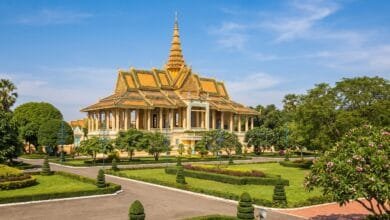
Royal Palace: The Royal Palace is about a 10-minute walk from the monument. It is one of the most important sites in the city and includes the Silver Pagoda.
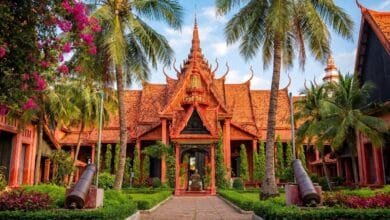
National Museum of Cambodia: The National Museum is near the Royal Palace and houses one of the world’s largest collections of Khmer art. It is a short walk from the monument.
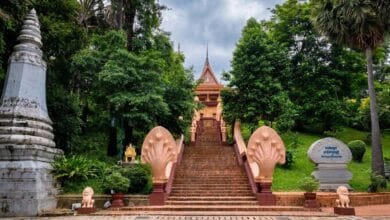
Wat Phnom: Wat Phnom is a historic temple on a small hill, about a few blocks from the monument. It is the most important temple in Phnom Penh and is associated with the founding of the city.
Statue of Norodom Sihanouk: This statue is just east of the monument and is worth a visit for those interested in Cambodia’s modern history.
These attractions are all within walking or short tuk-tuk distance, making it easy to combine them into a single day of sightseeing.
Travel Tips
- Bring water. Phnom Penh is hot, and there are limited places to buy drinks near the monument.
- Wear comfortable shoes. You will be walking on uneven surfaces and crossing streets.
- Use sunscreen and a hat. The sun can be strong, even in the late afternoon.
- Be careful when crossing the street. The monument is in the middle of a busy roundabout. Use marked crossings if available and wait for gaps in traffic.
- Visit in the evening for the best atmosphere. The lights make the monument especially beautiful.
- If you visit during a national holiday, expect crowds and be prepared for traffic diversions.
Responsible Travel
The Independence Monument is a national memorial. Treat it with respect.
Do not climb on the monument or touch the naga carvings. Do not leave litter in the park. Follow any instructions from local authorities or security staff.
If you are taking photos, be mindful of others. Do not block pathways or interfere with people who are using the park for exercise or relaxation.
When visiting during ceremonies or holidays, keep a respectful distance and avoid interrupting official events.
Frequently Asked Questions
Is the Independence Monument free to visit?
Yes. There is no entrance fee. It is a public monument, and you can view it from the outside at any time.
Can you go inside the Independence Monument?
No. The interior is not open to visitors. You can only view the monument from the outside.
What is the best time to visit the Independence Monument?
Early morning or late afternoon/evening is best. The monument is lit up at night, which many visitors find especially beautiful.
How long do you need at the Independence Monument?
Most visitors spend 30 minutes to 1 hour. It is a quick stop, not a full-day attraction.
What should I wear when visiting?
There is no strict dress code, but modest clothing is respectful. Avoid very short shorts or sleeveless tops, especially during national holidays.
Is the Independence Monument wheelchair accessible?
The surrounding park is generally accessible, but the area around the roundabout may be challenging for wheelchairs due to traffic and uneven surfaces. Check current conditions locally.
What is the Independence Monument made of?
It is built with reinforced concrete and designed in the style of a lotus-shaped stupa with naga decorations
Conclusion
The Independence Monument is one of Phnom Penh’s most recognizable landmarks. It is a symbol of Cambodia’s independence, a memorial to the country’s war dead, and an example of modern Khmer architecture.
It is not a major tourist attraction in the same way as the Royal Palace or Angkor Wat. But it is a meaningful place that helps visitors understand modern Cambodia. It is easy to visit, free to see, and close to other important sites in the city.
If you are interested in history, architecture, or simply want to see a beautiful monument in the heart of Phnom Penh, the Independence Monument is worth adding to your itinerary. Plan to visit in the late afternoon or evening, combine it with nearby attractions, and take a moment to appreciate what it represents.