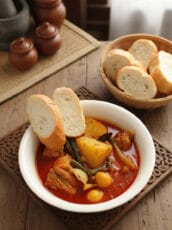
There are some days when you just want something warm and gentle. Something that doesn’t ask too much of you but still feels like a real meal. Something that reminds you of home, even if home is far away right now.
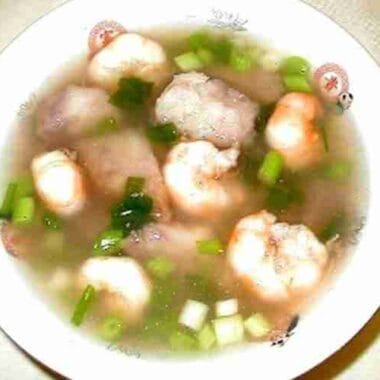
For me, that something is this simple loofah soup with shrimp.
I first learned to make this soup standing next to my grandmother in her kitchen in Cambodia. I couldn’t have been more than eight years old. She let me hold the ladle and stir the pot while she dropped in the ingredients one by one. The steam would rise up and fog my little glasses, and she would laugh and wipe them clean with the edge of her krama.
That memory comes back every single time I make this soup.
Loofah might be a new vegetable for some of you, and that’s okay. I remember the first time I tried to explain it to my husband, who grew up in a small town in the Midwest. I held up this long green thing at the market and tried to describe it. He just stared at me like I was holding a garden hose.
But after one taste of this soup, he understood.
Today I want to share this recipe with all of you. It’s simple enough for a Tuesday night when you’re tired from work. It’s gentle enough for days when your stomach feels a little off. And it’s special enough to remind you that the best food doesn’t have to be complicated.
Let’s make some soup together.
Why This Soup Belongs in Your Kitchen
This loofah soup with shrimp is the kind of recipe that becomes a regular in your rotation once you try it.
First of all, it comes together fast. From the moment you start peeling the loofah to the moment you’re sitting down with a bowl, you’re looking at maybe twenty minutes. Maybe less if you’re quick with a vegetable peeler.
The ingredients are straightforward too. Nothing weird or hard to find. I promise we’ll talk about where to get loofah if you’ve never bought one before. But everything else is just normal pantry stuff and some shrimp.
The texture of cooked loofah is something special. It softens but doesn’t fall apart completely. It soaks up the broth and gets this almost silky quality. The shrimp add sweetness. The egg makes everything a little richer. It’s simple food that somehow feels like more than the sum of its parts.
And honestly? It’s forgiving. If you add a little too much fish sauce or not enough, it’s okay. If your loofah pieces aren’t all exactly the same size, nobody’s going to notice. This soup doesn’t demand perfection. It just wants to be made and shared.
My History With Loofah Soup
Growing up in Cambodia, loofah was just… around. It wasn’t something we thought about much. It grew in gardens and along fences. My aunt had a trellis in her backyard where loofah vines would climb and spread, and in the summer she’d have more loofah than she knew what to do with.
My grandmother used to say that loofah was one of the oldest vegetables Cambodians have been eating for a very long time. I don’t know exactly how long. Centuries, probably. Long enough that it’s just part of the way we cook.
I remember watching her prepare loofah. She’d hold it in one hand and scrape off the skin in long strips with a little knife. Not a peeler like we use now. Just a knife she’d sharpened on the bottom of a clay pot. She worked so fast I could barely follow her hands.
The fibrous part of the loofah, the inside part after it gets old and dries out? That was for everything else. My grandmother kept a stack of dried loofah sections by the dishwashing area. She used them to scrub pots and pans. My aunts used them in the bath. My mother still sends me packages of dried loofah for my skin, wrapped in newspaper and tied with string.
But the young loofah, the tender green ones? Those went into the soup pot.
When I moved to the United States, I didn’t make this soup for years. It just didn’t occur to me. I was busy learning new foods, new ways of cooking, new everything. But one day I was at an Asian grocery store and there they were. A whole bin of loofah, looking just like they did back home.
I bought three of them. I called my mother on the phone while I made the soup, and she talked me through it even though I’d watched her make it a hundred times. And when I sat down with that bowl, I cried a little. Not sad tears. Just… remembering tears.
Now this soup is part of my regular cooking again. My kids grew up eating it. They roll their eyes when I tell them the scrubbing loofah is the same plant. But they eat it without complaining, which with teenagers is basically a compliment.
Finding Your Ingredients Without Stress
Let’s talk about the main character here: loofah.
If you’ve never bought one, here’s what to look for. Loofah is long and green, kind of like a cucumber that got stretched out. It can be anywhere from six inches to over a foot long. The skin is smooth but not shiny. You want one that feels firm when you hold it. Not rock hard, but not soft or squishy either.
Where do you find it? Most Asian grocery stores carry it. It might be labeled as loofah, luffa, Chinese okra, or angled gourd depending on the specific variety. The kind I use most often is the smooth loofah, but the ridged kind works too. Some stores call it silk squash. If you’re not sure, just ask someone who works there. Show them a picture on your phone if you need to.
If you can’t find fresh loofah where you live, don’t give up on this recipe. Some frozen versions exist, though the texture won’t be quite the same. You could also try zucchini in a pinch. It won’t taste the same, but it will give you a similar soft texture in soup. Just know that you’re making an adaptation, not the real thing.
The shrimp part is easy. Any shrimp works. Fresh or frozen, doesn’t matter. I usually buy frozen shrimp because that’s what’s available at my regular grocery store. Just thaw them first. Peel them if they’re not already peeled. Take that little dark vein out if you want to, though honestly it’s mostly for looks and I skip it sometimes when I’m in a hurry.
Everything else is pantry stuff. Fish sauce, sugar, eggs, green onions, salt, pepper. If you don’t cook much Asian food, you might not have fish sauce yet. It’s worth getting a bottle. It keeps forever in the fridge and adds a depth of flavor that salt alone can’t give you. Look for a brand with just anchovies and salt in the ingredients if you can.
Ingredients List
- 1/2 pound (about 225 grams) shrimp, peeled and deveined
- 1/2 teaspoon salt (divided, some for the shrimp and some for the soup)
- 1/4 teaspoon black pepper
- 2 stalks green onion, chopped
- 4 cups water
- 2 pounds (about 900 grams) loofah, peeled and cut into thin strips or bite-sized pieces
- 2 tablespoons fish sauce
- 1 tablespoon sugar
- 1 large egg, beaten
Why These Ingredients Work Together
Shrimp gives the soup sweetness and protein. It cooks fast and turns pretty pink when it’s done. You can use any size you like. I usually go for medium shrimp because they’re affordable and easy to eat.
Salt and black pepper wake up the shrimp and help it taste like itself. A little seasoning goes a long way.
Green onion adds a mild onion flavor without being too strong. The green parts look pretty floating in the soup too.
Water is the base. Simple and clean. Some people use broth, but I like how the water lets the loofah and shrimp flavors come through clearly.
Loofah is the heart of this soup. When it cooks, it softens and absorbs the broth. It has a mild, slightly sweet taste and a really pleasant texture. Not quite like any other vegetable, but if you’ve had zucchini in soup, it’s in that neighborhood.
Fish sauce brings saltiness and that deep savory flavor called umami. It smells strong from the bottle but mellows out completely in the soup. Trust the process.
Sugar balances the saltiness of the fish sauce. Just a little bit. You won’t taste sweet soup, I promise. It just rounds everything out.
Egg gets drizzled in at the end and cooks in the hot soup. It adds richness and makes the broth a little heartier. My kids love finding the egg ribbons in their bowls.
Cooking Equipment Needed
- Small bowl – For mixing the shrimp with salt, pepper, and green onion before cooking. Giving the shrimp a head start on flavor makes a difference.
- Soup pot – Any pot that holds at least 6 cups works. I use a medium-sized pot, nothing fancy. A Dutch oven is nice but completely unnecessary.
- Vegetable peeler or small knife – For peeling the loofah. A peeler is easier if you have one. My grandmother used a knife. Both work.
- Cutting board – For cutting the loofah and chopping the green onions.
- Knife – Any sharp knife you’re comfortable with. Nothing special needed.
- Measuring cups and spoons – Helpful but not essential. I’ve made this soup by estimating plenty of times.
- Ladle or large spoon – For stirring and serving.
- Small bowl for the beaten egg – To whisk the egg before adding it to the soup.
Let’s Walk Through This Together
Before you start anything, take a look at your shrimp. If they’re frozen, get them thawing. The fastest way is to put them in a bowl of cool water for about fifteen minutes. If they need peeling, do that now. Some people leave the tails on for looks, but I take them off so it’s easier to eat.
Now find your loofah. Give it a rinse under cool water just to wash off any dirt. Then grab your peeler or knife and take off the skin. The skin is thin but slightly tough, so you want it all off. If you’re using the ridged kind of loofah, you might need to scrape a little deeper in the ridges.
After peeling, cut the loofah however you like. I cut mine into thin strips about two inches long and maybe half an inch wide. Sometimes I just slice it into rounds. Sometimes I do half-moons. It honestly doesn’t matter much. Just try to keep the pieces similar in size so they cook evenly.
Chop your green onions. Use both the white and green parts. Set them aside for a minute.
Get out that small bowl and put your peeled shrimp in it. Sprinkle on half the salt, the black pepper, and most of the chopped green onions. Save a little green onion for garnish at the end if you want. Mix everything together with your hands or a spoon. Let it sit while you work on the rest.
Step-by-Step Directions
- Put the water in your soup pot and turn the heat to high. Let it come to a rolling boil. This usually takes about five minutes depending on your stove.
- While you wait for the water, beat the egg in that little bowl and set it aside. Nothing fancy here. Just fork-whisk it until the yolk and white are mixed together.
- Once the water is boiling, add all the loofah pieces. Stir them in gently. Turn the heat down to medium-high so it keeps bubbling but not crazy hard. Let the loofah cook until it’s tender. This takes about five to eight minutes. You can check by poking a piece with a fork. It should go in easily but the loofah shouldn’t be falling apart.
- When the loofah is tender, add the marinated shrimp. Stir them in and watch them change color. This happens fast. In maybe two or three minutes, they’ll turn from grayish to pink and curl up a little. That’s how you know they’re done. Don’t overcook them or they’ll get tough.
- Now add the fish sauce and sugar. Stir everything together and taste the broth. This is important. Does it need more salt? More fish sauce? A tiny pinch more sugar? Trust your taste buds. Adjust a little at a time until it tastes right to you.
- Turn the heat down to medium so the soup is still hot but not boiling like crazy. Take your bowl of beaten egg and drizzle it slowly into the soup while you stir gently with your other hand. Stir in one direction. This makes the egg form thin ribbons instead of clumping up. It looks so pretty when it works.
- Turn off the heat. Ladle the soup into bowls. Sprinkle the rest of your chopped green onion on top if you saved some. Serve hot with rice on the side.
Little Tips for the Best Bowl
- Don’t overcook the loofah. It should be tender but still hold its shape. Mushy loofah isn’t terrible, but the texture is much nicer when it’s just right.
- Taste as you go. Seasoning is personal. What tastes perfect to me might need more salt for you. Trust yourself.
- Use good fish sauce. It makes a difference. If your fish sauce smells harsh and chemical-y, it might not be great quality. Look for bottles with simple ingredients.
- Let the shrimp marinate. Even five minutes helps. If you have time, cover the bowl and put it in the fridge for fifteen minutes while you prep everything else.
- Stir the egg in slowly. Fast pouring makes big egg chunks. Slow drizzle with stirring makes beautiful ribbons.
- Serve with jasmine rice. The plain rice balances the soup perfectly. Scoop up broth and loofah with each bite of rice.
Ways to Make It Your Own
- Use chicken instead of shrimp. Cut boneless chicken into small pieces and cook it a little longer than shrimp until it’s done through.
- Add mushrooms. Sliced button mushrooms or enoki mushrooms are nice in this soup. Add them with the loofah.
- Make it vegetarian. Skip the shrimp and fish sauce. Use firm tofu and soy sauce or salt instead. Vegetable broth instead of water adds more flavor.
- Add more vegetables. A handful of spinach stirred in at the end wilts down nicely. Thin carrot strips look pretty and add color.
- Spice it up. A sliced Thai chili or a pinch of white pepper adds warmth if you like heat.
- Use chicken broth. For a richer soup, replace the water with good chicken broth. It’s different but still delicious.
How to Serve This Soup
- With jasmine rice in a separate bowl. Take bites of rice, then sips of soup. This is how we eat it at home.
- As a light meal by itself with some bread on the side if you don’t have rice.
- With a simple cucumber salad on the side for something fresh and crunchy.
- As part of a bigger Cambodian meal with grilled meat and a dipping sauce.
- For lunch the next day because it reheats pretty well.
- To someone who isn’t feeling well because this soup is gentle and comforting.
Storing Leftovers
- Let the soup cool completely before putting it in the fridge. Hot soup in a closed container makes steam and gets everything watery.
- Store in an airtight container in the refrigerator for up to three days.
- Keep the rice separate if you can. Rice gets weird when it sits in soup overnight.
- Reheat gently on the stove over medium heat until hot. The microwave works too, just cover the bowl so it doesn’t splatter.
- The loofah will soften more as it sits. It’s still good, just a different texture. Some people actually prefer it the next day.
- I don’t recommend freezing this soup. The loofah gets too soft and the texture isn’t nice after thawing.
A Few Last Thoughts Before You Cook
This loofah soup with shrimp is one of those recipes that feels like a hug in a bowl. It’s not fancy. It’s not complicated. It’s just good food made from simple things, the way people have been making it for a very long time.
I hope you try it. I hope you make it on a quiet evening when you need something warm. I hope you taste that silky loofah and sweet shrimp and think about how nice it is that food can connect us to places and people we love.
If you’re new to Cambodian cooking, this is a great place to start. It’s forgiving and delicious. And once you’re comfortable with it, maybe try my recipe for Cambodian Ginger Catfish or Stir-Fried Morning Glory with Garlic. They’re both favorites in my house.
For more about the health benefits and traditional uses of loofah, I found this article from Specialty Produce really interesting. They talk about all the different ways loofah is used around the world.
Thank you for being here and reading. Thank you for being willing to try something new in your kitchen. That takes courage, and I don’t take it for granted.
Cook this soup for someone you love. Or just for yourself. Both are good.
Frequently Asked Questions
Q: What does loofah taste like?
A: It’s very mild and slightly sweet. Not a strong flavor at all. It mostly takes on the taste of the broth around it. The texture is soft but not mushy when cooked right, kind of like a tender zucchini.
Q: Can I use bottled loofah or canned?
A: I’ve never seen canned loofah. Frozen might exist in some stores. Fresh is really best for this soup. The texture just isn’t the same otherwise.
Q: Is loofah the same thing as the scrubby sponge?
A: Same plant, different stage. Young loofah is eaten as a vegetable. Mature loofah dries out and becomes fibrous, and that’s what bath sponges and dish scrubbers are made from. So yes, same plant, just harvested at different times.
Q: My grocery store doesn’t have loofah. What can I use?
A: Zucchini is the closest substitute in texture. It won’t taste exactly the same, but it will give you a similar soft vegetable in soup. You could also try chayote squash or even cucumber if you add it at the very end so it doesn’t get too soft.
Q: Can I make this soup without fish sauce?
A: You can use salt instead. Start with about a teaspoon and adjust from there. It won’t have quite the same depth, but it will still be good. Soy sauce works too but will change the color of the broth.
Q: How do I know when the shrimp is cooked?
A: Shrimp cooks fast. When it turns from gray to pink and curls into a loose C shape, it’s done. If it curls into a tight O, it’s slightly overcooked but still fine to eat.
Q: Is this soup spicy?
A: Not at all unless you add chili. It’s very mild and gentle. Good for kids and people who don’t like heat.
Q: Can I add more vegetables?
A: Absolutely. Carrots, spinach, mushrooms, even some corn would work. Add firmer vegetables with the loofah and leafy ones at the end.
Q: Why do you add sugar to soup?
A: It balances the saltiness of the fish sauce, not to make it sweet. Think of it like a pinch of sugar in tomato sauce. You don’t taste sugar, you just taste a more rounded flavor.
Q: Do I have to add the egg?
A: No, you can skip it. The soup is still good without it. The egg just adds a little richness and protein.
Loofah Soup with Shrimp
2
servings20
minutes30
minutes180
kcal50
minutesThis loofah soup with shrimp is a gentle Cambodian classic featuring tender loofah, sweet shrimp, and delicate egg ribbons in a light savory broth. It comes together in about twenty minutes with simple ingredients and is the perfect comforting meal served with jasmine rice.
Ingredients
1/2 lb 1/2 (225 gram) of shrimp, peeled and de-veined
1/2 teaspoon 1/2 salt
1/4 teaspoon 1/4 black pepper
2 2 stalks of green onion, chopped
4 cups 4 water
2 lbs 2 (900 gram) of loofah, peeled and julienne
2 tablespoons 2 fish sauce
1 tablespoon 1 sugar
1 1 beaten egg
Directions
- In a small bowl, put shrimp with salt, black pepper and green onion, mix well and set a side.
- Put water in a soup pot and cook till water boiling.
- Add loofah and cook till loofah tender.
- Add marinated shrimp and cook till it turns darker pink color.
- Seasoning with fish sauce and sugar.
- Slowly pours and stirs beaten egg in to boiling soup.
Recipe Video
Recipe Notes
- Peel the loofah completely. The skin isn’t tough exactly, but it’s not pleasant to eat either.
- Cut loofah pieces roughly the same size so they cook evenly.
- Don’t walk away while the shrimp is cooking. It goes from raw to overcooked very fast.
- Taste the broth before you add the egg and adjust seasoning if needed.
- Leftover soup keeps for about three days in the fridge.
- The loofah will continue softening as it sits in the broth.
- This soup is naturally gluten-free if you use a gluten-free fish sauce.
- You can use any size shrimp you like. Smaller shrimp cook faster, larger ones take a minute or two more.
- If you forget to thaw shrimp, put them in a bowl of cool water for about fifteen minutes.
- The beaten egg will cook instantly in the hot soup. Don’t boil it hard after adding or the egg can get tough.
- Serve with plenty of rice to soak up the broth.
- This recipe doubles easily if you’re feeding a crowd.
Nutrition Facts
- Serving Size: 1
- Total number of serves: 4
- Calories: 150kcal
- Fat: 5g
- Saturated Fat: 1g
- Trans Fat: 0g
- Polyunsaturated Fat: 1g
- Monounsaturated Fat: 2g
- Cholesterol: 70mg
- Sodium: 500mg
- Potassium: 300mg
- Carbohydrates: 15g
- Fiber: 3g
- Sugar: 5g
- Protein: 10g
- Vitamin A: 500IU
- Vitamin C: 30mg
- Calcium: 80mg
- Iron: 2mg
- Vitamin D: 1mg
- Vitamin E: 2mg
- Vitamin K: 15mg
- Thiamin: 0.1mg
- Riboflavin: 0.2mg
- Niacin: 2mg
- Vitamin B6: 0.2mg
- Vitamin B12: 0.5mg
- Folate: 40mg
- Biotin: 5mg
- Pantothenic Acid: 0.5mg
- Phosphorus: 200mg
- Iodine: 10mg
- Magnesium: 30mg
- Zinc: 1mg
- Selenium: 15mg
- Copper: 0.1mg
- Manganese: 0.1mg
- Chromium: 0mg
- Molybdenum: 5mg
- Chloride: 400mg
Did you make this recipe?
Tag @cambodiarecipe on Instagram and hashtag it
Like this recipe?
Follow us @cambodiarecipe on Pinterest
Did you make this recipe?
Follow us on Facebook