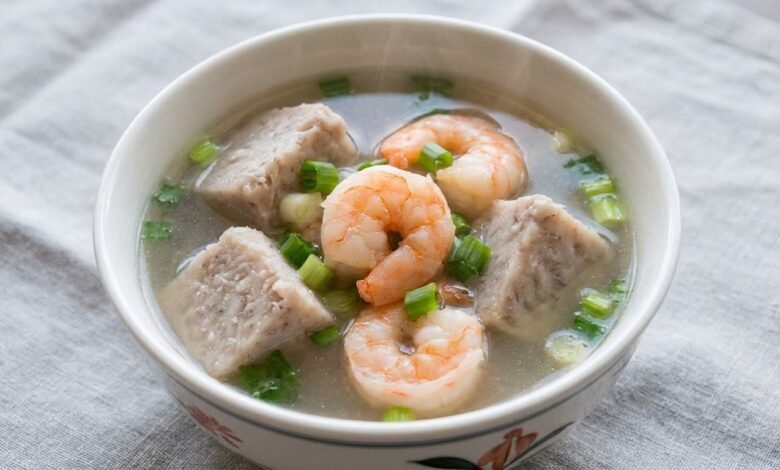
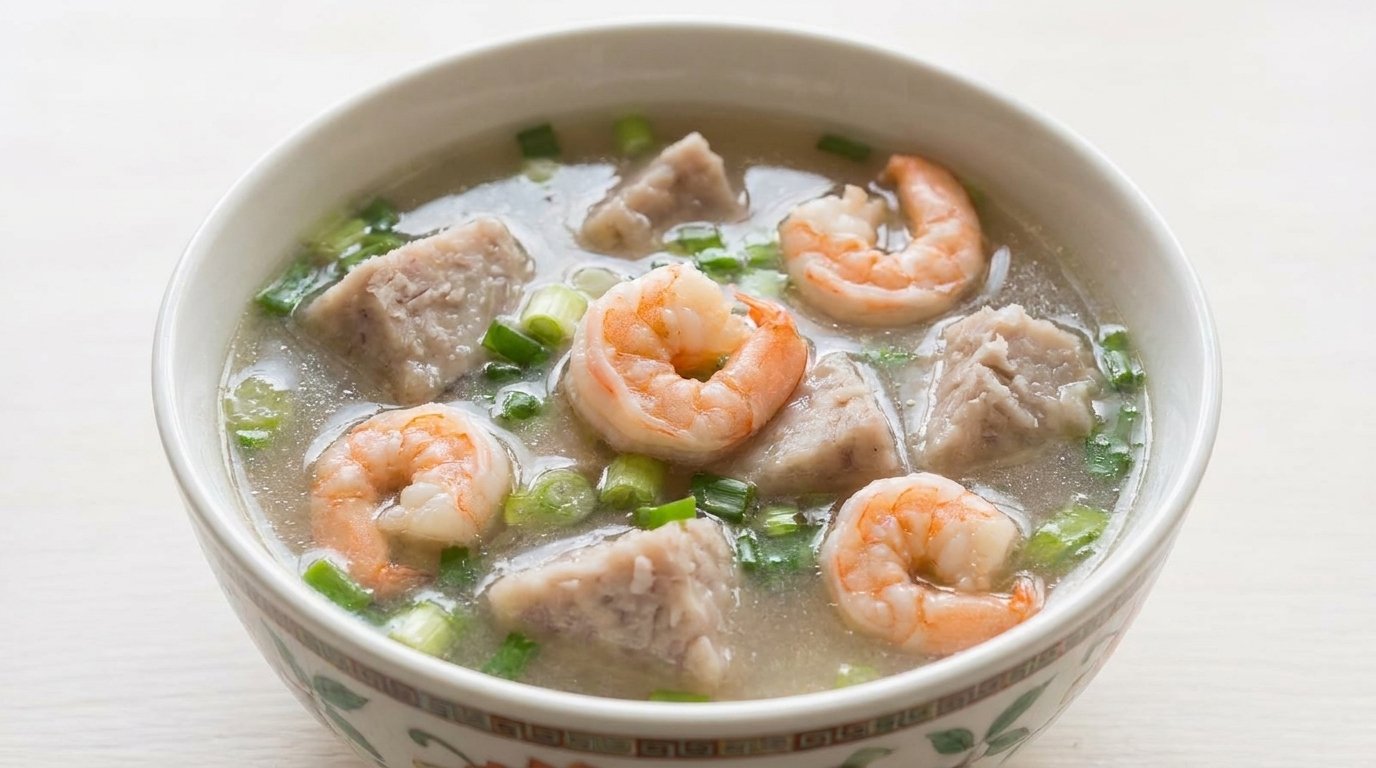
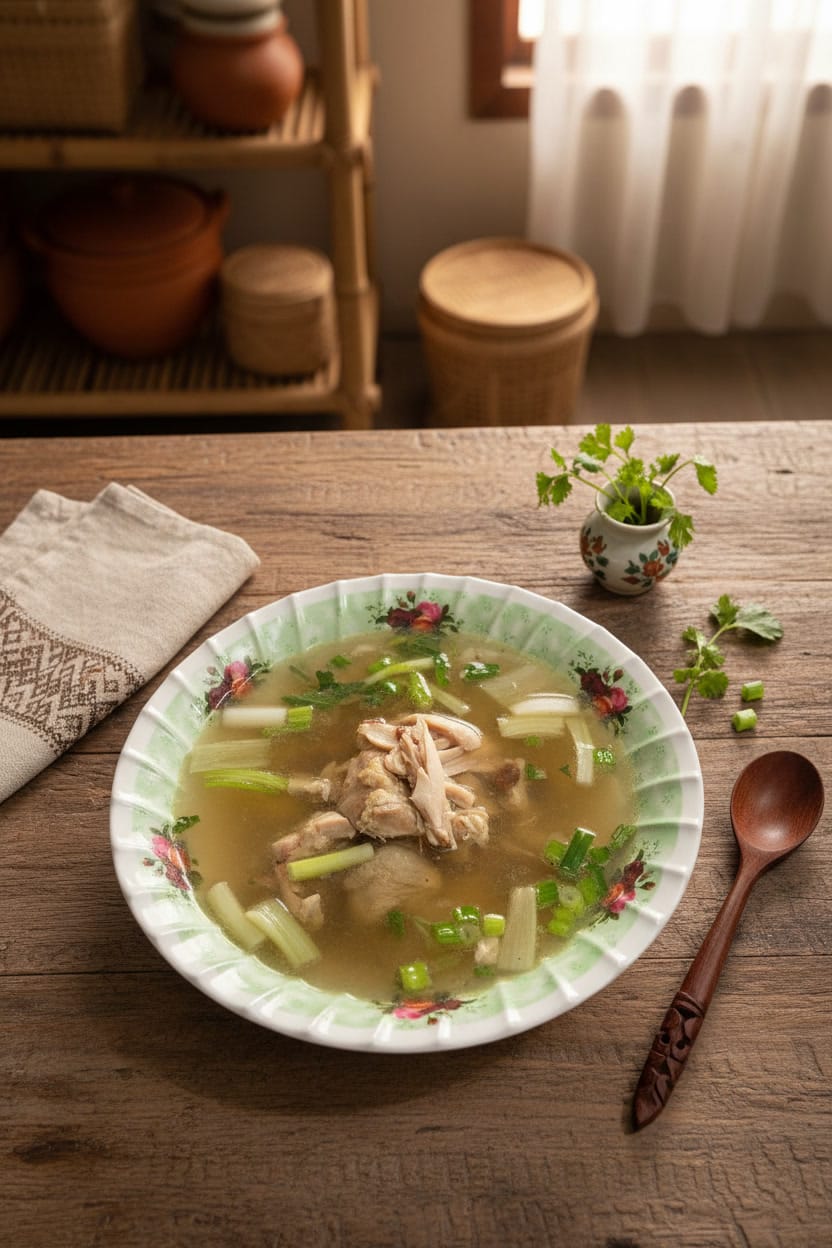
There are some meals that just feel like a hug in a bowl. This shrimp and taro root soup is exactly that for me. It’s the kind of simple, nourishing food that Cambodian families have been making for generations, and today I’m going to show you how to bring this little piece of my heritage into your own kitchen.
I still remember walking home from school as a little girl and catching that gentle, nutty aroma drifting from our neighborhood. That smell meant someone was cooking taro root soup, and my stomach would start growling immediately. There’s something so special about how the sweetness of the shrimp mingles with the earthy, almost buttery taro as it slowly softens in the pot.
What I love most about this recipe is that it doesn’t ask for anything fancy. It’s honest food made from simple ingredients, the kind of meal that fills your home with warmth and your belly with comfort. If you’ve never cooked with taro root before, don’t worry one bit. I’ll walk you through everything, just like my mother did for me when I first started learning to cook.
Why You’ll Love This Soup
This isn’t one of those complicated recipes that leaves you with a mountain of dirty dishes and a headache. It comes together in one single pot, and I mean truly one pot. The stove does most of the work while you go about your day or maybe just sit down with a cup of tea for a few minutes.
The flavors are gentle and approachable, nothing too strong or scary if you’re new to Cambodian cooking. The taro root breaks down just enough to thicken the broth slightly, giving it this lovely silky texture that coats your spoon. And the shrimp, oh the shrimp, they cook so quickly and add this beautiful sweetness that balances the earthiness of the taro.
You know what else? This soup is budget-friendly. Taro root is usually pretty affordable, and you don’t need a lot of shrimp to get that wonderful flavor throughout the whole pot. It’s the kind of meal that makes you feel good about feeding your family something wholesome without spending your whole paycheck.
My Personal Experience with This Soup
I have to tell you, learning to make this soup was actually one of the first things my mother taught me in the kitchen. I couldn’t have been more than ten years old, standing on a little wooden stool so I could reach the stove. She showed me how to peel the taro root with my bare hands, which I quickly learned was a mistake because it makes your skin itch like crazy. Now I always wear gloves, and I want you to remember that too.
My mother never measured anything, of course. She would just toss in a handful of this and a pinch of that, tasting as she went along. When I asked her to write down the recipe for me before I moved to the city, she laughed and said, “Just use your heart, child.” That wasn’t very helpful for my first few attempts, let me tell you. My first batch was way too salty, and another time I didn’t cook the taro long enough, so it was all crunchy and wrong.
But you know what? Every mistake taught me something. Now I can close my eyes and know exactly when the soup needs another splash of fish sauce or when the taro has reached that perfect softness. This recipe I’m sharing with you today is the result of all those years of practice, and I’ve written it down carefully so you can get it right the very first time.
There’s something magical about how this soup brings people together. In Cambodia, we often eat it for breakfast with a big bowl of rice, or as a light dinner when the weather turns cool. The taro root soaks up all the savory broth, and when you bite into it, there’s this wonderful creaminess that just melts in your mouth.
Easy-to-Find Ingredients
Here’s some good news for you. You don’t need to go to a special Asian market for most of these ingredients, though that’s where I usually shop. Regular grocery stores these days often carry taro root in the produce section, especially if you live in an area with a diverse community. It’s that brown, hairy-looking vegetable that sort of resembles a potato but with rings around it.
The shrimp is easy enough, just grab a pound from the seafood counter or the frozen section. I usually go for medium-sized shrimp because they cook quickly and are easy to handle. If you can find them already peeled, even better, but I don’t mind doing it myself while listening to music in the kitchen.
Fish sauce might be the one ingredient that feels unfamiliar, but I promise you can find it in any grocery store these days. It’s usually in the international foods aisle, and a bottle will last you forever because you only use a little bit at a time. Don’t skip it though, because it gives the soup that deep savory flavor that makes it taste authentic.
Everything else is probably already in your kitchen. Sugar, salt, black pepper, green onions. See, I told you this was simple.
Ingredients List
- 5 cups of water
- 2 pounds (about 900 grams) of taro root, peeled and cut into bite-sized chunks
- 1/2 pound (about 225 grams) of shrimp, peeled and deveined
- 2 tablespoons of fish sauce
- 1 tablespoon of sugar
- 1/2 teaspoon of salt
- 1/4 teaspoon of black pepper
- 2 stalks of green onion, chopped
Why These Ingredients Are Used
- Water forms the simple base of our soup, letting the other ingredients shine without competing with a heavy broth. It’s clean and pure.
- Taro root is the heart of this dish. When it cooks, it becomes tender and creamy, almost like a potato but with a more nutty, earthy flavor. It also thickens the soup naturally as some of it breaks down.
- Shrimp adds sweetness and protein. The pink color against the pale taro is just beautiful, and the shrimp flavor infuses the whole broth.
- Fish sauce might smell strong right out of the bottle, but trust me, it melts into the soup and creates this wonderful savory depth that you can’t get from salt alone. It’s the secret to authentic Cambodian cooking.
- Sugar balances the saltiness of the fish sauce and brings out the natural sweetness of both the shrimp and the taro. Just a tiny bit makes everything taste more rounded.
- Salt helps season the taro from the inside out as it cooks.
- Black pepper adds a gentle warmth at the end. Not enough to make it spicy, just enough to wake up your taste buds.
- Green onions give a fresh, oniony pop at the very end. They add color and a little brightness to finish the soup.
Cooking Equipment Needed
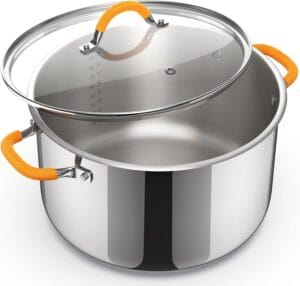
- A large soup pot or Dutch oven – You want something big enough to hold all the water and taro with room for bubbling. I use my favorite heavy-bottomed pot that distributes heat evenly.
- A sharp knife – Taro root can be firm and tricky to cut, so a good sharp knife makes the job safer and easier. Dull knives are actually more dangerous because they slip.
- A vegetable peeler – For peeling the tough brown skin off the taro. A regular peeler works fine.
- A cutting board – Preferably one that won’t slide around on your counter. I put a damp paper towel underneath mine to keep it steady.
- Measuring spoons – For the fish sauce, sugar, salt, and pepper. Though after you make this a few times, you’ll probably just eyeball it like I do.
- A wooden spoon – For stirring everything together gently. Wood won’t scratch your pot and it feels nice in your hand.
- A small bowl – To hold your peeled and chopped ingredients before they go into the pot. Mise en place, as the fancy chefs say.
Cooking Instructions
Alright, let’s get started with the actual cooking. Before you do anything else, put on a pair of disposable gloves if you have them. Taro root contains calcium oxalate crystals that can irritate your skin and make it itchy. I learned this the hard way, so please learn from my mistake.
First, you’ll need to peel your taro root. The skin is brown and sort of rough, almost like tree bark. Use your peeler to take it all off, making sure to get any little hairy bits. Then rinse the peeled taro under cool water. Now cut it into chunks about the size of a large bite, maybe an inch or so. They don’t have to be perfect, just roughly the same size so they cook evenly.
Put your pot on the stove and pour in the 5 cups of water. Drop in all those taro chunks and turn the heat to high. We’re going to bring this to a boil, then turn it down to a simmer. While you’re waiting, you can work on your shrimp if they aren’t already peeled.
Once the water starts boiling, you’ll notice some foam or scum floating to the top. That’s totally normal. Just skim it off with a spoon and keep going. Turn the heat down to medium-low so the water is bubbling gently but not疯狂. Let the taro cook like this for about 15 to 20 minutes. You’ll know it’s getting close when you can poke a chunk with a fork and it slides in easily, but the taro isn’t falling apart yet.
Now it’s time for the shrimp. Gently drop them into the pot and watch what happens. Within just a minute or two, they’ll start curling up and turning that beautiful pinkish-orange color. Shrimp cook really fast, so don’t walk away. As soon as they’re pink all the way through, which takes about 3 minutes depending on their size, we’re ready for the next step.
Add your fish sauce, sugar, salt, and black pepper. Give everything a gentle stir and taste the broth. This is the most important part. Does it need a little more salt? Another splash of fish sauce? Everyone’s taste is different, so adjust until it tastes right to you. Remember that the taro will absorb some of the seasoning too.
Turn off the heat and sprinkle those chopped green onions all over the top. They’ll wilt slightly from the heat of the soup, which is exactly what we want. Let the soup sit for just a minute or two before serving to let all the flavors get to know each other.
Step-by-Step Directions
- Put on gloves to protect your hands from itching, then peel the taro root and cut it into bite-sized chunks, about 1 inch pieces.
- Place the taro chunks and 5 cups of water into a large soup pot and bring to a boil over high heat.
- Once boiling, reduce the heat to medium-low and let it simmer gently for 15 to 20 minutes, until the taro is tender when pierced with a fork.
- Add the peeled and deveined shrimp to the pot and cook for about 3 minutes, just until they turn pink and opaque.
- Stir in the fish sauce, sugar, salt, and black pepper. Taste the broth and adjust seasoning if needed.
- Turn off the heat and sprinkle the chopped green onions over the top of the soup.
- Let the soup rest for a minute or two, then ladle into bowls and serve hot with steamed rice.
Tips for Best Flavor
- Don’t rush the taro cooking time. It needs those full 20 minutes to become tender and release its creamy texture into the broth. Undercooked taro is crunchy and not pleasant at all.
- Always taste before serving. Fish sauce brands vary in saltiness, so what tastes perfect to me might need adjustment for you. Trust your own taste buds.
- Add the shrimp at the very end so they don’t overcook and become tough. Rubbery shrimp are sad shrimp.
- Use the best fish sauce you can find. I like brands from Thailand or Vietnam that list only anchovies and salt as ingredients. The cheap stuff often has additives that taste harsh.
- If you want a richer broth, you can use chicken stock instead of water. My mother would never do this, but sometimes I cheat and it’s still delicious.
- Let the soup sit for five minutes before serving if you can wait that long. The flavors deepen as it rests slightly.
Variations and Adaptations
- If you can’t find fresh shrimp, frozen works perfectly fine. Just thaw them completely in the refrigerator overnight or under cool running water before adding to the soup.
- Some families add a piece of lemongrass to the pot while the taro cooks, removing it before serving. It adds a lovely citrusy note that’s very Cambodian.
- You can use chicken instead of shrimp if someone has allergies. Just cut it into small pieces and cook it a little longer until done through.
- For a vegetarian version, use vegetable broth and substitute the shrimp with firm tofu or mushrooms. Add a little soy sauce along with the fish sauce, or use a vegetarian fish sauce alternative.
- If you like a little heat, slice a Thai chili or two and add it with the green onions at the end. My uncle always does this.
- Some people add a handful of bok choy or spinach in the last few minutes for extra greens. It’s not traditional but it’s tasty and adds color.
Serving Suggestions
- Serve this soup in big bowls with a generous scoop of steamed jasmine rice on the side or even mixed right in. The rice soaks up all that flavorful broth.
- A simple cucumber salad on the side adds freshness and crunch. Just slice cucumber, toss with a little vinegar and sugar, and you’re done.
- For a complete Cambodian meal, add a fried egg with crispy edges on top of the rice. The runny yolk mixing with the soup is pure comfort.
- If you’re serving guests, present the soup in a beautiful bowl at the center of the table and let everyone help themselves. Family style is how we always do it.
- A squeeze of fresh lime juice over each bowl right before eating brightens everything up. I always include lime wedges when I serve this.
- Leftover soup the next day is even better, if you ask me. The flavors have had all night to meld together beautifully.
Storing Leftovers
- Let any leftover soup cool completely to room temperature before storing. Don’t leave it out for more than two hours though.
- Transfer the cooled soup to an airtight container and keep it in the refrigerator for up to 3 days.
- When reheating, warm it gently on the stovetop over medium-low heat. The microwave works too, but the stovetop gives better results.
- The taro will continue to soften and may break apart more when reheated, which actually makes the broth even creamier. It’s a happy accident.
- I don’t recommend freezing this soup because the taro texture becomes grainy and the shrimp can get rubbery. It’s really best eaten fresh.
- If you do have leftovers, store the rice separately so it doesn’t get mushy from soaking in the broth overnight.
Final Thoughts
You know, writing this recipe down for you has brought back so many memories. I can almost hear my mother humming in the kitchen while she cooked, and smell that wonderful aroma filling our little house. Food has a way of doing that, doesn’t it? Connecting us to people and places we love.
I really hope you’ll try making this shrimp and taro root soup in your own kitchen. Don’t be intimidated if you’ve never cooked Cambodian food before. This recipe is forgiving and simple, and the results are so satisfying. There’s something special about sitting down to a bowl of soup that you made with your own hands, knowing exactly what went into it.
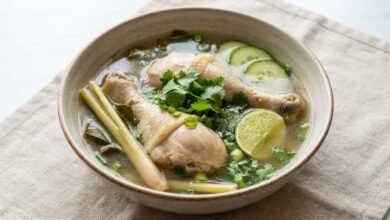
If you enjoy this recipe, you might also like my recipe for Cambodian Chicken Coconut Soup which has a similar comforting vibe. And if you’re looking for something refreshing to serve alongside, my Green Mango Salad with Fish Sauce Dressing is absolutely perfect with it.
For more information about Cambodian ingredients and where to find them, I always recommend checking out The Cambodian Kitchen, a wonderful resource run by a friend of mine who’s passionate about preserving our food traditions.
Cooking is about more than just following instructions. It’s about feeling, tasting, and adjusting until something tastes right to you. So taste as you go, trust yourself, and don’t worry about being perfect. The best meals come from the heart.
Now go make some soup, and when you do, think of me and my mother and all the Cambodian grandmothers who have made this same simple soup for their families through the years. You’re part of that tradition now.
Frequently Asked Questions (FAQs)
Q: What does taro root taste like?
A: Taro root has a mild, nutty flavor that’s slightly sweet. When cooked, it becomes creamy and almost buttery, similar to a potato but with more character. It soaks up the flavors of whatever it’s cooked with beautifully.
Q: Can I eat taro root raw?
A: No, never eat taro root raw. It contains calcium oxalate crystals that can irritate your mouth and throat, causing itching and swelling. Always cook taro thoroughly before eating.
Q: My hands are itching after peeling taro. What should I do?
A: This happens to everyone at least once! Wash your hands thoroughly with soap and warm water, then rub them with a little cooking oil or vinegar to help dissolve the crystals. For next time, definitely wear gloves while peeling.
Q: Is this soup spicy?
A: Not at all. The recipe as written has just a touch of black pepper for warmth, but it’s not spicy. If you want heat, you can add fresh chilies, but the basic soup is very mild and family-friendly.
Q: Can I use frozen shrimp for this recipe?
A: Absolutely. Just make sure to thaw them completely first. I like to put frozen shrimp in a bowl of cool water for about 15 minutes, changing the water once, until they’re fully thawed. Then pat them dry before adding to the soup.
Q: Why does my taro root turn purple sometimes?
A: Those beautiful purple specks are completely natural! Some varieties of taro have purple flecks throughout the flesh, especially when grown in certain soils. It’s not mold or anything bad, just nature being beautiful.
Q: Can I make this soup in advance for a party?
A: You can cook the taro in the broth a day ahead, but I’d add the shrimp fresh on the day you serve it. Shrimp don’t reheat very well and can become tough. Just reheat the taro broth and add the shrimp at the last minute.
Q: Is fish sauce necessary? Can I substitute something else?
A: Fish sauce really gives this soup its authentic Cambodian flavor. If you absolutely can’t use it, try soy sauce with a tiny bit of minced anchovy, or use salt and increase the other seasonings. It won’t be the same, but it will still be tasty.