Cambodia’s Water Festival: What Visitors Should Know About Bon Om Touk
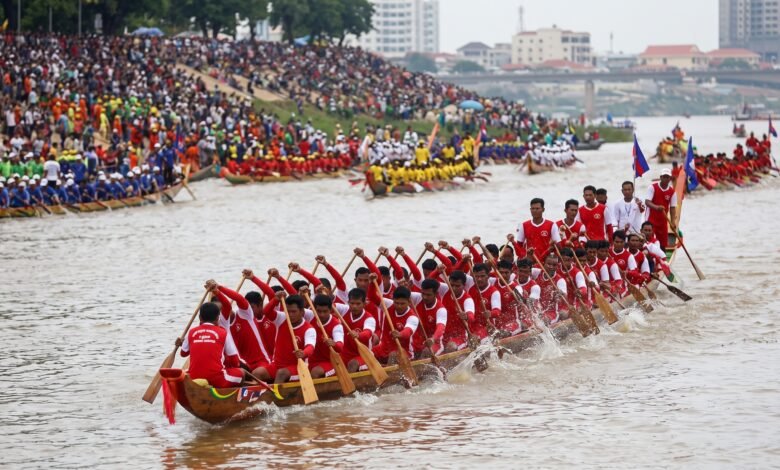
Imagine standing on the bank of the Tonle Sap River in Phnom Penh. The air is thick with heat and the sound of drums. Then you see them — long wooden boats slicing through the brown water, each one powered by dozens of rowers pulling in perfect rhythm. The crowd roars. Flags wave. Somewhere nearby, a vendor is selling cold sugarcane juice and grilled bananas.
This is Bon Om Touk, Cambodia’s Water Festival. For three days each November, the country pauses to celebrate the end of the rainy season, the reversal of the Tonle Sap River, and a tradition that stretches back nearly 800 years.
If you are traveling in Cambodia during this time, you are about to witness one of the most spectacular cultural events in Southeast Asia. Here is what you need to know.
Quick Festival Information
Festival: Water Festival
Khmer name: បុណ្យអុំទូក (Bon Om Touk), literally “Boat Racing Festival”
Full ceremonial name: The Royal Boat Racing Festival, Lanterns Floating, Taste the Ambok, and Worship the Moon
Typical time: November, on the full moon of the Buddhist month of Kadeuk
Length: 3 days
Type: National cultural festival with religious and agricultural roots
Main locations: Phnom Penh (traditional center), Siem Reap, and provincial capitals
Main activities: Boat racing, illuminated float parade, moon salutation, eating Ok Ambok (flattened rice)
Visitor experience: Spectacular, crowded, joyful; best experienced from the riverbanks
2026 note: Phnom Penh celebrations have been canceled for 2026; provincial celebrations may still take place
What Is the Water Festival?
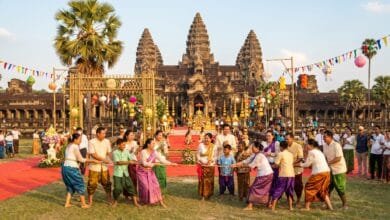
The Water Festival — Bon Om Touk in Khmer — is one of Cambodia’s three most important traditional celebrations, alongside Khmer New Year in April and Pchum Ben in September or October. It is a national public holiday, and in a normal year, millions of Cambodians travel to Phnom Penh or gather in their home provinces to celebrate.
The festival marks a natural event that is central to life in Cambodia. Every year, the Mekong River floods during the rainy season, pushing water up the Tonle Sap River and into the Tonle Sap Lake. The lake expands dramatically, becoming a vast breeding ground for fish. When the rains end in November, the river reverses its flow and the water drains back toward the Mekong and eventually the sea.
Bon Om Touk celebrates this reversal. It is a way of saying thank you to the river for the fish and the fertile soil that sustain millions of people.
The full moon that coincides with the festival is considered a good omen for the coming harvest. This is why the festival is sometimes called the Water and Moon Festival.
Why Does Bon Om Touk Matter in Cambodia?
Water is life in Cambodia. The Tonle Sap system is one of the richest freshwater fisheries in the world, and the annual flood cycle supports rice farming across the country. The Water Festival is a cultural expression of gratitude for this natural rhythm.
But the festival is also about something deeper: community. In a country where many people have moved to cities for work, Bon Om Touk is a time when families reunite. Boat racing teams train for weeks, representing their villages, schools, or government ministries. The races are fiercely competitive but also joyful — a chance for provinces to show pride and for communities to come together.
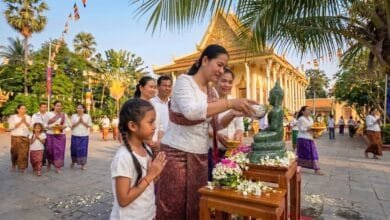
For Cambodian Buddhists, the festival also carries spiritual meaning. The moon salutation ceremony is a moment of prayer and reflection, and the illuminated floats are offerings of light and hope.
When Is the Water Festival Celebrated?
Bon Om Touk takes place over three days in November, timed to the full moon of the Buddhist month of Kadeuk. Because it follows the lunar calendar, the exact dates shift slightly from year to year.
For 2026, the official public holiday dates are November 23, 24, and 25 .
The 2026 Update: Phnom Penh Cancellation
If you are planning to visit Cambodia for the Water Festival in 2026, there is important news. In July 2026, the Royal Government announced that the official celebrations in Phnom Penh — including the boat races on the Tonle Sap River in front of the Royal Palace — have been canceled for 2026. This is the second consecutive year that the capital’s celebrations have been suspended.
However, this does not mean the festival is canceled everywhere. The government’s announcement specifically applies to Phnom Penh. Provinces across Cambodia may still organize their own celebrations, following local traditions and their own capabilities.
Siem Reap, in particular, has become a major alternative destination for the Water Festival. In recent years, the city has hosted boat races along the Siem Reap River, illuminated float displays, cultural performances, and food fairs. If you are in Cambodia in November 2026 and want to experience Bon Om Touk, Siem Reap is likely your best option.
Always check with local authorities or a trusted tour operator for the latest information before making travel plans.
The History Behind the Celebration
The Water Festival has two overlapping origin stories, and both are important to understanding what you will see.
The first is a story of war. In the 12th century, during the reign of King Jayavarman VII, the Khmer Empire faced a serious threat from the Champa kingdom to the east. According to Khmer historical accounts, Cham forces launched a surprise naval attack, sailing up the Mekong River and across the Tonle Sap Lake. Jayavarman VII raised a navy, fought back, and defeated the invaders in a great naval battle around 1181.
The bas-reliefs at the Bayon temple and Banteay Chhmar show scenes of this battle, with Khmer and Cham warriors fighting in boats on the lake. The boat races you see today are a reenactment of that victory — a way of honoring the naval strength of the Khmer Empire.
The second story is about agriculture. The festival is a thanksgiving to the water deities for the fish and the fertile land that the Mekong’s flood cycle provides. The full moon is seen as a blessing for the coming harvest.
Historians do not agree on which origin came first. Some suggest the naval victory story was layered onto an older agricultural festival. What matters for visitors is that both meanings are present today: Bon Om Touk is both a commemoration of military history and a celebration of nature’s generosity.
How Cambodian People Celebrate
The Water Festival is built around three main ceremonies, each with its own atmosphere and meaning.
Boat Racing
Boat racing is the heart of Bon Om Touk. In a typical year, hundreds of boats from across Cambodia compete in races on the Tonle Sap River. Each boat is a long wooden vessel, often carved from a single tree trunk, carrying 30 to 40 rowers. The rowers wear matching uniforms — sometimes bright colors, sometimes simple white shirts — and they paddle in unison to the beat of a drum.
The boats are more than just racing vessels. They are community projects. Villages spend months preparing, training, and fundraising to send a team to the capital. When a boat wins, the celebration in its home province can last for days.
Loy Pratip: The Illuminated Float Parade
As the sun sets, the riverfront transforms. Large floats — some shaped like lotus flowers, others like temples or mythological creatures — are decorated with hundreds of glowing lights and set adrift on the river. This is Loy Pratip, the illuminated float parade.
The floats are sponsored by government ministries, businesses, and community organizations. They drift slowly down the Tonle Sap, their reflections shimmering on the water. Fireworks light up the sky, and the crowd cheers.
Sampeas Preah Khe and Ok Ambok: The Moon Salutation
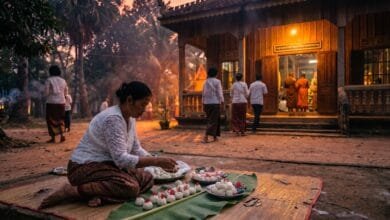
On the second night of the festival, many Cambodian families gather at pagodas, in their homes, or along the riverbank to perform Sampeas Preah Khe — the Moon Salutation. Just before midnight, they face the full moon and offer prayers of thanks.
They also eat Ok Ambok, a traditional dish made from rice that has been roasted in the husk, then pounded and flattened. It is eaten with banana and coconut juice. The ritual is simple but deeply meaningful: a moment of gratitude for the harvest, shared with family and community.
Food and Family Traditions
Food is central to Bon Om Touk, but it is not a food festival in the way that a Western harvest fair might be. The most important food tradition is Ok Ambok, the flattened rice eaten during the Moon Salutation. It is simple, slightly nutty, and usually served with slices of banana and a splash of coconut water.
Beyond Ok Ambok, the festival is a time for family meals. Street vendors line the riverbanks in a normal year, selling grilled squid, fried noodles, sugarcane juice, and Khmer desserts. Families spread mats on the grass and share food together, often late into the night.
For many Cambodians, the Water Festival is less about specific dishes and more about the experience of eating together — a rare opportunity when relatives who live in different cities can share a meal.
What Visitors May See
If you attend Bon Om Touk — especially in Siem Reap in 2026 — here is what you are likely to encounter:
- Boat races along the river, with teams of rowers competing in colorful boats.
- Large crowds of Cambodian families, many of whom have traveled from other provinces.
- Street food stalls selling grilled meats, noodles, fruit, and desserts.
- Illuminated floats drifting down the river at night.
- Fireworks over the water.
- Monks and lay Buddhists performing prayers and offerings, especially during the Moon Salutation.
- Traditional music and dance performances at community stages.
The atmosphere is festive but not chaotic in the way a music festival might be. It is a family-oriented celebration. You will see grandparents, toddlers, teenagers, and young couples — all sharing the same riverside space.
Can Tourists Participate?
Yes — and in a normal year, the Cambodian government actively welcomes foreign visitors. In past years, Phnom Penh has set up dedicated viewing platforms for international tourists, with seating, free cold drinks, and translation services in English, Chinese, and French.
Tourists are welcome to watch the boat races, enjoy the street food, and observe the cultural ceremonies. However, participation in religious rituals like the Moon Salutation should be done respectfully and only if invited. It is a family and community practice, not a performance for tourists.
If you are in Siem Reap for the 2026 festival, you will likely find a more relaxed atmosphere than Phnom Penh in a typical year, with easier access to the riverbank and more opportunities to interact with local families.
How Visitors Should Behave Respectfully
Bon Om Touk is a joyful celebration, but it is also a sacred and culturally important event. Here are some simple guidelines for respectful behavior:
Dress modestly. Cambodia is a conservative country. Lightweight, breathable clothing is fine, but avoid very short shorts, tank tops that expose the shoulders, or anything that would be considered revealing in a temple context. If you plan to visit a pagoda during the festival, cover your shoulders and knees.
Ask before photographing people. Many Cambodians are happy to be photographed, especially during festivals. But always ask first, and respect a “no.” Avoid photographing monks without permission.
Do not interrupt religious ceremonies. If you see people praying or making offerings, observe from a respectful distance. Do not stand between worshippers and the altar, and do not use flash photography during prayers.
Be careful in crowds. The Water Festival draws millions of people in a normal year. Keep your valuables secure, stay hydrated, and be aware of your surroundings. If you feel unwell in the heat, find shade and sit down.
Follow local instructions. If security personnel or volunteers ask you to move, do so promptly. The festival involves large crowds and the authorities take safety seriously.
Do not litter. The riverbanks are sacred to many Cambodians. Use trash bins and help keep the celebration clean.
What Makes This Celebration Special
Many countries have water festivals. Thailand has Songkran, where people splash water on each other. Myanmar has Thingyan. But Cambodia’s Water Festival is different. It is not about playful water fights. It is about the river itself — the Tonle Sap system that has sustained Cambodia for centuries.
Bon Om Touk is a celebration of a natural phenomenon that is unique in the world: a river that changes direction twice a year. It is a moment when Cambodians express gratitude for the fish, the rice, and the water that make life possible. It is also a moment of national unity, when people from every province come together to cheer for their boats and their communities.
For a visitor, the Water Festival offers something rare: a chance to see Cambodia celebrating itself, not for tourists, but for its own reasons. If you approach it with curiosity and respect, you will come away with a deeper understanding of this country and its people.
Frequently Asked Questions
When is the Water Festival in Cambodia in 2026?
The official public holiday dates are November 23–25, 2026. However, the Phnom Penh celebrations have been canceled for 2026. Provincial celebrations, including in Siem Reap, may still take place.
What does Bon Om Touk mean?
Bon Om Touk (បុណ្យអុំទូក) literally means “Boat Racing Festival” in Khmer. The full ceremonial name includes references to illuminated floats, the taste of Ok Ambok, and moon worship.
Why is the Water Festival important in Cambodia?
It marks the end of the rainy season and the reversal of the Tonle Sap River. It is a time of thanksgiving for the water and fish that sustain Cambodian agriculture and fisheries. It also commemorates a historic naval victory from the 12th century.
Can tourists participate in the Water Festival?
Yes. Tourists are welcome to watch the boat races, enjoy the food, and observe the cultural ceremonies. In past years, Phnom Penh has even provided dedicated viewing areas for foreign visitors.
What should tourists wear to the Water Festival?
Wear lightweight, breathable clothing suitable for hot weather. Avoid very revealing clothing. If you plan to visit a pagoda, cover your shoulders and knees.
Where can visitors experience the Water Festival in 2026?
With Phnom Penh’s celebrations canceled, Siem Reap is the most likely alternative. The city has hosted boat races, illuminated floats, and cultural performances in recent years. Check with local authorities for the latest information.
Is the Water Festival a public holiday in Cambodia?
Yes. It is an official three-day public holiday.
What food is associated with the Water Festival?
The most important festival food is Ok Ambok, a dish of roasted, flattened rice eaten with banana and coconut juice during the Moon Salutation ceremony.
Conclusion
The Water Festival — Bon Om Touk — is more than a boat race. It is a celebration of water, community, and the cycles of nature that have shaped Cambodia for centuries. For travelers, it is a window into a side of Cambodian life that is not always visible: the deep connection between the country and its rivers, the importance of family and community, and the quiet spirituality that runs through many Khmer traditions.
If you are in Cambodia in November 2026, remember that Phnom Penh’s official celebrations have been canceled. But the spirit of the festival lives on in the provinces, especially in Siem Reap. Wherever you experience it, approach it with curiosity and respect. Learn a few words of Khmer. Try the Ok Ambok. Sit with a Cambodian family and share a meal. You will come away with more than photographs — you will come away with a deeper understanding of this remarkable country.