What Is Prahok? Cambodia’s Fermented Fish Paste Explained for Travelers
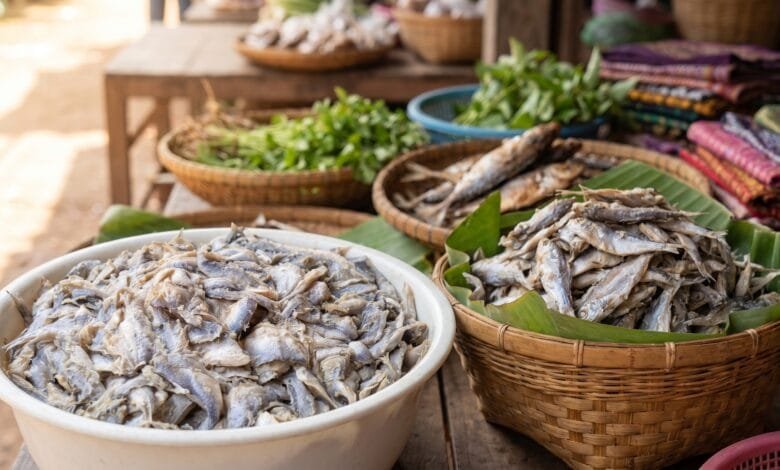
Walk into any Cambodian market and you will notice it before you see it. A sharp, salty, deeply fermented aroma drifts from rows of jars and plastic tubs filled with grey-brown paste. That is prahok, Cambodia’s most important fermented fish paste, and for many travelers it is also the most intimidating ingredient in the country.
Prahok is not just another condiment. It is the backbone of Khmer cooking, a source of protein and flavor that has sustained Cambodian families for centuries. You will find it in soups, dips, stir-fries, and grilled dishes. It appears on humble street stalls and in fine dining restaurants alike. Understanding prahok — even if you never learn to love it — will help you understand what makes Cambodian food taste like Cambodian food.
This guide explains what prahok is, how it smells and tastes, which dishes use it, where it comes from, and what first-time visitors should know before trying it.
What Is Prahok?
Prahok (ប្រហុក, romanized as prâhŏk) is a salted and fermented fish paste used in Cambodian cuisine as a seasoning and condiment. It is typically made from small freshwater fish, most commonly a mud carp called trey riel in Khmer. The fish are cleaned, salted, and fermented for weeks to months, producing a thick, greyish paste with a powerful aroma.
The name “prahok” is sometimes spelled prahoc or prohok in English. In Khmer, the word specifically refers to this fermented fish paste. It is distinct from mam, a broader term for fermented seafood, and from kapi, which is fermented shrimp paste.
Prahok is not eaten on its own the way you might spread cheese on bread. It is almost always cooked, mixed into dishes, or used as a dipping sauce base. Its role is similar to that of fish sauce in Thai or Vietnamese cooking, but prahok is thicker, stronger, and more intensely fermented.
What Does Prahok Taste and Smell Like?
The aroma is the first thing people notice, and it is unforgettable. Prahok has a pungent, fermented smell that has earned it the nickname “Cambodian cheese” — a comparison to Limburger or ripe Camembert that gives you a rough idea of its intensity. The smell is funky, salty, and deeply savory, with a fermented edge that can be overwhelming if you are not prepared for it.
The taste, once cooked, is different from the smell. Prahok is extremely salty and delivers a deep, concentrated umami flavor. When fried or simmered with other ingredients, the harshness of the raw paste softens into something rich and complex. You will taste saltiness first, followed by a savory depth that spreads through the entire dish.
Texture matters too. Raw prahok is a thick, moist paste with a slightly grainy consistency. When cooked, it melts into sauces and broths, thickening them and giving them body. Some versions are smoother, while others retain small pieces of fish.
If you can eat anchovies, fish sauce, or strong blue cheese, you are already familiar with the category of flavor prahok belongs to. If those foods repel you, prahok will too. There is no middle ground.
What Does Prahok Look Like?
Prahok is not a beautiful ingredient. Raw, it is a grey to grey-brown paste, sometimes with a slightly pinkish or purplish tint depending on the fish used and the fermentation time. It looks moist and dense, similar to a thick, coarse pâté.
You will see prahok sold in several forms in Cambodian markets. Some vendors sell it loose from large tubs, scooping it into plastic bags. Others sell it pre-packaged in jars or vacuum-sealed pouches. There is also a dried version called prahok sach, which is boneless and lighter in color, and prahok cha-oeung, which contains bones and is made with less salt.
When prahok is cooked into a dish, it disappears visually. It blends into sauces, soups, and dips, leaving behind only its flavor.
How Is Prahok Used in Cambodian Cooking?
Prahok is a building block, not a finishing ingredient. Cooks use it to add salt, depth, and fermented complexity to a wide range of dishes. It is rarely used raw in everyday cooking because of food safety concerns and its overwhelming intensity.
The most common ways prahok is used:
As a base for dipping sauces. Prahok is mixed with lime juice, sugar, garlic, and chilies to make tuk prahok, a dipping sauce served with fresh vegetables, grilled meat, and rice.
Cooked into soups and broths. A spoonful of prahok dissolves into samlor (Cambodian soups), giving the broth a salty, savory foundation. You will find it in sour soups, vegetable stews, and fish soups.
Fried with aromatics. Prahok chien is prahok fried with minced meat, chilies, and sometimes egg. It is eaten with rice and vegetables as a simple, flavorful meal.
As the star of a dip. Prahok ktiss is the most famous prahok dish for travelers — a rich, creamy dip made with prahok, minced pork, coconut milk, and kroeung (Cambodian spice paste). It is served with raw vegetables for dipping.
Mixed into stir-fries and grilled dishes. Prahok adds depth to fried rice, stir-fried vegetables, and grilled fish or meat marinades.
The key point is that prahok is almost always cooked or processed before eating. The raw paste is a starting point, not a final product.
Which Cambodian Dishes Use Prahok?
Prahok appears in dozens of Cambodian dishes, from everyday home cooking to restaurant specialties. Here are the most important ones for travelers to know:
Prahok Ktiss (ប្រហុកខ្ទិះ) — A rich, creamy dip made with prahok, minced pork, coconut milk, pea eggplant, and kroeung. Served with fresh vegetables like cucumber, cabbage, and carrots. This is the most traveler-friendly introduction to prahok because the coconut milk and pork soften the fermented punch. It is also considered a dish of courtship — traditionally, a man would cook prahok ktiss for his future mother-in-law to prove his cooking skills.
Samlor Korko — A traditional Cambodian soup made with prahok, fish, vegetables, and roasted rice. The prahok gives the broth its salty, savory base.
Prahok Chien — Fried prahok mixed with minced pork or beef and chilies, served with rice and fresh vegetables.
Nom Banh Chok — Cambodia’s famous breakfast noodle dish uses prahok as a seasoning in the fish-based gravy.
Green Papaya Salad (Bok Lahong) — Many versions include tuk prahok (prahok dipping sauce) as a dressing ingredient.
Various Samlor (Soups) — Prahok is a common seasoning in Cambodian sour soups, vegetable soups, and fish soups.
At CambodiaRecipe.com, you can find recipes that use prahok in traditional Khmer cooking, including Cambodian Traditional Bamboo Soup, Green Papaya Salad, and Khmer Prahok Ktis.
Where Does Prahok Come From?
Prahok is made throughout Cambodia, but production is concentrated in provinces with access to freshwater fisheries, particularly around the Tonle Sap Lake and the Mekong River system.
The main production hotspots include:
Battambang Province — Home to the famous Phsa Prahok (Prahok Market) in Ek Phnom district, about six kilometers north of Battambang city. This market is the largest fish processing site in the region and a major center for prahok production.
Kampong Chhnang Province — Another important production area, with commercial processors concentrated in Kampong Tralach district and Boribo district.
Siem Reap Province — Prahok from Siem Reap was recently recognized as a Geographical Indication (GI) product, highlighting the region’s distinct production tradition.
The fish used to make prahok are primarily small, migratory freshwater species. The most common is trey riel, a small mud carp that is abundant during the migratory season. Other species include trey raw, trey kros, and trey chhdor.
How Is Prahok Made?
Prahok production is seasonal. The peak season runs from November to February, when migratory fish are abundant in Cambodian waters. Outside this window, fresh fish are harder to find, which is exactly why fermentation became so important — prahok allowed Cambodians to preserve fish protein for the months when fishing was poor.
The traditional production process follows several steps:
- Cleaning. The fish are beheaded, and their scales and entrails are removed. In traditional production, this was done by trampling the fish by foot, though modern processors often use machines.
- Salting. The cleaned fish are mixed with coarse salt. The salt ratio depends on the type of prahok being made. Prahok cha-oeung (with bones) uses 15–20% salt, while prahok sach (boneless) uses 25–30% salt.
- Drying. The salted fish are spread on mats and dried in the sun for one day.
- Fermentation. The fish are packed into jars or containers and left to ferment. Fermentation takes at least three weeks, but higher-quality prahok is fermented for three months to a year or longer.
The result is a stable, long-lasting product that can be stored for months without refrigeration. This made prahok a reliable source of protein for Cambodian families, especially in rural areas.
Why Is Prahok Important in Cambodian Food?
Prahok is more than an ingredient. It is a piece of Cambodian identity.
Cambodian chefs and food writers describe it as the soul of Khmer cooking. Chef Luu Meng, one of Cambodia’s most prominent chefs, told the BBC: “There’s a saying among our elders, ‘No good prahok, no good friends.’ Prahok in the countryside is part of life for Cambodian people; it has been an essential ingredient in kitchens for many generations”.
Prahok has been part of Cambodian cuisine since at least the Angkorian period (9th–15th centuries), when it provided a way to preserve fish protein in a tropical climate. It sustained families through lean seasons, flavored everyday meals, and became a marker of Cambodian culinary identity. Even Cambodia’s currency, the riel, is named after the trey riel, the small fish most commonly used to make prahok.
In modern Cambodia, prahok remains a daily staple. It is not a delicacy reserved for special occasions. It is the taste of home.
Regional Differences
Prahok production varies by region in several ways:
Fish species. Different provinces have access to different fish. Battambang and Kampong Chhnang rely heavily on trey riel and other small migratory species, while other areas may use larger fish like snakehead.
Salt content. Prahok sach (boneless) is saltier than prahok cha-oeung (with bones), and regional producers may adjust salt ratios based on local preferences and climate.
Fermentation time. Some producers ferment for just a few weeks, while others age their prahok for a year or more. Longer fermentation produces a stronger, more complex flavor.
Texture. Some prahok is smooth and fine, while other versions retain visible pieces of fish. This depends on the fish used and the processing method.
Can Foreign Travelers Try or Buy Prahok?
Yes, and you probably will whether you plan to or not.
Prahok is everywhere in Cambodia. You will smell it in markets. You will taste it in soups and dips without knowing it. You may see it on menus as an ingredient in dishes you order.
Where to try it:
The best place to start is prahok ktiss at a restaurant. The coconut milk and pork make it approachable, and it is served with fresh vegetables that help balance the flavor. In Siem Reap, restaurants along Wat Bo Road serve excellent versions. In Phnom Penh, restaurants like Malis have elevated prahok dishes to fine dining.
Where to buy it:
You can buy prahok in almost any Cambodian market. It is sold loose from tubs, in plastic bags, and in jars. Battambang’s Prahok Market (Phsa Prahok) is a destination for food-focused travelers who want to see the production process and buy directly from producers.
For something more portable, you can find packaged prahok powder and jarred prahok in supermarkets and specialty shops in Phnom Penh and Siem Reap. These are easier to take home than the raw paste.
How to ask for it:
The Khmer word is ប្រហុក (prahok). If you want to try the dip, ask for “prahok ktiss.” If you want to avoid it, ask whether a dish contains prahok — but be prepared for the answer to be “yes” more often than you expect.
How to Recognize Good Prahok
If you are buying prahok, either to cook with in Cambodia or to take home, here are practical indicators of quality:
Color. Good prahok is grey to grey-brown, sometimes with a slight pink or purple tint. It should not be bright red or artificially colored.
Aroma. It will smell fermented and salty. This is normal. The smell should be pungent but not rotten or ammonia-like. A strong, clean fermented aroma is a good sign.
Texture. The paste should be moist and thick, with a slightly grainy consistency. It should not be watery or dry and crumbly.
Packaging. If buying packaged prahok, check for airtight seals and a clean appearance. Jars should be free of cracks. Vacuum-sealed pouches should be intact.
Spoilage signs. Avoid prahok with mold on the surface, a slimy texture, or an ammonia-like smell. These are signs of spoilage.
Prahok is a preserved product, but it is not indestructible. Once opened, it should be kept refrigerated and used within a reasonable time.
Can You Find Prahok Outside Cambodia?
Prahok is available in many countries with Cambodian communities, particularly the United States, France, Australia, and Canada. You will find it in Asian grocery stores that serve Southeast Asian communities, especially those with Cambodian or Vietnamese populations.
In the United States, look for prahok in larger Asian supermarkets in cities like Long Beach (California), Lowell (Massachusetts), and Seattle (Washington), which have significant Cambodian communities. It is usually sold in jars or plastic containers in the refrigerated or shelf-stable sections.
Online availability has improved in recent years. Some Asian grocery delivery services and specialty retailers carry jarred prahok. However, the raw paste is harder to ship than fish sauce or other shelf-stable condiments.
What to use instead:
If you cannot find prahok, the closest substitutes are:
- Fermented fish paste from other Southeast Asian cuisines. Thai pla ra and Lao padaek are the closest equivalents. Vietnamese mam nem is also similar. Each has its own character, but they belong to the same family of fermented fish products.
- Fermented shrimp paste (kapi). More widely available in some regions. The flavor is different — shrimpier and less fishy — but it adds a similar fermented depth.
- Fish sauce. Not a true substitute, but it can add saltiness and umami in dishes where prahok is used as a seasoning rather than the main ingredient.
- French pissalat. An unusual substitute sometimes suggested by Cambodian cooks abroad. It is an anchovy paste from the south of France with a similar fermented character.
None of these are identical to prahok. If you are cooking a dish where prahok is the star — like prahok ktiss — there is no real substitute. For dishes where prahok is one of many seasonings, fish sauce or shrimp paste can work in a pinch.
What Should Travelers Know?
Start with prahok ktiss. It is the most approachable prahok dish for first-timers. The coconut milk and pork tame the fermented edge, and the fresh vegetables give you something familiar to eat alongside it.
Do not eat raw prahok. Raw prahok is not commonly eaten in Cambodia because of food safety concerns. It can harbor harmful bacteria if not properly fermented, and its flavor is overwhelming raw. Every prahok dish you encounter will be cooked or processed.
Allergens. Prahok is fish-based. If you have a fish allergy, avoid it. It also contains high levels of salt.
Dietary considerations. Prahok is not vegetarian or vegan. It contains fish and is often cooked with pork or other meats. If you follow a plant-based diet, ask specifically about prahok in dishes.
Cultural etiquette. Prahok is a beloved ingredient in Cambodia. Making faces or loudly expressing disgust at its smell is considered rude. If you do not like it, simply do not eat it. Cambodians are used to foreigners being surprised by prahok, and they often find it amusing — but genuine disdain is not appreciated.
Start small. You do not have to eat a big spoonful of prahok on your first try. Taste a small amount in a dish like prahok ktiss. If you like it, explore more. If you do not, you have still experienced a fundamental part of Cambodian food culture.
Buying for home. If you want to take prahok home, buy the packaged version rather than the loose paste. It is easier to transport and has a longer shelf life. Check your country’s customs regulations regarding fermented fish products before you travel.
Frequently Asked Questions
What is prahok called in Khmer?
Prahok is written as ប្រហុក in Khmer script and romanized as prâhŏk. The pronunciation is roughly “pra-hok.”
What does prahok taste like?
Prahok is extremely salty with a deep, fermented umami flavor. It tastes like a concentrated, fishy version of fish sauce, with a complexity that comes from fermentation. When cooked, the flavor softens and blends into dishes.
Is prahok safe to eat?
Cooked prahok is safe to eat. Raw prahok is not commonly consumed because of food safety concerns. Always eat prahok in cooked dishes or as part of a cooked preparation.
What Cambodian dishes contain prahok?
Prahok is used in prahok ktiss (a pork and coconut dip), samlor korko (a traditional soup), prahok chien (fried prahok), nom banh chok (breakfast noodles), and many Cambodian soups and salads.
Is prahok spicy?
No. Prahok is salty and fermented, not spicy. Some dishes made with prahok, like prahok ktiss, may include chilies, but the heat comes from added chilies, not from prahok itself.
Where can travelers find prahok?
Prahok is available in markets throughout Cambodia. You can try it in restaurants, especially in dishes like prahok ktiss. To buy it, visit local markets or specialty food shops. Battambang’s Prahok Market is a popular destination for food-focused travelers.
Conclusion
Prahok is the ingredient that defines Cambodian cooking. It is salty, fermented, pungent, and utterly unlike anything in most Western kitchens. It smells like a challenge and tastes like a revelation — or a nightmare, depending on your palate.
But prahok is more than a flavor. It is a story of survival and ingenuity, a way of preserving fish in a tropical climate that became a cornerstone of a national cuisine. It has fed Cambodian families for centuries, survived war and upheaval, and remains a daily presence in kitchens across the country.
For travelers, prahok is a doorway into understanding Cambodian food. You do not have to love it. You do not even have to like it. But if you want to understand what makes Khmer cooking taste like Khmer cooking, you need to know prahok. Try it in a dish like prahok ktiss, keep an open mind, and let the flavor tell you the story of Cambodia.