A Traveler’s Guide to Identifying Cambodian Ingredients
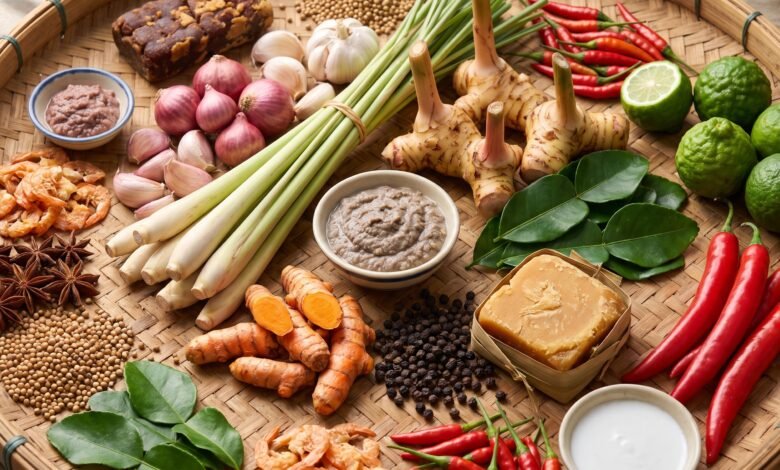
Cambodian food does not shout. It builds flavor slowly, layering aromatic herbs, fermented fish, palm sugar, and freshwater ingredients into something balanced and deeply savory. For a first-time visitor, that subtlety can be confusing. You sit down to a bowl of fish amok and wonder what makes it taste the way it does. You walk through a Cambodian market and see piles of pale roots, knotted leaves, and dark pastes you cannot name.
This guide is for that moment. It covers the core ingredients that define Khmer cooking, explains what they look like and how they smell, and tells you where you are most likely to encounter them. By the end, you will be able to walk into a market or read a menu with more confidence — and enjoy Cambodian food on a deeper level.
What Are the Core Ingredients in Cambodian Cooking?
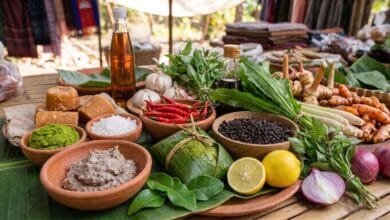
Khmer cuisine rests on a small set of ingredients that appear again and again. The most important are kroeung (a fresh herb paste), prahok (fermented fish paste), Kampot pepper, palm sugar, fish sauce, coconut milk, and a handful of aromatics: lemongrass, galangal, kaffir lime leaves, and fresh turmeric.
These ingredients work together in a specific way. Kroeung provides the aromatic base. Prahok and fish sauce supply salt and umami. Palm sugar balances with sweetness. Coconut milk adds richness. Fresh herbs and vegetables finish dishes with brightness and texture. Understanding these roles will help you recognize what you are tasting in almost any Khmer dish.
The guide below focuses on the ingredients you are most likely to notice as a traveler — the ones that appear in markets, on menus, and in the questions you will want to ask.
Kroeung: The Aromatic Paste Behind Khmer Flavor
Kroeung (គ្រឿង, krœăng) is the single most important building block in Cambodian cooking. The word itself simply means “ingredients,” but in practice it refers to a fresh paste pounded from herbs and rhizomes. It is the base flavor of curries, soups, stir-fries, and stuffings.
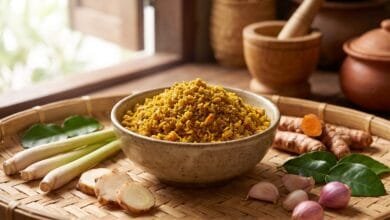
What it looks like: Fresh kroeung is a moist, coarse paste. Its color depends on the type — yellow kroeung is golden from turmeric, green kroeung is bright with fresh herbs, and red kroeung takes on color from dried chilies. You will often see it sold in markets already ground, wrapped in banana leaves or packed into small plastic bags. In restaurants, it appears as the cooking base rather than a finished dish.
What it smells like: Sharp, herbal, and citrusy. Lemongrass dominates the aroma, followed by the pine-like scent of galangal and the floral notes of kaffir lime leaves. Fresh kroeung smells green and alive; cooked into a dish, it mellows into something warmer and rounder.
The core ingredients: The base of most kroeung includes lemongrass, galangal, garlic, shallots, kaffir lime leaves, and turmeric. Different dishes call for different ratios and additions. Yellow kroeung (kroeung samlar m’chu) is used for sour soups. Green kroeung (kroeung prâhoeur) appears in fish amok. Red kroeung (kroeung samlar kari) goes into curries.
Where you will encounter it: Kroeung is not usually eaten on its own. You taste it in fish amok, in sour soups like samlar machu, in stir-fries, and in the marinades for grilled meats. When a dish tastes layered and aromatic rather than simply spicy, kroeung is usually the reason.
Prahok: Cambodia’s Fermented Fish Paste
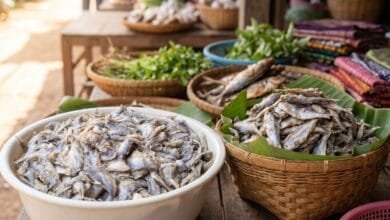
Prahok (ប្រហុក) is the ingredient that most surprises foreign visitors — and the one that most clearly separates Khmer cooking from its neighbors. It is a fermented fish paste, usually made from small freshwater fish, and it functions as a seasoning rather than a main ingredient. In 2025, prahok from Siem Reap was recognized as a Geographical Indication product, joining Kampot pepper and Kampong Speu palm sugar as protected Cambodian foods.
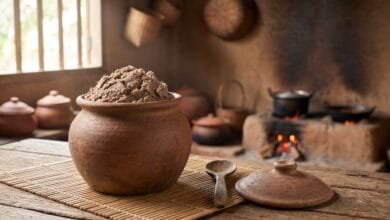
What it looks like: Prahok is a thick, grayish-brown paste. Its texture ranges from chunky to smooth depending on how it is processed. You will see it sold in markets in large tubs or wrapped in banana leaves. In restaurants, it is usually cooked into dishes rather than served raw.
What it smells like: Strong. Fermented, salty, and distinctly fishy. The aroma can be intense for anyone unfamiliar with fermented seafood. But when prahok is cooked — fried with pork, simmered into a soup, or blended into a dipping sauce — the smell softens and the flavor becomes a deep, savory undertone rather than an overwhelming presence.
How it is used: Prahok is rarely eaten plain. It is fried with minced pork and eaten with rice and raw vegetables. It is added to soups for salt and depth. It is mixed into dipping sauces. In many Khmer dishes, prahok provides the salty, umami foundation that fish sauce provides in Thai or Vietnamese cooking.
A note for travelers: If you are vegetarian or have a seafood allergy, prahok is the ingredient to ask about. It appears in many dishes that might otherwise seem vegetable-based. The phrase “ot sai prahok” (no prahok) is worth learning. Many restaurants in tourist areas understand the request.
Kampot Pepper: The World’s Most Prized Peppercorn
Kampot pepper is Cambodia’s most famous export ingredient. It holds Geographical Indication status and is widely regarded as one of the finest peppers in the world. The unique flavor comes from the quartz-rich soil of the foothills around Kampot Province and the Elephant Mountains.
What it looks like: Kampot pepper comes in four main forms. Green peppercorns are fresh and soft, often sold still attached to the vine. Black peppercorns are the dried, mature berries. White peppercorns are the same berries with the outer skin removed. Red peppercorns are ripe berries, briefly preserved, and have a fruity, almost floral quality.
What it tastes like: Kampot pepper is aromatic and complex rather than simply hot. The black pepper has a sharp, clean heat with floral and citrus notes. The red pepper is fruitier and milder. The white pepper is earthier. If you have only tasted supermarket pepper, Kampot pepper will feel like a different spice entirely.
Where you will encounter it: You will see Kampot pepper on nearly every restaurant table in Cambodia, often served as a small dish of ground pepper mixed with lime juice for dipping. It is sold in markets, specialty shops, and at the farms themselves. It is one of the easiest Cambodian ingredients to bring home.
Palm Sugar: Cambodia’s Natural Sweetener
Cambodian palm sugar (ស្ករត្នោត, skor thnaot) is made from the sap of the sugar palm tree, a tall, slender palm that dots the Cambodian landscape. It has a deep, caramel-like sweetness with notes of smoke and molasses, and it is used in both sweet and savory cooking.
What it looks like: Palm sugar is sold in several forms: pale golden blocks, dark brown paste, granulated crystals, and syrup. The blocks are often wrapped in palm leaves. In markets, you will see them stacked in neat piles. The paste has a soft, fudgy texture; the blocks are hard and need to be shaved or melted.
What it tastes like: Unlike refined white sugar, palm sugar has depth. It tastes like caramel, with a faint smokiness and a mineral finish. It is less sweet than white sugar by volume, so it adds flavor rather than just sweetness.
How it is used: Palm sugar appears in desserts, drinks, and savory dishes. It balances the salt and sourness in soups and stir-fries. It sweetens coconut-based desserts. In Kampong Speu Province, palm sugar production is a recognized Geographical Indication product, and the province is the center of traditional production.
The Aromatic Herbs: Lemongrass, Galangal, Kaffir Lime, and Turmeric
These four ingredients form the aromatic backbone of Khmer cooking. You will find them in almost every kroeung, and you will see them fresh in every Cambodian market.
Lemongrass (ស្លឹកគ្រៃ, sleuk krey) looks like a thick, pale green stalk with a woody texture. Only the tender inner core is used. It smells intensely of citrus — like lemon without the sharpness. In markets, it is sold in bundles. If you buy some, look for stalks that are firm and pale at the base, not dry or brown.
Galangal (រំដេង, romdeng) resembles ginger but is harder, paler, and more aromatic. It has a pine-like, peppery scent that is sharper than ginger. You will see it in markets as knobby rhizomes with a light brown skin and pale interior. It is almost always used cooked, never raw.
Kaffir lime leaves (ស្លឹកក្រូចសើច, sleuk kroch saeuch) are dark green, glossy, and shaped like a figure eight. The leaves themselves have a powerful citrus aroma — more floral and intense than the fruit. They are used whole in soups and curries, or sliced into fine ribbons for salads and stuffings. In markets, you will find them in small bundles, sometimes still attached to the thorny branch.
Fresh turmeric (រមៀត, romiet) looks like a smaller, brighter relative of ginger. When you cut into it, the interior is a vivid orange-gold. It stains everything it touches. It smells earthy and slightly bitter, with a warm, peppery finish. Dried turmeric powder is common, but fresh turmeric is what you will see in Cambodian markets and what gives yellow kroeung its color.
Fish Sauce and Coconut Milk
Cambodian fish sauce (ទឹកត្រី, teuk trei) is similar to the fish sauces of Thailand and Vietnam, but it has its own character. It is salty, amber-colored, and intensely savory. Some Cambodian fish sauce is produced as a byproduct of prahok fermentation, giving it a milder, fresher flavor than long-fermented fish sauces. It appears as a condiment on tables and as a seasoning in cooked dishes.
Coconut milk (ទឹកដូង, teuk doung) is the creamy liquid pressed from grated mature coconut. It is used in curries, desserts, and drinks. In Cambodian cooking, it adds richness without the heaviness of dairy. You will see it sold fresh in markets, pressed at stalls, or in cans in supermarkets.
How to Identify Cambodian Ingredients in a Market
Cambodian markets are the best place to see these ingredients in their raw form. Here is what to look for:
The herb and rhizome stalls: Look for baskets of lemongrass bundles, knobby galangal, bright orange turmeric, and piles of kaffir lime leaves. The vendors will often have small bunches ready to buy. If you are unsure what something is, point and ask “k’nyom?” (what is this?). Most vendors are patient with curious visitors.
The paste section: Kroeung is often sold pre-ground in markets, wrapped in banana leaves or packed into small bags. It will look like a moist, colorful paste. Prahok is sold in large tubs, usually in the fermented goods section. The smell will tell you when you have found it.
The pepper and sugar stalls: Kampot pepper is sold in small bags or jars, often labeled with the region and the color. Palm sugar is sold in blocks, paste, or granulated form, usually near the dry goods stalls. Both are lightweight and easy to carry home.
The fresh coconut stalls: In many markets, you will see vendors pressing fresh coconut milk. The process involves grating the white coconut flesh and squeezing it with water. The result is a rich, white liquid that separates into cream and milk if left to stand.
Where Travelers Encounter These Ingredients
You do not need to cook to experience Cambodian ingredients. They appear everywhere you eat.
In restaurants: Kroeung is the base of fish amok, sour soups, and curries. Prahok is cooked into stir-fries and dipping sauces. Kampot pepper is on the table. Palm sugar sweetens desserts and drinks. Fish sauce is in the dipping sauces served with almost every meal.
In street food: Look for grilled meats marinated in kroeung, papaya salads dressed with fish sauce and lime, and coconut-based desserts. The flavors you taste in street food are built from the same core ingredients.
In cooking classes: Many travelers encounter Cambodian ingredients most directly in a cooking class. You will pound kroeung in a mortar and pestle, learn to balance fish sauce and palm sugar, and taste the difference between fresh and dried aromatics. This is the best way to develop a sensory memory of these ingredients.
In markets: As described above, markets are where you see the raw ingredients. Even if you do not cook, a walk through a Cambodian market will teach you more about Khmer food than any restaurant meal.
Can You Bring Cambodian Ingredients Home?
Many Cambodian ingredients travel well. Dried Kampot pepper, palm sugar blocks, and dried spices are lightweight and legal to bring into most countries. Fish sauce and prahok are more complicated: they are liquids or pastes, and some countries restrict the import of fermented seafood products. Check your country’s customs rules before packing prahok or large bottles of fish sauce.
Fresh herbs, rhizomes, and leaves generally cannot be brought across borders. If you want to cook Cambodian food at home, look for frozen lemongrass, dried kaffir lime leaves, and jarred kroeung paste in Asian grocery stores. They are not identical to fresh, but they will get you close.
What to Know Before You Try These Ingredients
Prahok is an acquired taste. If you are not used to fermented fish, start with a dish where prahok is cooked into the background — a soup or a stir-fry — rather than a dish where it is the main flavor. Fried prahok with pork is a classic, but it is intense. You may love it. You may not. Either is fine.
Kampot pepper is not just “pepper.” Take a moment to taste it on its own, without lime or salt. The floral, citrusy notes are what make it special.
Kroeung is not a curry paste in the Thai sense. It is fresher, more herbal, and less chili-forward. If you are expecting red curry heat, you will be surprised. The heat in Cambodian food usually comes from fresh chilies added at the table or in specific dishes, not from the kroeung itself.
Palm sugar is not a substitute for white sugar. It has a distinct flavor that changes the character of a dish. In desserts, it adds depth. In savory dishes, it balances salt and sourness without making the dish taste sweet.
Learn a few phrases. “Ot sai prahok” (no prahok) is useful if you are vegetarian or allergic to fish. “Chngay” (delicious) will make any vendor smile. “K’nyom” (what is this?) will open conversations.
Frequently Asked Questions
What is kroeung made of?
Kroeung is a fresh paste made from lemongrass, galangal, garlic, shallots, kaffir lime leaves, and turmeric. Different dishes use different ratios and may add dried chilies, fingerroot, or other rhizomes.
What does prahok taste like?
Prahok is salty, deeply savory, and intensely fishy when raw. When cooked into a dish, it becomes a background flavor — umami rather than overwhelming fishiness.
Is Cambodian food spicy?
Not generally. Khmer cooking emphasizes aromatic herbs, fermented flavors, and balance rather than chili heat. Fresh chilies are often served on the side or added to specific dipping sauces.
What is Kampot pepper used for?
Kampot pepper is used as a table condiment, mixed with lime juice for dipping, and added to marinades and stir-fries. It is prized for its complex, floral flavor rather than pure heat.
Where can I buy Cambodian ingredients?
Markets, specialty shops in Phnom Penh and Siem Reap, and the farms themselves. Kampot pepper and palm sugar are widely available and easy to bring home. Prahok and fish sauce are harder to transport and may be restricted by customs.
Can I find Cambodian ingredients outside Cambodia?
Dried Kampot pepper and palm sugar are increasingly available online and in specialty stores. Frozen lemongrass, dried kaffir lime leaves, and jarred kroeung paste can be found in many Asian grocery stores. Fresh galangal and turmeric are available in larger Asian markets.
Conclusion
Cambodian ingredients are not difficult to understand once you know what you are looking at. Kroeung is the aromatic base. Prahok is the fermented depth. Kampot pepper is the floral heat. Palm sugar is the caramel sweetness. Lemongrass, galangal, kaffir lime, and turmeric are the fresh, green backbone that ties it all together.
You do not need to memorize every name or learn to cook every dish. What matters is recognizing these ingredients when you see them — in a market, on a menu, or in the food in front of you. Once you can identify them, Cambodian food becomes less mysterious and more delicious. You start to taste the layers, not just the surface.
Take a walk through a market. Order a bowl of fish amok. Ask what is in it. Taste the pepper on the table. Cambodia’s ingredients will teach you more about the country than any guidebook can.