How Prahok Is Made: Inside Cambodia’s Fermented Fish Paste
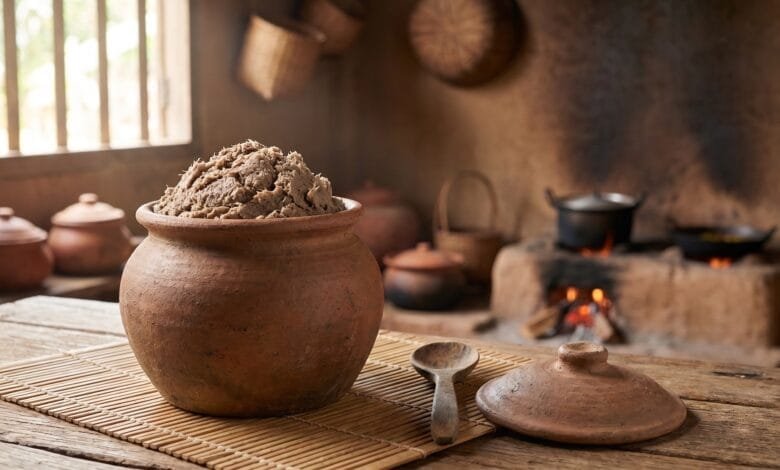
Prahok is Cambodia’s most important fermented ingredient. It is a salty, pungent fish paste that gives Khmer cooking its unmistakable depth of flavor. For travelers, prahok is also one of the most surprising things they will encounter in Cambodia. The smell alone can stop a first-time visitor in their tracks.
Understanding how prahok is made explains a great deal about Cambodian food. It reveals why this paste tastes the way it does, why it lasts so long, and why Cambodians treat it as an essential part of daily cooking rather than a specialty item. This guide walks through the entire process, from fish selection to fermentation, and explains what travelers should know before trying it.
What Is Prahok?
Prahok (Khmer: ប្រហុក, romanized: prâhŏk) is a salted and fermented fish paste used in Cambodian cuisine as a seasoning or condiment. It is sometimes nicknamed “Cambodian cheese” because of its strong aroma and umami-rich flavor, though it is nothing like dairy cheese in taste or texture.
Prahok originated as a way of preserving fish during months when fresh fish was scarce. Today, it remains a staple in Cambodian kitchens, particularly in rural areas, where it is eaten with rice or added to soups, stews, and dips. There are two main types: prahok ch’oeung, made from small fish with bones included and less salt (15–20%), and prahok sach, made from larger deboned fish with more salt (25–30%).
What Does Prahok Taste and Smell Like?
Prahok has a powerful, pungent aroma that many first-time travelers find overwhelming. The smell is sharp, fermented, and distinctly fishy. Cambodians describe good prahok as having a deep, savory aroma that signals flavor, not spoilage.
The taste is intensely salty and umami-rich. It carries a fermented complexity that is difficult to compare to anything else in Western cooking. A small amount goes a long way. When cooked into dishes, the harshness of the raw paste softens, and it becomes a rich, savory background flavor rather than a dominant one. In dishes like prahok ktis, coconut milk and pork balance the saltiness and create a creamy, complex dip.
The texture varies by type. Prahok ch’oeung is a thick paste with softened bones that dissolve during fermentation. Prahok sach is smoother and denser, often used in recipes where a finer texture is preferred.
What Does Prahok Look Like?
Prahok is typically a grey-brown to dark brown paste. Its color deepens with longer fermentation. In markets, it is often sold in clay jars, plastic containers, or wrapped in banana leaves. The paste itself looks moist and dense, similar in appearance to a thick, grainy pâté.
Travelers should look for prahok with a uniform color and a moist, paste-like consistency. Dry or crusty edges can indicate poor storage. The aroma should be strong but not sour or rotten in an unpleasant way. Experienced buyers rely on smell as the primary quality indicator.
How Is Prahok Made?
Prahok production is a traditional process that has changed surprisingly little over generations. It relies on just two main ingredients: fresh fish and salt. The method varies depending on the type of prahok being made, but the core steps remain consistent.
Fish Selection
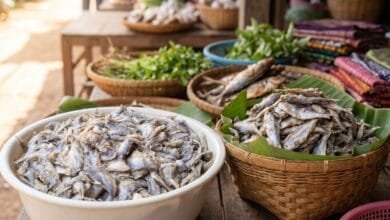
Prahok is made from freshwater fish caught in Cambodia’s rivers and lakes. The most common species is trey riel (Henicorhynchus spp.), a small mud carp that is abundant in the Mekong River basin and Tonle Sap Lake. Other small fish such as trey sleuk reussey are also used. For prahok sach, larger fish like snakehead are preferred.
The fishing season peaks between January and March, when receding water levels in the Tonle Sap concentrate fish populations and make them easier to catch. This seasonal window is when most prahok production takes place.
Cleaning and Preparation
The fish are first beheaded, descaled, and gutted. Traditionally, this was done by placing the fish in a flat basket at the edge of a river and stepping on them until the scales washed away in the current. This foot-trampling method is still used in some rural areas today, though modern tools have replaced it in many production facilities.
After cleaning, the fish are washed thoroughly and excess water is pressed out. For prahok sach, the fish are filleted to remove bones. For prahok ch’oeung, the small fish are kept whole, and their tiny bones soften during fermentation.
Salting and Early Fermentation
The cleaned fish are mixed with salt at a relatively low concentration, commonly 4–5%, and soaked in baskets overnight. This early stage produces a liquid byproduct called teuk trey, a type of fish sauce that some producers collect. Teuk trey from this stage is considered milder and fresher than fish sauces made from longer fermentations.
After the teuk trey is collected (or left in the mixture, depending on the producer), the fish are salted again. Prahok ch’oeung receives 15–20% salt, while prahok sach receives 25–30% salt. The fish are then packed into containers for the long fermentation.
Fermentation
The salted fish are packed into sealed containers — traditionally clay jars, but also plastic, earthenware, metal, or concrete vats. To keep the fish submerged, producers place wooden pieces or rocks on top. The containers are sealed without air ventilation, because exposure to oxygen causes bad smells and reduces quality.
Fermentation lasts anywhere from three months to a year, depending on the fish species and the producer’s preference. A common duration is six months. During this time, bacteria and enzymes break down the fish proteins and fats, creating the deep umami flavor and characteristic aroma that define prahok.
Experienced producers test for doneness by smelling the paste when the container is opened and pressing the fish flesh to check firmness. Some steam a small portion to evaluate the aroma and consistency more carefully.
The Final Product
From 100 kilograms of fresh fish, producers typically yield about 60 kilograms of prahok ch’oeung or 40 kilograms of prahok sach. The finished paste is then packaged for sale in markets or stored for household use.
Which Cambodian Dishes Use Prahok?
Prahok appears in many Cambodian dishes, usually in small amounts that add depth without dominating the flavor.
- Prahok Ktis is a popular dipping sauce made from prahok sach, minced pork, coconut cream, yellow kroeung, tamarind water, palm sugar, and pea eggplants. It is served with fresh vegetables such as cucumber and rice crackers.
- Bok Lahong (green papaya salad) uses prahok as a key seasoning alongside lime juice and chilies. CambodiaRecipe has a recipe for this dish that uses tuk prahok (prahok liquid).
- Samlar Prahok is a spicy soup made with prahok and vegetables, often cooked with fish or pork.
- Prahok Chien is a simple preparation where prahok is fried with aromatics and eaten with rice.
Prahok is also used as a general seasoning in soups, stews, and stir-fries. Many Cambodian cooks keep a jar of prahok in the kitchen the way Western cooks keep salt or stock cubes.
Where Does Prahok Come From?
Prahok is produced throughout Cambodia, but it is most closely associated with fishing communities around Tonle Sap Lake and along the Mekong River. Kampong Thom province is a notable production area, and Battambang province has a market specifically dedicated to prahok that has become a tourist attraction.
The ingredient’s history is tied to the seasonal rhythms of Cambodia’s freshwater fisheries. During the dry season, when water levels recede and fish become concentrated, communities harvest large quantities of small fish and preserve them as prahok for the coming months.
Why Is Prahok Important in Cambodian Food?
Prahok is more than a condiment. It is a cornerstone of Cambodian cooking and food security. Because it is heavily salted and fermented, it can be stored for long periods without refrigeration, making it a reliable source of protein and flavor in rural areas.
Cambodian cooks use prahok liberally to add depth to nearly every dish. Khmer people often say that without prahok’s smell and flavor, food is not delicious. This sentiment captures the ingredient’s cultural weight: prahok is not just an ingredient but a marker of authentic Khmer taste.
Regional Differences
Prahok production varies by region and producer. The fish species available locally, the salt ratio, the duration of fermentation, and the type of container all influence the final product. Some producers add ginger, galangal, roasted rice, or fruit like papaya to adjust flavor and appearance. These small variations create regional differences in aroma, texture, and taste that experienced Cambodian eaters can recognize.
Can Foreign Travelers Try or Buy Prahok?
Travelers will encounter prahok in many forms across Cambodia. It appears on menus in dishes like prahok ktis, samlar prahok, and bok lahong. It is sold in markets throughout the country, often in clay jars or plastic tubs.
For first-time tasters, prahok ktis is a good introduction. The coconut milk and pork soften the intensity of the paste and make it more approachable. Raw prahok is extremely salty and pungent; it is best experienced cooked into a dish rather than eaten alone.
Travelers can also visit prahok production areas. The prahok market in Battambang’s Ek Phnom district is a known destination for foreign visitors interested in seeing how the paste is made. Production peaks between January and March, so travelers visiting during that window are more likely to see active fermentation and fish processing.
How to Recognize Good Prahok
Good prahok has a uniform grey-brown color and a moist, dense texture. The aroma should be strong and fermented, but not sour or ammonia-like. Experienced buyers press the paste to check firmness and smell it directly from the container. For travelers buying prahok to take home, sealed jars from reputable producers are the safest option.
Can You Find Prahok Outside Cambodia?
Prahok is available in Asian grocery stores in many countries with Cambodian communities, including the United States, France, and Australia. It can also be ordered online from specialty retailers. Availability varies by location, and the quality of imported prahok may differ from what is sold fresh in Cambodian markets.
What Can You Use Instead?
There is no perfect substitute for prahok. Fish sauce adds umami and saltiness but lacks the paste’s fermented complexity and texture. Shrimp paste (such as Thai kapi) is a closer texture match but has a different flavor profile. Some cooks use Thai pla ra, a fermented fish sauce from Thailand’s Isan region, as an accessible alternative. Each substitute will change the character of the dish.
What Should Travelers Know?
Prahok is an acquired taste. The smell is intense, and the flavor is salty and fermented. Start with a small amount in a cooked dish rather than eating it raw. If you have dietary restrictions, note that prahok is a fish product and is not vegetarian. Food safety studies have identified concerns related to biogenic amines and Clostridium in some prahok products, and researchers recommend cooking prahok thoroughly before consumption. As with any fermented food, buying from reputable sources and cooking it properly reduces risk.
Frequently Asked Questions
What is prahok called in Khmer?
Prahok is spelled ប្រហុក in Khmer and romanized as prâhŏk. It is pronounced roughly as “pra-hok.”
What does prahok taste like?
Prahok is intensely salty and umami-rich, with a fermented, pungent flavor. When cooked into dishes, it adds deep savory notes without overwhelming the other ingredients.
How long does prahok take to ferment?
Fermentation typically lasts between three months and one year, with six months being a common duration.
Is prahok safe to eat?
Prahok should be cooked before eating. Research has identified food safety concerns in some products, and cooking prahok thoroughly is recommended to reduce risk.
What fish is prahok made from?
Prahok is commonly made from small freshwater fish such as trey riel (Henicorhynchus spp.), a type of mud carp found in the Mekong River and Tonle Sap Lake.
Where can travelers see prahok being made?
Production peaks between January and March. The prahok market in Battambang province is a known destination for visitors interested in seeing the traditional process.
Conclusion
Prahok is Cambodia’s defining fermented ingredient. It is made from freshwater fish and salt, transformed over months of fermentation into a paste that gives Khmer cooking its signature depth. The process is simple in its ingredients but complex in its results, relying on time, salt, and the knowledge of producers who have refined their methods over generations.
For travelers, prahok is a gateway into understanding Cambodian food. It explains why Khmer dishes taste the way they do and why Cambodians value this pungent paste so highly. Try it in a cooked dish like prahok ktis, visit a production area if your travels take you near Tonle Sap, and remember that the strongest flavors often carry the deepest stories.