Visiting the Royal Palace in Phnom Penh: What First-Time Visitors Should Know
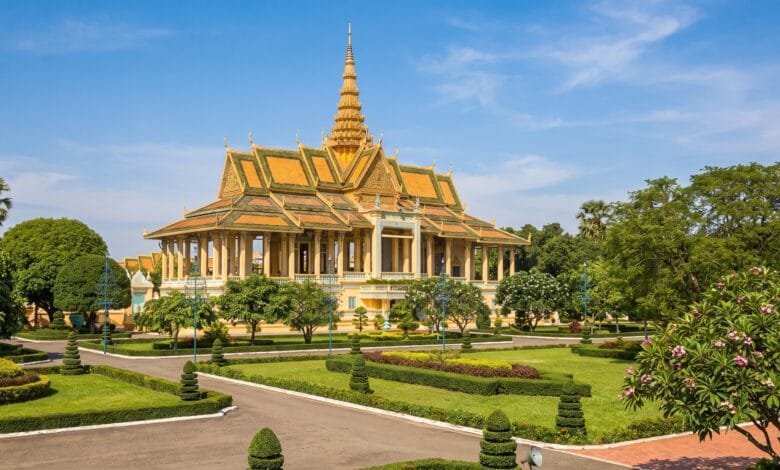
From the riverside in Phnom Penh, the Royal Palace’s yellow walls and layered golden roofs catch the morning light in a way that feels almost unreal. It is one of the few places in Cambodia where you can walk through a working royal residence — the King of Cambodia still lives here — while also exploring ornate throne halls, a pagoda with a floor of silver, and gardens filled with statues and frangipani trees.
But the Royal Palace is also a place where first-time visitors often have questions. What should you wear? How long does it take? Is it worth the ticket price? This guide answers those questions using verified information, so you can decide how to fit the palace into your Phnom Penh plans.
Quick Travel Information
Note: Fees and hours can change. Check locally before your visit.
What Is the Royal Palace?
The Royal Palace is the official residence of the King of Cambodia. It sits at the confluence of the Mekong, Tonle Sap, and Bassac rivers — a location known in Khmer as Chaktomuk, meaning “four faces.”
The palace was built in the 1860s after King Norodom moved the royal capital from Oudong to Phnom Penh. The current complex was designed by a Cambodian architect, Neak Okhna Tep Nimith Mak, and constructed with support from the French Protectorate. It has been the home of Cambodian kings since then, with a period of absence during and after the Khmer Rouge era.
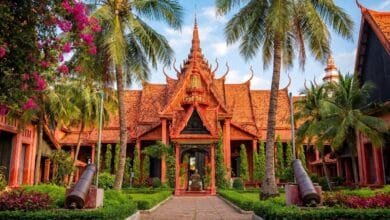
Today, the palace is both a working royal residence and one of Phnom Penh’s most visited attractions. The King still lives in a section of the complex that is closed to the public. The parts open to visitors include the Throne Hall, the Silver Pagoda, several pavilions, and the surrounding gardens.
Why Visit the Royal Palace?
It is a living piece of Cambodian culture. Unlike a museum where objects are displayed behind glass, the Royal Palace is an active site of royal and religious life. The Throne Hall is still used for coronations and official ceremonies.
The Silver Pagoda is genuinely remarkable. The pagoda’s floor is covered with more than 5,000 silver tiles, and it houses a life-sized gold Buddha encrusted with thousands of diamonds, along with an Emerald Buddha made of Baccarat crystal.
The architecture is distinctive. The Throne Hall’s roof has multiple tiers crowned by a 59-meter tower in the Bayon style, with tiles in orange, sapphire, and green — colors that in Khmer tradition represent prosperity, nature, and freedom.
The location is convenient. The palace sits along the riverside, within walking distance of the National Museum of Cambodia and the Royal Palace Park. It is easy to combine with other central Phnom Penh attractions.
What to See
The Throne Hall (Preah Tineang Tevea Vinichhay)
The Throne Hall is the first major building you encounter after entering. It is used for coronations, royal ceremonies, and receiving foreign dignitaries. The current structure was rebuilt and inaugurated in 1919 after the original wooden building was destroyed.
Inside, you can see the royal thrones and ceiling paintings. Photography is not allowed inside the Throne Hall.
The Silver Pagoda (Wat Preah Keo Morakot)
The Silver Pagoda, in the southern part of the complex, is the highlight for many visitors. Its floor is paved with over 5,000 silver tiles, though most are covered with protective mats. Look near the altar to spot the exposed silver.
The pagoda houses two notable Buddha statues: a small Emerald Buddha made of Baccarat crystal, and a life-sized gold Maitreya Buddha weighing 90 kilograms and adorned with 9,584 diamonds.
Photography is not permitted inside the Silver Pagoda.
The Chanchhaya Pavilion (Moonlight Pavilion)
This open-air pavilion overlooks the river and was traditionally used for royal dance performances and public audiences. It dominates the palace facade along Sothearos Boulevard. From outside, you can see its distinctive layered roof and ornate decoration.
The Gardens and Courtyards
The palace grounds include manicured gardens with tropical plants, statues, and traditional Khmer structures. The gardens are peaceful compared to the busy streets outside and offer good spots for photos of the golden roofs against the sky.
The Mural Corridor
Along the wall near the Silver Pagoda, hundreds of meters of murals depict scenes from the Ramayana, the Indian epic. These are considered among the largest mural frescoes in Southeast Asia.
What to Do
Walk slowly through the courtyards. The palace is not a place to rush. The architecture rewards close attention — look for the detailed carvings on the music hall, the naga motifs on roof corners, and the glass tiles that catch the light.
Hire a guide if you want deeper context. Guides are available at the ticket booth for an additional fee (around $10 USD). They can explain the history and significance of the buildings and the treasures inside the Silver Pagoda. This is optional, but worthwhile if you enjoy learning the stories behind what you see.
Take photos in the outdoor areas. Photography is allowed in the gardens and courtyards. The Throne Hall from outside, the Silver Pagoda courtyard, and the riverside wall are popular photo spots. Morning light is best for capturing the golden roofs.
Sit in the gardens for a few minutes. The palace grounds can feel busy, but the gardens offer benches and shade where you can pause and take in the atmosphere.
The Story and History of the Royal Palace
The site of the Royal Palace has a longer history than the current buildings suggest. In 1813, King Ang Chan constructed a citadel called Banteay Kev (the Crystal Citadel) on this location, though he soon moved the capital back to Oudong.
The permanent move to Phnom Penh came in 1866, when King Norodom relocated the royal capital from Oudong. The first Royal Palace at the present site was designed by Neak Okhna Tep Nimith Mak and built by the French Protectorate in 1866.
The original structures were built of wood. King Sisowath (reigned 1904–1927) later rebuilt the palace in more durable materials. Work began in 1907, and the palace was inaugurated on 16 May 1919. The architecture was designed in traditional Khmer style.
The palace remained the royal residence until the Khmer Rouge period (1975–1979), when the monarchy was abolished and the royal family was forced to leave. The monarchy was restored in 1993, and the palace again became the official royal residence.
Today, the King of Cambodia lives in a private section of the complex. The public areas are maintained as both a royal site and a cultural attraction.
Culture and Local Meaning
The Royal Palace is more than a tourist site. For many Cambodians, it represents the continuity of the monarchy and the nation’s cultural identity.
The Throne Hall, with its 59-meter tower and tiered roofs, is a symbol of royal authority. The Silver Pagoda is a sacred Buddhist site, and visitors are expected to behave respectfully — removing shoes before entering shrines, keeping voices low, and not touching the murals or display cases.
The four gates of the palace each have traditional meanings. The Victory Gate faces east and was used by royalty and VIPs. The northern gate was historically associated with funerals, the western gate with executions, and the southern gate with welcoming commoners.
These traditions reflect the palace’s role as a ceremonial and spiritual center, not just a building complex.
What the Experience Is Like
The Royal Palace is a popular attraction, and it can feel busy, especially in the morning. Cruise ship groups and tour buses often arrive early, so the courtyards may be crowded between 9 AM and 11 AM.
The midday sun in Phnom Penh is intense. The palace grounds have limited shade, and the concrete courtyards reflect heat. Many visitors find the morning slot (8–11 AM) more comfortable than the afternoon.
The atmosphere inside the palace is generally calm and respectful. Visitors move at a leisurely pace, taking photos and reading information signs. The Silver Pagoda tends to be the busiest area.
Expect to walk on uneven surfaces in some areas, including older walkways and steps. Comfortable shoes are a good idea.
How to Get There
The Royal Palace is located on Samdach Sothearos Boulevard, along the Tonle Sap River in central Phnom Penh. The main entrance and ticket booth are on the southern section of the east wall.
By tuk-tuk: This is the most common way for visitors to reach the palace. From the Central Market area, the ride takes about 12 minutes. Fares are negotiable; expect to pay around 6,000 riel (roughly $1.50 USD) if you bargain, or use a ride-hailing app like PassApp or Grab for a set price.
By taxi or car: Available through apps or hotels. More expensive than tuk-tuks but comfortable.
On foot: If you are staying near the Riverside or Sisowath Quay area, the palace is within walking distance. The walk along the river is pleasant in the early morning or late afternoon.
By bicycle: If you are staying nearby, renting a bicycle (around $5 USD per day) is an option. There are bike racks near the palace entrance.
Transportation prices and availability can change. Confirm locally.
How to Visit
What to wear: The dress code is strictly enforced. Shoulders and knees must be covered for both men and women. No sleeveless shirts, tank tops, or short skirts. If you arrive inappropriately dressed, you can buy a sarong or oversized T-shirt at the entrance for a small fee (around $2–3 USD), but it is easier to dress appropriately beforehand.
What to bring: A hat, sunscreen, and water. The grounds are large and shade is limited. Cash for the entrance fee — cards are not accepted at the ticket counter. Small denominations in USD or Cambodian riel are best.
Photography rules: Photography is allowed in outdoor areas and gardens. It is not allowed inside the Throne Hall, the Silver Pagoda, or certain other buildings. Look for signs indicating where photography is restricted.
Shoes: You will need to remove your shoes before entering the Silver Pagoda and some other shrines. Wear shoes that are easy to slip on and off.
Time needed: Most visitors spend 1.5 to 2 hours at the palace. If you hire a guide and want to see everything in detail, allow up to 2.5 hours.
Accessibility: The palace grounds have uneven surfaces and some steps. Visitors with mobility challenges may find some areas difficult to navigate. A private accessible tour may be available through specialized operators.
Best Time to Visit
Time of day: The palace opens at 8:00 AM. Arriving right at opening gives you cooler temperatures and fewer crowds. The morning light is also better for photography — the golden roofs catch the sun beautifully.
The palace closes from 11:00 AM to 2:00 PM. If you visit in the afternoon, the heat can be intense, and the light for photos is less flattering after about 3 PM.
Time of year: Cambodia’s dry season (November to April) offers clearer skies and more comfortable temperatures. The rainy season (May to October) brings afternoon showers, but the palace is still visitable. The cooler months of September to early January are particularly pleasant.
Avoid major holidays: The palace may be closed or crowded during major Cambodian holidays and royal ceremonies. Check locally before planning your visit.
How Long to Spend
Most travelers find that 1.5 to 2 hours is enough to see the main buildings, walk through the gardens, and visit the Silver Pagoda at a comfortable pace. If you are deeply interested in history or architecture, or if you hire a guide, you may want up to 2.5 hours. For a quick visit focused on the Silver Pagoda and Throne Hall, one hour is possible but feels rushed.
Nearby Places to Combine With Your Visit
The Royal Palace is in a convenient central location, and several other worthwhile destinations are within easy walking or short tuk-tuk distance.
National Museum of Cambodia: Located just north of the palace, about a two-minute walk away. The museum houses the world’s finest collection of Khmer sculpture. Combining the palace and museum makes a natural half-day of cultural sightseeing.
Royal Palace Park (Riverside): The park in front of the palace along the river is a popular place for an evening stroll. You can see the palace lit up at night, and street food vendors are often nearby.
Wat Ounalom: About 500 meters north of the palace, this is one of the older pagodas in Phnom Penh and an active Buddhist monastery.
Wat Botumvatey: About 500 meters south of the palace, another historic pagoda worth a brief visit.
Sisowath Quay (Riverside): The riverside promenade is lined with restaurants, cafés, and shops. It is a good place to relax after your palace visit.
Travel Tips
Bring small bills. The ticket counter accepts cash in USD or Cambodian riel. Having exact change ($10 USD or the riel equivalent) speeds up the process.
Go early. The palace is most comfortable in the first hour after opening. By mid-morning, tour groups arrive and the heat builds.
Wear comfortable shoes. You will be walking on concrete, stone, and uneven surfaces, and you will need to remove your shoes at some buildings.
Stay hydrated. There are limited places to buy water inside the palace grounds. Bring a bottle with you.
Be aware of scams. Some individuals outside the palace may offer “guides” or “shortcuts.” The official ticket booth is the only place to buy tickets, and official guides are available there. Do not trust unofficial offers.
Check for closures. The palace closes during official royal ceremonies. If you are visiting during a major holiday or royal event, confirm the palace is open before you go.
Responsible Travel
The Royal Palace is a sacred and active royal site. Visitors are expected to behave respectfully.
Dress modestly — cover your shoulders and knees. This is not just a rule but a sign of respect for Cambodian culture and the royal family.
Speak quietly in the shrines and pagoda areas. Remove your hat before entering buildings. Do not touch the murals, statues, or display cases.
Follow all posted signs about photography restrictions. If in doubt, ask a staff member.
Do not litter. The gardens are maintained with care, and keeping them clean helps preserve the site for everyone.
Support the local economy by buying from official vendors and hiring official guides. This helps ensure that tourism benefits the local community.
Frequently Asked Questions
What is the entrance fee for the Royal Palace?
The entrance fee is $10 USD for foreign visitors. The ticket includes access to the Silver Pagoda. Cash is preferred, and cards are not accepted at the ticket counter.
What are the opening hours?
The palace is open daily from 8:00 AM to 11:00 AM and 2:00 PM to 5:00 PM. It is closed during official royal ceremonies.
What should I wear?
Shoulders and knees must be covered. No sleeveless tops, tank tops, or short skirts. If you arrive inappropriately dressed, you can buy a sarong or T-shirt at the entrance for a small fee.
Can I take photos inside?
Photography is allowed in outdoor areas and gardens. It is not allowed inside the Throne Hall, the Silver Pagoda, or certain other buildings. Look for signs.
How do I get to the Royal Palace?
The palace is on Samdach Sothearos Boulevard along the river. Tuk-tuks from most central areas take about 10–15 minutes and cost around $1.50–$3 USD depending on your negotiation. Ride-hailing apps like PassApp and Grab are also available.
How long should I spend at the Royal Palace?
Most visitors spend 1.5 to 2 hours. If you hire a guide or are particularly interested in the details, allow up to 2.5 hours.
Is the Royal Palace accessible for visitors with mobility challenges?
The grounds have uneven surfaces and some steps. Some areas may be difficult to navigate for visitors with mobility challenges. Private accessible tours may be available through specialized operators.
Conclusion
The Royal Palace is one of Phnom Penh’s most distinctive destinations. It is a place where you can see traditional Khmer architecture at its most ornate, visit a pagoda with a floor of silver, and walk through gardens that have been part of Cambodia’s royal history for more than 150 years.
It is not a large site, and it does not require a full day. But for travelers interested in culture, history, and architecture, it is a worthwhile addition to a Phnom Penh itinerary. The palace pairs naturally with the National Museum and a walk along the riverside.
If you go, the practical takeaway is simple: arrive early, dress respectfully, bring cash, and allow yourself time to slow down and notice the details. The gold roofs are what catch your eye first, but the carvings, murals, and quiet corners of the gardens are what stay with you.