How Cambodia’s Cities Are Growing and Changing: What Travelers Should Know
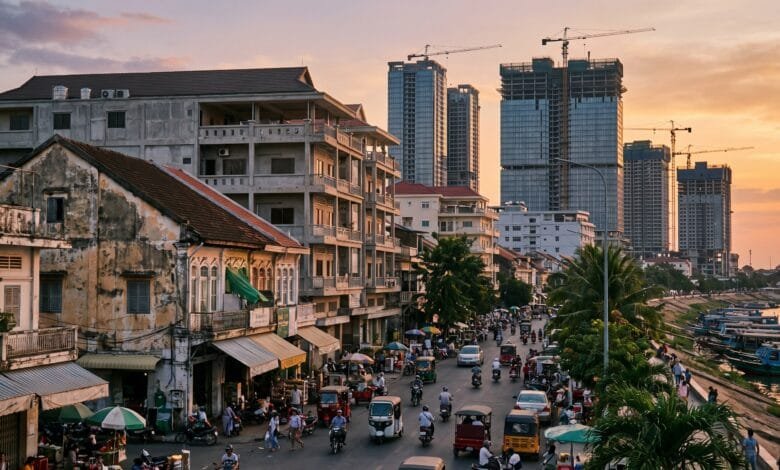
If you visited Phnom Penh five years ago, the city you return to today will feel noticeably different. New bridges span the rivers. High-rise towers rise where low-rise buildings once stood. Traffic moves faster on some roads and slower on others. In Siem Reap, construction crews are building an entire township designed around green space and modern living.
Cambodia is urbanizing quickly, and the change is visible in ways that matter to anyone curious about the country — whether you are planning a visit, following regional development, or simply trying to understand what modern Cambodia looks like.
What Is Happening in Cambodia‘s Cities Today?
Cambodia remains one of the least urbanized countries in Southeast Asia, but that is changing. As of 2025, roughly 41% of Cambodia’s population — about 7.3 million people — lived in urban areas, up from about 40.9% in 2024. Urban growth has slowed slightly from its peak, but the long-term trend is clear: more people are moving to cities, and cities are expanding to accommodate them.
Phnom Penh dominates the picture. In 2026, the capital‘s registered population reached approximately 2.6 million, and the city now has nearly 2,000 buildings between five and sixty storeys tall. The municipality has published a 2026–2030 urban development plan focused on making the city greener, more attractive, and easier to navigate for both residents and visitors.
But the story is not only about Phnom Penh. Secondary cities like Siem Reap, Battambang, and Sihanoukville are also growing, each with its own trajectory.
Why Is This Changing?
Several forces are driving Cambodia’s urban transformation.
Economic growth is the foundation. Cambodia’s economy has expanded steadily, and cities are where most new jobs, businesses, and investment are concentrated. The construction sector alone generates some of the highest employment multipliers in the region, supporting over 170 related industries.
Infrastructure investment is another major driver. The Phnom Penh–Sihanoukville Expressway, which opened in 2022, has cut travel time between the capital and the coast and is reshaping development along its route. New bridges, roads, and drainage systems are being built across the country. In early 2026, the Bassac River Bridge in Phnom Penh reached 79% completion, designed to connect the city’s southern districts and ease chronic congestion.
International partnerships are accelerating specific projects. The Asian Development Bank approved a $763 million program in December 2025 to improve water supply, sanitation, and climate resilience across 14 cities and 12 districts. The program aims to reach more than 2 million people.
Smart city initiatives are also taking shape. Siem Reap has been selected as Cambodia‘s Smart City Demonstration City, with support from Japan’s JICA agency. The second phase of the project, running from 2025 to 2028, focuses on improving waste collection, parking management, and data-driven urban planning.
What Does It Look Like in Everyday Life?
The changes are not abstract. They show up in daily routines.
In Phnom Penh, new residential and commercial developments are spreading outward. The city‘s administrative area expanded from about 376 square kilometers in 2011 to 678 square kilometers, with farmland and wetlands converted into housing estates, industrial parks, and new urban zones. Areas that were once quiet outskirts — like Por Senchey, Dang Kao, and Mean Chey — have become busy urban districts.
For residents, this means more housing options but also longer commutes. Traffic congestion has worsened noticeably in recent years, driven by rising private vehicle ownership and insufficient public transport. The city has banned heavy trucks from some major roads, built new flyovers, and begun studying a metro system.
In Siem Reap, change looks different. The city is not just accommodating tourists — it is building for residents. DreamVille Siem Reap, a 35.4-hectare integrated township, broke ground in August 2025. It will include modern homes, schools, parks, wellness centers, and commercial spaces, with 55% of the site dedicated to green areas. The project is positioned at the junction of National Road 6, Ring Road 3, and the expressway to Siem Reap–Angkor International Airport, in a growth corridor that officials hope will become a model for sustainable urban development.
In Sihanoukville, the coastal city has experienced a dramatic construction boom, though not without complications. A master plan launched in 2026 aims to transform it into a regional trade, logistics, and tourism hub by integrating it into regional supply chains and upgrading urban areas. At the same time, the city faces stalled construction projects and the aftermath of a crackdown on scam operations that had reshaped parts of its economy.
How Is It Affecting Cambodian Life?
Urban growth brings clear benefits. New roads, bridges, and water systems improve access to services. The ADB program, for example, is expanding piped water and sanitation — areas where Cambodia still lags significantly. Less than 60% of the urban population currently has access to piped water, and less than 40% has improved sanitation.
But growth also creates challenges. Flooding remains a serious problem. More than half of Cambodia’s population is exposed to climate-related risks, with floods and extreme heat placing growing pressure on cities — especially in the Mekong and Tonle Sap floodplains. Urban drainage systems are often overwhelmed, and poor planning has led to unsafe development in some areas.
Housing affordability is another pressure point. Phnom Penh alone requires approximately 8,000 housing units annually for middle-income families, according to JICA research, with virtually no quality supply at appropriate price points. The government and private developers have launched affordable housing projects, but the gap remains large.
What Might Travelers Notice?
If you visit Cambodia‘s cities today, you will notice a mix of old and new.
In Phnom Penh, the skyline is changing quickly. A 333-meter landmark tower is under construction in the city center. New public spaces, including a planned green transformation of the riverside area near the Four Arms Bay, are being developed to improve the visitor experience.
You may also notice the traffic. Phnom Penh remains highly dependent on motorbikes, and congestion during peak hours is a daily reality. But new flyovers and road improvements have eased some bottlenecks, and the city is studying longer-term solutions like a metro system.
In Siem Reap, the contrast between the ancient temples and the new township under construction is striking. The city is trying to balance tourism growth with livability — a challenge that will shape its future.
In Sihanoukville, you may see a city in transition: new hotels and commercial buildings alongside unfinished construction sites, reflecting the boom-and-bust dynamics of rapid development.
How Is This Different From the Past?
Twenty years ago, Phnom Penh was a low-rise city with limited infrastructure. Most roads were unpaved or poorly maintained. International brands and modern shopping centers were rare. Today, the city has international hotels, modern office towers, and a growing middle class.
The pace of change has accelerated since the 2010s, driven by foreign investment, infrastructure projects, and economic growth. But the transformation is uneven. Some cities and districts are changing rapidly, while others lag behind.
What Could Happen Next?
Official plans point toward continued urban growth. The Phnom Penh metro study, the Siem Reap smart city program, and the Sihanoukville master plan are all in various stages of development. The ADB urban water program will roll out over multiple phases.
Experts generally agree that Cambodia’s cities will continue to grow, but the quality of that growth — how well infrastructure keeps pace, how equitably services are distributed, and how environmental pressures are managed — remains uncertain. The government has set a goal of achieving universal access to safe drinking water by 2030, but current coverage levels suggest that will be challenging.
Frequently Asked Questions
Is Phnom Penh safe for tourists?
Phnom Penh is generally safe for tourists, though petty crime like bag-snatching can occur. Traffic is the bigger concern — be cautious when crossing streets, as motorbikes often do not yield.
How different is Phnom Penh from five years ago?
Very different. The skyline has more high-rise buildings, roads are busier, and new commercial and residential areas have expanded outward. Traffic congestion has worsened, but new infrastructure has improved some connections.
What is a “smart city” in Cambodia?
Siem Reap is being developed as Cambodia‘s model smart city, with support from Japan. The project focuses on using data and technology to improve waste collection, parking management, and urban planning — practical solutions rather than futuristic technology.
Are Cambodian cities walkable?
Not very. Most cities are designed around motorbikes and cars. Sidewalks are often used for parking or commerce, and pedestrian infrastructure is limited. Walking long distances is not always practical.
Will I see construction everywhere?
In Phnom Penh, Siem Reap, and Sihanoukville, yes — construction is a constant presence. In smaller cities like Battambang and Kampot, development is slower but still visible.
Do Cambodian cities have modern amenities?
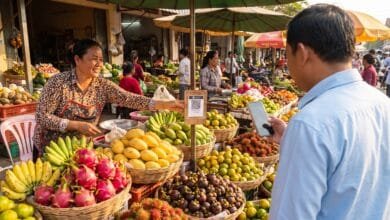
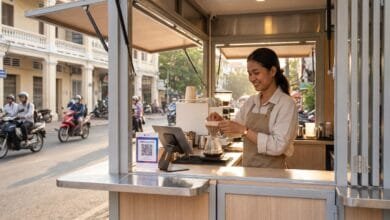
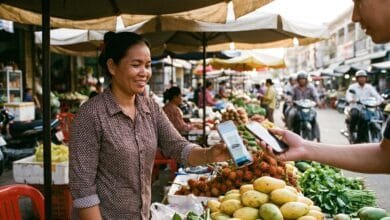
Major cities have international hotels, modern shopping malls, reliable mobile internet, and digital payment options. Smaller cities may have fewer amenities but are catching up.
Conclusion
Cambodia’s cities are growing and changing at a pace that can surprise even repeat visitors. New infrastructure, housing, and urban services are reshaping daily life. At the same time, challenges like flooding, traffic congestion, and housing affordability remain unresolved.
For travelers, understanding this transformation adds depth to every visit. The construction cranes, new bridges, and changing skylines are not just background noise — they are evidence of a country in motion, working to build a modern future while holding on to what makes Cambodia unique. The next time you walk through Phnom Penh or Siem Reap, look beyond the temples and the tourist spots. The real story of Cambodia today is being written in its cities.