15 Khmer Words Every First-Time Visitor to Cambodia Should Know
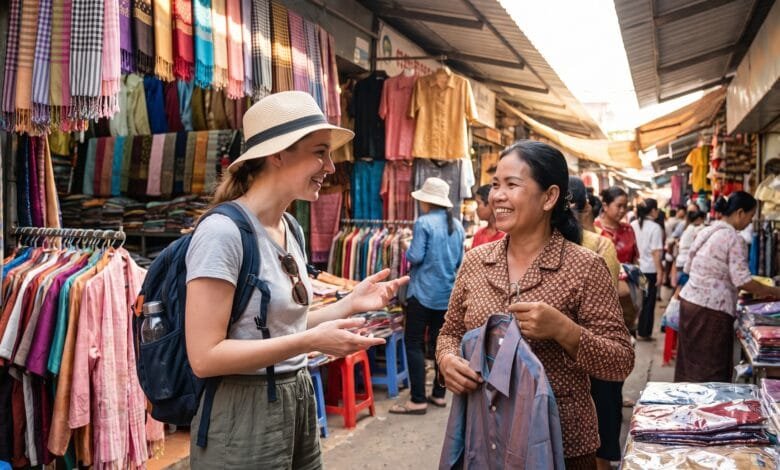
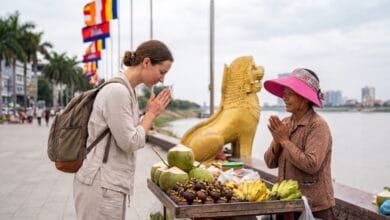
The first Khmer word you will probably hear is not in a classroom or a phrasebook. It will come from a hotel receptionist, a tuk-tuk driver, or a vendor at a market. It will sound something like “soo-sa-day.” You may not know what it means yet, but you will notice something immediately: when you try to say it back, people smile.
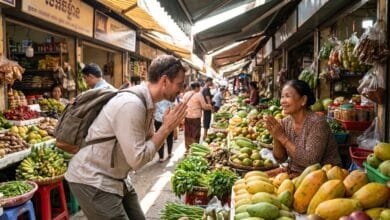
That is the power of a few simple words in Cambodia. You do not need to learn the language to travel here. But learning even 15 words changes the texture of your trip. It turns transactions into interactions. It turns a market stall into a conversation. It turns you from a tourist into a guest.
This guide covers the 15 Khmer words that first-time visitors actually use. Each word includes the Khmer script, a simple pronunciation guide written for English speakers, and a real travel context where you will need it.
Quick Answer: The 15 Words at a Glance
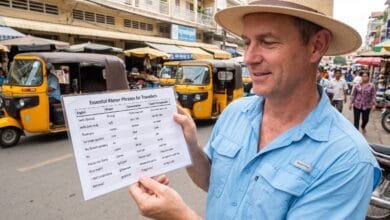
| English | Khmer | Say It Like This |
|---|---|---|
| Hello (informal) | សួស្តី | soo-sa-day |
| Hello (formal) | ជំរាបសួរ | chum-reep-soor |
| Thank you | អរគុណ | aw-koon |
| Yes (male) | បាទ | baht |
| Yes (female) | ចា៎ | jah |
| No | អត់ទេ | ot-tay |
| Sorry / Excuse me | សុំទោស | som-toh |
| Goodbye | លាហើយ | lee-ah-hay |
| How much? | ថ្លៃប៉ុន្មាន? | tlai pon-man |
| Too expensive | ថ្លៃណាស់ | tlai nah |
| Delicious | ឆ្ងាញ់ | ch-nganh |
| Water | ទឹក | tuke |
| Rice / meal | បាយ | bye |
| Bathroom | បង្គន់ | bahng-kun |
| Help! | ជួយ! | joo-ay |
1. Susadei — Hello (Informal)
Khmer: សួស្តី
Say it: soo-sa-day
This is the greeting you will hear most often in casual settings. It works when you walk into a café, pass someone on a trail, or greet a vendor at a market. It is friendly, simple, and almost always accompanied by a smile.
For formal situations—greeting an elder, a monk, or someone in an official position—Cambodians use chom reap sour (ជំរាបសួរ), which sounds like “chum-reep-soor.” As a visitor, susadei will carry you through almost every daily interaction.
2. Orkun — Thank you
Khmer: អរគុណ
Say it: aw-koon
This is the single most useful word in this list. You will use it at restaurants, hotels, markets, temples, and everywhere in between. The word sounds a little like “raccoon” without the “r” at the beginning—aw-koon, with a soft ending.
If you want to say “thank you very much,” add chran (ច្រើន): orkun chran (aw-koon chran). You will hear this from Cambodians as well.
3. Baat and Jaa — Yes (Male and Female)
Khmer: បាទ (male) / ចា៎ (female)
Say it: baht / jah
Khmer uses different words for “yes” depending on whether the speaker is male or female. If you are a man, say baat (sounds like “baht”). If you are a woman, say jaa (sounds like “jah”).
This is not just grammar—it is politeness. Using the correct form signals that you are paying attention. Even if you get it wrong, Cambodians will appreciate the effort.
4. Ot Te — No
Khmer: អត់ទេ
Say it: ot-tay
The word for “no” is ot te (អត់ទេ). Say it with a short, clipped “ot” followed by a gentle “tay.” You will use this when declining a tuk-tuk ride, saying you do not want more rice, or answering a question you do not understand.
A smile softens it. A firm “ot te” without a smile can sound harsh in Cambodian culture.
5. Som Toh — Sorry / Excuse Me
Khmer: សុំទោស
Say it: som-toh
This word covers both “sorry” and “excuse me.” Use it when you bump into someone, when you need to get past a crowd, or when you want to politely interrupt to ask a question.
It is also useful when you do not understand something. A gentle “som toh” followed by a question in English will almost always be met with patience.
6. Lea Haey — Goodbye
Khmer: លាហើយ
Say it: lee-ah-hay
When you leave a shop, a restaurant, or a hotel, saying lea haey is a small gesture that goes a long way. It literally means “goodbye” in a casual, friendly way.
For formal goodbyes, Cambodians say chom reap lea (ជំរាបលា). But lea haey is perfect for everyday travel.
7. Thlai Pon Man? — How Much?
Khmer: ថ្លៃប៉ុន្មាន?
Say it: tlai pon-man
This is your market and tuk-tuk phrase. Thlai pon man? means “How much does it cost?” You will use it constantly—at souvenir stalls, for motorbike taxis, and when buying fruit from a street vendor.
A useful follow-up: thlai nas (ថ្លៃណាស់), which means “too expensive.” Say it with a smile, and you have just entered the friendly negotiation zone.
8. Chnganh — Delicious
Khmer: ឆ្ងាញ់
Say it: ch-nganh
Cambodian food is one of the great pleasures of traveling here. When you taste something you love—a bowl of kuy teav, a plate of bai sach chrouk, or a fresh mango from the market—say chnganh. It means “delicious.”
This word is nasal and sounds a bit like “ch-nganh” with the “ng” sound from “sing.” Cooks and vendors light up when they hear it.
9. Teuk — Water
Khmer: ទឹក
Say it: tuke
You will need this word often. Teuk means water. At a restaurant, you can say “teuk” to ask for water. At a market, you can point to a bottle and say “teuk” to confirm what it is. The word also appears in place names and festival names—Bon Om Teuk, the Water Festival, literally means “Festival of Water.”
10. Bai — Rice / Meal
Khmer: បាយ
Say it: bye
In Cambodia, bai means both “rice” and “a meal.” Asking someone if they have eaten is a common way of showing care. When you order food, you might hear bai used to mean the whole meal, not just the rice.
A useful phrase: bai cha (បាយឆា) is fried rice. You will see it on almost every menu.
11. Bangkun — Bathroom
Khmer: បង្គន់
Say it: bahng-kun
This is a practical word every traveler needs. Bangkun means bathroom or toilet. If you need to ask where it is, say bangkun now ey nah? (បង្គន់នៅឯណា?)—”Where is the bathroom?”
Many restaurants and cafés in tourist areas have signs in English, but knowing the Khmer word helps in smaller towns and rural areas.
12. Chuy — Help!
Khmer: ជួយ!
Say it: joo-ay
This is an emergency word. Chuy! means “Help!” It is short, loud, and clear. In a country where English is not universal, having one emergency word in Khmer can be reassuring.
You will likely never need it. But knowing it is part of traveling prepared.
13. Khnom Min Yul Te — I Don’t Understand
Khmer: ខ្ញុំមិនយល់ទេ
Say it: knyom min yul tay
This phrase is longer, but it is worth learning. Khnom min yul te means “I don’t understand.” It is polite, clear, and gives the person you are speaking with a chance to slow down, repeat, or find another way to communicate.
You can also shorten it to min yul te (min yul tay) if you are in a hurry.
14. Som — Please
Khmer: សូម
Say it: sa-ohm
Som is a polite word that softens requests. You can use it before asking for something: som teuk (please, water), som bai (please, rice). It is not used the same way as English “please” in every sentence, but it signals respect.
15. Men Ay Te — No Problem / You’re Welcome
Khmer: មិនអីទេ
Say it: min ay tay
When someone thanks you, or when you want to say “it’s fine” or “no problem,” use men ay te. It is a warm, casual phrase that closes an interaction on a positive note.
You will hear it often. Cambodians use it to say “you’re welcome,” “never mind,” and “it’s okay” all at once.
How to Use These Words Without Feeling Awkward
You do not need to memorize all 15 at once. Start with three: susadei (hello), orkun (thank you), and som toh (sorry/excuse me). These three words will carry you through most daily interactions.
When you speak Khmer, do not worry about perfect pronunciation. Cambodians are remarkably gracious with visitors who try. A smile matters more than a perfect tone. The effort itself is the point.
If you want to go deeper, CambodiaRecipe’s About Cambodia section covers the country’s geography, culture, and everyday life in more detail.
Frequently Asked Questions
What language do people speak in Cambodia?
Khmer is the official language, spoken by over 16 million people. English is common in tourist areas, but learning a few Khmer words is always appreciated.
Is Khmer difficult for English speakers?
Khmer is not a tonal language, which makes pronunciation easier than Thai or Vietnamese. The script is challenging to read, but spoken phrases are manageable for travelers.
What is the easiest Khmer word to learn?
“Orkun” (thank you) is probably the easiest and most useful. It is short, has no difficult sounds, and you will use it every day.
How do you say hello in Khmer?
The informal greeting is “susadei” (soo-sa-day). The formal greeting is “chom reap sour” (chum-reep-soor).
Do I need to learn Khmer to travel in Cambodia?
No. English is widely spoken in tourist areas. But knowing a few words makes travel more meaningful and opens doors to warmer interactions.
What does “susadei” mean?
“Susadei” means hello in Khmer. It is the informal greeting used among friends, peers, and in casual daily situations.
Conclusion
Fifteen words will not make you fluent in Khmer. But they will change how you move through Cambodia. They will turn a silent transaction into a moment of connection. They will make a vendor laugh, a driver smile, a hotel clerk nod with recognition.
The Khmer language is part of Cambodia’s identity. When you say susadei at a market or orkun at a restaurant, you are not just being polite. You are acknowledging the culture you have come to visit. And in Cambodia, that acknowledgment is always returned.
Start with three words. Use them tomorrow. The rest will follow naturally.