What Khmer Classical Dance Gestures Mean: A Traveler’s Guide to Cambodia’s Apsara Dance
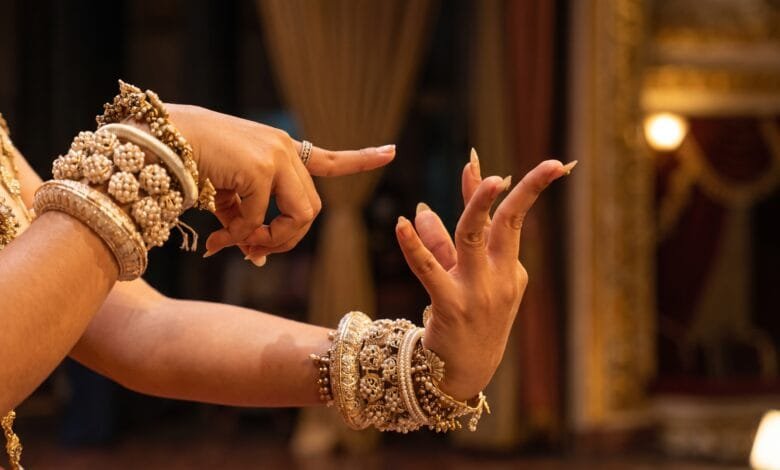
You are sitting in a dimly lit theatre in Siem Reap. The music begins—a slow, hypnotic melody from wooden xylophones and gongs. Dancers in gold headdresses and shimmering silk step onto the stage. Their movements are impossibly slow and precise. Their fingers bend backward at angles that seem to defy nature. Their wrists curve like flower petals. You lean forward, captivated, but also a little confused. What are they saying with their hands?
If you have ever watched Khmer classical dance and felt that you were missing half the story, you are not alone. Most foreign visitors—especially those from the United States—have never encountered a dance tradition quite like this. There are no big leaps or dramatic spins. The dancers do not speak or sing. Instead, they communicate through a vocabulary of gestures that has been refined over centuries. Once you understand that vocabulary, the performance opens up in a completely new way.
What Is Khmer Classical Dance?
Khmer classical dance, also known as the Royal Ballet of Cambodia or Apsara dance, is one of Cambodia’s most treasured cultural traditions. It is a form of dance drama in which performers use highly stylized movements and gestures to tell stories from Khmer mythology, especially the Reamker, Cambodia’s adaptation of the Ramayana epic.
The dance is performed by a group of trained dancers—traditionally women, though some roles are now performed by men—accompanied by a Pin Peat orchestra and a female chorus. The dancers do not speak. Instead, they mime the action while the chorus sings the narrative. The gestures are the dancers’ words.
UNESCO recognized the Royal Ballet of Cambodia as Intangible Cultural Heritage in 2003 and inscribed it on the Representative List in 2008. The organization describes the dance as “renowned for its graceful hand gestures and stunning costumes” and notes that it has been closely associated with the Khmer court for over one thousand years.
Why Does It Matter in Khmer Culture?
In Khmer culture, classical dance is not just entertainment. It is a form of storytelling, spiritual expression, and cultural identity. UNESCO describes the dance as embodying “values of refinement, respect and spirituality” and notes that it perpetuates the legends associated with the origins of the Khmer people.
The dance has historically been associated with the royal court, performed at coronations, marriages, funerals, and religious observances. Dancers were once considered the kings’ messengers to the gods and ancestors, carrying prayers and wishes to the heavens through their movements.
This spiritual dimension is important for visitors to understand. When you watch a performance, you are not just seeing a show. You are witnessing a tradition that Cambodians have used for centuries to connect with their history, their religion, and their ancestors.
How Is the Tradition Practiced?
At the heart of Khmer classical dance are the hand gestures, called kbach in Khmer. The word means “style” or “ornament,” and it is also used for decorative motifs in Khmer architecture and art, reflecting a shared aesthetic language across different art forms.
There are four fundamental hand gestures that form the foundation of the dance. These gestures are named after elements of nature:
- kbach lear (tree)
- kbach cheep (leaf)
- kbach khoung (flower)
- kbach chang-ol (fruit)
These four gestures represent the cycle of life. A tree grows, produces leaves, flowers, and fruit. The fruit drops, and a new tree grows. The same four gestures are used to express emotions including sadness, love, anger, pain, joy, and pride.
But the gestures are not used in isolation. Their meaning depends on where they are placed on the body and how the arm is positioned. For example, placing kbach lear under the eye means “crying.” Placing it on the chest means “anger.” Placing it on the abdomen means “sadness.” Placing the palm upward under the chin can express shyness or modesty. kbach cheep held low in front of the chest means “I” or “me.” Placed below the mouth, it represents a smile, even if the dancer’s face remains neutral.
Gestures are also performed differently depending on the character type. In the classical repertory, there are four main character types: Neang (the woman), Neayrong (the man), Yeak (the giant or demon), and Sva (the monkey). Each has distinctive colors, costumes, makeup, and masks, and the gestures are adapted accordingly.
Dancers train for years to master these gestures. The training is intensive, with dancers learning to bend their fingers and toes into positions that look unnatural to untrained eyes. Knowledge is passed directly from master teachers to students through imitation and repetition.
What Does a Visitor See in Cambodia?
In Siem Reap, Phnom Penh, and other tourist centers, travelers can attend Apsara dance performances, often as part of a dinner show. These performances typically include classical dances, scenes from the Reamker, and folk dances from different regions of Cambodia.
The experience is usually intimate. You sit close to the stage, dine on Khmer food, and watch the dancers perform a sequence of short pieces. Each piece tells a story—a princess in a garden, a battle between a hero and a demon, a celestial nymph offering flowers to the gods.
Many visitors find the slow pace surprising at first. There are no dramatic leaps or fast spins. The beauty is in the details: the angle of a wrist, the curve of a finger, the tilt of a head. Once you know what to look for, every movement becomes meaningful.
One of the most striking visual elements is the way dancers bend their fingers backward. This is not a natural position. Dancers train for years to achieve this flexibility, and the effect is otherworldly. It is also a gesture with meaning: the backward-bent fingers represent the unfolding of a flower or the unfurling of a leaf, a signature motion that captures the essence of life unfolding.
What Should Foreign Visitors Know?
If you are planning to watch a Khmer classical dance performance in Cambodia, here are a few things to keep in mind:
The gestures are a language. They are not decorative. Each hand position, each arm movement, each tilt of the head has meaning. You do not need to memorize the entire vocabulary, but knowing that there is a vocabulary will change how you watch.
The stories are often from the Reamker. This is Cambodia’s version of the Ramayana. If you are familiar with the Ramayana, you will recognize some of the characters and plot points. If not, the chorus will narrate the story, and the gestures will help you follow along.
Respect the performance. This is a living cultural tradition, not just a tourist show. Photography policies vary by venue, so check before the performance begins. Avoid talking during the performance, and dress respectfully if the venue does not specify a dress code.
Ask questions. Many venues provide program notes, and some offer pre-show introductions. If you are curious about a particular gesture, guides or program notes can help you understand what you are seeing.
Remember that you are seeing a tradition that nearly disappeared. During the Khmer Rouge period, almost all master dancers and musicians were lost. The dance you see today is a revival—a testament to the resilience of the Cambodian people.
How Has the Tradition Changed?
Khmer classical dance has changed significantly over the past century. During the French Protectorate era, the dance was primarily a court tradition, performed for royalty and elites. After Cambodia gained independence in 1953, the dance became a symbol of national identity and was performed more widely.
During the Khmer Rouge period (1975–1979), the tradition nearly vanished. UNESCO states that the regime “eliminated almost all master dancers and musicians.” After the fall of the Khmer Rouge in 1979, dance troupes re-emerged and performances of the ancient repertory resumed.
Today, the dance faces new challenges. UNESCO notes that it still faces “lack of funding and suitable performance spaces, competition from modern media and the risk of becoming a mere tourist attraction.” At the same time, the tradition has gained international recognition and new audiences. Some contemporary dancers are experimenting with the form, including all-male and LGBTQ+ companies that are preserving the tradition while expanding who can perform it.
For travelers, this means that when you watch a performance, you are seeing a tradition in motion—not frozen in time, but evolving, surviving, and adapting.
Frequently Asked Questions
What is the difference between Apsara dance and Khmer classical dance?
Apsara dance is a specific style within Khmer classical dance. The term “Apsara” refers to the celestial dancers depicted in the carvings of Angkor Wat and other temples. The performance tradition seen today is part of Cambodia’s classical dance heritage, closely associated with the Royal Ballet of Cambodia.
Do dancers speak during the performance?
No. Dancers do not speak or sing during the performance. They communicate entirely through stylized movements and gestures. A female chorus provides narration, singing the story while the dancers mime the action.
What do the hand gestures mean?
The hand gestures, called kbach, form a vocabulary of movement. Each position represents elements from nature or states of being. The four fundamental gestures—tree, leaf, flower, and fruit—represent the cycle of life and are used to express emotions including love, anger, sadness, and joy.
Can I learn Khmer classical dance as a foreigner?
Yes. There are dance schools and workshops in Cambodia that welcome foreign students, though training is intensive and requires long-term commitment. Some organizations offer short workshops for visitors who want a taste of the tradition.
Is it appropriate to take photos during a performance?
Photography policies vary by venue. Some allow photography without flash; others prohibit it entirely. Check with the venue before the performance begins. Always be respectful and avoid disturbing the dancers or other audience members.
Why do the dancers bend their fingers backward?
The backward-bent fingers are a signature element of Khmer classical dance. They represent the unfolding of a flower or the unfurling of a leaf—a motion that captures the essence of life unfolding. Achieving this flexibility requires years of training.
Conclusion
Khmer classical dance is more than a performance. It is a language, a spiritual practice, and a living link to Cambodia’s past. The gestures you see on stage—the bent fingers, the curved wrists, the slow, deliberate movements—are not random. They are words in a vocabulary that has been refined over centuries, passed down from master to student, and carried through war and revival.
For travelers, understanding these gestures transforms the experience. You are no longer just watching a show. You are reading a story written in movement. You are witnessing a tradition that Cambodians have used for generations to connect with their gods, their ancestors, and their identity.
The next time you sit in a theatre in Siem Reap or Phnom Penh, watch the dancers’ hands. Think about the four gestures: tree, leaf, flower, fruit. Watch how they are placed—under the eye, on the chest, on the abdomen. You may not understand every word, but you will understand the story. And that understanding will make your visit to Cambodia more meaningful.