Sugar Palm Fruit Dessert
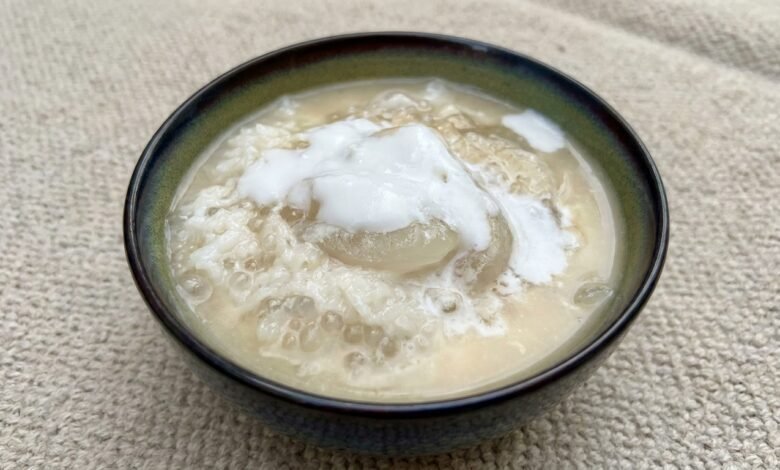
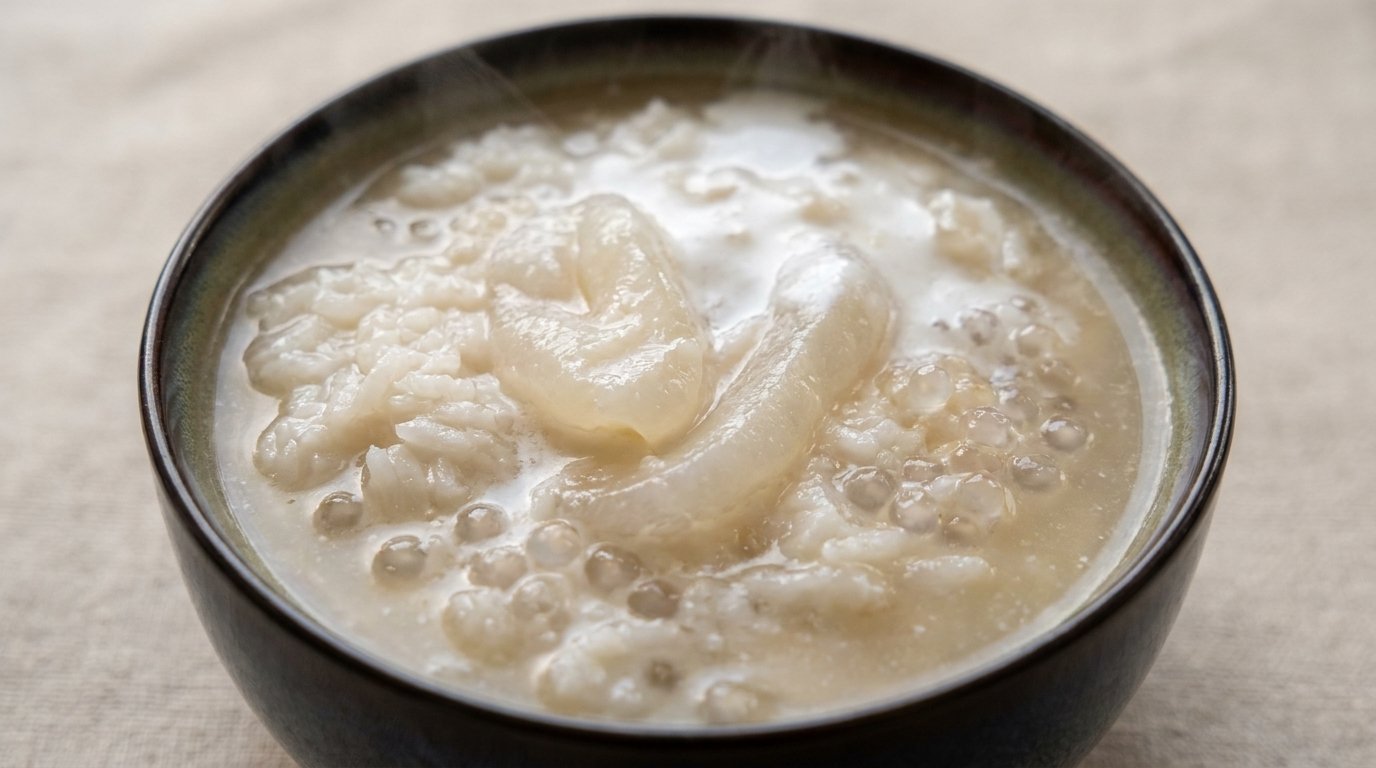
Sugar palm fruit has a soft, jelly-like texture that slips gently against the tongue. In this warm Cambodian dessert, it simmers with glutinous rice, tiny tapioca pearls, and palm sugar in a lightly salted coconut broth. The result is comforting rather than heavy.
This is the kind of sweet soup Khmer families enjoy warm from the pot or chilled on a hot afternoon. The ingredients are simple, and most of the work is gentle stirring. If you can find tinned palm fruit, you can make it any time of year.
What You Need
The recipe uses pantry-friendly ingredients with one special addition: tinned sugar palm fruit. Look for it in Asian grocery stores or online. Glutinous rice and white tapioca pearls are both widely available in the same aisles. Palm sugar brings a deep, caramel-like sweetness that white sugar cannot match. If you want to understand more about this ingredient, you can read about how Kampong Speu palm sugar is made.
Equipment
- Medium pot: To boil the water and cook the rice, palm fruit, and sago into a single dessert.
- Measuring cups: To measure the glutinous rice, tapioca pearls, water, and coconut milk accurately.
- Measuring spoons: To measure the sea salt.
- Chef’s knife: To slice the drained palm fruit into 1 cm thick pieces.
- Cutting board: To hold the palm fruit steady while you slice it.
- Wooden spoon or cooking spoon: To stir the dessert gently so the rice and sago do not stick.
- Ladle: To portion the finished dessert into individual serving bowls.
- Individual serving bowls: To serve each portion with a spoonful of coconut cream on top.
How to Make Sugar Palm Fruit Dessert
Step 1: Prepare the Rice and Sago
Soak the glutinous rice in water for 1 hour, then strain it. Soak the white tapioca pearls in a separate bowl of water for 10 minutes, then strain them as well. Let both sit in the strainers while you start the pot.
Step 2: Boil the Water
Pour 2 cups of water into a medium pot and bring it to a boil over medium heat.
Step 3: Cook the Glutinous Rice
Add the soaked glutinous rice to the boiling water. Cook for 15 minutes over medium heat, stirring occasionally, until the rice begins to soften.
Step 4: Add the Palm Fruit, Sugar, Salt, and Coconut Milk
Add the sliced palm fruit, palm sugar, sea salt, and half of the coconut milk. Stir gently and lower the heat so the liquid simmers. Let it cook until the rice softens fully. Keep the heat low so the coconut milk does not boil over.
Step 5: Add the Tapioca Pearls
Stir in the soaked tapioca pearls. Continue stirring gently until the pearls turn translucent. This is the cue that they are cooked through.
Step 6: Rest the Dessert
Turn off the heat and let the pot rest for 15 minutes. The rice will absorb more of the sweet coconut liquid, and the texture will settle.
Step 7: Serve with Coconut Cream
Ladle the dessert into individual bowls. Spoon about 1 tablespoon of the remaining coconut cream over the top of each bowl and serve.
Cooking Tips
Soaking the rice and tapioca pearls is not a step to skip. The rice cooks more evenly, and the pearls soften faster when they have had time to absorb water.
Keep the heat low once the coconut milk goes in. A hard boil can make the coconut milk separate and turn grainy.
If the dessert thickens too much as it rests, stir in a splash of warm water to loosen it before serving.
How to Serve
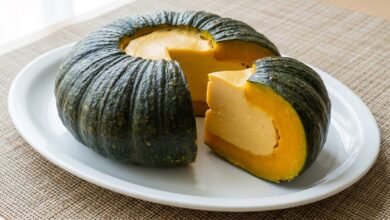
Serve this dessert warm for a comforting finish to a meal, or chill it and serve it cold on a warm day. The coconut cream on top is part of the experience—it adds a cool, rich contrast to the sweet soup beneath. If you enjoy Cambodian desserts with coconut milk, you might also like our Cambodian pumpkin coconut custard, which uses similar flavors in a very different form.
Frequently Asked Questions
Can I use fresh sugar palm fruit instead of tinned?
Yes, if you can find it. Fresh palm fruit is seasonal and requires peeling and pitting before slicing. The tinned version is already prepared, which makes this dessert possible year-round.
What if I cannot find palm sugar?
Palm sugar gives the dessert its distinctive caramel note, but another unrefined sugar such as jaggery or coconut sugar can work as a substitute in the same quantity. The flavor will shift slightly, but the dessert will still be sweet and comforting.
How should I store leftovers?
Cool the dessert completely, then store it in a covered container in the refrigerator. It will keep for 2 to 3 days. The rice and sago will absorb liquid as it sits, so loosen it with a little warm water or coconut milk when reheating. Reheat gently on the stovetop or in the microwave.
Is this dessert gluten-free?
Glutinous rice is naturally gluten-free, and rice-based desserts are common in Cambodian cooking. However, check the labels on your tinned palm fruit and tapioca pearls to confirm they have not been processed in a facility with gluten. For general food safety guidance when handling and storing cooked rice and starch-based desserts, the USDA Food Safety and Inspection Service provides reliable advice.
Final Thoughts
Sugar palm fruit dessert is a quiet, gentle sweet soup—the kind that asks for a spoon and a few minutes of your attention rather than a celebration. Its appeal comes from the contrast between the soft rice, the slippery palm fruit, and the tiny pearls suspended in sweet coconut broth. Serve it warm when you want comfort, or chill it for a warm afternoon. Either way, a spoonful of coconut cream on top brings it together.
Sugar Palm Fruit Dessert
4
servings1
hour25
minutes944
kcal1
hour25
minutesThis gentle Cambodian dessert combines soft glutinous rice, jelly-like sugar palm fruit, and translucent tapioca pearls in a sweet, lightly salted coconut broth. It is simple to prepare and can be served warm or chilled.
Ingredients
1 cup glutinous rice, soaked in water for 1 hour and strained
½ cup white tapioca pearls (sago), soaked in water for 10 minutes and strained
200 g tinned sugar palm fruit, drained and sliced 1 cm thick
1 cup coconut milk or coconut cream, divided
½ teaspoon sea salt
½ cup palm sugar
2 cups water
Directions
- Soak the glutinous rice in water for 1 hour, then strain it. Separately soak the white tapioca pearls for 10 minutes, then strain them.
- Pour 2 cups of water into a medium pot and bring it to a boil over medium heat.
- Add the soaked glutinous rice and cook for 15 minutes over medium heat.
- Add the sliced palm fruit, palm sugar, sea salt, and half of the coconut milk. Stir gently, lower the heat, and simmer until the rice softens.
- Add the soaked tapioca pearls and stir gently until they become translucent.
- Turn off the heat and let the dessert rest for 15 minutes.
- Ladle into individual bowls and finish each with about 1 tablespoon of the remaining coconut cream.
Equipment
 Cutting boardCheck product details

 Measuring Spoons & CupsCheck product details
 Sharp Kitchen KnifeCheck product details
 Small bowlCheck product details
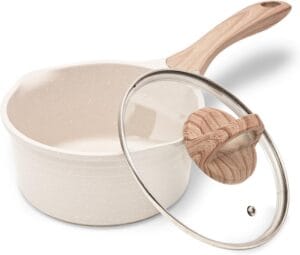
 Small potCheck product details
 Wooden SpoonCheck product details



Recipe Video
Recipe Notes
- Soaking the rice and tapioca pearls helps them cook evenly. Keep the heat low once the coconut milk is added to prevent it from separating. If the dessert thickens too much as it rests, loosen it with a splash of warm water.
Nutrition Facts
- Serving Size: 4 g
- Total number of serves: 4
- Calories: 944kcal
- Fat: 71.1g
- Saturated Fat: 43.2g
- Sodium: 342mg
- Potassium: 233mg
- Carbohydrates: 76g
- Net Carbs: 73.2g
- Fiber: 2.8g
- Sugar: 13.7g
- Protein: 5.4g
- Vitamin C: 1.7mg
- Calcium: 19mg
- Iron: 2mg
- Vitamin E: 8mg
- Vitamin K: 4mcg
- Thiamin: 0.1mg
- Niacin: 1.5mg
- Vitamin B6: 0.1mg
- Folate: 17.8mcg
- Pantothenic Acid: 0.6mg
- Phosphorus: 107mg
- Magnesium: 29mg
- Zinc: 1mg
- Selenium: 7.1mcg
- Copper: 0.3mg
- Manganese: 1.3mg
Did you make this recipe?
Tag @cambodiarecipe on Instagram and hashtag it
Like this recipe?
Follow us @cambodiarecipe on Pinterest
Did you make this recipe?
Follow us on Facebook