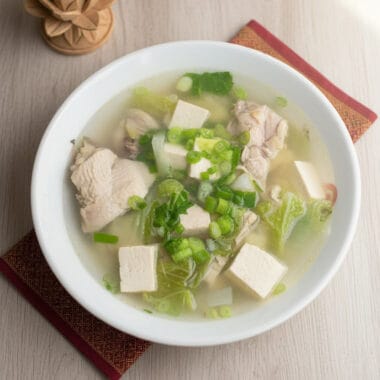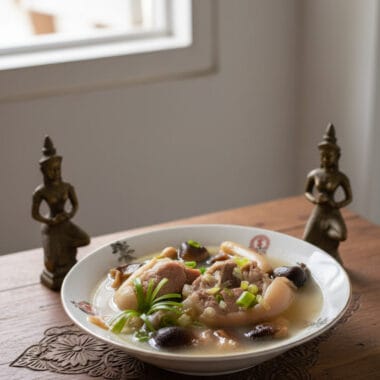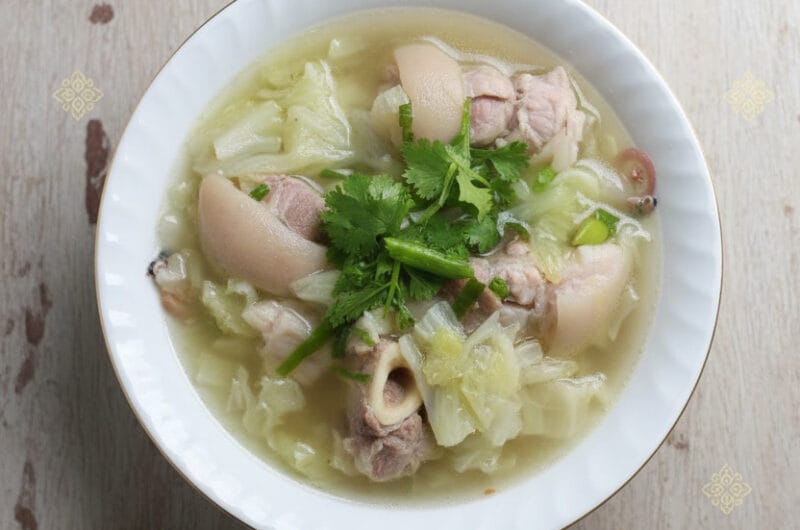
There are some soups that feel fancy, and then there are soups that feel like home.
Pork Hocks and Cabbage Soup is one of those quiet, comforting dishes that doesn’t try too hard. It’s simple. It’s honest. It fills the house with a soft, meaty smell that makes everyone wander into the kitchen asking, “Is it ready yet?”
In my family, this soup is something we cook when we want comfort without stress. It doesn’t need complicated spices or special techniques. Just pork hocks, cabbage, water, and patience. That’s it.
If you are new to cooking, don’t worry. I will explain everything slowly, step by step, just like I would if you were standing next to me in my kitchen.
Why You’ll Love This Soup
This soup is simple, but it tastes rich and deep.
The pork hocks cook slowly and release all their flavor into the broth. The cabbage becomes soft and slightly sweet. When you sip the soup, it feels warm and soothing, especially on rainy days.
You will also love that it uses only a few easy ingredients. Nothing fancy. You can find everything at your local market.
And honestly? It tastes even better the next day. The flavors become stronger and more blended together.
If you like gentle, home-style Khmer soups, this one will make you happy.
My Personal Experience With This Soup
I remember my mother cooking this soup on quiet afternoons. The sound of the pot gently bubbling on the stove… that soft, steady sound always made the house feel calm.
She never measured anything exactly. A little fish sauce here, a pinch of salt there. She would taste the broth with a spoon, close her eyes for a second, then nod.
When I started cooking on my own, this was one of the first soups I tried. I was nervous the first time. I thought pork hocks would be difficult. But they are actually very forgiving. You just let them simmer until tender. They do most of the work themselves.
Now when I make Pork Hocks and Cabbage Soup, the smell brings me back to my childhood kitchen. It’s funny how food can do that.
Easy-to-Find Ingredients
One thing I love about this recipe is how easy it is to shop for.
Pork hocks are usually affordable and easy to find in Asian markets. Sometimes they are labeled as pork knuckles. Just ask the butcher if you are unsure.
Cabbage is everywhere. It’s one of the most budget-friendly vegetables, and it lasts a long time in the fridge.
Fish sauce, sugar, salt, and pepper are basic pantry items in most Khmer homes. If you cook Southeast Asian food often, you probably already have them.
Fresh cilantro and green onion are optional but highly recommended. They add freshness and a nice color at the end.
Nothing complicated. Nothing expensive.
Ingredients List
- 2 pounds (900 grams) pork hock, cut into 3-inch pieces
- 1/2 yellow onion, sliced
- 6 cups water
- 1/2 head cabbage, cut into 2-inch pieces, washed and drained
- 2 tablespoons fish sauce
- 1 tablespoon sugar
- 1/2 teaspoon salt
- 1/4 teaspoon black pepper
- A handful of chopped fresh cilantro
- A handful of chopped green onion
Why These Ingredients Are Used
- Pork hock – Gives the soup deep, rich flavor and tender meat. The bone adds extra taste to the broth.
- Yellow onion – Adds sweetness and soft aroma while simmering.
- Water – Becomes the broth as it absorbs flavor from the pork.
- Cabbage – Brings light sweetness and soft texture. It balances the richness of the pork.
- Fish sauce – Adds salty, savory depth. Very important in Khmer cooking.
- Sugar – Balances the saltiness and enhances natural flavors.
- Salt – Adjusts seasoning.
- Black pepper – Adds gentle warmth.
- Cilantro and green onion – Add freshness and color at the end.
Cooking Equipment Needed
- Large soup pot – For simmering the pork hocks and making the broth.
- Sharp knife – To cut cabbage and prepare ingredients safely.
- Cutting board – For chopping vegetables.
- Wooden spoon or ladle – For stirring and tasting the soup.
- Strainer (optional) – If you want to rinse pork before cooking.
Cooking Instructions
Start by rinsing the pork hocks under cold water. This helps clean away any small bone pieces. Some people like to blanch the pork quickly in boiling water first, but I usually skip this step unless the meat has a strong smell.
Place the pork hocks in a large soup pot. Add the sliced onion and 6 cups of water.
Turn the heat to medium-high and bring everything to a boil. Once it starts boiling, you will see foam rise to the top. Use a spoon to gently remove the foam. This helps keep the broth clear.
After that, lower the heat to medium-low. Let it simmer gently. You want small bubbles, not a big rolling boil. Cover the pot slightly and let it cook for about 1 to 1.5 hours, or until the pork is tender.
You will know the pork is ready when you can easily pierce it with a fork and the meat feels soft.
Now add the cabbage. Stir gently so it sinks into the broth.
Cook for about 10 to 15 minutes. If you like your cabbage a little crisp, cook for less time. If you prefer it very soft, cook a bit longer.
Finally, add fish sauce, sugar, salt, and black pepper. Stir well. Taste the soup. Adjust seasoning if needed.
Turn off the heat. Sprinkle chopped cilantro and green onion on top.
The smell at this moment is so comforting. Meaty, slightly sweet, fresh from the herbs.
Step-by-Step Directions
- Rinse pork hocks under cold water.
- Place pork hocks, onion, and water in a large pot.
- Bring to a boil and remove foam from the surface.
- Lower heat and simmer for 1 to 1.5 hours until pork is tender.
- Add cabbage and cook 10–15 minutes.
- Season with fish sauce, sugar, salt, and black pepper.
- Taste and adjust seasoning if needed.
- Turn off heat and top with cilantro and green onion.
- Serve hot.
Tips for Best Flavor
- Simmer slowly. Do not rush. Slow cooking makes the broth rich.
- Remove foam at the beginning for clearer soup.
- Taste before adding too much salt. Fish sauce is already salty.
- Use fresh cabbage for the best sweetness.
- Let the soup rest for 10 minutes before serving so flavors settle.
Variations and Adaptations
- Add carrots for extra sweetness.
- Add potatoes to make it more filling.
- Use napa cabbage instead of regular cabbage.
- Add garlic while simmering for stronger flavor.
- Make it spicy by adding fresh chili.
Serving Suggestions
- Serve hot with steamed jasmine rice.
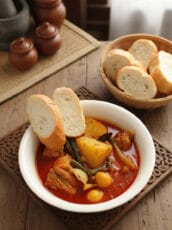
- Pair with crusty bread for dipping.
- Serve with a side of fresh herbs and lime.
- Enjoy as a light dinner on cool evenings.
Storing Leftovers
- Store in an airtight container in the fridge for up to 3 days.
- Reheat gently on the stove over medium heat.
- Add a little water if the broth becomes too strong.
- Do not leave at room temperature for more than 2 hours.
Final Thoughts
There is something very peaceful about Pork Hocks and Cabbage Soup. It’s not flashy. It doesn’t try to impress anyone. But it quietly brings comfort.
If you enjoy this type of simple Khmer soup, you might also like my Chicken Ginger Soup Recipe and my Khmer Sour Soup with Fish. Both are very gentle and perfect for family meals.
If you want to learn more about traditional Cambodian cooking ingredients, I sometimes read helpful articles on Serious Eats because they explain techniques in a clear way.
Cooking soups like this reminds me why I love home cooking. It’s not about perfection. It’s about care.
Thank you for spending your time in my kitchen today. Truly.
Frequently Asked Questions (FAQs)
Q: Can I use pork belly instead of pork hocks?
A: Yes, you can. Pork belly will make the soup richer and more fatty. Pork hocks give more bone flavor.
Q: How do I know when pork hocks are tender?
A: Use a fork. If it goes in easily and the meat feels soft, it is ready.
Q: Can I cook this in a pressure cooker?
A: Yes. Cook pork for about 30–35 minutes under pressure, then add cabbage after releasing pressure.
Q: Can I freeze this soup?
A: Yes, freeze for up to 2 months. Thaw in the fridge before reheating.
Q: Why is my broth cloudy?
A: It may be from not removing foam at the beginning. It is still safe to eat.
Q: Can I make it less salty?
A: Reduce fish sauce and adjust slowly while tasting.
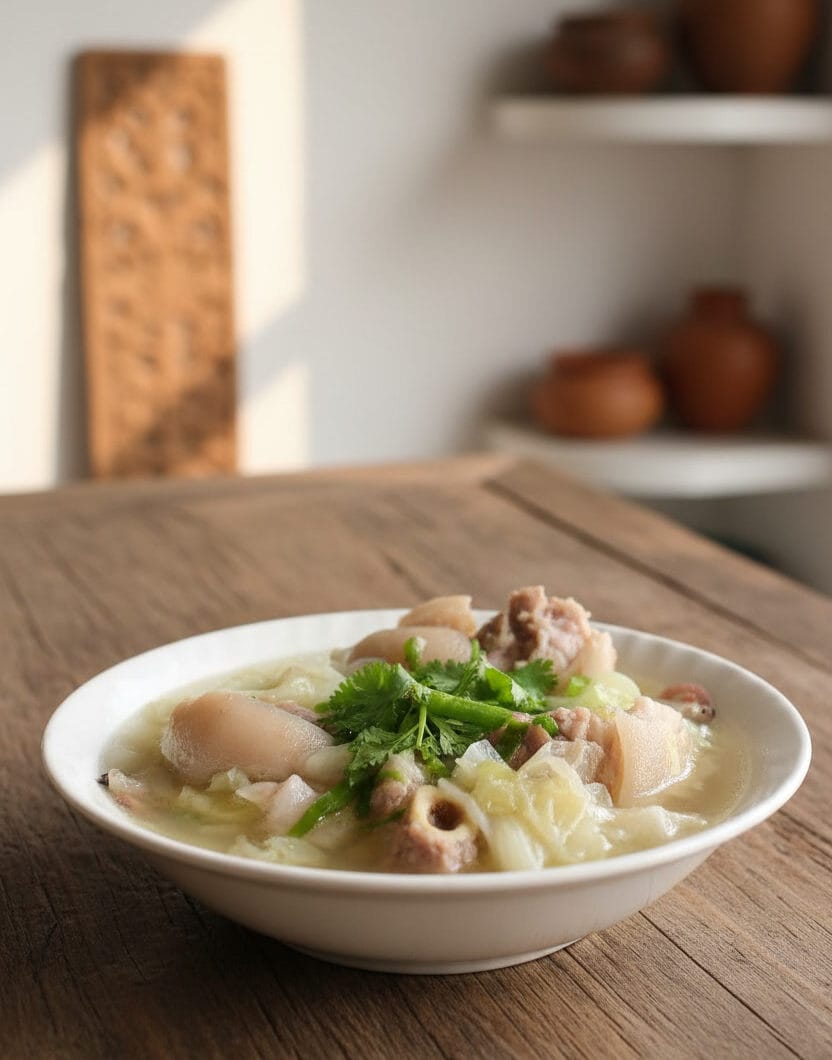
Pork Hocks and Cabbage Soup
4
servings30
minutes1
hour418
kcal1
hour30
minutesA comforting, simple soup made with tender pork hocks and soft cabbage simmered in a rich, flavorful broth. Perfect for family meals.
Ingredients
2 lbs 2 (900 gram) of pork hock, cut 3 inches in length
1/2 1/2 yellow onion, sliced
6 cups 6 water
1/2 1/2 cabbage head, cut 2 inches in length, washed and drained
2 tablespoons 2 fish sauce
1 tablespoon 1 sugar
1/2 teaspoon 1/2 salt
1/4 teaspoon 1/4 black pepper
A handful chopped fresh cilantro and green onion
Directions
- Put pork hocks, yellow onion and water in a soup pot, cook till pork hocks tender.
- Add cabbage and cook till cabbage tender(crisp cabbage less cooking time.)
- Seasoning with fish sauce, sugar, salt and black pepper.
- Top with cilantro and green onion
- Serve hot with rice or hot crusty bread.
Recipe Video
Recipe Notes
- Cut cabbage evenly for even cooking.
- Do not overcook cabbage if you like texture.
- Always taste before serving.
- Fresh herbs should be added at the end.
- Simmer gently, not aggressively.
- Leftovers taste better the next day.
Nutrition Facts
- Serving Size: 1
- Total number of serves: 6
- Calories: 250kcal
- Fat: 14g
- Saturated Fat: 5g
- Trans Fat: 0g
- Polyunsaturated Fat: 2g
- Monounsaturated Fat: 6g
- Cholesterol: 60mg
- Sodium: 950mg
- Potassium: 600mg
- Carbohydrates: 15g
- Fiber: 3g
- Sugar: 6g
- Protein: 18g
- Vitamin A: 3000IU
- Vitamin C: 40mg
- Calcium: 80mg
- Iron: 2mg
- Vitamin D: 1mg
- Vitamin E: 1mg
- Vitamin K: 45mg
- Thiamin: 0.2mg
- Riboflavin: 0.1mg
- Niacin: 2mg
- Vitamin B6: 0.5mg
- Vitamin B12: 0.7mg
- Folate: 30mg
- Biotin: 0mg
- Pantothenic Acid: 0.5mg
- Phosphorus: 150mg
- Iodine: 0mg
- Magnesium: 25mg
- Zinc: 2mg
- Selenium: 10mg
- Copper: 0.1mg
- Manganese: 0.2mg
- Chromium: 0mg
- Molybdenum: 0mg
- Chloride: 0mg
Did you make this recipe?
Tag @cambodiarecipe on Instagram and hashtag it
Like this recipe?
Follow us @cambodiarecipe on Pinterest
Did you make this recipe?
Follow us on Facebook