Braised Pork Hock with Straw Mushroom
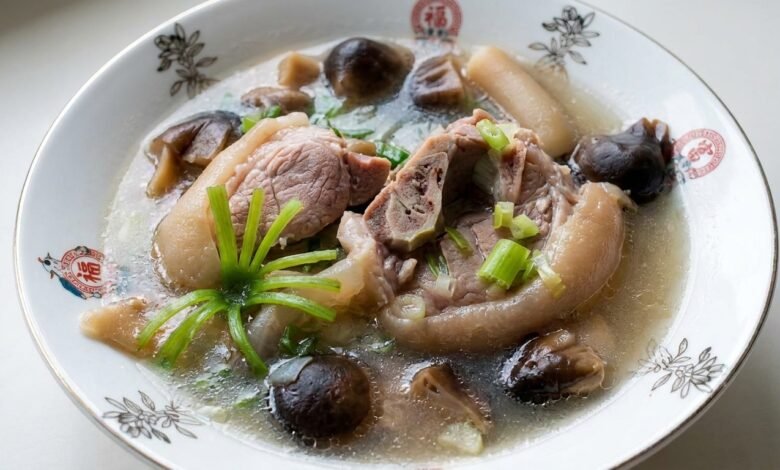
Pork hock is one of those cuts that rewards patience. In this Khmer-style braise, it simmers slowly with lemongrass and salty preserved radish until the skin turns sticky and the meat gives way under a spoon. Canned straw mushrooms go in near the end, plump and ready to soak up the dark, savory broth.
This is home cooking in the truest sense. The ingredient list is short, the method is straightforward, and the pot does most of the work. If you have never cooked with pork hock before, this is a gentle place to start. You can also explore other Cambodian pork soup recipes on CambodiaRecipe once you see how forgiving this cut can be.
What You Need
The dish relies on three flavor builders: lemongrass for a citrusy aroma, preserved radish for a deep, gentle saltiness, and fish sauce for savory backbone. all staples covered in our Khmer ingredients guide. Canned straw mushrooms are practical and widely available; they hold their shape well in a braise. Pork hock, sometimes labeled pork knuckle, is sold in most Asian markets and many mainstream butcher counters.
Equipment
- Soup pot (large): To sauté the aromatics and pork, then simmer everything until the hock is tender.
- Chef’s knife: To mince the garlic, slice the onion, cut the pork hock into 3-inch lengths, and chop the green onions.
- Cutting board: To hold the pork and vegetables steady while cutting.
- Measuring spoons: To measure the oil, fish sauce, sugar, and black pepper.
- Measuring cup: To measure the 7 cups of water.
- Wooden spoon: To stir the aromatics and pork without scratching the pot.
- Ladle: To serve the braise and broth into bowls.
How to Make Braised Pork Hock with Straw Mushroom
Step 1: Heat the pot and sauté the aromatics
Place a large soup pot over medium heat. When it is hot, add the vegetable oil. Add the minced garlic and sliced yellow onion and cook until the garlic is fragrant and the onion begins to soften, about 2 minutes.
Step 2: Brown the pork hock
Add the pork hock pieces to the pot. Stir and cook until the outside of the pork is lightly browned, about 5 minutes. This step builds flavor in the broth.
Step 3: Add lemongrass, radish, and water
Add the lemongrass pieces and sliced preserved radish. Pour in the 7 cups of water. Bring the liquid to a gentle simmer, then reduce the heat to maintain a low, steady bubble. Cover and cook until the pork hock is tender. Begin checking at 1 hour 30 minutes; depending on the size of the pieces, it may need up to 2 hours. The meat should pull away from the bone without resistance.
Step 4: Add mushrooms and season
Once the pork is tender, add the drained canned straw mushrooms, fish sauce, sugar, and black pepper. Stir gently and simmer uncovered for another 10 minutes so the mushrooms heat through and the broth concentrates slightly.
Step 5: Finish with green onion
Taste the broth. If it needs a little more salt, add a splash more fish sauce. Scatter the chopped green onions over the top and turn off the heat. Let the pot sit for 5 minutes before serving.
Cooking Tips
- Keep the simmer low. A hard boil can make the pork skin tough and cloudy the broth. Small, lazy bubbles are what you want.
- Preserved radish varies in saltiness. Soak and rinse it as directed, then taste the broth before adding extra fish sauce at the end. Different brands can be significantly saltier than others.
- Canned straw mushrooms are already cooked. They only need to be heated through, which is why they go in at the end rather than at the start.
How to Serve
Ladle the pork, mushrooms, and broth over steamed jasmine rice. The broth is the point of the dish, so use a bowl rather than a plate and spoon plenty of it over the rice. A side of quick-pickled vegetables or sliced cucumber adds a fresh contrast. This braise also tastes even better the next day, once the flavors have had time to settle.
Recipe Notes
Pork safety: Fresh pork, including pork hock, should reach a safe minimum internal temperature of 145°F (62.8°C) with a 3-minute rest, according to the USDA Food Safety and Inspection Service temperature chart. In a braise, the pork will far exceed this temperature during the long simmer.
Storage: Refrigerate leftovers within 2 hours of cooking, as recommended by the FDA’s food chilling guidance. Store in a covered container for up to 4 days. Reheat gently on the stovetop, adding a splash of water if the broth has thickened too much.
Frequently Asked Questions
Can I use fresh straw mushrooms instead of canned?
Yes. Fresh straw mushrooms are sometimes available in Asian markets. Clean them, trim the base, and add them in Step 4 as directed. They may release a little more liquid, so simmer a few minutes longer if the broth seems thin.
What is preserved radish, and can I skip it?
Preserved radish is a salted, cured radish sold in jars or vacuum packs at Asian grocery stores. It gives the broth its distinctive deep, savory saltiness. If you skip it, the dish will still work, but the flavor will be simpler. Taste the broth before seasoning and adjust the fish sauce accordingly.
Can I make this in a slow cooker?
The stovetop sauté in Steps 1 and 2 builds important flavor. If you want to use a slow cooker, do the sautéing in a pan first, then transfer everything except the mushrooms and green onions to the slow cooker. Cook on LOW for 6–7 hours, then add the mushrooms and green onions in the last 20 minutes.
Final Thoughts
What makes this braise worth cooking is the way a tough, inexpensive cut turns soft and glossy with nothing more than time and a covered pot. The straw mushrooms are quiet but essential, each one holding a little pocket of savory broth. Serve it over rice on a cool evening, and let the pot do the rest.
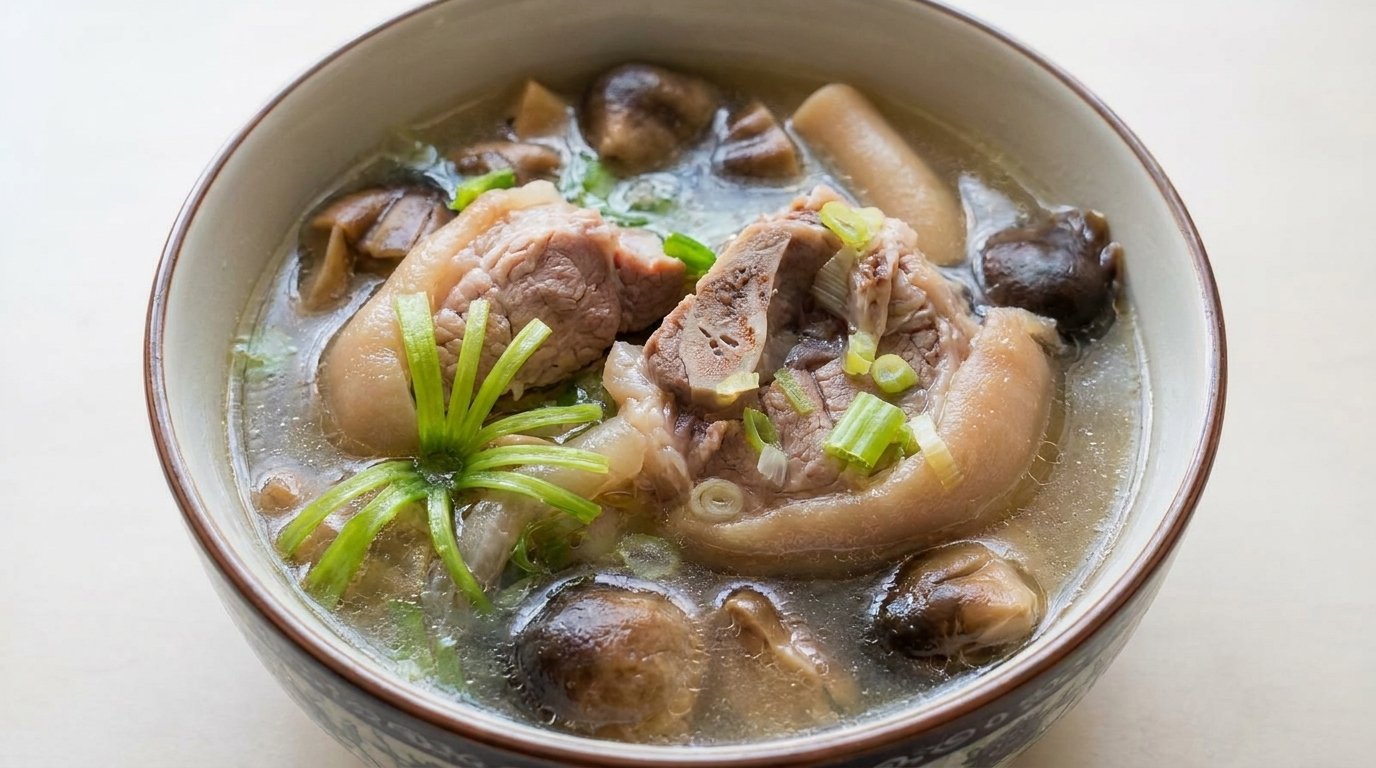
Braised Pork Hock with Straw Mushroom
4
servings15
minutes1
hour40
minutes833
1
hour55
minutesPork hock becomes tender and sticky in a savory broth built from lemongrass, preserved radish, and fish sauce. Canned straw mushrooms add texture and soak up the dark, rich liquid. Serve over steamed rice.
Ingredients
2 tablespoons vegetable oil
2 cloves garlic, minced
1 yellow onion, sliced
2 lbs (900 gram) of pork hock, cut 3 inches in length
1 stalk lemon grass, cut 4 inches in length
1 piece salty preserved radish, soaked in warm water, rinsed and sliced thin
7 cups water
1 canned straw mushroom, drained
2 tablespoons fish sauce
1 tablespoon sugar
1/4 teaspoon black pepper
3 stalks green onion, chopped
Directions
- Pre-heat a large soup pot, when it hot add oil.
- Saute’ garlic, onion and pork hock.
- Add lemon grass root, preserved radish and water, and cook till pork hock tender.
- Add straw mush room and seasoning with fish sauce, sugar, and black pepper.
- Top with green onion.
Equipment
 Large Soup PotCheck product details
 Chef’s KnifeCheck product details
 Cutting boardCheck product details
 Measuring Spoons & CupsCheck product details

 Wooden SpoonCheck product details






Recipe Video
Nutrition Facts
- Serving Size: 150 g
- Total number of serves: 4
- Calories: 320kcal
- Fat: 18g
- Saturated Fat: 6g
- Trans Fat: 0g
- Polyunsaturated Fat: 2g
- Monounsaturated Fat: 9g
- Cholesterol: 90mg
- Sodium: 850mg
- Potassium: 450mg
- Carbohydrates: 12g
- Net Carbs: 10g
- Fiber: 2g
- Sugar: 3g
- Protein: 22g
- Vitamin A: 150mcg
- Vitamin C: 6mg
- Calcium: 40mg
- Iron: 2mg
- Vitamin D: 0mcg
- Vitamin E: 1mg
- Vitamin K: 5mcg
- Thiamin: 0.3mg
- Riboflavin: 0.2mg
- Niacin: 5mg
- Vitamin B6: 0.4mg
- Vitamin B12: 0.8mcg
- Folate: 20mcg
- Biotin: 5mcg
- Pantothenic Acid: 1mg
- Phosphorus: 200mg
- Iodine: 0mcg
- Magnesium: 30mg
- Zinc: 3mg
- Selenium: 20mcg
- Copper: 0.1mg
- Manganese: 0.5mg
- Chromium: 0mcg
- Molybdenum: 0mcg
- Chloride: 300mg
Did you make this recipe?
Tag @cambodiarecipe on Instagram and hashtag it
Like this recipe?
Follow us @cambodiarecipe on Pinterest
Did you make this recipe?
Follow us on Facebook