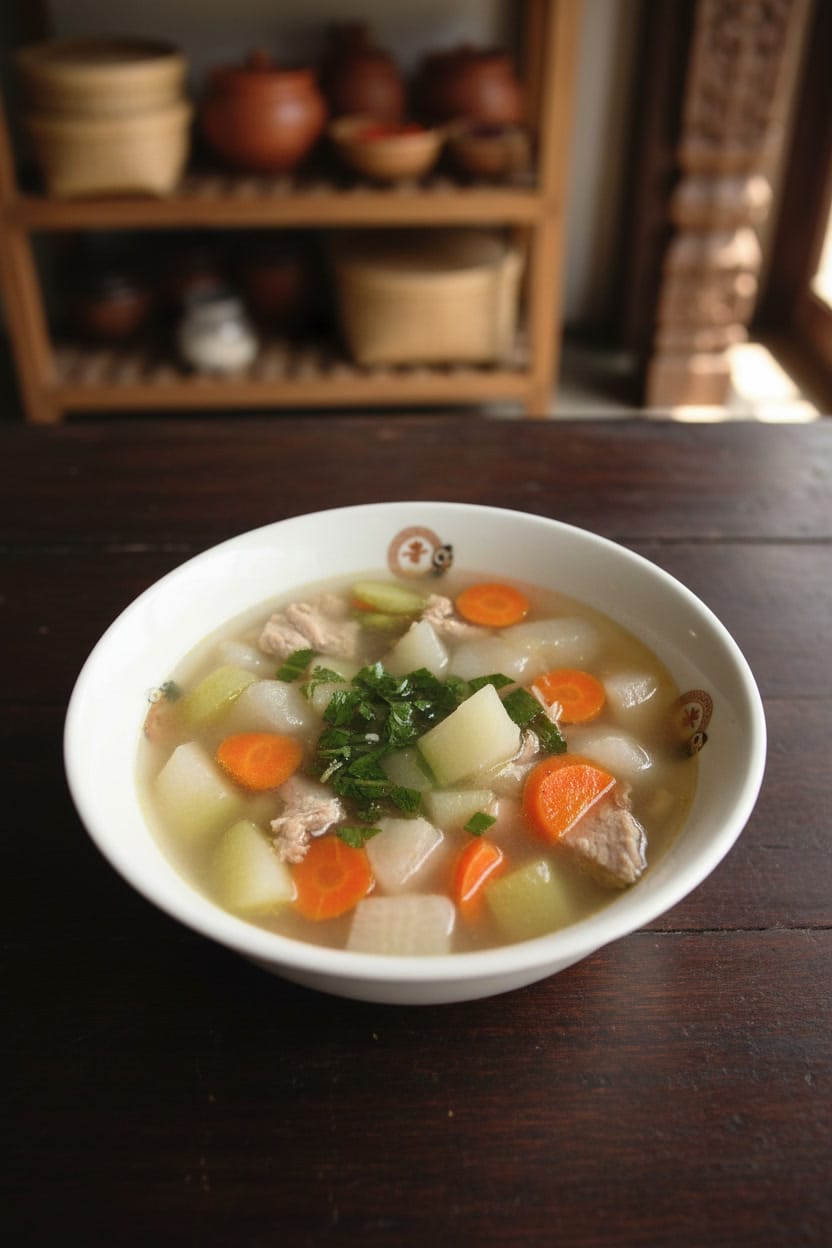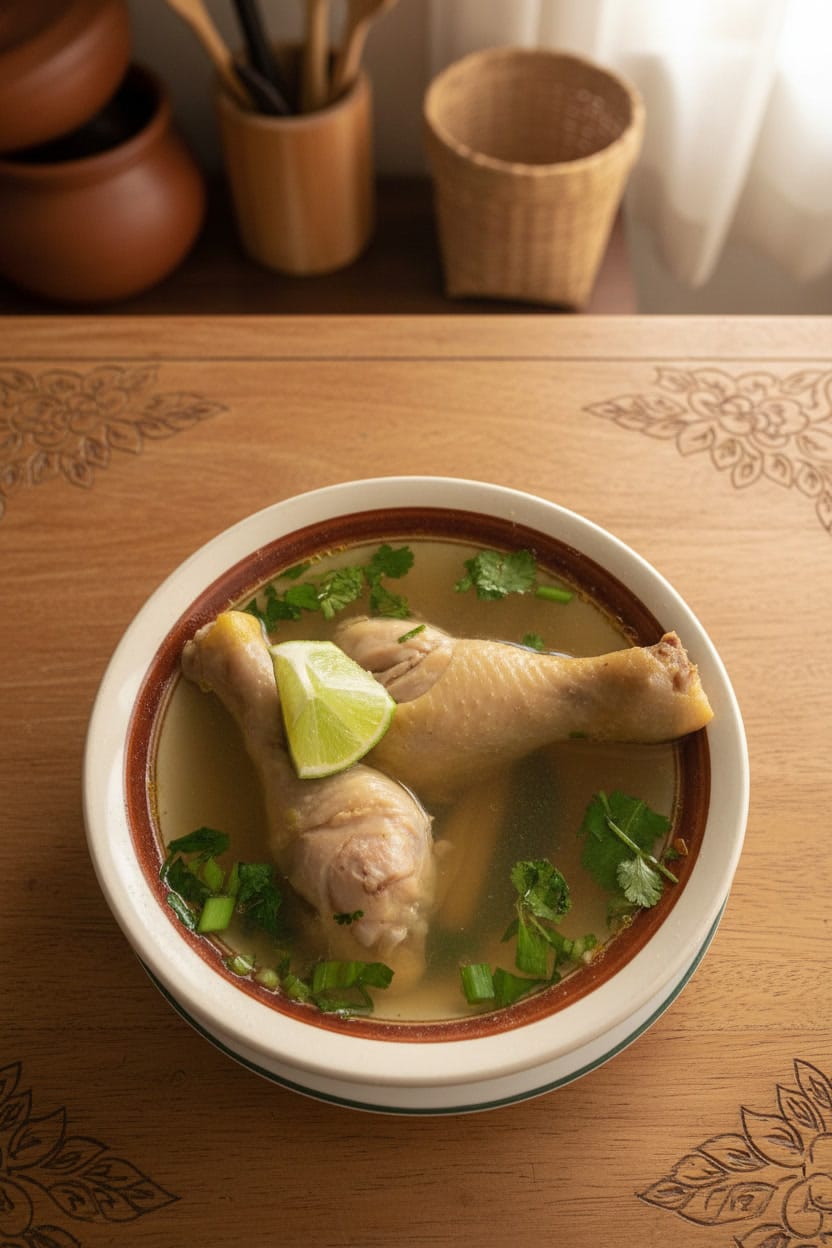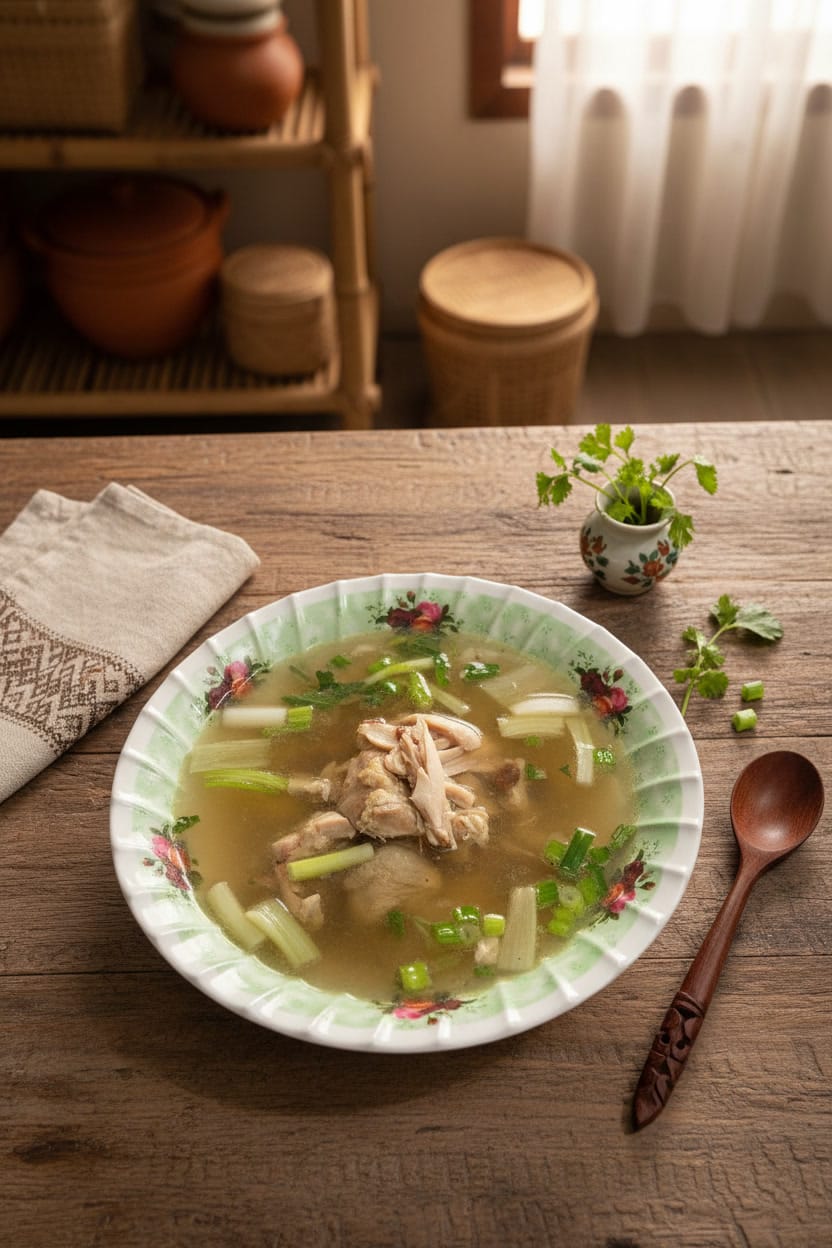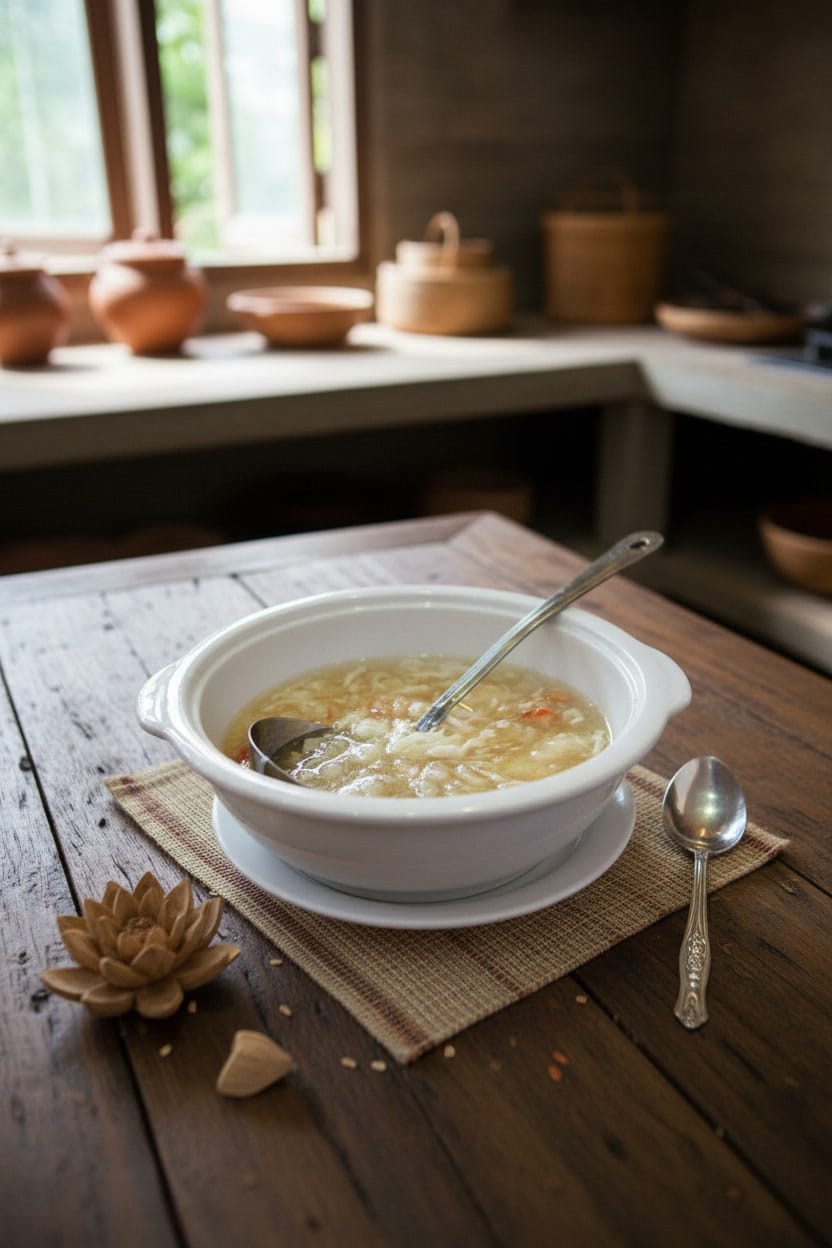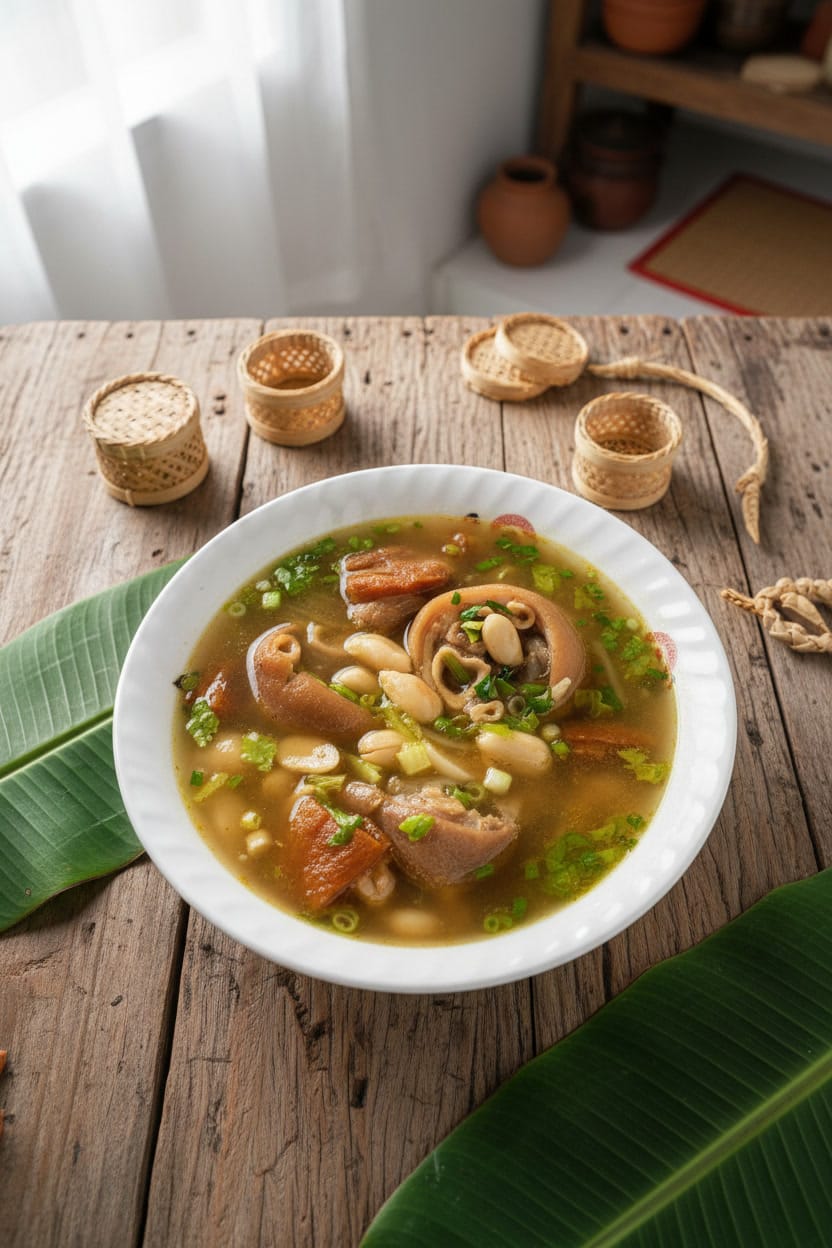
Peanut Soup with Pork Hocks
There are some meals that just feel like home before you even take the first bite. For me, that bowl is always filled with this Peanut Soup with Pork Hocks. It’s the kind of dish that fills your kitchen with the most gentle, nutty aroma and makes everyone wander in asking, “What’s cooking?” It smells like my grandmother’s house in the countryside, where meals were simple but made with so much care.
I still remember watching her prepare this soup on cool mornings when the rice fields were quiet. She would move slowly around the outdoor kitchen, her hands knowing exactly what to do without measuring cups or timers. She cooked by feeling, by instinct, by years of feeding people she loved. And that’s exactly how I want you to approach this recipe too.
If you’ve never cooked with pork hocks before or if peanuts in soup sounds a little unusual, please stay with me. This is one of those recipes that might surprise you. The broth becomes rich and creamy from the peanuts, the pork gets so tender it falls apart, and that little bit of salty radish adds something special you can’t quite name but would definitely miss if it wasn’t there.
This is real Cambodian home cooking. Nothing fancy, nothing complicated. Just good food that makes you feel taken care of.
Why You’ll Love This Soup
First of all, this soup is incredibly comforting without being heavy. The peanuts break down as they cook and create this slightly thick, almost creamy broth that coats the back of your spoon. It feels nourishing in a way that’s hard to describe. Like a warm hug in a bowl, but lighter than you’d expect.
The pork hocks become meltingly tender after simmering for a while. You know that texture where the meat is so soft it just pulls apart with the slightest nudge from your spoon? That’s what happens here. And because pork hocks have a little bit of fat and collagen, they give the soup so much flavor and body.
Another thing I really love about this recipe is how balanced it tastes. You get the sweetness from the pork and peanuts, the saltiness from the fish sauce and preserved radish, and a tiny hint of pepper warmth at the end. It’s not spicy at all, so it’s perfect for kids or anyone who prefers milder food.
And honestly? It’s one of those recipes that’s hard to mess up. You basically put everything in a pot and let it do its thing. The ingredients are simple and easy to find, and the soup practically cooks itself while you go about your day. That’s my favorite kind of cooking.
My Personal Experience
I learned to make this soup by watching my grandmother in her little kitchen in Kampong Cham province. She had this old clay pot she used for everything, and I swear food just tasted better coming out of that pot. Her version of Peanut Soup with Pork Hocks was something the whole family looked forward to, especially on days when the weather was a little gray and damp.
I remember sitting on a low stool near the fire, watching her soak the peanuts in a bowl of water. She would leave them there for hours while she tended to other things around the house. She told me the soaking was important, that it woke the peanuts up and made them easier to digest. I didn’t really understand what she meant back then, but I did what she said anyway.
When I moved to the city for school and later started my own family here in Phnom Penh, this was one of the first recipes I called her about. I wanted to make sure I got it right. She laughed at me on the phone and said it was the easiest thing in the world, that I should stop worrying so much. And she was right. It really is simple.
Now I make this soup for my own children, and I love watching their faces light up when they realize what’s for dinner. My youngest likes to pick out the peanuts one by one. My oldest loves the soft pieces of pork. And my husband? He just quietly eats three bowls without saying much, which is his way of telling me I did good.
This recipe connects me to my grandmother even though she’s not here anymore. Every time I make it, I think of her hands, her kitchen, her laugh. Food does that, doesn’t it? It keeps people close.
Easy-to-Find Ingredients
One thing I really appreciate about this recipe is that none of the ingredients are hard to find. You don’t need to go to a special store or order anything online. Most of these things are probably already in your kitchen or available at any regular grocery store.
The pork hocks might be the one ingredient you’re not super familiar with. They’re also called pork shanks or ham hocks, and you can find them in the meat section of most supermarkets. If you have an Asian grocery store near you, even better, they’ll definitely have them. But really, any regular grocery store carries them. Just ask the butcher if you’re not sure where to look.
For the preserved salty radish, you might need to visit an Asian market if you don’t already have it. It’s usually sold in small plastic bags and looks like pale yellowish strips. But I’ll also give you a substitution later in case you can’t find it. Don’t let one ingredient stop you from trying this soup.
Everything else is super basic. Raw peanuts, fish sauce, sugar, black pepper, green onions, and celery leaves. If you can’t find celery leaves specifically, just use the tender inner leaves from a bunch of celery or even substitute with cilantro. Both work beautifully.
Ingredients List
- 2 pounds (about 900 grams) of pork hocks, cut into 3-inch pieces
- 1/2 cup raw shelled peanuts, soaked for 3 hours and rinsed well
- 4 ounces (about 113 grams) preserved salty radish, soaked in warm water, rinsed, and cut into bite-sized pieces
- 6 cups of water
- 1 tablespoon fish sauce
- 1/2 tablespoon sugar
- 1/4 teaspoon black pepper
- 2 stalks green onion, chopped
- 1/4 cup chopped celery leaves
Why These Ingredients Are Used
- Pork hocks: They add so much flavor to the broth because of the bone and connective tissue. As they cook slowly, they release collagen that makes the soup feel rich and satisfying. The meat becomes incredibly tender too.
- Raw peanuts: These are the heart of the soup. As they simmer, they soften and release their oils, which thickens the broth slightly and gives it that creamy, nutty taste. Soaking them first helps them cook evenly and makes them easier to digest.
- Preserved salty radish: This little ingredient does big things. It adds a deep salty flavor that’s different from regular salt or fish sauce. It also gives the soup a subtle complexity that makes people wonder what that secret ingredient is.
- Water: Simple but important. The amount of water determines how concentrated your soup will be. Six cups gives you a good balance where the broth is flavorful but not too intense.
- Fish sauce: This is our main seasoning for saltiness and umami. It blends into the background and makes everything taste more meaty and savory without screaming “fish.”
- Sugar: Just a tiny bit to balance the saltiness and bring out the natural sweetness of the pork and peanuts. You won’t taste it as sugar, I promise.
- Black pepper: Adds a gentle warmth at the end. It’s not spicy, just cozy. Freshly ground is always better if you have it.
- Green onion: Gives a fresh, mild onion flavor and adds a pop of green color that makes the soup look pretty.
- Celery leaves: These are often thrown away, which is such a shame. They have a delicate celery flavor that’s fresher and less bitter than the stalks. They add a lovely herbal note right at the end.
Cooking Equipment Needed
- Large soup pot: You want something big enough to hold all the ingredients with room for the water to bubble away. A 5 or 6-quart pot works perfectly. Dutch ovens are great if you have one, but any heavy-bottomed pot will do.
- Cutting board and sharp knife: For cutting the pork hocks if they’re not pre-cut, and for chopping the green onions and celery leaves. A sharp knife makes everything safer and easier.
- Mixing bowls: You’ll need a couple of small bowls for soaking the peanuts and the preserved radish. Nothing fancy, just whatever you have.
- Measuring cups and spoons: To measure the water, fish sauce, sugar, and pepper. After you make this a few times, you’ll probably just eyeball it like my grandmother did.
- Wooden spoon or ladle: For stirring the soup occasionally and for tasting. Wooden spoons are gentle on your pot and comfortable to hold.
- Colander: For rinsing the soaked peanuts and the radish. A fine-mesh strainer works too.
Cooking Instructions
Before you start cooking, there’s a little bit of prep work that makes everything go smoothly. Don’t skip the soaking, it really does make a difference. The peanuts need time to soften and plump up, and the radish needs to lose some of its intense saltiness.
So here’s what I do. I usually put the peanuts in a bowl of water in the morning if I’m planning to make this soup for dinner. Three hours is good, but even an hour helps. For the preserved radish, soak it in warm water for about 15 to 20 minutes while you’re getting everything else ready. Then drain it and give it a good rinse to make sure any grit is gone.
When you’re ready to cook, put your pot on the stove and add the pork hocks, the soaked peanuts, the chopped radish, and all six cups of water. Turn the heat to medium and let it come to a gentle simmer. You don’t want it boiling hard, just bubbling softly.
Now comes the waiting part. This soup takes time, and that’s a good thing. Let it cook gently for about an hour and a half to two hours. You’ll know it’s ready when the pork is so tender it’s practically falling off the bone and the peanuts are soft enough to mash easily with a spoon.
Every now and then, check on it and give it a stir. If you see any foam or scum floating on top, just skim it off with a spoon. That’s totally normal and removing it keeps the broth clear.
Once the pork and peanuts are tender, it’s time to season. Add the fish sauce, sugar, and black pepper. Stir it all together and then taste. This is important. Does it need more salt? More pepper? Trust your own taste buds. Everyone likes things a little different.
Right before you’re ready to serve, turn off the heat and sprinkle the chopped green onions and celery leaves on top. They don’t need to cook, the hot soup will warm them perfectly.
Serve it hot with a big bowl of steamed rice, and watch everyone at your table get quiet because they’re too busy enjoying their soup to talk.
Step-by-Step Directions
- Soak the raw peanuts in a bowl of water for at least 3 hours. After soaking, drain and rinse them with cold water.
- Soak the preserved salty radish in warm water for about 15 to 20 minutes. Drain, rinse well, and cut into bite-sized pieces.
- Place the pork hocks, soaked peanuts, prepared radish, and 6 cups of water into a large soup pot.
- Bring everything to a gentle simmer over medium heat. Don’t let it boil too hard.
- Let the soup cook slowly for about 1.5 to 2 hours, until the pork is very tender and the peanuts are soft.
- Skim off any foam that rises to the surface during cooking, if you want a clearer broth.
- Add the fish sauce, sugar, and black pepper. Stir well to combine.
- Taste the broth and adjust the seasoning if needed. You might want a little more fish sauce or a tiny extra pinch of sugar.
- Turn off the heat. Sprinkle the chopped green onions and celery leaves over the top.
- Serve hot with plenty of steamed white rice.
Tips for Best Flavor
- Don’t rush the cooking time. This soup really benefits from slow simmering. The longer it cooks gently, the more flavor comes out of the pork bones and the creamier the peanuts become.
- Soak the peanuts long enough. If you can, soak them for the full three hours or even longer overnight in the fridge. It makes them cook more evenly and gives a better texture.
- Rinse the preserved radish well. It’s quite salty, so a good soak and rinse prevents the soup from becoming too salty. When in doubt, rinse a little more.
- Skim the foam if you want. It’s not strictly necessary, but removing the grayish foam that rises at the beginning gives you a cleaner looking broth. The flavor is fine either way.
- Add the fresh garnishes at the end. Green onions and celery leaves lose their brightness if they cook too long. Sprinkling them on right before serving keeps them fresh and vibrant.
- Taste before serving. This is the most important tip. Everyone’s fish sauce is a little different, and your preferences might be different from mine. Adjust the seasoning until it tastes right to you.
Variations and Adaptations
- No preserved radish? You can leave it out and just add a little extra salt or fish sauce to taste. The soup will still be delicious, just slightly less complex.
- Chicken instead of pork: If you don’t eat pork, chicken thighs or drumsticks work really well. The cooking time will be shorter, about 45 minutes to an hour. Check for doneness earlier.
- Vegetarian version: Use firm tofu or soy curls instead of pork, and replace the fish sauce with soy sauce or mushroom seasoning. Use vegetable broth instead of water for more flavor.
- Add vegetables: Some families add chunks of daikon radish or carrots during the last 30 minutes of cooking. It adds sweetness and makes the soup even more hearty.
- Use different herbs: If you can’t find celery leaves, cilantro is a beautiful substitute. Thai basil would also be lovely, though it has a stronger flavor.
- Make it spicy: If you like heat, serve the soup with fresh sliced Thai chilies on the side so everyone can add their own. A little chili garlic sauce on the side works too.
Serving Suggestions
- Serve the Peanut Soup with Pork Hocks in large bowls with a generous scoop of steamed jasmine rice on the side or even stirred right into the soup.
- A simple cucumber salad with a little vinegar and sugar makes a refreshing side dish that contrasts nicely with the rich soup.
- Fresh vegetables like sliced cucumbers, raw cabbage, or herb platters are common in Cambodian meals and go perfectly with this soup.
- For a complete Cambodian-style meal, serve it alongside other dishes like stir-fried morning glory or a simple fried fish.
- This soup is also wonderful the next day, so don’t worry if you make too much. It might even taste better after the flavors have had more time to meld.
Storing Leftovers
- Let the soup cool completely before storing. Don’t leave it out at room temperature for more than two hours.
- Store in an airtight container in the refrigerator for up to 3 to 4 days. The flavors will continue to develop and often taste even better the next day.
- This soup freezes well too. Put it in freezer-safe containers or bags, leaving a little space for expansion, and freeze for up to 3 months.
- When reheating, warm it gently on the stove over medium-low heat. You might need to add a splash of water if it thickened up too much in the fridge.
- The peanuts will continue to soften as the soup sits, so leftovers will have an even creamier texture. Some people actually prefer it this way.
- Don’t forget to reheat only the amount you’ll eat. It’s better to take out what you need and leave the rest in the fridge or freezer.
Final Thoughts
I hope you’ll try making this Peanut Soup with Pork Hocks in your own kitchen. It’s one of those recipes that reminds me why I love cooking so much. Not because it’s fancy or impressive, but because it’s real. It’s the food that families in the Cambodian countryside have been making for generations, and there’s something beautiful about carrying on those traditions.
If you enjoy this recipe, you might also like my recipe for Cambodian Ginger Catfish or my Pork and Pickled Mustard Greens Soup. They’re both comforting, simple, and full of the flavors I grew up with. And if you want to learn more about Cambodian cooking in general, I highly recommend checking out the cookbooks from Saveur magazine, they do a wonderful job showcasing Southeast Asian cuisine.
Remember that cooking doesn’t have to be perfect. My grandmother never worried about whether her pork was cut exactly three inches long or if she used precisely half a tablespoon of sugar. She cooked with her heart and her hands, and that’s what made her food so good. So please, make this soup your own. Adjust it until it tastes like home to you.
Thank you so much for being here and for letting me share this little piece of my family’s kitchen with you. If you make this soup, I would genuinely love to hear how it turns out. Leave a comment below or tag me in your photos. It makes me so happy to see these old recipes finding new life in kitchens around the world.
Cook with love, eat with joy, and always save room for one more bowl.
Frequently Asked Questions (FAQs)
Q: Can I use canned peanuts instead of raw peanuts?
A: I wouldn’t recommend it. Canned peanuts are already cooked and often salted, so they won’t break down the same way in the soup. Raw peanuts that you soak yourself give the broth that creamy texture we want.
Q: What if I can’t find preserved salty radish?
A: That’s okay! You can leave it out and just adjust the salt with a little extra fish sauce. Some people use a small piece of salted turnip or even a teaspoon of soy sauce as a substitute.
Q: How do I know when the pork hocks are done?
A: The meat should be very tender and pulling away from the bone. If you poke it with a fork, it should go in easily with no resistance. If it’s still tough, let it cook longer.
Q: Can I make this in a slow cooker or Instant Pot?
A: Yes! For a slow cooker, cook on low for 6 to 8 hours. For an Instant Pot, cook on high pressure for 45 minutes with natural release. Add the fresh garnishes at the end either way.
Q: Is this soup supposed to be thick or thin?
A: It’s somewhere in between. The peanuts thicken it slightly as they cook, so it’s not as thin as a clear broth but not as thick as a stew. If it gets too thick when you reheat it, just add a little water.
Q: My soup tastes a little bland. What should I do?
A: First, make sure you’ve added enough salt. Sometimes it just needs a tiny bit more fish sauce. Also, a little extra black pepper can brighten everything up. Don’t be afraid to adjust at the end.
Q: Can I use skinless peanuts?
A: Yes, you can. The red skin on peanuts is harmless and adds a little color, but if you can only find skinless peanuts or prefer them, they’ll work just fine.
Q: How much does this recipe serve?
A: This makes about 4 to 6 servings, depending on how hungry everyone is. In my house, it’s usually 4 because we all go back for seconds.
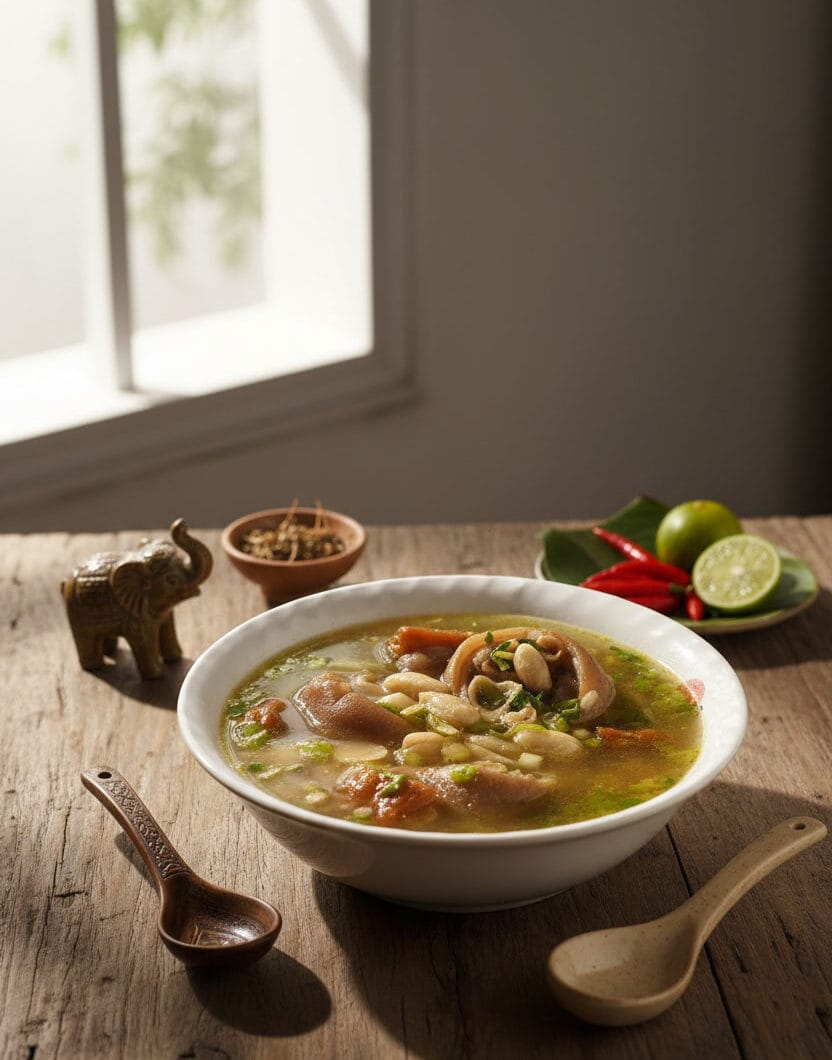
Peanut Soup with Pork Hocks
6
servings1
hour1
hour450
kcal2
hoursThis Peanut Soup with Pork Hocks is a traditional Cambodian countryside dish where tender pork and creamy peanuts simmer together with preserved radish to create a rich, comforting broth that’s perfect served with steamed rice.
Ingredients
2 lbs 2 (900 gram) of pork hocks, cut 3 inches in length
1/2 cup 1/2 raw shelled peanuts, soaked for 3 hours and rinsed with cold water
4 oz 4 (113 gram) of preserve salty radish, soaked in warm water, rinsed and cut to bite sizes
6 cups 6 water
1 tablespoon 1 fish sauce
1/2 tablespoon 1/2 sugar
1/4 teaspoon 1/4 black pepper
2 2 stalks green onion, chopped
1/4 cup 1/4 chopped celery leaves
Directions
- Put pork hocks, raw peanut, preserve salty radish and water in a soup pot.
- Cook in medium temperature till pork hock and peanut are tender.
- Seasoning with fish sauce, sugar and black pepper.
- Top with green onion and celery leaves.
Recipe Video
Recipe Notes
- Soaking the peanuts is important for texture and digestibility, so try not to skip this step.
- The preserved radish is quite salty, so always soak and rinse it well before using.
- Feel free to cut the pork hocks smaller if you prefer bite-sized pieces, but 3-inch chunks work well for long cooking.
- If you can’t find celery leaves, use the tender inner parts of celery stalks or substitute with cilantro.
- This soup tastes even better the next day after the flavors have melded together overnight.
- Leftovers can be frozen for up to 3 months in airtight containers.
- Serve with plenty of steamed rice to soak up the delicious broth.
- Adjust the fish sauce at the end based on your taste, different brands have different salt levels.
- The soup should simmer gently, not boil hard, for the best texture and flavor.
- Green onions and celery leaves should be added at the very end to keep their fresh taste and color.
Nutrition Facts
- Serving Size: 1
- Total number of serves: 6
- Calories: 350kcal
- Fat: 22g
- Saturated Fat: 7g
- Trans Fat: 0g
- Polyunsaturated Fat: 5g
- Monounsaturated Fat: 9g
- Cholesterol: 50mg
- Sodium: 800mg
- Potassium: 650mg
- Carbohydrates: 20g
- Fiber: 4g
- Sugar: 6g
- Protein: 22g
- Vitamin A: 500IU
- Vitamin C: 8mg
- Calcium: 45mg
- Iron: 2mg
- Vitamin D: 0mg
- Vitamin E: 3mg
- Vitamin K: 5mg
- Thiamin: 0.5mg
- Riboflavin: 0.3mg
- Niacin: 4mg
- Vitamin B6: 0.4mg
- Vitamin B12: 1mg
- Folate: 85mg
- Biotin: 3mg
- Pantothenic Acid: 1.5mg
- Phosphorus: 180mg
- Iodine: 0mg
- Magnesium: 50mg
- Zinc: 3mg
- Selenium: 15mg
- Copper: 0.3mg
- Manganese: 1mg
- Chromium: 0mg
- Molybdenum: 0mg
- Chloride: 1000mg
Did you make this recipe?
Tag @cambodiarecipe on Instagram and hashtag it
Like this recipe?
Follow us @cambodiarecipe on Pinterest
Did you make this recipe?
Follow us on Facebook