Pchum Ben in Cambodia: What Visitors Should Know About Ancestors’ Day
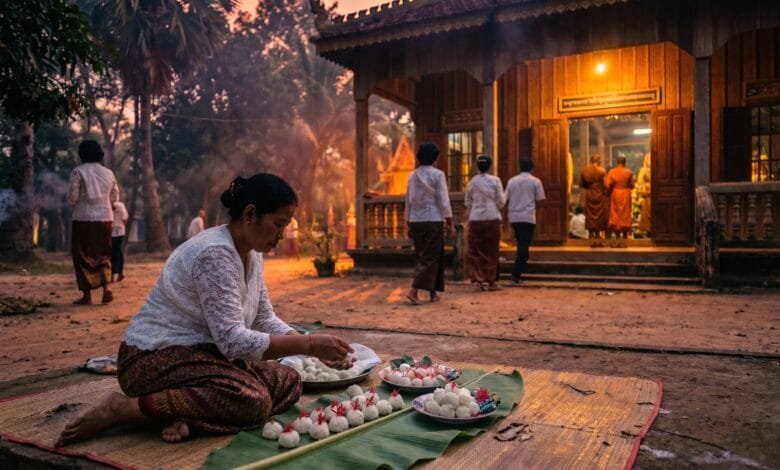
If you are in Cambodia in late September or October, you may notice something unusual. Before the sun comes up, families are already walking quietly toward the local pagoda. They carry plates of sticky rice, wrapped cakes, and incense. The streets are calm. The temples are full.
This is Pchum Ben — a 15-day Buddhist festival that many Cambodians consider the most important religious period of the year. It is sometimes called Ancestors’ Day in English. The name Pchum Ben comes from two Khmer words: Pchum, which means “to gather together,” and Ben, which refers to a ball of food, usually rice.
For a foreign visitor, Pchum Ben can be confusing at first. It is not a festival with parades or firecrackers. It is quiet, personal, and deeply spiritual. This article explains what is happening, why it matters, and how you can experience it respectfully.
Quick Festival Information
Festival: Pchum Ben
Khmer name: ភ្ជុំបិណ្ឌ (Pchum Ben)
Also known as: Ancestors’ Day, Festival of the Dead, Brochum Ben
Typical time: September–October (based on the Khmer lunar calendar)
Length: 15 days total; the final 3 days are a public holiday
Type: Buddhist religious festival; national public holiday
Main locations: Pagodas throughout Cambodia; particularly busy in Phnom Penh, Siem Reap, and rural provinces
Main activities: Early-morning offerings of food and rice balls to monks, chanting, family gatherings, visits to pagodas
Visitor experience: Quiet, moving, and respectful; best experienced by observing at a pagoda before sunrise
What Is Pchum Ben?
Pchum Ben is a Buddhist festival that lasts for 15 days. It begins on the first day of the waning moon in the Khmer month of Photrebot, which usually falls between late September and early October on the Western calendar.
The first 14 days are called Kan Ben. During this time, families take turns bringing offerings to the pagoda. The 15th and final day is called Pchum Ben (or sometimes Ben Thom, meaning “the great offering”). That final day is the most important, and it is the start of a three-day public holiday.
The purpose of the festival is to honor deceased relatives. Cambodians believe that during this period, the spirits of the dead are released to visit the living. By making offerings to Buddhist monks, families can transfer merit to their ancestors, helping to ease their suffering in the afterlife.
Why Pchum Ben Matters in Cambodia
Pchum Ben is not just a religious obligation. It is one of the few times each year when entire families come together. Relatives who have moved to Phnom Penh or other cities for work travel back to their home provinces. They visit the family pagoda, share meals, and remember those who have passed away.
The festival also carries deep emotional weight for many Cambodians. The Khmer Rouge regime of the 1970s killed an estimated 1.8 million people — nearly a quarter of the country’s population at the time. Most Cambodian families lost relatives during those years. Pchum Ben is a time to remember them specifically, along with ancestors going back seven generations.
For younger Cambodians, the festival is a way to connect with traditions that were disrupted or suppressed during that period. Prime Minister Hun Manet has publicly described the festival as vital for preserving Cambodian culture and customs for future generations.
When Is Pchum Ben Celebrated?
Pchum Ben follows the Khmer lunar calendar, so the dates change every year. It typically falls in late September or early October.
The full festival lasts 15 days. The first 14 days are called Kan Ben, and the final day is Pchum Ben proper. The final three days are a national public holiday in Cambodia.
In 2026, the Pchum Ben public holiday falls on October 10, 11, and 12. The full Kan Ben and Pchum Ben period runs from approximately September 27 to October 11, 2026 based on the lunar calendar.
If you are planning to visit Cambodia during this time, check the exact dates for the year of your trip. Because the festival is based on the lunar calendar, the dates shift each year by roughly two to three weeks.
The History Behind Pchum Ben
Pchum Ben is not a new tradition. Its roots go back to the Angkorian era, when Cambodians practiced animist traditions before the arrival of Buddhism.
Ancient Khmer inscriptions suggest that ancestor-honoring rituals were performed in Cambodia as early as the late 9th century. One source mentions King Yasovarman (who ruled from 889 to 910) preparing rice offerings to honor soldiers who had died in battle. Academic research indicates that these rituals were influenced by Indian sraddha ceremonies, which were adapted into Cambodian Buddhist practice over many centuries.
What is clear is that Pchum Ben has always been about one thing: remembering the dead and caring for their spiritual well-being. The specific customs have changed and developed over time, but the core purpose has remained the same.
How Cambodian Families Celebrate
If you want to understand Pchum Ben, it helps to know what actually happens during the festival — especially on the final day.
The Bay Ben Ritual
The most distinctive Pchum Ben tradition is the offering of bay ben — small balls of sticky rice, sometimes mixed with sesame seeds or coconut cream.
Before dawn, families gather at the pagoda. They form the rice balls in their palms and bring them to the temple grounds. Then, they walk around the main temple building three times, scattering the rice balls on the ground as they go.
Why before sunrise? Cambodian tradition holds that hungry spirits with heavy sins cannot receive food during daylight. They are believed to be afraid of light, so the offerings must be made in the dark.
Offerings to Monks
After the bay ben ritual, families enter the temple to offer food, drinks, incense, candles, and sometimes money to the monks. The monks chant prayers and perform rituals to transfer merit to the deceased.
Common offerings include rice, noodles, and traditional Khmer cakes. Families also offer soft drinks and packaged snacks — a modern addition that reflects the way the tradition has adapted over time.
Family Reunions
Beyond the religious rituals, Pchum Ben is a family holiday. Relatives travel from far away to spend time together. They share meals, visit the pagoda as a group, and tell stories about the ancestors they are honoring.
For many Cambodian families, this is the only time of year when everyone is in the same place at the same time. The festival strengthens family bonds and connects younger generations to their roots.
Foods Connected to Pchum Ben
Food is central to Pchum Ben, both as an offering and as a way to bring people together.
One of the most important festival foods is Num Onsam — a traditional cake made from glutinous rice stuffed with pork or banana, wrapped in banana leaves, and steamed. You will see these cakes everywhere during the festival, sold at markets and stacked on offering trays at pagodas.
Other traditional cakes include Num Korm (a sticky rice cake) and Num Bort (a pandan-flavored sticky rice cake). These are not just festival foods. They are also shared with neighbors, relatives, and anyone who visits the family home during the festival period.
The food itself is a form of merit-making. By offering food to monks, families earn spiritual merit that they can dedicate to their deceased relatives.
What Visitors May See at a Pagoda
If you visit a pagoda during Pchum Ben, you will likely see several things happening at once.
Before sunrise, you may see families arriving quietly in the dark, carrying trays of rice balls and other offerings. The atmosphere is calm and focused. You may hear the soft sound of monks chanting from inside the temple.
As the morning goes on, more people arrive. The pagoda compound fills with families dressed in traditional clothing — often white, which is associated with mourning and respect in Cambodian Buddhist culture. Women may wear sarongs and blouses; men may wear white shirts and dark trousers.
You will see people removing their shoes before entering the temple. You will see them kneeling with their hands pressed together in respect. You may see food being arranged in large piles — offerings that will be distributed to monks and sometimes to the poor.
This is not a performance. It is a religious observance. Visitors are generally welcome, but the focus should remain on the people who are there to practice their faith.
Can Tourists Participate in Pchum Ben?
Tourists are welcome to observe Pchum Ben at pagodas, but there is an important distinction between observing and participating.
If you are not Buddhist, you should not take part in the religious rituals themselves — for example, you should not offer food directly to monks as a merit-making act. That said, you are generally welcome to stand quietly at the back, watch, and show respect through your behavior.
Some pagodas may have signs or staff directing visitors. Follow their instructions. If you are unsure whether you are welcome, ask politely. In most cases, a respectful visitor who is clearly there to learn will be treated with kindness.
How Visitors Should Behave Respectfully
Pchum Ben is a religious festival, not a tourist attraction. If you plan to visit a pagoda during this time, a few simple guidelines will help you behave appropriately.
Dress modestly. Cover your shoulders and knees. White clothing is traditional and appropriate, but any modest, respectful outfit is fine. Avoid revealing clothing, shorts, or sleeveless tops.
Remove your shoes before entering any temple building or prayer hall.
Do not touch the monks. This is especially important for female visitors. In Cambodian Buddhist tradition, women should not touch monks or hand objects directly to them.
Ask before taking photos. Some people are happy to be photographed during religious observances; others are not. Never photograph someone without permission, and never use flash during prayers.
Sit lower than the monks. If you are seated in the temple, do not position yourself higher than a monk. This is a sign of respect.
Keep your voice low. The atmosphere at the pagoda is quiet and contemplative. Loud talking, laughing, or disruptive behavior is inappropriate.
Do not interrupt. If a ceremony is in progress, wait until it is finished before moving through the area.
If you follow these basic guidelines, you will be a welcome observer. Cambodians are generally happy when foreigners show genuine interest in their traditions, especially when that interest is expressed with respect.
What Makes Pchum Ben Special
Pchum Ben is special because it is not designed for outsiders. It is a family festival, a religious observance, and a national tradition all at once. It is quiet rather than spectacular. It is about memory and duty rather than celebration and entertainment.
For a visitor, Pchum Ben offers a rare chance to see Cambodian culture in a moment of genuine spiritual focus. It is not a show. It is not staged. It is simply people doing what their families have done for generations: waking before dawn, walking to the pagoda, and remembering the dead.
That is what makes it worth understanding — even if you only observe from a respectful distance.
Frequently Asked Questions
When is Pchum Ben in 2026?
The three-day public holiday is October 10–12, 2026. The full 15-day festival period runs from approximately September 27 to October 11, 2026. The dates change each year because they follow the Khmer lunar calendar.
What does “Pchum Ben” mean?
Pchum means “to gather together” and Ben means “a ball of food.” The name refers to the gathering of rice-ball offerings made during the festival.
Why is Pchum Ben important?
It is a time to honor deceased relatives and ancestors. Cambodians believe that offering food to monks during Pchum Ben can transfer merit to the dead, helping to ease their suffering.
Is Pchum Ben a public holiday in Cambodia?
Yes. The final three days of the festival are an official public holiday. Schools, government offices, and many businesses close.
Can tourists visit pagodas during Pchum Ben?
Yes, respectfully. Dress modestly, remove your shoes, keep your voice low, and ask before taking photos. Do not interrupt ceremonies.
What should I wear to a pagoda during Pchum Ben?
Cover your shoulders and knees. White clothing is traditional and appropriate for Pchum Ben. Avoid shorts, sleeveless tops, and revealing clothing.
What food is associated with Pchum Ben?
Num Onsam (sticky rice cake wrapped in banana leaves) is the most iconic festival food. Bay ben (sticky rice balls) are the ritual offering. Other traditional cakes like Num Korm and Num Bort are also common.
How long does Pchum Ben last?
The full festival lasts 15 days. The first 14 days are Kan Ben, and the final day is Pchum Ben proper. The final three days are a public holiday.
Conclusion
Pchum Ben is not an easy festival to explain in a few sentences. It is a blend of Buddhist practice, family tradition, and national memory. It is about feeding the dead, honoring the past, and bringing the living together.
If you are in Cambodia during Pchum Ben, you do not need to participate to understand it. You only need to watch, listen, and treat the moment with respect. Stand quietly at the edge of the pagoda compound. Watch the families arrive in the dark. Listen to the chanting. Notice how the whole country seems to slow down for a few days.
That is Pchum Ben. And if you approach it with curiosity and humility, it will give you a deeper understanding of Cambodia than any temple tour ever could.