Angkor Sankranta: What Foreign Visitors Should Know About Cambodia’s Khmer New Year Festival
Every April, something remarkable happens in Cambodia. The country essentially pauses. Millions of people travel back to their home provinces. Cities empty out as families gather in villages. And at the ancient temple complex of Angkor, a celebration begins that draws more than two million people over just a few days.
This is Khmer New Year — and in Siem Reap, the celebration has a name: Angkor Sankranta.
If you are a foreign traveler planning to visit Cambodia in April, you are about to walk into the country’s most important holiday. Understanding what Angkor Sankranta is, why it matters, and how to participate respectfully will transform your experience from a confusing crowd into a meaningful cultural encounter.
Quick Festival Information
- Festival: Angkor Sankranta (អង្គរសង្ក្រាន្ត)
- Related celebration: Nokor Sankranta (Phnom Penh, 2026)
- Typical time: Mid-April, during Khmer New Year (Chaul Chnam Thmey)
- Length: 3 days (Angkor Sankranta), 6 days (Nokor Sankranta 2026)
- Type: Cultural, seasonal, national
- Main locations: Angkor Archaeological Park and Siem Reap city (Angkor Sankranta); Wat Phnom and central Phnom Penh (Nokor Sankranta)
- Main activities: Traditional games, Apsara dance, Khmer chess, ox-cart races, Buddhist ceremonies, food fairs, handicraft exhibitions
- Visitor experience: Open to the public; respectful dress and behavior required at temple sites
What Is Angkor Sankranta?
Angkor Sankranta is a large-scale cultural festival held in Siem Reap during Khmer New Year. It was first organized in 2013 by the Union of Youth Federations of Cambodia (UYFC) and has grown into one of the country’s most significant annual events.
The name combines “Angkor” — the ancient temple complex that gives Siem Reap its identity — with “Sankranta,” a Sanskrit-derived word meaning “the great passage” or “the crossing,” referring to the movement of the sun into a new zodiac sign at the start of the new year.
The festival is not a religious holiday in itself. It is a cultural celebration built around Khmer New Year, designed to showcase traditional Cambodian arts, games, music, and community life. Think of it as Cambodia’s national cultural showcase, set against the backdrop of the country’s most famous heritage site.
Why Is Khmer New Year So Important in Cambodia?
Khmer New Year, known in Khmer as Chaul Chnam Thmey, is the most important traditional holiday in Cambodia. It marks the end of the harvest season and the beginning of a new year. Unlike many Cambodian religious festivals that follow the lunar calendar, Khmer New Year follows the solar calendar and falls each year in mid-April.
For Cambodian families, this is the biggest reunion holiday of the year. Millions of people travel from cities back to their home provinces to celebrate with relatives. Streets, markets, and pagodas fill with families wearing new clothes — a tradition that symbolizes leaving the old year behind.
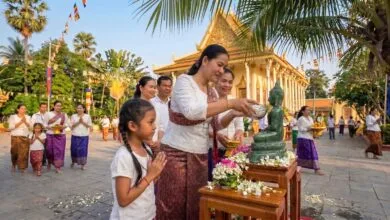
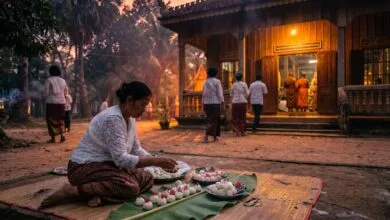
The holiday is also a time for religious merit-making. Cambodians visit pagodas to offer food to monks, bathe Buddha statues, and pour water over the hands of elders as a gesture of respect and blessing. These practices are central to the spiritual meaning of the new year.
The Story Behind Angkor Sankranta
Angkor Sankranta was created to give Khmer New Year a public, celebratory home in Siem Reap — one that would both honor tradition and boost tourism. When it launched in 2013, Siem Reap welcomed 170,000 visitors. By 2023, the festival’s 10th anniversary, the province recorded over 2 million attendees and generated more than US$126 million in revenue.
Prime Minister Hun Manet has described the festival as a symbol of national unity, bringing together people regardless of religion or background. He has also highlighted its role in showing the world that Cambodia enjoys peace and happiness — a message that helps attract international visitors.
In recent years, the Cambodian government has taken steps to seek UNESCO recognition for Sankranta as part of the country’s intangible cultural heritage.
When Is Angkor Sankranta Celebrated?
Angkor Sankranta is celebrated during Khmer New Year, which generally falls from April 14 to 16. In some years, the holiday begins on April 13 depending on the solar calendar.
In 2026, Khmer New Year ran from April 14 to 16, welcoming the Year of the Horse. In 2027, the holiday will fall on April 13–15.
For travelers planning a trip, the key point is simple: if you are in Cambodia in mid-April, you will be there during the country’s biggest celebration. Book accommodation and transport well in advance, as this is the busiest travel period of the year.
What Happens During Angkor Sankranta
The festival offers a wide range of activities that showcase Khmer culture. While the exact program varies from year to year, these are the main elements that visitors can expect.
Traditional Games
One of the most joyful parts of Angkor Sankranta is the playing of traditional Khmer games. These games are not just entertainment — they are living traditions passed down through generations, and visitors are often invited to join.
Common games include:
- Bas Angkunh: A game involving the throwing of seeds or small stones.
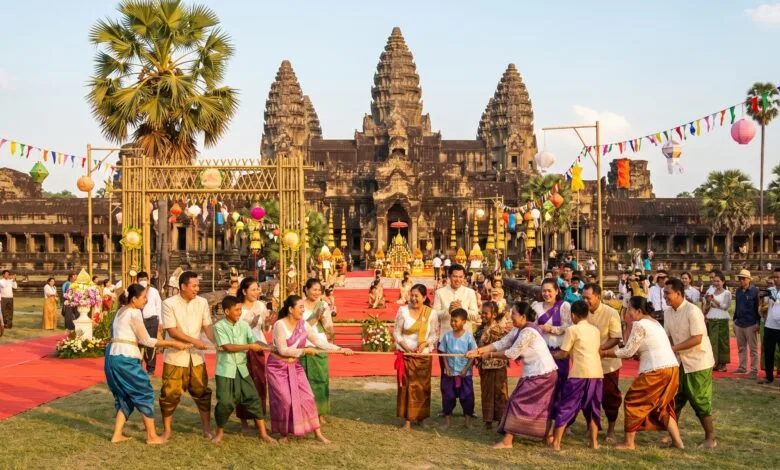
- Teanh Prot: A tug-of-war game that was recognized as an Intangible Cultural Heritage of Humanity in 2015.
- Chab Kon Kleng: A game similar to “capture the flag,” played in teams.
- Haol Chhoung: A game involving the throwing of a twisted scarf.
These games are typically played in the grounds of Angkor Thom and the outer areas of Angkor Wat. Local families often encourage visitors to join in, making this one of the most welcoming aspects of the festival.
Apsara Dance and Cultural Performances
Apsara dance is Cambodia’s classical dance tradition, and it takes center stage during Angkor Sankranta. Performances tell ancient stories through graceful, precise movements, accompanied by traditional music.
Visitors can also enjoy shadow puppetry, folk dances, and modern concerts. In 2025, a new theatrical experience called “Angkor’s Heartbeat” was introduced, offering performances within the Angkor Wat temple complex over three nights.
Ox and Buffalo Cart Races
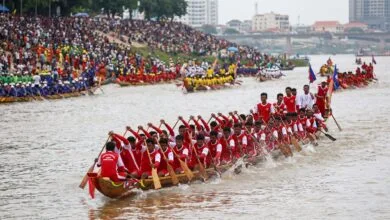
Ox-cart and buffalo-cart races are a distinctive part of the celebrations. These races are not just a competition — they are a celebration of Cambodia’s agricultural heritage. The races typically take place near the Angkor ticket office area and draw enthusiastic crowds.
Buddhist Ceremonies
While Angkor Sankranta is a cultural festival, it is rooted in the spiritual traditions of Khmer New Year. Buddhist ceremonies take place at temples across Siem Reap province. Monks chant blessings for the new year, and families make merit by offering food and other gifts.
A particularly meaningful ceremony is Srang Preah — the bathing of Buddha statues. This ritual symbolizes the cleansing of the old year and the welcome of a fresh start.
Food and Family Traditions
Food plays a central role in Khmer New Year celebrations. The most traditional New Year dish is Kralan — sticky rice mixed with coconut milk and sometimes beans, cooked inside a bamboo stalk over an open flame. The result is a sweet, aromatic rice cake that is sold at markets and roadside stalls throughout the holiday.
During Angkor Sankranta, food is a major attraction. Past celebrations have featured enormous traditional Cambodian cakes, including a Guinness World Record-winning sticky rice cake in 2015. Food stalls throughout the festival grounds offer a wide range of Cambodian dishes, from amok (fish curry) to nom banh chok (rice noodle soup).
For Cambodian families, Khmer New Year is above all a time for gathering. The holiday meals are shared with relatives, often in the family home or at a pagoda. If you are invited to join a family celebration, it is a sign of genuine welcome.
What Changed in 2026: From Siem Reap to Phnom Penh
In 2026, something significant changed. The large-scale Angkor Sankranta festival was not held in Siem Reap. Instead, the Union of Youth Federations of Cambodia organized a new event called Nokor Sankranta in Phnom Penh, running for six days from April 14 to 19.
The shift was partly due to the border situation, with many residents still displaced, and authorities decided to scale down celebrations in Siem Reap. The Siem Reap events focused on traditional culture and folk games, while Phnom Penh hosted the main large-scale festival.
Nokor Sankranta 2026 featured over 20 major cultural, religious, and artistic activities, concentrated at Wat Phnom and other iconic locations in the capital. The event drew an estimated 6.67 million visitors.
For travelers, the key takeaway is this: the location of Cambodia’s largest Khmer New Year celebration may vary. Check current information before planning your trip, and do not assume that Angkor Sankranta will always take place in Siem Reap.
What Visitors May See and Experience
If you are in Cambodia during Khmer New Year, here is what you might encounter:
- Crowded pagodas: Temples across the country fill with families making merit. The atmosphere is peaceful and respectful, though busy.
- Decorated homes and streets: Many families clean and decorate their homes before the holiday. You may see floral arrangements, lights, and offerings at household altars.
- Water ceremonies: Pouring water is a traditional blessing during Khmer New Year. You may see people gently pouring water over Buddha statues or over the hands of elders. In some areas, especially in cities, water-throwing has become part of the celebration, though this is more subdued at Angkor itself.
- Traditional games: In parks, temple grounds, and community spaces, you will see groups playing traditional games. Visitors are often welcome to watch or join.
- Food stalls and markets: Festival markets sell traditional foods, handicrafts, and souvenirs. The Siem Reap River Market is a notable feature, with boat rides, exhibitions, and live music.
How Visitors Should Behave Respectfully
Khmer New Year is a joyful celebration, but it is also a sacred time for many Cambodians. Here is how to participate respectfully:
At temples and sacred sites:
- Dress modestly. Cover your shoulders and knees. Revealing clothing is not appropriate in sacred places.
- Do not consume alcohol or food within the ancient temple precincts.
- Ask before photographing people, especially monks and those participating in religious ceremonies.
- Follow the Angkor Code of Conduct, which is enforced at the Angkor Archaeological Park.
At public celebrations:
- Observe before joining. If you see a ceremony in progress, watch quietly rather than interrupting.
- Accept invitations to join traditional games — it is a sign of respect and openness.
- Be mindful of crowds. Khmer New Year draws millions of people, and large gatherings can be overwhelming. Stay aware of your surroundings.
- Do not give money to children. This is discouraged at heritage sites.
General etiquette:
- Learn a few words of Khmer. “Sok sabai chnam thmey” (Happy New Year) is a warm greeting during the holiday.
- Be patient. Services may be slower during the holiday as many businesses reduce hours or close while staff travel to their home provinces.
- Plan ahead for transport and accommodation. This is the busiest travel period in Cambodia.
Frequently Asked Questions
What is Angkor Sankranta?
Angkor Sankranta is a large-scale cultural festival held in Siem Reap during Khmer New Year. It showcases traditional Khmer games, dance, music, martial arts, and food, with the Angkor temple complex as its backdrop.
When is Angkor Sankranta celebrated?
It is celebrated during Khmer New Year, which generally falls from April 14 to 16. The exact dates can vary slightly from year to year.
Is Angkor Sankranta still held in Siem Reap?
In 2026, the large-scale Angkor Sankranta was not held in Siem Reap. Instead, a new event called Nokor Sankranta was organized in Phnom Penh. Siem Reap still hosted scaled-down celebrations. Check current information before planning your trip.
Can tourists participate in Angkor Sankranta?
Yes. The festival is open to the public, and visitors are often invited to join traditional games and observe ceremonies. Respectful behavior is expected, especially at temple sites.
What should tourists wear to Angkor Sankranta?
Dress modestly. Cover your shoulders and knees, especially when visiting temples and sacred sites. Comfortable walking shoes are recommended.
What food is associated with Khmer New Year?
Kralan — sticky rice and coconut milk cooked inside a bamboo stalk — is the most traditional New Year dish. Other popular foods include amok, nom banh chok, and various traditional sweets.
Is Angkor Sankranta a public holiday?
Khmer New Year is a public holiday in Cambodia. The celebration lasts for at least three days, though many businesses close for longer.
Where can visitors experience Khmer New Year celebrations?
The largest celebrations take place in Siem Reap (at Angkor) and Phnom Penh. However, Khmer New Year is celebrated throughout the country, and even small towns and villages hold their own traditions.
Conclusion
Angkor Sankranta is more than a festival. It is a window into what matters most to Cambodian people: family, tradition, community, and the joy of starting a new year together.
For a foreign visitor, the experience can be overwhelming at first — the crowds, the heat, the unfamiliar sounds and smells. But if you approach it with curiosity and respect, you will witness something rare: a country celebrating its identity at its most iconic site.
The 2026 shift to Nokor Sankranta in Phnom Penh reminds us that traditions evolve. What remains constant is the spirit of the celebration — the welcoming of a new year with hope and togetherness.
If you find yourself in Cambodia in April, take part. Watch the games. Taste the kralan. Stand quietly at a pagoda and listen to the monks chant. You will leave with a deeper understanding of Cambodia than any guidebook can offer.