Eel with Preserved Bean Curd Hot Pot: A Deeply Savory Cambodian Braise
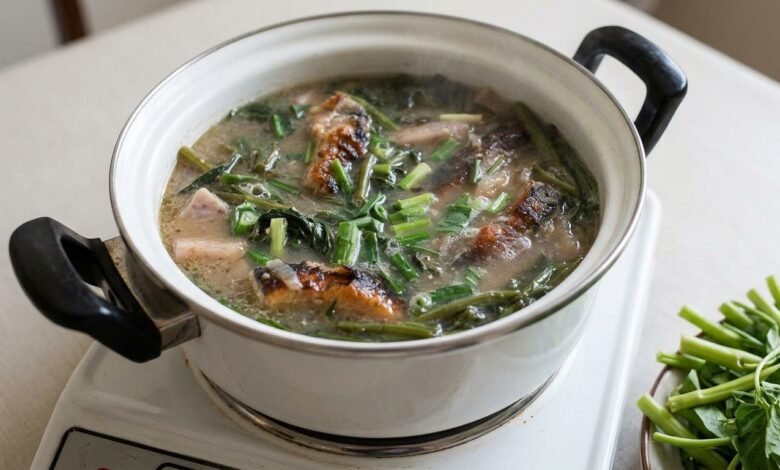
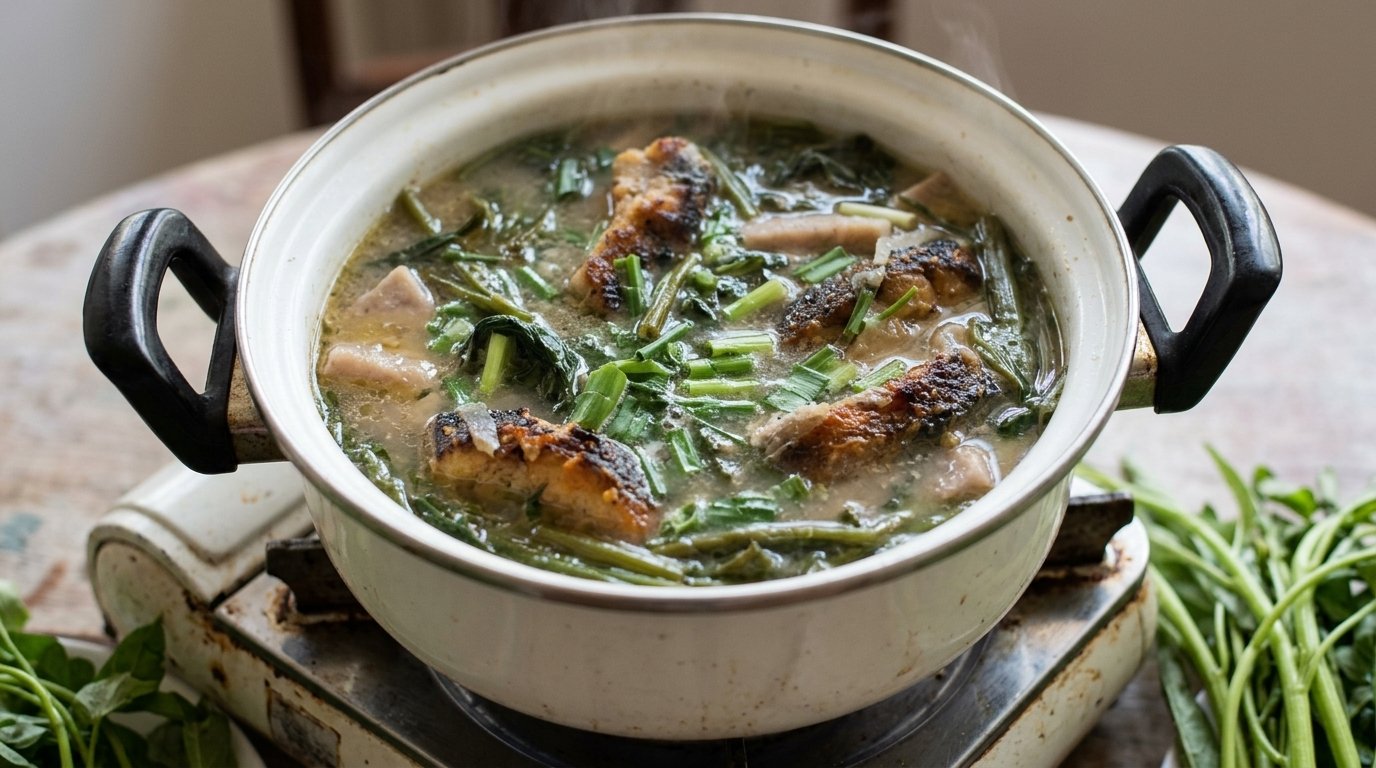
Eel is one of Cambodia’s most treasured freshwater fish, and this hot pot shows why. The eel is pan-fried first, then simmered with taro root in a broth seasoned with preserved bean curd. The result is a deep, savory braise with a gentle funk and a naturally thick, comforting body.
This is the kind of dish that anchors a family table. The taro softens into the broth, the eel stays rich and tender, and a pile of raw water spinach waits on the side for wrapping and dipping. It feels generous without being complicated.
What You Need
The ingredient list for this hot pot is short, but each piece matters. Eel brings the richness. Taro root gives the broth body and a gentle sweetness. Preserved bean curd does the heavy seasoning, so you do not need much else.
A few notes before you shop. Frozen cleaned eel is a practical option and is sold in many Asian markets. Taro root is often sold already peeled and cut into cubes, which saves time. If you buy whole taro, wear gloves when peeling it, because the raw sap can irritate your skin. Preserved bean curd comes in small jars and is sometimes labeled “fermented bean curd” or “tofu cheese” .
Equipment
- Large soup pot or Dutch oven: To simmer the broth, taro root, and eel together until the taro is tender.
- Frying pan: To pan-fry the eel until golden brown on both sides before it goes into the broth.
- Chef’s knife: To mince the garlic, slice the onion, and chop the green onions.
- Cutting board: A stable surface for preparing the onion, garlic, and green onions.
- Measuring spoons: To measure the oil, sugar, and fish sauce.
- Measuring cup: To measure the chicken broth and water or beer.
- Small mixing bowl: To mash and mix the preserved bean curd with sugar, fish sauce, and black pepper.
- Wooden spoon or cooking spoon: To stir the onions, garlic, and taro in the frying pan and to stir the broth.
- Ladle: To serve the hot pot and broth into bowls.
How to Make Eel with Preserved Bean Curd Hot Pot
Step 1: Dry and Pan-Fry the Eel
Pat the cleaned eel pieces dry with paper towels. This helps the skin brown instead of steam. Heat a frying pan over medium heat and add 2 tablespoons of vegetable oil. When the oil is hot, add the eel and pan-fry until both sides are golden brown. Remove the eel from the pan and set it aside.
Step 2: Sauté the Garlic, Onion, and Taro
Pour the remaining 1 tablespoon of oil into the same frying pan. Add the minced garlic, sliced onion, and cubed taro root. Stir and cook briefly, then remove the pan from the heat and set it aside. You are not trying to fully cook the taro here—just giving it a head start and a little color.
Step 3: Build the Broth and Simmer the Taro
Pour the chicken broth and water (or beer) into a large soup pot. Bring the liquid to a gentle boil over medium-high heat. Add the sautéed taro mixture and the pan-fried eel to the bubbling broth. Cook until the taro root is tender and a knife slides through it easily.
Step 4: Mix the Preserved Bean Curd Seasoning
While the hot pot simmers, mash the preserved bean curd in a small bowl. Mix it with the sugar, fish sauce, and a dash of black pepper until it forms a loose, pourable sauce. The bean curd is salty and concentrated, so the sugar and fish sauce help round it into a balanced seasoning.
If you enjoy cooking with preserved bean curd, you might also like this duck and preserved bean curd hot pot, which uses the same ingredient with taro root in a similarly savory braise.
Step 5: Season the Hot Pot and Finish
Stir the prepared bean curd sauce into the simmering broth. Taste the broth and adjust if needed. Top with the chopped green onions. The hot pot is ready when the taro is soft, the eel is tender, and the broth tastes savory and rounded.
For another Cambodian soup that lets a single ingredient shine, try this Cambodian chicken lemon soup when you want something lighter and brighter.
How to Serve
Serve the hot pot hot, straight from the pot. Put the raw water spinach on the table alongside steamed jasmine rice or rice noodles. Diners can drop the water spinach into the hot broth to wilt it, or wrap pieces of eel and taro in a raw leaf and dip it into sweet fish sauce.
A small bowl of sweet fish sauce on the side is traditional and practical. It adds a bright, salty-sweet contrast to the deep flavor of the eel and bean curd. If you want to explore more Cambodian hot pot styles, browse the full collection of Cambodian soups and stews.
Cooking Tips
- Dry the eel well before frying. Moisture on the skin prevents browning. Paper towels are your friend here.
- Do not oversalt the broth early. Preserved bean curd and fish sauce are both salty. Mix the seasoning sauce first, taste it, and then season the broth gradually.
- Cook the taro until it is fully tender. Raw taro root is toxic and must be thoroughly cooked before eating . A knife should slide through the largest cube with no resistance.
- Keep the water spinach raw and crisp on the side. It is meant to be dipped or briefly wilted in the hot broth at the table, not cooked down in the pot.
Recipe Notes
Preserved bean curd is a fermented soybean product. Once you open the jar, keep it refrigerated and use a clean spoon each time you take some out . White spots on the bean curd are usually crystallized amino acids, not mold, but check the jar for any off smell or unusual fuzz before using it.
Water spinach is known as trakoun in Khmer and is the same vegetable sold as kangkong in the Philippines and rau muống in Vietnam . Look for it in Asian markets near the fresh herbs or in the refrigerated vegetable section.
Frequently Asked Questions
Can I use a different fish instead of eel?
Eel gives this hot pot its signature rich texture and flavor. If you cannot find eel, a firm freshwater fish would be the closest substitute, but the broth will be less rich. The supplied recipe is built around eel, so the result will change if you swap it.
What does preserved bean curd taste like?
Preserved bean curd is salty, savory, and slightly funky, similar to a soft, fermented cheese. In this hot pot, it melts into the broth and gives the dish its deep, rounded seasoning. The sugar and fish sauce balance its intensity.
Is taro root safe to eat?
Yes, but only after it is fully cooked. Raw taro root contains needle-like calcium oxalate crystals that can irritate the mouth and throat . Cook it until a knife slides through it easily, and never add raw taro to the broth and assume it will cook through in a short time.
How should I store leftovers?
Cool the hot pot completely, then store it in a covered container in the refrigerator. Keep the raw water spinach separate. Reheat the hot pot gently on the stovetop until it is steaming hot throughout. The taro will continue to soften as it sits, so the texture may change after storage.
Final Thoughts
Eel with preserved bean curd hot pot is not a shy dish. It is savory and deep, with the kind of flavor that builds slowly as the taro drinks up the broth and the eel settles into the pot. Serve it with a big pile of raw water spinach and rice, and let people help themselves at the table. That is how this dish is meant to be eaten.
Eel with Preserved Bean Curd Hot Pot
4
servings20
minutes40
minutes283
kcal1
hourEel pieces are pan-fried until golden, then simmered with taro root in a chicken broth seasoned with mashed preserved bean curd, sugar, and fish sauce. The hot pot is finished with green onions and served with raw Asian water spinach, rice or rice noodles, and sweet fish sauce.
Ingredients
2 Eel ,or 1 Package cleaned frozen eels (sold in frozen section at most Asian markets)
3 tablespoons vegetable oil
3 cloves garlic, minced
1 yellow onion, sliced thin
4 cups already cut to cubes taro root
2 canned, 16 oz or 460 gram of chicken broth
1 cup water or beer
5 pieces preserved bean curd (jao)
1/2 tablespoon sugar
1 tablespoon fish sauce
Dash black pepper
2 stalks of green onion, chopped
2 lbs (900 gram) of Asian water spinach, removed roots, washed and drained
Directions
- Cleaned and cut eel to 5 inches length, dabs with paper towel to dry off excessive water.
- Heat up a frying pan.
- When the frying pan is hot, add 2 tablespoons oil, add eel, pan-fry eel till both side golden brown, removed eel from heat and set a side.
- Pour remaining oil to the same frying pan, add garlic, onion and taro root, stirs, removed it from heat and set it a side.
- Put chicken broth and water in a large soup pot, cook till water bubbling, add prepare tarot root and eel to boiling broth, cook till taro root tender.
- In a small bowl, mix hot bean curd with sugar, fish sauce and black pepper.
- Seasoning soup with prepared bean curd sauce, stirs well and top with green onion.
- Serve hot with raw Asian water spinach, rice or rice noodle and sweet fish sauce.
Equipment
 Cutting boardCheck product details
 Deep Frying PanCheck product details

 Mixing BowlsCheck product details
 Portable Induction CooktopCheck product details
 Round Oven PotCheck product details





Recipe Video
Nutrition Facts
- Serving Size: 4 g
- Total number of serves: 4
- Calories: 283kcal
- Fat: 11.1g
- Saturated Fat: 1.6g
- Cholesterol: 1mg
- Sodium: 628mg
- Potassium: 1443mg
- Carbohydrates: 42.1g
- Net Carbs: 32.1g
- Fiber: 10g
- Sugar: 3.4g
- Protein: 8.5g
- Vitamin A: 716.6mcg
- Vitamin C: 131.9mg
- Calcium: 241mg
- Iron: 5mg
- Vitamin E: 3.6mg
- Vitamin K: 32.5mcg
- Thiamin: 0.2mg
- Riboflavin: 0.3mg
- Niacin: 2.9mg
- Vitamin B6: 0.6mg
- Folate: 160.6mcg
- Pantothenic Acid: 0.7mg
- Phosphorus: 196mg
- Magnesium: 209mg
- Zinc: 1mg
- Selenium: 3.8mcg
- Copper: 0.3mg
- Manganese: 0.9mg
Did you make this recipe?
Tag @cambodiarecipe on Instagram and hashtag it
Like this recipe?
Follow us @cambodiarecipe on Pinterest
Did you make this recipe?
Follow us on Facebook