Phnom Penh Street Food: What First-Time Visitors Should Try
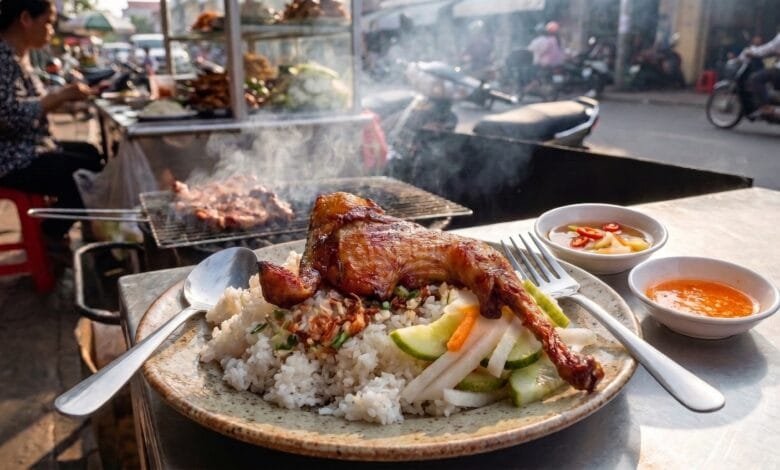
Phnom Penh does not ease you into its street food scene. The city wakes before sunrise with the smell of charcoal smoke and grilled pork. By mid-morning, vendors are ladling broth into bowls and flipping noodles in well-worn woks. For a first-time visitor, the options can feel overwhelming, but the good news is that the most iconic Phnom Penh street foods are also the easiest to find, the cheapest to try, and some of the most satisfying things you will eat in Southeast Asia.
This guide introduces the dishes that matter most, explains what they taste like, and gives you the practical knowledge to order and enjoy them with confidence.
What Makes Phnom Penh Street Food Different?
Phnom Penh is where Cambodia eats. The capital has the country’s densest concentration of street vendors, from early-morning breakfast stalls to late-night grills that stay busy past midnight. The city’s food reflects a mix of Khmer tradition, Chinese-Cambodian cooking, Vietnamese influence, and a French colonial legacy that gave Cambodia the baguette.
What sets Phnom Penh apart is the sheer variety packed into a few walkable neighborhoods. You can eat grilled pork and rice at dawn near the Russian Market, stir-fried noodles for lunch on Street 136, and charcoal-grilled skewers at the riverside night market, all in a single day.
Prices are low enough to encourage trying multiple dishes. A full meal from a street stall usually costs between $1 and $2.50, while snacks and skewers often cost less than a dollar.
Bai Sach Chrouk: The Classic Cambodian Breakfast
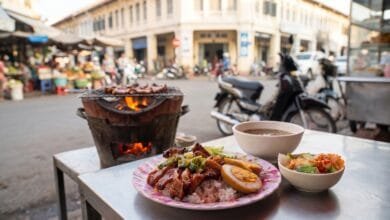
Bai sach chrouk (grilled pork and rice) is the dish most Cambodians associate with morning. Thin slices of pork are marinated in coconut milk and garlic, then grilled over charcoal until the edges caramelize and the meat takes on a smoky aroma. It is served over broken rice with pickled cucumbers and daikon, and often a small bowl of clear chicken broth on the side.
What it tastes like: The pork is savory and slightly sweet from the coconut milk marinade. The char from the grill adds a subtle smokiness. The pickles bring a clean, tangy crunch that cuts through the richness of the meat.
Where to find it: Look for mobile grills on street corners in the early morning, typically between 6 AM and 9 AM. The area around Russian Market is particularly strong, with stalls that locals consider among the city’s best.
What to expect: A plate typically costs between $1 and $2. The vendor will often ask if you want a fried egg on top, which adds a small extra cost.
Nom Banh Chok: Cambodia’s Morning Noodle Bowl
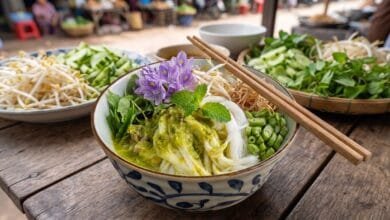
Nom banh chok is often described as Cambodia’s national dish. It consists of fresh, thin rice noodles topped with a creamy fish curry gravy, usually made with lemongrass, turmeric, and coconut milk. Vendors serve it with a generous basket of fresh vegetables and herbs, including bean sprouts, cucumber, banana flower, and mint.
What it tastes like: The gravy is fragrant and gently spiced, with a balance of coconut richness and the earthy depth of fermented fish. The fresh herbs add brightness and crunch. It is not overwhelmingly spicy by default, but chili and extra fish sauce are usually available on the side.
Where to find it: Morning markets are the best bet. Orussey Market and the Russian Market both have well-regarded nom banh chok vendors. In Phnom Penh, the style tends to be creamier than versions found in other provinces.
What to expect: A proper bowl costs around $1.25 to $2, depending on the vendor and portion size.
Kuy Teav: The Comforting Noodle Soup
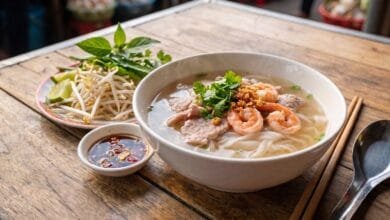
Kuy teav is a pork-based noodle soup that Cambodians eat for breakfast, lunch, or whenever they want something warm and restorative. The broth is built from pork bones and seasoned with garlic, shallots, and lemongrass. Rice noodles are added, along with toppings that can include sliced pork, beef, shrimp, fish balls, or offal for the more adventurous.
What it tastes like: The broth is light but deeply savory. It is not spicy unless you add the condiments that come with it, which usually include chili flakes, pickled chilies, and lime. The texture is soft and slippery from the rice noodles.
Where to find it: Family-run stalls throughout the city, especially near markets and in residential neighborhoods. It is a common breakfast item, so morning is the best time to try it.
What to expect: A bowl usually costs between $1 and $2. Vendors will typically ask what meat you want, and you can point at what looks good.
Lort Cha: Stir-Fried Noodles With a Fried Egg
Lort cha is one of the most common street foods in Phnom Penh. Short, thick rice noodles are stir-fried in a hot wok with vegetables, egg, and a sauce that is both sweet and savory. It is typically topped with a fried egg and served with a spicy sauce on the side. Some vendors add beef, while others stick to vegetables and egg.
What it tastes like: The noodles have a chewy, satisfying texture. The sauce is a balance of sweet soy and mild heat. The fried egg on top adds richness, and the vegetables bring a slight crunch.
Where to find it: Lort cha is available almost everywhere, from market food courts to roadside stalls. It is a popular lunch and dinner option, but many vendors sell it throughout the day.
What to expect: A plate costs roughly $1.25 to $2. It is one of the most affordable and filling street meals in the city.
Num Pang: The Cambodian Baguette Sandwich
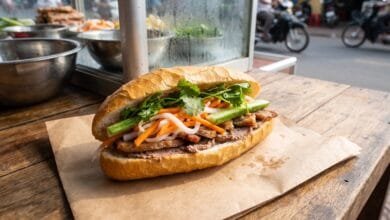
Num pang is Cambodia’s take on the baguette sandwich, a legacy of French colonial rule. A crispy baguette is filled with grilled pork, pâté, pickled carrots and daikon, fresh herbs like coriander and mint, and a generous spread of chili sauce or mayonnaise.
What it tastes like: The bread is light and crusty. The filling is a combination of savory meat, creamy pâté, tangy pickles, and fresh herbs. It is a perfect balance of textures and flavors.
Where to find it: Street carts and small shops throughout the city, often near schools, markets, and busy intersections. Neak Poan Pate Bread Shop, which opened in 1997, is one of the most established spots for the sandwich.
What to expect: Prices range from about 75 cents to $1.50. It is one of the cheapest and most portable street meals in Phnom Penh.
Chek Chien: Fried Bananas for a Sweet Finish
Chek chien is a simple but satisfying street snack. Ripe bananas are coated in a batter that often includes sesame seeds, then deep-fried until the outside is golden and crispy and the inside is soft and sweet.
What it tastes like: The contrast between the crunchy batter and the warm, sweet banana is what makes this snack memorable. It is not overly sugary, which makes it easy to eat more than one.
Where to find it: Street carts and snack stalls throughout the city, especially near markets and in the late afternoon when people are looking for something to tide them over before dinner.
What to expect: A piece usually costs well under a dollar. It is a good introduction to Cambodian street desserts.
Where First-Time Visitors Should Start
If you are new to Phnom Penh street food, these areas give you a manageable starting point without needing to hunt down individual stalls:
Russian Market (Phsar Tuol Tom Poung): A classic starting point with strong morning options. You will find nom banh chok, bai sach chrouk, and Khmer coffee all in one place.
Central Market (Phsar Thmey): The Art Deco landmark has food stalls on the ground floor serving noodle soups, fried noodles, and snacks. It is touristy but convenient and easy to navigate.
Orussey Market: Less touristy and more chaotic. This is where you go if you want to eat like a local without a guide. The ground floor is packed with food stalls serving Khmer curry, fried noodles, and pork dishes.
Riverside Night Market: Open on weekend evenings, this market along Sisowath Quay is a relaxed introduction to evening street food. Grilled seafood, chicken wings, and sugarcane juice are all available, and you can sit by the river while you eat.
Street 136 near Riverside: After dark, this street fills with stalls selling grilled squid, beef skewers, and fried noodles. It is popular with tuk-tuk drivers and locals finishing work, which is usually a good sign.
What Foreign Travelers Should Know
Follow the crowd. A busy stall with a line of locals is almost always a better choice than an empty one. High turnover means the food is fresh and the vendor has a proven track record.
Eat food that is cooked hot and in front of you. Grilled skewers, stir-fried noodles, and noodle soups are all cooked to order. Avoid food that has been sitting out lukewarm.
Spice levels vary. Cambodian food is generally not as spicy as Thai or some Indian cuisines, but chili is often available on the side. If you are sensitive to spice, ask for “tiktak” (a little bit) when requesting chili.
Prahok is an acquired taste. Fermented fish paste is a fundamental Cambodian ingredient, but it can be very strong for first-timers. It is often blended into sauces and broths rather than served raw, which makes it more approachable.
Vegetarian options exist but require planning. Fried rice and stir-fried noodles can usually be made without meat if you ask. Fresh spring rolls, bamboo sticky rice, and fried bananas are often vegetarian by default.
Cash is king. Most street stalls do not accept cards. Small riel notes and US dollar bills are both widely accepted.
Frequently Asked Questions
What is the most popular street food in Phnom Penh?
Bai sach chrouk and nom banh chok are probably the two most iconic Phnom Penh street foods, especially for breakfast. Lort cha and num pang are also extremely common and easy to find throughout the city.
Is Phnom Penh street food safe for tourists?
Street food in Phnom Penh is generally safe if you follow a few basic rules: eat at busy stalls, choose food that is cooked fresh and served hot, and skip raw garnishes if you have a sensitive stomach.
What does Cambodian street food cost?
Can vegetarians eat street food in Phnom Penh?
Yes, but it requires some effort. Fried rice and stir-fried noodles can usually be made without meat. Look for vegetable spring rolls, fried bananas, and bamboo sticky rice, which are often vegetarian by default.
What should I avoid eating in Phnom Penh?
Avoid raw or undercooked meat and seafood, and be cautious with raw vegetables and herbs that may have been washed in tap water if you have a sensitive stomach. Food that has been sitting out at room temperature for a long time is also best avoided.
Where is the best place to try street food in Phnom Penh?
Russian Market and Orussey Market are great for morning food. The riverside night market is a good introduction for evening eating. Street 136 near the riverside is popular after dark.
Conclusion
Phnom Penh street food is one of the most accessible and rewarding food scenes in Southeast Asia. The dishes are affordable, the flavors are bold but not intimidating, and the best stalls are often right in front of you. Start with bai sach chrouk or nom banh chok in the morning, try lort cha or num pang for lunch, and finish with fried bananas or a bowl of kuy teav whenever you are hungry. Follow the crowds, eat what is cooked fresh, and you will discover why Phnom Penh is one of the region’s most underrated street food cities.