Siem Reap Beyond the Temples: A Traveler’s Guide to Markets, Culture and Countryside
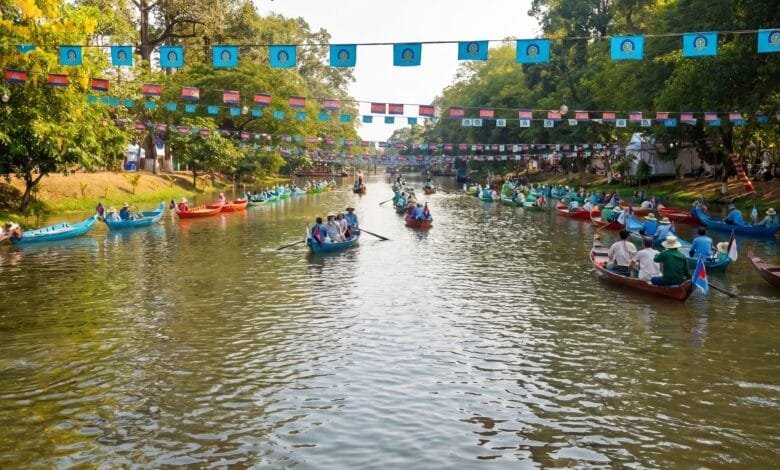
Most travelers arrive in Siem Reap for one reason: Angkor Wat. The temple complex is Cambodia’s most famous landmark, and it deserves the attention it receives. But after the sunrise photos and the temple circuits, many visitors discover something unexpected — Siem Reap is a city with its own identity, creativity, and rhythm.
This guide focuses on everything beyond the temples. It covers what to see, where to eat, how to experience local culture, and why many travelers end up staying longer than they planned.
Quick Travel Information
- Location: Siem Reap Province, northwestern Cambodia
- Province / Region: Siem Reap Province
- Destination Type: City and provincial capital
- Known For: Angkor Wat and the Angkor Archaeological Park; also known for a growing cultural scene, markets, and access to Tonle Sap Lake
- Main Attractions (Beyond Temples): Phare Circus, Artisans Angkor, Old Market, Night Market, Made in Cambodia Market, APOPO Visitor Center, Cambodia Landmine Museum, Tonle Sap floating villages
- Main Access Point: Siem Reap-Angkor International Airport (SAI), approximately 40 km east of the city
- How to Get There: Direct flights from several Asian cities; road connections from Phnom Penh and Battambang
- Typical Travel Time: 3–5 days to see temples and experience the city
- Recommended Stay: 3–5 days minimum; longer for slow travel
- Best Time to Visit: November to February for cooler, drier weather; year-round for cultural activities
- Main Activities: Temple visits, cultural performances, market shopping, cooking classes, countryside cycling, floating village tours, museum visits
- Accommodation: Wide range available, from hostels to boutique hotels and luxury resorts
- Useful to Know: US dollars are widely accepted; tuk-tuks are the main form of local transport; Grab and PassApp are available for transparent pricing
Where Is Siem Reap?
Siem Reap is the capital of Siem Reap Province in northwestern Cambodia. It sits about 315 km northwest of Phnom Penh and serves as the gateway to the Angkor Archaeological Park, a UNESCO World Heritage Site.
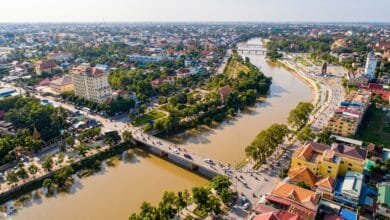
The city is built along the Siem Reap River, a small waterway that divides the town into two main areas. The western bank has the Old Market, Pub Street, and most of the tourist infrastructure. The eastern bank, particularly around Wat Bo village, is quieter and more residential, with cafes and boutique guesthouses that attract travelers who prefer a slower pace.
The location matters for travelers because Siem Reap is more than a base for temple exploration. The city itself has a compact, walkable center, and the surrounding countryside offers rice fields, villages, and the vast Tonle Sap Lake — Southeast Asia’s largest freshwater lake.
What Is Siem Reap Like?
Siem Reap has a dual personality. By day, the town can feel quiet and almost sleepy, especially in the residential neighborhoods. Many travelers leave early for the temples and return in the afternoon, so the streets empty out during peak temple hours.
By evening, the city transforms. Pub Street becomes pedestrian-only, and the area around the Old Market and Night Market fills with food stalls, shoppers, and tuk-tuks. The atmosphere is lively but not overwhelming — it is easy to find a quiet cafe or riverside spot if you prefer.
The city has a growing creative scene. Galleries, craft workshops, and social enterprises have opened in recent years, giving Siem Reap a cultural depth that goes beyond its temple history. The Wat Bo area on the east bank has been recognized internationally for its mix of traditional Khmer character and modern creative energy.
Why Visit Siem Reap Beyond the Temples?
There are several practical reasons to spend time in the city itself.
First, Siem Reap is the cultural capital of Cambodia. The city supports traditional arts through organizations like Phare Ponleu Selpak, a non-profit school that trains young Cambodians in circus arts, visual arts, and music.
Second, the food scene is genuinely good. From $1 noodle soups at the Old Market to refined Khmer tasting menus, Siem Reap offers some of the best-value dining in Southeast Asia.
Third, the surrounding landscape provides easy escapes. You can cycle through rice fields in the morning, visit a floating village in the afternoon, and be back in time for a circus performance in the evening.
Fourth, Siem Reap is a comfortable place to slow down. After the intensity of temple touring, the city offers cafes, spas, and quiet riverside walks that make it easy to rest and recharge.
Best Things to Do Beyond the Temples
See a Show at Phare, The Cambodian Circus
Phare Circus is one of Siem Reap’s most highly rated evening activities. The performers are graduates of Phare Ponleu Selpak, a non-profit school in Battambang that uses art as a tool for social development.
The show blends acrobatics, theater, dance, and live music into modern Cambodian storytelling. It is not a traditional circus — there are no animals — but a performance art experience that feels both entertaining and meaningful.
Practical details: The evening program runs from 5:30 PM to 9:00 PM, with the main performance from 8:00 PM to 9:00 PM. Ticket prices range from $18 for general open seating to $38 for preferred reserved seating. Children’s tickets are available at lower prices. It is worth checking the official website for current schedules and any seasonal changes, as performance times can vary.
Visit Artisans Angkor
Artisans Angkor is a working workshop in the center of Siem Reap where visitors can watch skilled artisans practice traditional Khmer crafts. The workshop includes stone carving, wood carving, silk weaving, lacquerware, and silver work.
The experience is educational and relaxed. You can walk through the workshops at your own pace, watch artisans at work, and purchase handmade products from the flagship boutique. It is a good option for travelers who want to understand Cambodian craftsmanship and bring home something meaningful.
Practical details: The workshop is located on Stung Thmey Street in central Siem Reap. Daily guided tours are available from 7:30 AM to 6:00 PM.
Explore the Old Market and Night Market
The Old Market (Phsar Chas) is the heart of local commerce in Siem Reap. In the early morning, it is a working market where locals buy fresh produce, meat, and spices. By afternoon, it shifts toward tourist-oriented stalls selling souvenirs, clothing, and crafts.
The Night Market, located near Pub Street, opens in the evening and stays busy until midnight. It offers a mix of food stalls, clothing vendors, and souvenir shops. Grilled skewers, fried snacks, fruit shakes, and smoothies are easy to find.
For a different experience, the Made in Cambodia Market focuses on fair-trade, locally produced crafts and food. It is a good place to find gifts that directly support Cambodian artisans and small businesses.
Practical details: The Old Market is generally open from around 6 AM to 6 PM, though hours can vary. The Night Market typically runs from 5 PM to midnight. Prices at markets are often negotiable, but a friendly approach works better than aggressive bargaining.
Visit the APOPO Visitor Center
APOPO is an organization that trains rats — known as HeroRATs — to detect landmines. Cambodia still has areas contaminated by landmines from decades of conflict, and APOPO’s work supports clearance efforts.
At the visitor center, you can learn how the rats are trained and watch demonstrations. It is an unusual and memorable experience that gives insight into a humanitarian challenge most travelers never see directly.
Practical details: The visitor center can be visited as part of organized tours or independently. It is often combined with other afternoon activities, such as a visit to Theam’s Gallery or Phare Circus.
Visit the Cambodia Landmine Museum
The Cambodia Landmine Museum was founded by Aki Ra, a former child soldier who later dedicated his life to clearing landmines. The museum displays thousands of decommissioned mines and other ordnance, along with exhibits about Cambodia’s recent history.
It is a sobering but important stop. The museum is located on the road to Banteay Srei, about 25 minutes past Angkor Wat, making it easy to combine with a temple day trip.
Practical details: The museum is consistently rated as one of the top museum experiences in Siem Reap. Tickets and donations go toward demining and education programs.
Explore Tonle Sap Floating Villages
Tonle Sap Lake is Southeast Asia’s largest freshwater lake, and several floating and stilted villages sit along its edge. These communities offer a glimpse into a way of life that is fundamentally shaped by the lake’s seasonal changes.
Kompong Khleang is one of the largest and most authentic floating villages. Located approximately 45–50 km from Siem Reap, it is home to around 1,800 families, most of whom depend on fishing and fish processing. The village is known for its tall stilted houses — some reaching 10 meters above the ground in dry season — and for its community-based tourism model.
Chong Kneas is the closest floating village to Siem Reap, but it has a reputation for aggressive selling and a highly commercial atmosphere. Many travelers and local guides suggest skipping it in favor of more distant, authentic villages.
Kampong Phluk is another option, located between Chong Kneas and Kompong Khleang in terms of distance. It offers a mix of stilted houses and flooded forest, with boat tours through the mangroves during the wet season.
Practical details: Visiting a floating village typically takes a half-day. Tours can be arranged through hotels, local agencies, or directly with community tourism operators. The experience varies significantly by season — in the wet season, boats navigate through flooded forests; in the dry season, the stilted architecture becomes fully visible. Travelers should verify current conditions and prices before booking.
Cycle Through the Countryside
The countryside around Siem Reap is flat, which makes it ideal for cycling. Several companies offer guided bike tours that take you out of the city and into rice fields, villages, and local farms.
A typical cycling tour lasts about 4 hours and covers 15–20 km at an easy pace. Along the way, you might visit a duck farm, sample palm wine at a family business, or stop at a lotus field for sunset. These tours provide a completely different perspective on Siem Reap — one that is quiet, green, and connected to the rhythms of rural life.
Practical details: Bicycle tours can be booked through activity platforms or local operators. The terrain is flat and the pace is leisurely, making this suitable for most fitness levels.
Take a Khmer Cooking Class
Cooking classes are a popular way to engage with Cambodian culture through food. Most classes include a visit to a local market to buy ingredients, followed by hands-on instruction in preparing traditional dishes.
Common dishes taught include fish amok (Cambodia’s national dish), fresh spring rolls, and Khmer curries. Classes range from a few hours to a full day, and some are held in local homes or village settings.
Practical details: Classes are available at various price points. Most include market visits and all ingredients. Booking in advance is recommended during peak season.
Visit Phnom Kulen National Park
Phnom Kulen is a mountain about 50 km from Siem Reap, and it holds both natural and cultural significance. It is considered a sacred site in Cambodia — the place where the Khmer Empire was founded in 802 AD.
The main attractions include a large reclining Buddha carved into a sandstone outcrop, the River of a Thousand Lingas (carved riverbed), and a waterfall that is popular for swimming. The journey to the mountain takes about 1.5 hours by road.
Practical details: Phnom Kulen is typically visited as a full-day or half-day tour. The admission fee is separate from the Angkor Pass. It is worth checking current conditions, as the waterfall is best during and after the rainy season.
Food & Local Flavors
Siem Reap’s food scene is one of the city’s strengths. You can eat well on any budget, and the range is wider than many travelers expect.
Must-try dishes include fish amok (steamed fish curry in coconut milk), kuy teav (breakfast noodle soup), lok lak (stir-fried beef with lime-pepper sauce), and bai sach chrouk (grilled pork with rice).
The Old Market area is a good place to try street food. In the early morning, local vendors sell kuy teav and bai sach chrouk to Cambodians heading to work — following the crowds to the busiest stall usually leads to the best food. In the evening, the Night Market and Street 60 offer grilled skewers, fried insects, noodle soups, and fresh fruit shakes.
For travelers who want to learn more about the ingredients, market tours combined with cooking classes provide context about Cambodian cuisine that goes beyond a restaurant menu.
Practical note: Cambodian food is generally less spicy than Thai food. It relies more on aromatic herbs and spices for flavor. In most restaurants, you can request “no spicy” if you prefer.
How to Get Around
Tuk-tuks are the most common way to get around Siem Reap. They are easy to find, especially around the Old Market and Pub Street, and short trips within the city are generally inexpensive.
Ride-hailing apps like Grab and PassApp are widely used in Siem Reap. They show prices before you book, which removes the need to negotiate fares. PassApp is a local Cambodian app, while Grab is more familiar to international travelers.
Bicycles can be rented from many guesthouses and shops. The terrain around Siem Reap is flat, and cycling is a practical way to explore the city and nearby countryside.
Walking works well in the central area around the Old Market, Pub Street, and the riverside. Wat Bo village on the east bank is also walkable, though it is quieter.
Scooter rental is available, but travelers should be aware of Cambodian traffic rules. According to Cambodian law, a driver’s license is not required for scooters up to 125cc, but a category “A” license and an International Driving Permit are formally required for larger bikes. Roads to the temples are paved; rural roads can be dusty or muddy depending on the season.
When to Visit
Siem Reap has two main seasons.
The dry season runs from November to April. The weather is cooler and less humid from November to February, which is the most popular time to visit. March and April are hotter, with temperatures sometimes exceeding 35°C.
The green season runs from May to October. Rain is common, but it usually falls in short, intense bursts rather than all-day downpours. The countryside is lush and green, and temple crowds are smaller. Some travelers prefer this season for the dramatic skies and quieter atmosphere.
For cultural activities, the timing matters less. Phare Circus and other shows run year-round, markets operate daily, and cooking classes are available in all seasons.
How Long to Stay
Most travelers plan 3–5 days in Siem Reap. That is enough time to cover the main temples and experience at least a few of the city’s other attractions.
If you have one full day beyond the temples, a good option is a morning visit to Artisans Angkor or a cooking class, an afternoon trip to a floating village, and an evening at Phare Circus.
If you have two or three extra days, you can add countryside cycling, Phnom Kulen, a museum visit, and unhurried time in the markets and cafes.
Travel Tips
Cash: US dollars are widely accepted in Siem Reap. Small bills are useful for tuk-tuks, markets, and street food. Cambodian riel is often used for amounts under one dollar.
Dress respectfully: When visiting temples, markets, or cultural sites, cover your shoulders and knees. This is particularly important at religious sites.
Sun protection: Siem Reap is hot and sunny most of the year. Bring sunscreen, a hat, and sunglasses, and drink plenty of water.
Market etiquette: Bargaining is normal at tourist markets, but it should be friendly. A common approach is to ask the price and then offer around 60–70% of the initial quote.
Connectivity: SIM cards with local data plans are inexpensive and easy to buy at the airport or in town.
Is Siem Reap Right for You?
Siem Reap works well for a wide range of travelers.
First-time Cambodia visitors will find the city easy to navigate, with plenty of English-speaking services and a comfortable tourism infrastructure.
Culture travelers can go deep into Khmer arts, history, and craftsmanship through workshops, museums, and performances.
Food travelers will enjoy the mix of street food, local markets, and an increasingly sophisticated restaurant scene.
Families may appreciate the combination of outdoor activities, animal-related experiences (like APOPO), and evening shows that are suitable for children.
Slow travelers will find Siem Reap easy to settle into — the city rewards those who stay longer and explore beyond the standard itinerary.
Travelers who prefer quiet, off-the-beaten-path destinations may find the tourist areas of Siem Reap busy, especially during peak season. But it is easy to escape the crowds by crossing the river to Wat Bo or heading into the countryside.
Responsible Travel
When visiting floating villages, choose operators that respect the community and do not exploit children or animals for tourism. Buying local crafts directly from artisan workshops or fair-trade markets supports Cambodian livelihoods.
At temples and memorial sites, follow posted rules about photography and dress. The Cambodia Landmine Museum and Wat Thmei Killing Field Memorial are places for reflection; respectful behavior is expected.
Avoid littering in rural areas and at temple sites. Carry a reusable water bottle and refill it where possible.
Frequently Asked Questions
Is Siem Reap worth visiting beyond Angkor Wat?
Yes. The city has a growing cultural scene, good food, interesting markets, and easy access to the countryside and Tonle Sap Lake. Many travelers find that the city itself becomes a highlight of their Cambodia trip.
How do I get to Siem Reap?
Siem Reap-Angkor International Airport (SAI) receives flights from several Asian cities. You can also travel by road from Phnom Penh or Battambang. The airport is approximately 40 km east of the city center.
How long should I stay in Siem Reap?
Three to five days is a reasonable minimum. That allows for temple visits and time to experience the city’s other attractions.
What should I see beyond the temples?
Phare Circus, Artisans Angkor, the Old Market and Night Market, a floating village on Tonle Sap, the Cambodia Landmine Museum, and the countryside around Siem Reap are all worthwhile.
What should I eat in Siem Reap?
Fish amok, kuy teav, lok lak, and bai sach chrouk are good starting points. The Old Market area and Night Market are convenient places to try local food.
What is the best time to visit Siem Reap?
November to February offers cooler, drier weather. The green season (May to October) is quieter and lush, with rain that usually passes quickly.
Can I visit Siem Reap without going to Angkor Wat?
Yes. The city has enough to fill several days on its own. Some travelers visit Siem Reap specifically for its food, culture, and community tourism experiences.
Conclusion
Siem Reap is more than a gateway to ancient temples. It is a city with a distinct character — creative, warm, and full of experiences that reward travelers who stay a little longer.
The combination of cultural performances, artisan workshops, local markets, countryside landscapes, and a genuinely good food scene makes Siem Reap a destination worth exploring in its own right. Whether you are a first-time visitor to Cambodia or a return traveler looking for a different angle, the city offers something beyond the stones of Angkor.
The main practical consideration is time. Plan for at least a few days beyond your temple visits, and leave room to follow your curiosity — whether that leads to a circus tent, a cooking class, a floating village, or simply a quiet cafe by the river.