Floating Village Food Experiences: What to Eat and Experience on Tonlé Sap and the Mekong
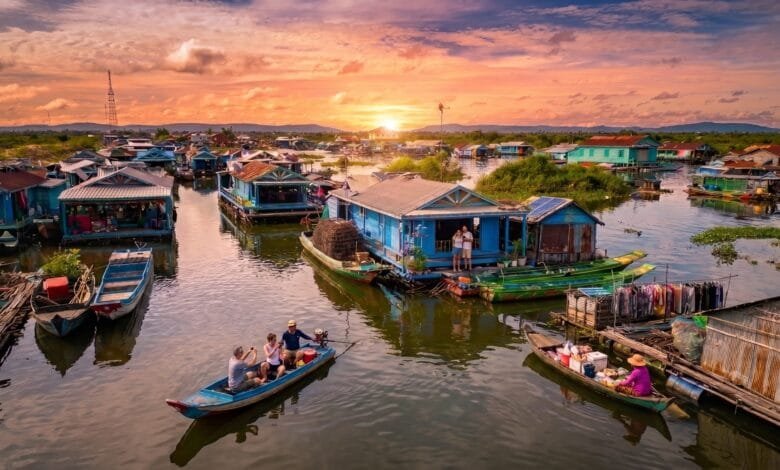
The boat slows as it enters the narrow channel. On both sides, wooden houses rise on stilts several meters above the water — some painted bright blue or green, others weathered gray by sun and rain. Children paddle small boats to school. Women sit on wooden platforms preparing the day’s catch. The air carries the smell of fish drying in the sun and smoke from open cooking fires.
This is not a tourist show. This is daily life on Tonlé Sap, Southeast Asia’s largest freshwater lake, and for the communities who live here, food is not something bought from a supermarket — it is something caught, fermented, dried, smoked, and shared.
For travelers, visiting a floating village is one of the most memorable ways to understand Cambodia. And food is the thread that ties the experience together.
Quick Information
Why Floating Village Food Experiences Are Worth Having
Tonlé Sap is one of the most productive inland fisheries in the world. More than 500,000 tons of fish come out of the lake each year. For the communities living on and around the water, fishing is not just an occupation — it is the foundation of daily life, culture, and food.
What makes floating villages special is how visibly food connects everything. You do not just eat a meal. You see where the fish comes from. You watch how it is caught, processed, and cooked. You taste ingredients shaped by the lake’s seasonal rhythm.
For travelers, this is not a curated food experience. It is a window into how people actually live.
What the Experience Is Like
A visit to a floating village begins with a boat ride. The journey itself is part of the experience — gliding past floating houses, schools, and sometimes even a floating pagoda.
What you may see:
- Stilt houses rising 6–9 meters above the ground during the dry season
- Floating homes, markets, and grocery stores that move with the lake’s level
- Fishermen casting nets from boats or standing waist-deep in water
- Fish being smoked over open wood fires
- Women collecting water spinach from floating gardens
What you may hear:
- The sound of boat engines echoing across the water
- Children’s voices from floating schools
- The splash of paddles and the calls of birds
What you may smell:
- Fish drying in the sun
- Smoke from cooking fires
- The distinctive pungent aroma of prahok being made
The Food Behind the Experience
Fish Amok
Fish amok (amok trei) is Cambodia’s signature dish. It is a thick, creamy fish curry traditionally made with catfish or snakehead fish caught in Tonlé Sap. The fish is steamed in a banana leaf with coconut milk and a spice paste called kroeung.
On many floating village tours, travelers can taste fish amok as part of a Khmer meal.
Prahok (Fermented Fish Paste)
Prahok is the heart of Cambodian cuisine. It is a fermented fish paste made by salting and macerating fish for several months. The floating villages of Tonlé Sap are the heartland of prahok production.
Each village and family produces their own variation, with differences in fish species, salt ratios, and fermentation times. Some villages specialize in prahok from specific fish like trey riel.
For travelers, visiting a floating village offers a window into this ancient food preservation tradition.
Bamboo Sticky Rice (Kralan)
Bamboo sticky rice is a popular Khmer snack made by stuffing sticky rice with coconut milk and beans into bamboo tubes, then roasting them over an open fire.
On tours to Kompong Khleang, travelers often stop at roadside stalls to try fresh bamboo sticky rice. Travelers describe it as a highlight of the experience.
Khmer Home-Cooked Meals
In homestay experiences, travelers share meals with local families. These are not restaurant meals — they are everyday Khmer dishes cooked in village kitchens. Meals typically include freshwater fish, rice, vegetables, and local sauces.
The Ingredients and Where They Come From
The food of floating villages comes directly from the lake and the surrounding landscape.
Freshwater fish are the main ingredient. Tonlé Sap supports a diverse array of fish species, along with shrimp and clams. Common fish include catfish, elephant fish, snakehead fish, and trey riel.
Prahok is made from fish caught during the peak fishing season. The fish are salted and fermented for months, creating a paste that can be stored long after the harvest.
Water spinach and other vegetables are sometimes grown in floating gardens.
Rice — the staple of every Cambodian meal — comes from the surrounding countryside.
The People Behind the Food
The communities of Tonlé Sap have lived on and around the water for generations. Most families are fishermen. Fishing techniques have been passed down through families.
In floating villages like Kampong Phluk, the economy is based almost entirely on fishing and related activities. Residents produce prahok and dried fish to supplement their income.
Children learn to handle boats from an early age. Some help their parents prepare the catch.
In recent years, community-based tourism has become an important supplement to the local economy. Many tours are guided by locals who were born in the villages. Homestays allow travelers to share meals with host families.
What Travelers Can Eat
On a typical floating village tour, travelers can expect to taste:
- Bamboo sticky rice — often the first snack of the day
- Local donuts or pastries — made in village bakeries
- A Khmer lunch — including fish amok, fresh fish dishes, and rice
- Fresh coconut juice — widely available
- Street food snacks — including fried spring rolls, crispy rice pancakes, and Khmer jasmine rice noodles with green curry soup
Some tours also offer the chance to try more unusual snacks like fried insects — crickets, red ants, and spiders on sticks.
What Travelers Can Learn
A floating village visit teaches travelers about:
- How people adapt to seasonal water changes — houses on stilts, boats as transport, livelihoods that shift with the lake
- The importance of fish to Cambodian food and culture
- Traditional food preservation methods — salting, fermenting, drying, smoking
- The connection between landscape and food — how the lake’s productivity shapes what people eat
How to Experience It
Choose a Village
There are several floating villages accessible from Siem Reap:
Kampong Phluk is about 28 kilometers east of Siem Reap. It is known for its towering stilt houses and flooded mangrove forest. Canoe rides through the mangroves are available during the wet season.
Kompong Khleang is about 50 kilometers east of Siem Reap. It is one of the largest floating villages and is known for being less touristy. The village has several thousand residents.
Chong Kneas is the closest floating village to Siem Reap. It is the most visited and also the most commercial.
Mekong River communities — including Kampong Luong in Pursat Province and villages in Kratie and Stung Treng — offer similar experiences with a river setting.
Join a Tour
Most travelers visit floating villages on organized tours from Siem Reap.
- Half-day tours typically last 3–5 hours and include hotel pickup, boat rides, and snacks
- Full-day tours may include a Khmer meal, market visits, and additional stops
- Private tours offer more flexibility and personalized attention
Prices vary. Half-day community tours can cost $15–30. Private tours are more expensive but many travelers find them worth the cost.
Stay Overnight in a Homestay
For a deeper experience, some travelers stay overnight in floating village homestays.
- Cost: $10–40 per night, often including dinner and breakfast
- Boat tours: $15–25 additional
- Activities: Sharing meals with the host family, observing fishing, and learning about daily life
Visit a Local Market
Some tours include a stop at a local market, such as the Roluos Market. These markets are where villagers buy fresh vegetables, meat, fruit, and freshwater fish. They offer a glimpse into everyday food shopping in rural Cambodia.
Best Time to Go
The experience changes dramatically with the seasons.
Wet season (May–October) : Water levels are high. Villages are truly “floating” and travel is exclusively by boat. The flooded mangrove forest is accessible. This is the most spectacular time to see the lake.
Dry season (November–April) : Water levels are low. Stilts are fully visible and you can walk through parts of the village on foot. Fishing activity slows and villagers turn to farming on exposed floodplains.
Shoulder seasons (May and November) : Offer interesting compromises.
Check current water levels before booking, especially if visiting during the dry season when floating villages may be less visible.
How Long to Spend
- Half-day (3–5 hours) : Enough for a boat tour, snacks, and a village visit
- Full-day (6–8 hours) : Allows time for a meal, market visit, and deeper exploration
- Overnight (1–2 nights) : Offers the most immersive experience
How to Get There
Most floating village tours depart from Siem Reap.
- Tours include hotel pickup and return
- The drive to the lake port takes about 1 hour
- From the port, you board a boat for the village visit
For independent travel, you can hire a tuk-tuk or taxi to the lake port, then arrange a boat locally. However, tours are more convenient and often provide better context through local guides.
What to Bring
- Water — bring bottled water (tours usually provide some)
- Sun protection — hat, sunscreen, sunglasses
- Comfortable shoes — for walking in the village during dry season
- Cash — for snacks, drinks, and tips (ATMs are not available)
- Camera — for the incredible views
- Insect protection — especially during wet season
Practical Tips
- Book with a responsible tour operator — choose community-based tours that benefit local residents
- Ask before taking photos — always respect people’s privacy
- Be patient — boat schedules and water levels can be unpredictable
- Learn a few Khmer words — a simple “thank you” (aw-kun) goes a long way
- Avoid tours that pressure you to buy overpriced souvenirs — some visitors report feeling pressured at certain villages
Responsible Travel
Floating villages are real communities, not attractions. Travel respectfully.
- Ask before taking photos of people, especially children
- Support local businesses — buy snacks, drinks, and handicrafts from village shops
- Avoid unnecessary waste — take your rubbish back with you
- Respect cultural practices — dress modestly when visiting pagodas
- Choose community-based tours — look for operators that employ local guides and support the community
Things to Do Nearby
- Angkor Wat — the famous temple complex is the main reason most travelers visit Siem Reap
- Beng Mealea — a jungle temple often combined with floating village tours
- Prek Toal Bird Sanctuary — home to over 100 species of aquatic birds
- Siem Reap Old Market — for street food, fresh produce, and souvenirs
Where to Stay
Most travelers stay in Siem Reap and visit floating villages on day trips. Accommodation options in Siem Reap range from budget guesthouses to luxury hotels.
For a more immersive experience, consider a homestay in a floating village.
FAQs
What is the best floating village to visit from Siem Reap?
Can I eat local food in a floating village?
What is prahok and why is it important?
Prahok is fermented fish paste, a staple of Cambodian cuisine. It is made from fish caught in Tonlé Sap and is central to many Khmer dishes
Is it safe to eat food in floating villages?
Yes. Food is freshly prepared. Use common sense — drink bottled water and choose freshly cooked food.
How much does a floating village tour cost?
When is the best time to visit floating villages?
Do I need a guide?
A guide adds significant value. Local guides provide context about village life and can answer questions
Can I stay overnight in a floating village?
Yes. Homestays are available in several villages. They offer an immersive experience including meals with local families
Final Thoughts
Floating villages are not a performance. They are working communities where life revolves around the rhythm of the lake. The food is not prepared for tourists — it is the same food families have been cooking for generations.
For travelers, the experience is simple but powerful. You taste fish that was caught that morning. You see how it is preserved for the months ahead. You share a meal with people whose lives are shaped by the water.
This is what it means to understand Cambodia through food. Not just to eat — but to see where the food comes from, who prepares it, and why it matters.