Cycling Through Battambang’s Food Villages: Rice Paper, Noodles & Wine
The steam rises from a clay pot as a woman smooths a thin layer of rice batter across a stretched cloth. Within seconds, it transforms into a translucent disc—rice paper, still warm and delicate. This is not a cooking show. This is Donteav Village, and you’re watching it happen from the seat of a bicycle.
A Battambang food cycling tour is one of the best ways to understand how Cambodians have turned rice into an astonishing variety of foods. In just half a morning, travelers can visit three different food villages, taste freshly made products, and cycle through some of the most beautiful countryside in Cambodia.
Battambang itself is Cambodia’s second-largest city, but its real charm lies in the rural villages that surround it. In 2023, Battambang became the first Cambodian city to be named a UNESCO Creative City of Gastronomy. This recognition celebrates the province’s rich food traditions, from fish pastes to fermented noodles to the rice-based snacks that villagers have been making for generations.
The cycling tour experience is accessible to almost anyone. Most tours are half-day affairs, lasting about four hours and covering roughly 19 kilometers of mostly flat, quiet roads. No special cycling skills are required, and guides are happy to adjust the pace.
What to Expect on a Battambang Food Cycling Tour
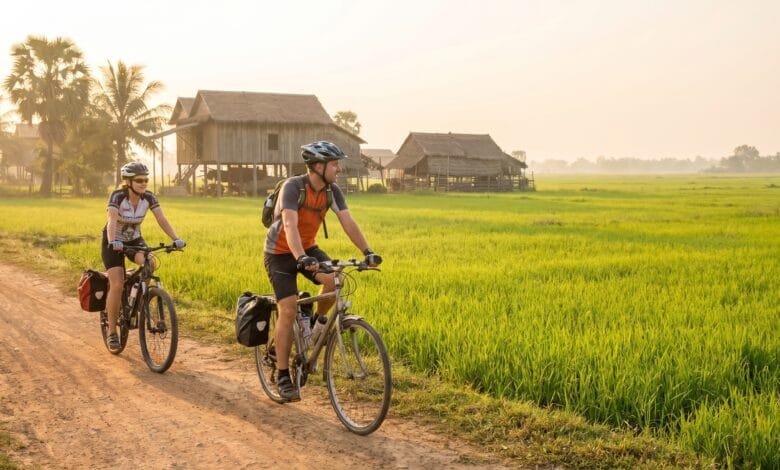
A typical Battambang food cycling tour starts early in the morning, around 8:00 AM, when the heat is still manageable and the village workshops are already busy with activity. After a hotel pickup by tuk-tuk, you’ll be fitted with a bicycle and given a brief orientation before setting off onto quiet dirt roads.
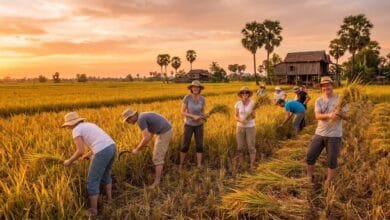
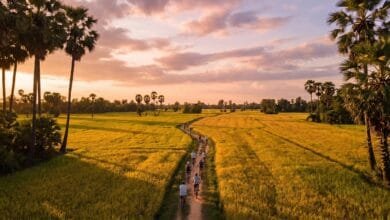
The route winds through rice paddies, past wooden houses on stilts, and alongside fruit trees that fill the air with a sweet fragrance. Village children wave and shout greetings as you pass. The pace is relaxed, with plenty of stops to learn, watch, and taste.
The Rice Paper Villages
The first major stop is usually Donteav Village, located about seven kilometers from Battambang’s town center. This village is famous for its rice paper production. Here, you’ll see families making rice paper by hand using methods that have been passed down through generations.
Rice paper—known locally as sambak naem or sambak korng—is made from a simple batter of rice flour, water, and salt. The batter is spread thinly over a cloth stretched across a pot of boiling water. The steam cooks it in seconds, and the resulting sheet is lifted off and laid on bamboo racks to dry in the sun.
Watching this process is mesmerizing. The movements are quick and practiced—smooth, spread, steam, lift. Each sheet is impossibly thin and almost transparent. Travelers are often invited to try peeling a sheet off the cloth themselves. (Don’t worry if you tear it—everyone does.)
At the rice paper village, you’ll also get to taste the finished product. Fresh spring rolls, still warm and filled with vegetables and herbs, are served alongside crispy deep-fried rolls. The contrast between the soft, delicate fresh rice paper and the crunchy fried version is a lesson in how one ingredient can create completely different textures.
The Noodle Makers
The next stop is a family-run rice noodle workshop. Here, you’ll see how num banh chok—Cambodia’s beloved Khmer noodles—are made from scratch.
The process starts with soaking rice, then grinding it into a thick batter. The batter is pressed through a mold into boiling water, where it sets into long, silky noodles. Watching the noodles emerge from the press is strangely satisfying—like seeing pasta being made, but with a distinctly Cambodian rhythm.
Num banh chok is a breakfast staple across Cambodia. The fresh noodles are typically topped with a green fish curry sauce made from pounded lemongrass, turmeric, garlic, and other aromatic spices. On the tour, you’ll get to sample the noodles fresh, often with a simple dipping sauce or as part of a local snack.
Some tours also stop at a fish paste (prahok) market, where you can see how this essential Khmer ingredient is made and sold. Prahok is fermented fish paste that forms the backbone of many Cambodian dishes—it’s salty, pungent, and absolutely central to Khmer cuisine.
The Rice Wine Distillery
The final food stop is a rice wine distillery. Rice wine—and rice whiskey—are traditional Cambodian drinks, often made for special occasions and ceremonies.
At the distillery, you’ll see how rice is fermented and distilled into alcohol. The process uses locally grown rice, sometimes mixed with herbs or spices for flavor. The resulting wine is strong and often served in tiny shots. Travelers are usually offered a small taste—just enough to understand the flavor without the burn.
Some tours also include a visit to the Banan Winery, Cambodia’s first and only vineyard, located about 15 kilometers south of Battambang near Phnom Banan Temple. Visitors can stroll through the vineyard, taste fresh grapes in season, and sample locally produced grape juice and wine. The winery produces several thousand bottles of wine, brandy, and grape juice each year. There is usually no entrance fee, though tastings and purchases cost extra.
Kralan: Bamboo Sticky Rice
No Battambang food cycling tour would be complete without tasting kralan—sticky rice cooked inside bamboo tubes. This iconic Battambang snack is made by filling bamboo segments with sticky rice, black beans, coconut milk, and a little salt, then roasting them over charcoal.
The bamboo is split open to reveal a cylinder of smoky, sweet, chewy rice. It’s eaten like a giant rice cake—sweet from the coconut, earthy from the bamboo, and absolutely delicious. Kralan is so closely associated with Battambang that it’s considered part of the province’s food identity.
The People Behind the Food
One of the most rewarding aspects of a Battambang food cycling tour is the people you meet. The tours are often led by local student guides who are passionate about sharing their culture. Social enterprises like Soksabike train local youth to become bicycle tour guides, creating meaningful employment while promoting responsible tourism.
The food makers themselves are equally welcoming. The “Mings” (aunties) making rice paper are happy to explain their work and laugh along with travelers who struggle to master the technique. These interactions are genuine—not staged performances, but real moments of connection between visitors and the community.
How to Experience It
Best Time to Go
The best time for a Battambang food cycling tour is early morning, starting around 8:00 AM. The weather is cooler, the light is beautiful for photography, and the village workshops are at their busiest. The dry season (November to March) offers the most reliable weather, though morning tours run year-round.
How Long to Spend
Most half-day tours last about four hours and cover approximately 19 kilometers. Full-day options are also available for travelers who want a more extensive experience, covering 35–40 kilometers and including additional stops like the Bamboo Train.
How to Get There
Battambang is easily reached from Siem Reap (about three hours by road) or Phnom Penh (about five to six hours). Once in Battambang, most tour operators offer hotel pickup and drop-off by tuk-tuk.
What to Bring
- Comfortable clothing suitable for cycling
- Closed-toe shoes
- Sunscreen and a hat
- Water (though most tours provide it)
- A camera for the scenic views
- Cash for purchasing products or making donations
Tour Costs
Prices for a half-day Battambang food cycling tour typically start from around $25–30 USD per person. This usually includes bicycle rental, a local guide, hotel pickup and drop-off, and tastings of local products.
Responsible Travel
When taking a Battambang food cycling tour, travelers are directly supporting local communities. The tours visit family-run workshops and small producers, putting money into the hands of the people who make the food.
Choosing a responsible tour operator matters. Social enterprises like Soksabike use bicycles (zero emissions), provide reusable water bottles to reduce waste, and ensure that tours benefit the communities they visit. By cycling rather than driving, you’re also reducing your environmental impact while experiencing rural Cambodia at a human pace.
Things to Do Nearby
After your cycling tour, consider visiting:
- Phnom Banan Temple — an ancient Angkorian temple with stone steps and sweeping views (near the vineyard)
- Bamboo Train — a unique rail ride through the countryside
- Wat Samrong Knong — a pagoda with a Khmer Rouge memorial
- Battambang’s colonial architecture — the city center has beautiful French-era buildings
Where to Stay
Battambang has a growing number of boutique hotels, guesthouses, and social enterprises offering comfortable accommodation. Many are within walking distance of the city’s cafes and restaurants.
Frequently Asked Questions
How long is the Battambang cycling food tour?
Most half-day tours last about four hours, from around 8:00 AM to 11:30 AM
Do I need to be an experienced cyclist?
No. The tour is suitable for all fitness levels, and the roads are mostly flat. A tuk-tuk can be arranged if needed
What foods will I taste on the tour?
You’ll typically taste fresh and fried spring rolls (rice paper), fresh rice noodles (num banh chok), rice wine, kralan (bamboo sticky rice), and dried banana chips
Are bicycles provided?
Yes, bicycles are included for all participants
Can children join the tour?
Yes, but check with the operator about age suitability. Some tours offer infant seats
Is lunch included?
Most half-day tours include tastings of local snacks but not a full lunch
What should I wear?
Comfortable clothing and closed-toe shoes suitable for cycling. Bring a hat and sunscreen
How much does the tour cost?
Prices typically start from around $25–30 USD per person
Final Thoughts
A Battambang food cycling tour is more than just a way to taste local food—it’s a window into how Cambodian communities live, work, and eat. The rice paper makers, noodle producers, and wine distillers you meet aren’t putting on a performance. They’re going about their daily work, and you’re lucky enough to witness it.
The food itself is delicious, but the real takeaway is the understanding you gain. You learn that rice isn’t just a staple—it’s a canvas for creativity. You see how one simple grain can become paper, noodles, wine, and cake, each one made with care and tradition.
And you do it all from the seat of a bicycle, pedaling through quiet villages where children wave and the air smells sweet. That’s not just a tour. That’s a memory.