What Is Num Banh Chok? A Traveler’s Guide to Cambodia’s Breakfast Noodles
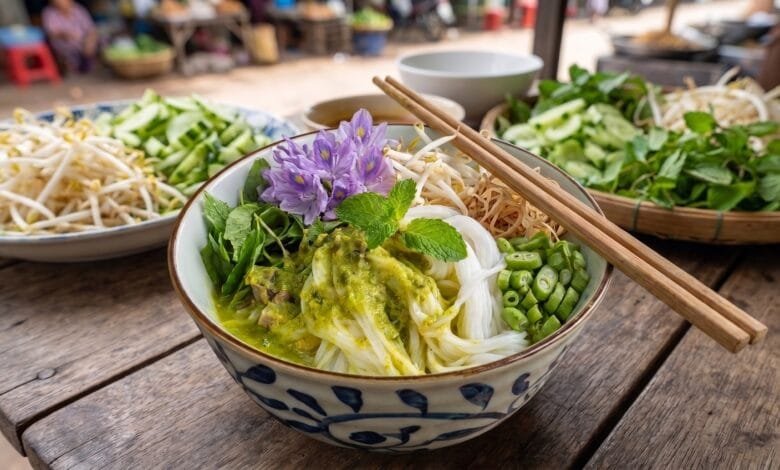
If you walk through a Cambodian neighborhood early in the morning, you will likely see women carrying baskets of fresh rice noodles on bicycles or setting up small stalls along the sidewalk. The dish they are selling is num banh chok — Cambodia’s beloved breakfast noodle. Many travelers encounter it without knowing its name, drawn in by the bright green curry and the pile of fresh vegetables on top. This guide explains what num banh chok is, what it tastes like, how it’s prepared by street vendors, and how you can order and enjoy it during your trip.
What Is Num Banh Chok?
Num banh chok (នំបញ្ចុក) is a Cambodian rice noodle dish served with a fish-based curry sauce and fresh raw vegetables. It is commonly eaten for breakfast, though you will also find it as an afternoon snack or a light lunch. In English, it is often called “Khmer noodles” — a simple name that reflects how central it is to Cambodian food culture.
The name itself gives a clue about the dish. “Num” refers to noodles or cakes made from rice, and “banh chok” translates roughly to “to feed” in Khmer. The noodles are made from lightly fermented rice, which gives them a soft, slightly tangy quality that is different from dried rice noodles.
There are several versions of num banh chok across Cambodia. The most common is num banh chok samlor proher, which uses a green or yellow curry sauce made from fish and kroeung (a Cambodian spice paste). Another popular version, num banh chok nam ya, features a red fish curry and is often served at special occasions like weddings.
What Does Num Banh Chok Taste Like?
The flavor of num banh chok is gentle, aromatic, and refreshing. The curry sauce has a savory fish base, but it is not heavy or overpowering. Lemongrass, turmeric, and kaffir lime leaves give the sauce a bright, herbal aroma. Coconut milk adds a mild creaminess in some versions, though not all vendors use it.
The noodles themselves are soft and slightly chewy, with a subtle fermented tang. When you take a bite, you get a mix of textures: the silky noodles, the thick curry sauce, and the crunch of raw vegetables like cucumber, bean sprouts, and banana blossom.
Is num banh chok spicy? Not usually. The base dish is mild, and any heat comes from the chili paste or fresh chilies served on the side. You can add as much or as little as you like.
The overall impression is cool, fresh, and balanced — a dish that makes sense in Cambodia’s warm climate.
What Is in Num Banh Chok?
The dish has three main components:
The noodles. These are fresh rice noodles, made by soaking rice, grinding it into a paste, and pressing it into boiling water. They are soft and delicate, quite different from the dried rice noodles you might find in a grocery store.
The curry sauce. The sauce is built on a base of kroeung, a Cambodian spice paste that typically includes lemongrass, turmeric, galangal, garlic, and kaffir lime leaves. Freshwater fish — commonly snakehead fish or mudfish — is pounded into the paste and simmered with the spices. Prahok, a fermented fish paste, is often used to add depth and saltiness. Coconut milk is added in some regional versions, giving the sauce a creamier texture.
The vegetables. A generous pile of raw and lightly blanched vegetables is served on top or on the side. Common additions include cucumber, banana blossom, water lily stems, bean sprouts, long beans, and fresh herbs like mint and basil.
How Is Num Banh Chok Prepared by Street Vendors?
The preparation of num banh chok often begins before sunrise. Vendors make the rice noodles fresh each morning, either at home or at their stall. The process involves soaking rice for several hours, grinding it into a liquid paste, and pressing it through a die into boiling water. The noodles are then cooled and set aside.
For the curry sauce, the vendor prepares the kroeung paste by pounding the aromatics in a large mortar and pestle. The fish is cooked and pounded into the paste, then simmered with the spices and coconut milk until the sauce thickens. Some vendors keep the sauce warm in a large pot, while others serve it at room temperature.
When you order, the vendor places a portion of noodles in a bowl, ladles the curry sauce over the top, and adds the fresh vegetables and herbs. The dish is assembled quickly — it is a fast, affordable breakfast that can be prepared in minutes.
When and Where Do Cambodians Eat Num Banh Chok?
Num banh chok is most commonly eaten in the morning, often before work or school. It is a breakfast staple in both cities and rural areas. You will also find it as an afternoon snack, especially in markets where vendors sell it throughout the day.
The best places to find num banh chok are local morning markets (phsar), street stalls along busy roads, and neighborhood vendors who set up on sidewalks. In Phnom Penh, areas around Orussey Market and Kandal Market are known for good street food. In Siem Reap, the Old Market area and the streets away from the main tourist strip have many local stalls. In Battambang, the dish is also popular, with a version that uses more coconut milk than the Phnom Penh style.
You are less likely to find num banh chok in restaurants aimed at tourists, though some Cambodian restaurants do serve it. The most authentic experience is at a street stall or a simple local eatery.
Why Is Num Banh Chok Popular as Street Food?
Num banh chok works well as street food for several reasons. It is quick to serve — the noodles and sauce are prepared in advance, so a vendor can assemble a bowl in under a minute. The ingredients are affordable and locally available, which keeps the price low for customers. The dish is also light and refreshing, making it suitable for Cambodia’s warm mornings.
The fresh noodles are a key part of its appeal. Because they are made daily, they have a texture and flavor that dried noodles cannot match. Many vendors take pride in making their own noodles, and some families have been selling num banh chok for generations.
The Story and History of Num Banh Chok
The origins of num banh chok are not precisely documented, but the dish is deeply rooted in Cambodian food culture. A popular Khmer folk legend tells the story of Thun Chey, a scholar who was exiled from the Khmer Empire to China. According to the legend, he made a living selling num banh chok in China, and the dish became so popular that even the emperor wanted to try it.
Some Cambodians say this legend explains how noodles reached China, though this is a folk story rather than a historical fact. What is clear is that num banh chok has been part of Cambodian daily life for a very long time. It is associated with home cooking, family gatherings, and Buddhist ceremonies. The dish is sometimes offered to monks as alms, reflecting its cultural importance.
Regional and Vendor Variations
Num banh chok varies from region to region, and even from vendor to vendor. In Kampot, the dish often uses locally produced dried shrimp, coconut cream, fish sauce, and peanuts. In Siem Reap, vendors tend to use more garlic and coconut milk, and serve the dish with a sweet sauce called tik pha em.
Phnom Penh style is often described as slightly sweeter, with a more pronounced coconut milk flavor. In the coastal areas of Kampot and Kep, the broth may include crab or shrimp. Battambang’s version is known for using more coconut milk than other regions.
These variations mean that num banh chok can taste different depending on where you try it. None of these versions is more “authentic” than the others — they are simply local interpretations of a shared dish.
Where Can Travelers Try Num Banh Chok?
The best way to try num banh chok is at a local market or street stall. Here are some practical suggestions:
Phnom Penh: Orussey Market and Kandal Market are good places to start. You can also find vendors along many residential streets in the early morning. The Russian Market (Toul Tom Poung) has stalls selling num banh chok.
Siem Reap: The Old Market area and the streets around Wat Bo have local stalls. Some vendors set up near the river in the morning.
Battambang: The central market area and nearby streets have vendors selling num banh chok, often with a creamier coconut milk sauce.
Kampong Cham: This province is known for its fish, and locals say the num banh chok here is particularly good because of the fresh fish from the Mekong River.
Prices vary by location and portion size. In Phnom Penh, a bowl typically costs between $1 and $2.50. In smaller towns and rural areas, you may pay less. Prices can change, so it is always worth asking before you order.
How to Order Num Banh Chok
Ordering num banh chok is simple, even if you do not speak Khmer. Here are a few phrases that can help:
- “Num banh chok” — the name of the dish. Say it clearly and the vendor will understand.
- “Som num banh chok” — “Please, num banh chok.” Adding “som” is polite.
- “Ot sai mak phet” — “No chili.” Use this if you do not want it spicy.
- “Sai trey” — “With fish.” This is the standard version.
In most stalls, you simply point to the noodles and sauce, and the vendor will assemble a bowl for you. The vegetables are usually added automatically. If you want more or less of something, you can point and gesture.
Some vendors may ask if you want the noodles served warm or at room temperature. Both are common. The curry sauce is usually served warm, while the noodles and vegetables are at room temperature.
How to Eat Num Banh Chok
Num banh chok is eaten with a spoon and fork, or sometimes just a spoon. The noodles and sauce are mixed together in the bowl. You can add fresh herbs, bean sprouts, and vegetables from the side plate as you eat.
Condiments are usually available on the table. These may include fish sauce, chili paste, lime wedges, and sometimes sugar. Feel free to adjust the flavor to your taste. Many Cambodians add a squeeze of lime and a little chili paste for extra brightness and heat.
The dish is not meant to be eaten piping hot. It is served warm or at room temperature, which makes it refreshing rather than heavy. Take your time and enjoy the mix of textures and flavors.
What Foreign Travelers Should Know
Spice level: The base dish is mild. Chili is served on the side, so you control the heat.
Fish and fermentation: The curry sauce contains fish and prahok (fermented fish paste). If you are sensitive to strong fermented flavors, start with a small taste. The fermented flavor is present but not overwhelming in most versions.
Vegetarian options: Traditional num banh chok is not vegetarian because the sauce is fish-based. Some vendors may offer a vegetarian version, but this is not common at street stalls. If you are vegetarian, it is best to ask clearly or look for a vendor who specializes in vegetarian food.
Allergens: The dish contains fish and may contain peanuts in some regional versions. If you have a fish or peanut allergy, be cautious.
Portion size: A standard bowl is a light meal. If you are hungry, you may want to order two bowls or add a snack from another stall.
Hygiene: Street food in Cambodia is generally safe for most travelers, but as with any street food anywhere in the world, choose stalls with a high turnover of customers. Busy stalls are more likely to have fresh ingredients.
Seating: Many stalls have small plastic chairs and tables. Some are takeaway only. If you are unsure, watch what other customers do.
How Much Does Num Banh Chok Cost?
Prices for num banh chok vary depending on the location, portion size, and vendor. In Phnom Penh, a bowl typically costs between $1 and $2.50. In smaller towns and rural areas, prices are often lower, sometimes around $0.75 to $1.50. These prices are approximate and can change. Always confirm the price before ordering if you are unsure.
Frequently Asked Questions
What is num banh chok?
Num banh chok is a Cambodian rice noodle dish served with a fish-based curry sauce and fresh raw vegetables. It is commonly eaten for breakfast and is often called “Khmer noodles” in English.
Is num banh chok spicy?
No, the base dish is mild. Chili paste and fresh chilies are served on the side, so you can add as much heat as you like.
What does num banh chok taste like?
It has a gentle, aromatic flavor with herbal notes from lemongrass and turmeric. The fish sauce is savory but not overpowering, and the fresh vegetables add crunch and brightness.
Is num banh chok vegetarian?
Traditional num banh chok is not vegetarian because the sauce is made with fish and prahok. Some vendors may offer a vegetarian version, but it is not common.
Where can tourists try num banh chok?
You can find it at local morning markets, street stalls, and neighborhood vendors throughout Cambodia. In Phnom Penh, try Orussey Market or Kandal Market. In Siem Reap, the Old Market area is a good place to start.
How do you eat num banh chok?
Mix the noodles and sauce together in the bowl. Add fresh herbs and vegetables from the side plate. Adjust the flavor with fish sauce, chili, or lime. Eat with a spoon and fork.
Conclusion
Num banh chok is more than just a bowl of noodles. It is a daily ritual, a street food staple, and a dish that captures the fresh, herbal flavors of Cambodian cooking. For travelers, it offers an affordable and accessible way to experience local breakfast culture. The next time you see a vendor with a basket of fresh rice noodles and a pot of green curry, you will know exactly what it is — and how to order it. Whether you try it in a busy Phnom Penh market or a quiet roadside stall in Battambang, num banh chok is worth seeking out.