How Women Are Reshaping Cambodia’s Economy Today
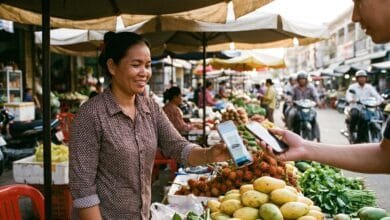
Walk through almost any market in Cambodia — from Phnom Penh’s sprawling Central Market to a small roadside stall in Kampot — and you will notice something. The vendors are almost always women.
Sit at a café in Siem Reap or Phnom Penh, and the barista pulling your espresso is likely a young woman. Hire a tuk-tuk to take you to Angkor Wat, and increasingly, the driver may be a woman too.
This is not a coincidence. It reflects something fundamental about how Cambodia’s economy works — and understanding it can change the way you see the country during your visit.
What Travelers Will See in Everyday Cambodia
Cambodia has one of the highest female labor force participation rates in the world. According to International Labour Organization modeled estimates, 77.35% of Cambodian women aged 15 and over were in the labor force in 2025 — ranking the country 7th globally on this measure. This is not a recent development. Cambodian women have long been economic actors, running household finances, managing small businesses, and trading in markets.
For travelers, this translates into daily encounters. The woman selling fresh spring rolls at the morning market. The woman running a guesthouse in Kampot. The woman driving a tuk-tuk in Siem Reap. The woman managing a boutique hotel in Phnom Penh.
According to Ministry of Tourism data presented in March 2026, women constitute nearly 60% of Cambodia’s tourism sector workforce and are present across all tourism-related services. If you are traveling in Cambodia, you are almost certainly interacting with women in the tourism economy every day.
The Numbers Behind the Everyday Reality
The scale of women’s economic participation in Cambodia is significant.
Approximately 61% of the country’s micro, small, and medium enterprises are owned by women, according to United Nations Development Programme data cited in a 2025 Bernama report. That means the majority of small businesses you encounter — the family-run restaurant, the souvenir shop, the laundry service — are likely owned by women.
In the formal sector, the garment, footwear, and travel goods industry employs over 1.11 million workers, around 75% of whom are women. This sector alone accounts for 51.8% of Cambodia’s total exports. While tourists rarely visit garment factories, this industry shapes the economic landscape of the country — including the communities that visitors pass through.
The informal economy is where women’s presence is even more visible. UNDP research indicates that 88.3% of Cambodia’s population works informally, and women make up approximately 80% of that segment. Street vending is a major part of this. Women represent 75% of Cambodia’s approximately 77,000 street vendors, according to the 2022 Economic Census.
Why Women Lead Cambodia’s Small Business Landscape
Several factors explain why women are so prominent in Cambodia’s small-scale commerce.
Historically, Cambodian women have managed household finances and market trading. This tradition predates the modern era and has roots in Khmer society’s family structures. The market has long been considered a women’s domain — a place where women could earn income while managing household responsibilities.
Today, that pattern continues. In a 2023 survey cited by UNESCAP, women were most involved in wholesale and retail trade (48.3%), accommodation and food services (10.8%), and manufacturing (3.6%). These are exactly the sectors where travelers interact most with Cambodian daily life.
There are also pragmatic reasons. For many women, especially those with limited formal education, small business ownership offers flexibility that formal employment does not. It allows them to earn income while caring for children or managing household duties.
What This Means for Travelers
Understanding women’s role in Cambodia’s economy can enrich your visit in several ways.
First, it helps you see markets differently. When you buy fruit from a vendor at Psar Thmei in Phnom Penh or a scarf at a stall in Siem Reap, you are participating in a long-standing economic tradition. The woman behind the stall is not just a vendor — she is part of a national pattern in which women have been the primary drivers of household income for generations.
Second, it helps you appreciate the tourism workforce. The hotel receptionist, the tour guide, the restaurant server, the tuk-tuk driver — many of these roles are held by women. Recognizing this can make you more conscious of how tourism income flows into Cambodian households.
Third, it helps you understand some of the challenges women face. Despite high labor force participation, women in Cambodia earn 27% less than men on average, according to UNESCAP data. Many work in the informal sector without social protections, health insurance, or retirement benefits. Understanding this context can make you a more thoughtful traveler.
A Changing Landscape
The picture is not static. Young Cambodian women are entering new sectors, particularly in urban areas.
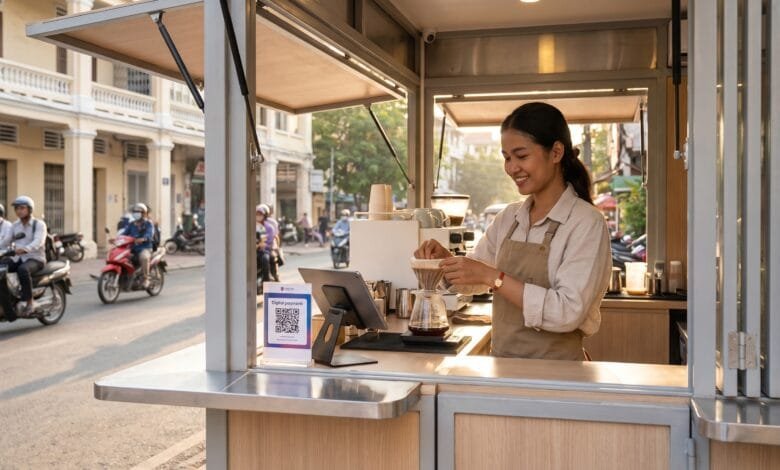
In Phnom Penh, mobile coffee kiosks and small cafés are increasingly run by Generation Z women. A 2025 Bernama report noted that thousands of young Cambodian women are starting mobile coffee businesses or working as baristas, drawn by low startup costs and the flexibility of small-scale entrepreneurship.
Female students now make up 52.51% of all tertiary-level students nationwide, according to the Ministry of Women’s Affairs. This represents a significant shift from previous generations and suggests that women’s economic roles will continue to evolve.
In tourism, women are also moving into roles traditionally held by men. In Siem Reap, organizations like Driver Srey and Tuk Tuk Lady have created networks of female tuk-tuk drivers, offering women an alternative to construction work or street vending. These initiatives are small in scale — Tuk Tuk Lady has around 50 drivers — but they represent a visible change that travelers may notice.
International organizations are also investing in women’s economic empowerment in tourism. In February 2026, The Asia Foundation, with support from Visa, launched a program to strengthen tourism MSMEs — particularly women-owned and rural enterprises — by expanding digital payments adoption and financial education.
What Travelers Can Do
For visitors who want to support women’s economic participation in Cambodia, there are simple ways to do so.
Choose women-owned businesses when possible. Many cafés, restaurants, and shops in Phnom Penh and Siem Reap are explicitly women-owned or women-run. In Siem Reap, the Tuk Tuk Lady and Driver Srey networks offer a way to hire female drivers.
Buy directly from market vendors. This puts money directly into the hands of small-scale traders, the majority of whom are women.
Be respectful and patient. Many women in Cambodia’s informal economy work long hours in challenging conditions. A friendly interaction and a fair price go a long way.
Frequently Asked Questions
Are there women tuk-tuk drivers in Cambodia?
Yes. In Siem Reap, organizations like Tuk Tuk Lady and Driver Srey have created networks of female drivers. While still a minority in the industry, women tuk-tuk drivers are increasingly visible in tourist areas.
Why do so many Cambodian women work in markets?
Market trading has historically been a women’s domain in Cambodia. It offers flexibility for managing household responsibilities while earning income. Today, women represent 75% of the country’s street vendors.
What percentage of Cambodia’s workforce is female?
Cambodia’s female labor force participation rate was 77.35% in 2025, according to ILO modeled estimates — one of the highest rates in the world.
How can tourists support women-owned businesses in Cambodia?
Choose women-run cafés, restaurants, and shops. Hire female tuk-tuk drivers where available. Buy directly from market vendors.
Do women work in Cambodia’s tourism industry?
Yes. Women constitute nearly 60% of Cambodia’s tourism sector workforce, according to Ministry of Tourism data from 2026.
Is it safe for women to travel alone in Cambodia?
Many women travel solo in Cambodia. As with any destination, it is wise to take standard precautions, especially at night. Female tuk-tuk drivers and women-run guesthouses can offer additional comfort for solo female travelers.
Conclusion
The women you encounter during a trip to Cambodia — the vendor, the driver, the barista, the hotel manager — are not incidental to your experience. They are central to how the country’s economy functions.
Cambodia has one of the highest rates of female labor force participation in the world. Women own the majority of small businesses. They dominate markets and make up most of the tourism workforce. They are, in many ways, the face of everyday Cambodian economic life.
Understanding this does not just make you a more informed traveler. It makes your visit more meaningful. When you buy a coffee from a young woman in Phnom Penh, hire a female tuk-tuk driver in Siem Reap, or purchase fruit from a vendor at a provincial market, you are participating in a pattern that stretches back generations — and that continues to shape Cambodia today.
Now you understand Cambodia a little better — and you may want to see more of it for yourself.