Banteay Srei Temple: A Visitor’s Guide to Angkor’s Pink Jewel
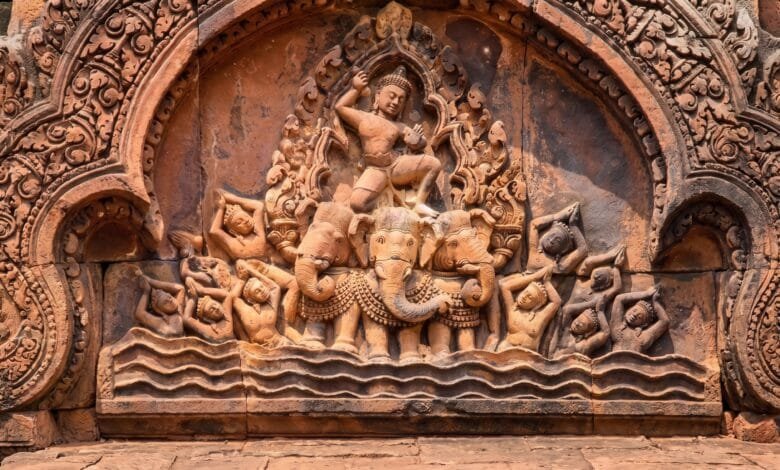
Most temples at Angkor impress you with size. Banteay Srei impresses you with detail. The buildings here are small — miniature by the standards of Khmer temple construction — but almost every surface is covered with carvings so fine they look like they were made with a jeweler’s tools.
The temple is built from pink sandstone, a material that catches the morning light and gives the whole site a warm, rosy glow. This is why travelers often call it the “Pink Temple.” Its official Khmer name, Banteay Srei, means “Citadel of Women,” likely a reference to the delicate beauty of the carvings and the small scale of the buildings.
What makes Banteay Srei truly unusual is who built it. Unlike Angkor Wat, the Bayon, or most other major temples in the region, Banteay Srei was not commissioned by a king. It was built by a courtier — a scholar and spiritual teacher named Yajnavaraha — in the 10th century. That single fact helps explain the temple’s character. It feels personal, refined, and deeply learned.
This guide explains what Banteay Srei is, why it matters, what you will see, and what you should know before you visit.
Quick Travel Information
| Information | Details |
|---|---|
| Location | Banteay Srei District, Siem Reap Province, Cambodia |
| Distance from Siem Reap | Approximately 25–35 km northeast of Siem Reap town, depending on route |
| Site Type | Hindu temple (dedicated to Shiva) |
| Historical Period | 10th century; consecrated 22 April 967 CE |
| Builder | Yajnavaraha, a Brahmin scholar and counselor to King Rajendravarman II |
| Religious Tradition | Hinduism (Shaivism), with some Vaishnava elements |
| Heritage Status | Part of the Angkor UNESCO World Heritage Site (inscribed 1992) |
| Known For | Pink sandstone construction; exceptionally fine bas-relief carvings |
| Entrance | Included in the Angkor Pass (1-day $37, 3-day $62, 7-day $72) |
| Opening Hours | 7:30 AM – 5:30 PM (verify current hours before travel) |
| Recommended Visit Time | 1–1.5 hours |
| Dress Code | Shoulders and knees must be covered |
What Is Banteay Srei?
Banteay Srei is a Hindu temple located in the Angkor archaeological area of Cambodia. It was built in the 10th century and dedicated to Shiva, one of the principal gods of Hinduism.
The temple sits about 25 kilometers northeast of the main Angkor temple group, near the hill of Phnom Dei. It is smaller than most other major temples at Angkor. But its size is part of its charm. Because the buildings are small, the carvings are close to your eyes. You do not have to look up at distant reliefs. You can see every detail.
The temple was originally surrounded by a town called Īśvarapura. Its original religious name was Tribhuvanamaheśvara, meaning “Great Lord of the Threefold World,” a reference to the Shiva linga that served as the central object of worship.
Why Is Banteay Srei Important?
Banteay Srei matters for three main reasons.
First, it is one of the finest examples of Khmer decorative art. The carvings on its walls, pediments, and lintels are considered the most elaborate and skilled to survive from the Khmer era. Art historians and archaeologists have called it a “precious gem” and the “jewel of Khmer art”.
Second, it was built by a non-royal patron. Almost all major temples at Angkor were built by kings. Banteay Srei is the exception. It was commissioned by Yajnavaraha, a scholar and counselor who served King Rajendravarman II. The temple’s foundational stele describes Yajnavaraha as a philanthropist who helped people suffering from illness, injustice, or poverty. His temple reflects his learning and his devotion.
Third, Banteay Srei preserves a rare record of religious and cultural connections. Some of its carvings show scenes and figures that recall imagery from South India, suggesting links between Khmer and Indian religious traditions. The temple is also unusual in that its buildings are divided along a central east–west axis between Shaivite (Shiva-focused) and Vaishnava (Vishnu-focused) structures.
The History of Banteay Srei
Banteay Srei was consecrated on 22 April 967 CE. It was built during the reign of King Rajendravarman II and completed in the early reign of his successor, Jayavarman V. Yajnavaraha, the temple’s founder, was the grandson of King Harsavarman I. He served as a teacher to the future king Jayavarman V.
The temple was originally dedicated to Shiva. Over time, it remained an active religious site, though like many Angkorian temples, it was eventually abandoned as the Khmer capital moved south. The temple was rediscovered in the early 20th century by French archaeologists. It was restored in the 1930s using the anastylosis method, which involves carefully dismantling and rebuilding structures.
In the late 20th century, Banteay Srei faced new threats. During the Khmer Rouge period, many temples were neglected or damaged. After the Vietnamese invasion in 1979, the area around Banteay Srei was difficult to reach because of landmines and the presence of Khmer Rouge fighters. In the early 2000s, a Swiss-funded restoration project helped stabilize the temple and improve drainage to protect it from water damage.
Today, the temple is managed by the APSARA National Authority, the Cambodian government body responsible for the Angkor site. Recent work has focused on visitor flow and conservation, including a renovation of the visitor circuit at Banteay Srei.
Architecture and What to Look For
Banteay Srei follows the classic Khmer temple plan but on a smaller scale. It is oriented to the east and surrounded by three concentric enclosure walls. A moat surrounds the inner complex, giving the temple the feeling of a small island. A causeway leads from the outer gate to the central sanctuary.
The temple’s most striking architectural feature is its use of pink sandstone for decorative elements. The structural elements are built from laterite, a porous stone, but the walls, pediments, and carvings are made from fine-grained sandstone that allows for detailed work. This combination is unusual. Laterite was used for foundations and walls, while the sandstone was reserved for the parts that needed to be beautiful.
As you walk through the temple, look for these features:
The outer gopura (gateway): The main entrance is a laterite structure trimmed with sandstone. Above the doorway, there is a carving of Indra, the Hindu god of rain, riding a three-headed elephant.
The processional way: A raised causeway leads from the outer gate toward the inner enclosures. Along the sides, you can see the remains of galleries and halls, some of which still have beautifully carved lintels.
The libraries: Two small buildings — one in the southeast and one in the northeast — flank the central area. These are called libraries, though their exact function is debated. They are richly decorated with pediments and lintels.
The central sanctuary: The innermost enclosure contains the main shrine and two other towers. The central tower is dedicated to Shiva. The tower to the north is dedicated to Vishnu.
The doorways of the inner sanctuary are notably small. Some are only about one meter high. You will likely need to crouch to look inside.
Carvings, Sculptures and Stories
The carvings at Banteay Srei are the main reason to visit. They cover almost every available surface. The temple is sometimes described as having “no space left uncarved” in its central area.
Tympanums: Above each doorway, there is a triangular-shaped carving called a tympanum. These present scenes from Hindu mythology. One famous tympanum in the southeast quadrant shows Shiva dancing. In the lower left corner of the scene, there is a thin, emaciated female figure. She is Karaikkal Ammaiyar, a Tamil saint who gave up her beauty to live as an ascetic devoted to Shiva. This is a rare depiction in Khmer art and points to connections with religious traditions from South India.
Devatas: The walls are decorated with images of devatas — female deities or celestial dancers. The devatas at Banteay Srei are known for their graceful postures and detailed jewelry. Some are shown with elaborate hairstyles and clothing. Art historians have studied the costumes of these figures to understand 10th-century Khmer dress and ornamentation.
Narrative reliefs: The lintels and pediments tell stories from the Hindu epics, the Ramayana and the Mahabharata. One pediment shows the abduction of Sita by the demon Ravana, a scene from the Ramayana. Another shows Krishna defeating the tyrant Kamsa.
Kala heads: You will notice faces of monsters — called kala — carved above doorways and on the bases of pediments. Kala is a protective figure in Hindu and Buddhist art, often shown with a wide mouth and bulging eyes. At Banteay Srei, the kala heads are sometimes surrounded by intricate floral scrolls and vine-like designs.
Guardian figures: At the base of stairways and beside doorways, you will see kneeling guardian figures. Some are human-like. Others have animal or monster features. These guardians were meant to protect the sacred space.
One of the most remarkable things about the carvings is their depth. The pink sandstone is relatively hard, which allowed the sculptors to carve in high relief without the stone crumbling. This is why the details are still sharp after more than a thousand years.
Cultural and Religious Meaning
Banteay Srei was built as a Shaivite temple — a place of worship for followers of Shiva. The central object of worship was a Shiva linga, a symbolic representation of the god. The temple’s original name, Tribhuvanamaheśvara, honored this linga.
The temple also has a Vaishnava dimension. The buildings north of the central axis are dedicated to Vishnu, while those south of the axis are dedicated to Shiva. This division suggests that the temple was designed to accommodate worship of both major Hindu deities.
The temple’s modern name, Banteay Srei, or “Citadel of Women,” has been interpreted in different ways. Some believe it refers to the many devata carvings on the walls. Others think it refers to the small, delicate scale of the buildings, which might be seen as feminine in contrast to the massive, masculine temples built by kings. The name is not ancient; it came into common use in the modern era.
Today, Banteay Srei is no longer an active place of worship in the way it was in the 10th century. However, it remains a sacred site for many Cambodians. Buddhist visitors sometimes come to pay respect. The temple is also used for cultural ceremonies and religious festivals on occasion.
What Visitors Can See
When you arrive at Banteay Srei, you will first pass through a modern visitor center and ticket check area. From there, a short walk leads to the temple’s outer gate.
The outer gate and causeway: The first structure you encounter is the outer gopura. It is a large, laterite gateway with sandstone trim. Above the doorway, look for the carving of Indra on his three-headed elephant, Airavata.
Beyond the gate, a raised causeway stretches toward the inner temple. This is the processional way. Along the sides, you can see the ruins of galleries and halls. Some of the pillars are still standing. Some of the lintels are still in place.
The second enclosure: After crossing the causeway, you pass through a second gate. This leads to the area around the moat. The moat is usually dry, but during the rainy season, it may hold water.
The inner sanctuary: The heart of the temple is the central sanctuary. Here you will find the three main towers — the central tower dedicated to Shiva and two flanking towers. The carvings here are the most dense and detailed. Take your time to look at the pediments and lintels.
The libraries: To the southeast and northeast of the central sanctuary are two small buildings. These are the libraries. They are decorated with some of the finest carvings at the site.
The “false doors”: You will notice several doorways that are not real entrances. They are carved stone panels designed to look like doors. These are called “false doors” and are a common feature in Khmer temples. They are often richly decorated.
What the Visit Is Like
The visit to Banteay Srei is relatively short compared to Angkor Wat or the Bayon. Most visitors spend about 45 minutes to an hour and a half at the site.
The temple is compact, so you will not be doing a lot of walking. However, the ground is uneven in places. There are some steps and thresholds to navigate. The inner sanctuary has very low doorways, so you may need to bend down to look inside.
Shade is limited. The temple is small, and there are few trees within the immediate enclosure. The sun in Cambodia can be intense, especially in the middle of the day. Bring a hat, sunscreen, and water.
The site can get crowded, especially in the mid-morning when tour groups arrive. If you want a quieter experience, try to arrive early in the morning, right when the temple opens, or later in the afternoon, after the main tour groups have left. The pink sandstone looks especially beautiful in the soft light of early morning or late afternoon.
Photography is allowed at the temple. However, tripods may be restricted in some areas. Be respectful of other visitors and do not block pathways.
How to Get There
Banteay Srei is about 25 to 35 kilometers from Siem Reap town, depending on your starting point and the route. The drive takes about 30 to 50 minutes by car or tuk-tuk, depending on traffic and road conditions.
The road to Banteay Srei is paved and in good condition. You can hire a tuk-tuk, a remork (a larger motorized vehicle), or a private car. Many visitors combine Banteay Srei with other sites on the “Grand Circuit” or with a trip to Kbal Spean and Beng Mealea.
If you are hiring a tuk-tuk for the day, expect to pay around $15–$20 for a round trip to Banteay Srei, depending on your negotiation and the duration of the trip. A private car will cost more.
You can also join a guided tour. Many tour companies in Siem Reap offer half-day or full-day tours that include Banteay Srei.
How to Visit
Tickets: Banteay Srei is part of the Angkor Archaeological Park. You need an Angkor Pass to enter. The pass can be purchased at the Angkor Enterprise ticket office or online through the official Angkor Enterprise portal. As of 2026, prices are $37 for a 1-day pass, $62 for a 3-day pass (valid for any 3 days within a 10-day period), and $72 for a 7-day pass (valid for any 7 days within a 30-day period). Children under 12 are free with proof of age.
Opening hours: The temple is generally open from 7:30 AM to 5:30 PM. Hours can change, so check with the official Angkor Enterprise website or your hotel before you go.
Dress code: The Angkor Code of Conduct requires that visitors cover their shoulders and knees. This means no sleeveless tops, no shorts above the knee, and no skirts above the knee. You may be refused entry if you do not comply. A light scarf or sarong can be useful to cover up if needed.
Etiquette: Banteay Srei is a religious site. Speak quietly. Do not touch the carvings. Do not climb on the structures. Do not smoke. Follow the instructions of site staff and guides.
Photography: Photography is allowed, but be mindful of other visitors. Do not use flash inside the towers if it is prohibited. Do not block pathways for long periods to take photos.
Best Time to Visit
The best time to visit Banteay Srei depends on what you want to avoid.
To avoid crowds: Arrive early, right when the temple opens at 7:30 AM. Or visit in the late afternoon, after 3:00 PM. The middle of the morning and early afternoon are the busiest times.
For the best light: The pink sandstone looks especially beautiful in the soft light of early morning or late afternoon. The warm light brings out the rosy tones of the stone.
For weather: The dry season, from November to March, generally offers the most comfortable temperatures and the easiest travel conditions. The wet season, from May to October, is greener and less crowded, but you may encounter rain.
To avoid heat: Early morning is the coolest time of day. By midday, the sun can be intense.
How Long to Spend
Most visitors spend about 1 to 1.5 hours at Banteay Srei. This is enough time to walk through the temple, look at the main carvings, and take photos.
If you are deeply interested in Khmer art and architecture, you may want to spend more time. The carvings reward close looking. You could easily spend two hours examining the details.
If you are combining Banteay Srei with other sites, plan your day carefully. The temple is often included in a half-day or full-day tour that also visits Kbal Spean, Beng Mealea, or the temples of the Grand Circuit.
Nearby Places to Combine With the Visit
Kbal Spean: About 12 kilometers from Banteay Srei, Kbal Spean is a site where carvings were made directly into the riverbed. It is sometimes called the “River of a Thousand Lingas.” The site involves a moderate hike through the jungle to reach the carvings. Allow about 1.5 to 2 hours for the visit, including the hike.
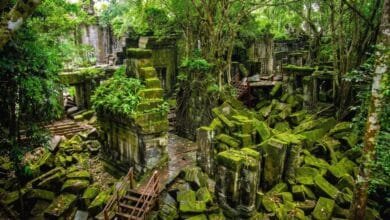
Beng Mealea: About 50 kilometers from Banteay Srei, Beng Mealea is a large, unrestored temple that has been largely overtaken by jungle. It is a very different experience from Banteay Srei — wild and atmospheric rather than refined. The site is popular with visitors who want to see a temple in its natural, ruined state.
Banteay Samre: A smaller temple located between Banteay Srei and the main Angkor group. It is less crowded than Banteay Srei and has some beautiful carvings. It can be a good stop on the way back to Siem Reap.
Grand Circuit temples: Banteay Srei is often included in tours of the Grand Circuit, which includes temples such as Pre Rup, East Mebon, Ta Som, Neak Pean, and Preah Khan. These can be combined with Banteay Srei for a full day of temple visiting.
Travel Tips
Start early. The early morning is the coolest and quietest time to visit. You will also get the best light for photos.
Bring water. There are few vendors inside the temple area. Bring enough water for your visit.
Wear comfortable shoes. The ground is uneven in places. You will be walking on stone and dirt paths.
Cover up. Remember the dress code. A light scarf or sarong can be useful if you need to cover your shoulders or knees.
Hire a guide if you want context. A good guide can explain the carvings and their stories. Without a guide, you may miss some of the most interesting details. Many guides are available at the temple entrance, or you can arrange one through your hotel or tour company.
Combine with Kbal Spean if you enjoy hiking. Kbal Spean is nearby and offers a different kind of experience — a jungle hike to see carvings in a riverbed.
Be patient with crowds. Banteay Srei is popular. If you arrive when a tour group is there, wait a few minutes. The groups usually move through quickly.
Responsible Tourism
Banteay Srei is a fragile heritage site. The carvings are more than a thousand years old. Your actions can help preserve them for future visitors.
Do not touch the carvings. The oils from your skin can damage the stone over time.
Do not climb on the structures. The stone is fragile and climbing can cause damage.
Follow conservation rules. Stay on designated paths. Do not enter areas that are roped off or marked as restricted.
Dress respectfully. Cover your shoulders and knees. This is not just a rule — it is a sign of respect for a sacred site.
Dispose of waste properly. Take your trash with you or use the bins provided. The APSARA National Authority has been working to reduce plastic waste at the Angkor site, including at Banteay Srei.
Support local communities. If you buy snacks or drinks near the temple, buy from local vendors. This helps the communities that live near the heritage site.
Frequently Asked Questions
Is Banteay Srei included in the Angkor Pass?
Yes. Banteay Srei is part of the Angkor Archaeological Park, and your Angkor Pass covers entry. You do not need a separate ticket.
How far is Banteay Srei from Siem Reap?
It is about 25–35 kilometers from Siem Reap town, depending on your starting point. The drive takes about 30–50 minutes.
What is the best time to visit Banteay Srei?
Early morning (right at opening) or late afternoon (after 3:00 PM) are the best times to avoid crowds. The light is also better for photography at these times.
Do I need a guide for Banteay Srei?
A guide is not required, but it is helpful. The carvings have complex stories and meanings. A guide can explain what you are seeing.
Is Banteay Srei wheelchair accessible?
The temple has uneven ground, steps, and low doorways. Wheelchair access is limited. Visitors with mobility concerns should check with the site or their tour operator in advance.
Can I take photos at Banteay Srei?
Yes, photography is generally allowed. Be respectful of other visitors and do not block pathways. Tripods may be restricted in some areas.
What should I wear to Banteay Srei?
Cover your shoulders and knees. No sleeveless tops or shorts above the knee. You may be refused entry if you do not follow the dress code.
Conclusion
Banteay Srei is not the biggest temple at Angkor. It is not the most famous. But for many visitors, it is the most memorable. The combination of pink sandstone, miniature scale, and extraordinarily fine carvings makes it feel like a piece of jewelry rather than a monument.
The temple’s story is also unusual. It was built by a scholar, not a king. It reflects learning, devotion, and artistic skill rather than royal power. That makes it feel more personal and more intimate than the grand state temples.
For travelers visiting Cambodia, Banteay Srei fits naturally into a temple itinerary. It can be visited as a half-day trip from Siem Reap, or combined with nearby sites like Kbal Spean and Beng Mealea for a full day of exploration.
If you visit, take your time. Look closely at the carvings. Notice the details — the jewelry on the devatas, the expressions on the guardian figures, the stories carved above the doorways. Banteay Srei rewards patience and attention.
And remember: this is a heritage site that belongs to Cambodia and to the world. Treat it with respect, and it will continue to inspire visitors for generations to come.