Cambodia Overland Border Crossing: What Foreign Travelers Need to Know in 2026
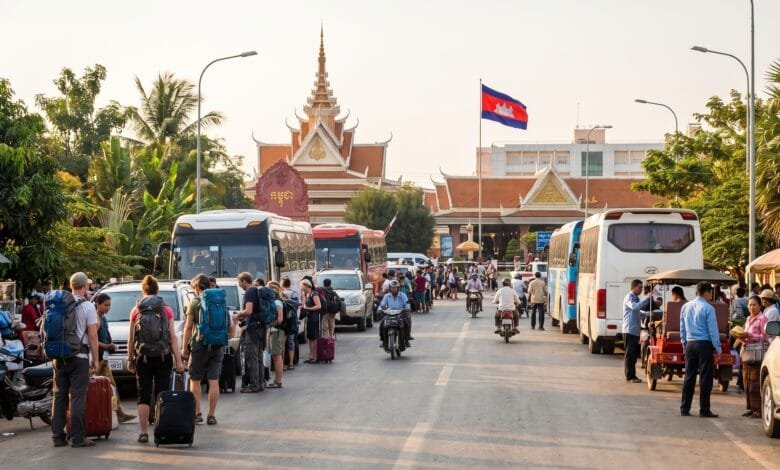
If you’re planning to travel overland into Cambodia, the first thing you need to know in 2026 is that the map has changed. Most crossings from Thailand are closed. Vietnam and Laos remain the practical options — but each comes with its own visa rules, transport quirks, and a few well-worn scams that catch unprepared travelers.
This guide explains which borders are open, how the visa process works, what to expect at the checkpoint, and how to avoid the classic overland mistakes that cost travelers time and money.
Quick Travel Information
| Information | Details |
|---|---|
| Open crossings (2026) | Vietnam: Bavet, Phnom Den, Prek Chak, and others. Laos: Tropaeng Kreal |
| Closed crossings | All Cambodia–Thailand land borders |
| Visa options | e-Visa (US$36, 30 days) or Visa on Arrival (US$30, 30 days) |
| e-Arrival card | Mandatory, free, submit within 7 days before arrival |
| Best for | Budget travelers, overland routes from Vietnam or Laos |
| Main warning | Thailand crossings closed; Poipet scams; bring clean USD cash |
| Official source | Royal Embassy of Cambodia border checkpoint list; tourismcambodia.org |
Which Cambodia Land Borders Are Actually Open?
Cambodia shares land borders with three countries: Thailand, Vietnam, and Laos. The situation as of late 2026 is straightforward — but not what most older travel guides describe.
Cambodia–Thailand Crossings (Currently Closed)
All land border crossings between Cambodia and Thailand are closed. This includes Poipet, Cham Yeam, O Smach, and the other main checkpoints along the Thai border.
The closure is due to ongoing armed conflict between Thai and Cambodian forces along the border region. The Australian government advises against travel within 50 kilometers of the Cambodia–Thailand border due to the risk of armed conflict, landmines, and explosive remnants of war.
If you were planning to cross from Thailand into Cambodia by land — from Bangkok to Siem Reap, for example — you will need to fly instead. Air arrivals at Siem Reap Angkor International Airport and Phnom Penh are operating normally.
Cambodia–Vietnam Crossings (Open)
Vietnam is currently the busiest overland route into Cambodia. Several checkpoints are open, but only one supports e-Visa entry for most travelers.
The main crossing is Bavet (on the Cambodia side) and Moc Bai (on the Vietnam side), located on the Phnom Penh–Ho Chi Minh City road. This is the busiest trade route between the two countries and the most practical option for most travelers.
Other Vietnam–Cambodia crossings that are open for exit but do not support e-Visa entry include: Kaoam Samnor (Kandal), Phnom Den (Takeo), Trapeang Phlong (Tboung Khmum), Trapeang Sre (Kratie), Oyadav (Ratanakiri), Prek Chak (Kampot), and Banteay Chakrei (Prey Veng).
If you plan to enter through one of these smaller checkpoints, you will need a visa on arrival or a visa from a Cambodian embassy. The e-Visa will not work.
Cambodia–Laos Crossing (Open)
The main Cambodia–Laos crossing is Tropaeng Kreal (also spelled Trapaing Kreal) in Stung Treng Province, on the Cambodian side, paired with Nong Nok Khiene on the Laos side.
This crossing supports e-Visa entry, which makes it a convenient option for travelers coming from southern Laos or the 4,000 Islands region.
It is a quieter crossing than Bavet. The border post operates during limited hours — typically 07:30–11:30 and 13:30–17:00 — so plan your arrival accordingly.
Visa Options for Land Border Entry
Most foreign travelers need a visa to enter Cambodia. There are two main options for land arrivals: the e-Visa and the visa on arrival.
e-Visa vs. Visa on Arrival
The tourist e-Visa is the smoothest option if your checkpoint supports it. You apply online at evisa.gov.kh, pay roughly US$36 (US$30 visa fee plus US$6 processing), and receive a PDF by email. It is valid for a single entry and a stay of up to 30 days.
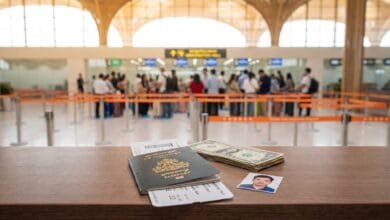
The visa on arrival costs US$30 and is available at the main land borders. You pay in cash — clean US dollar bills only — and you should bring a passport photo. Officers can process it without a photo for a small extra charge, but it is easier to just carry one.
Both options give you the same 30 days. The e-Visa costs a few dollars more but saves you the queue at the border. The visa on arrival is cheaper but requires you to fill out paperwork on the spot.
Which Checkpoints Accept the e-Visa?
This is where travelers get caught out. The e-Visa is accepted at international airports and the main land crossings, but not at every remote border post.
As of 2026, the land crossings that accept e-Visa entry are:
The other Vietnam checkpoints — Phnom Den, Prek Chak, Oyadav, and others — do not support e-Visa entry. If you plan to use one of those, you will need a visa on arrival or a visa obtained in advance from a Cambodian embassy.
Always check the official checkpoint list before you travel, because e-Visa acceptance can change.
What You Need to Bring
For either visa option, you need:
- A passport valid for at least six months beyond your arrival date
- At least one blank page in your passport
- A passport-style photo (digital for e-Visa, printed for visa on arrival)
- Clean US dollar bills for the visa fee (US$30 or US$36)
The e-Arrival card is separate from the visa and is mandatory. More on that below.
How the Crossing Works: Step by Step
The exact process varies by checkpoint, but the general flow is similar.
Leaving the Neighboring Country
First, you exit the country you are leaving. At Bavet/Moc Bai, for example, you will clear Vietnam immigration before crossing the border into Cambodia. At Tropaeng Kreal, you clear Laos immigration first.
Make sure you get an exit stamp. If you are on a bus, the driver or a helper will usually guide you through the process.
Entering Cambodia
After exiting the neighboring country, you walk or drive across the border to the Cambodian immigration post. This is where you present your passport, visa (or apply for visa on arrival), and e-Arrival QR code.
At Bavet, the process is relatively straightforward. At Poipet — when it was open — the process was more chaotic, with touts and “helpers” trying to steer travelers toward paid services. Poipet is currently closed, but the lesson applies to any busy border: you do not need to pay anyone to help you with immigration.
If you have an e-Visa, hand over the printed PDF along with your passport. If you are getting a visa on arrival, fill out the form, pay the fee in USD, and hand over your photo.
The e-Arrival Card
Cambodia replaced its paper arrival, health, and customs forms with a single digital submission called Cambodia e-Arrival (CeA). It is mandatory, it is free, and you submit it at arrival.gov.kh or through the official app.
Submit it within seven days before your arrival date — not earlier. You will get a QR code. Save a screenshot; border wi-fi is not guaranteed.
The e-Arrival system launched for air arrivals and has been extending across land checkpoints. Check the official site for current coverage — you may still be handed paper forms at some smaller land crossings.
Transport Across the Border
Most travelers cross the Cambodia–Vietnam or Cambodia–Laos border by bus. Here is what to expect.
Bus Companies That Actually Cross
For the Bavet/Moc Bai crossing, buses run between Phnom Penh and Ho Chi Minh City. The journey takes around six hours and costs roughly US$8–12, depending on the company and class of service.
For the Tropaeng Kreal crossing, buses run between Stung Treng and Pakse (Laos). The journey takes about four hours, with prices starting around US$19.
Companies like Virak Buntham and LANA Transportation operate on these routes. Not every bus company actually crosses the border — some will drop you at the border and leave you to find your own onward transport.
What Happens at the Border
On most cross-border buses, the driver or a helper will collect passports and handle immigration formalities on behalf of the passengers. This is common practice and usually works fine, but it means you may not see your passport stamped yourself.
If you are uncomfortable with this, you can ask to handle your own immigration. At Bavet, the process is walkable. At smaller crossings, it may be more difficult to navigate without the bus staff.
Getting From the Border to Your Destination
At Bavet, the Cambodian side has taxis and tuk-tuks waiting to take travelers to Phnom Penh or other destinations. At Tropaeng Kreal, onward transport is more limited — most travelers continue on the same bus to Stung Treng or Pakse.
If you are crossing independently, negotiate the fare before you get in the vehicle. At Bavet, a shared taxi to Phnom Penh should cost less than a private taxi.
Common Scams and How to Avoid Them
Overland border crossings in Cambodia have a reputation for scams. The situation has improved at some crossings, but a few classic tricks remain.
The “Free Government Bus” Scam
This was most common at Poipet (currently closed), but the pattern can appear elsewhere. After you clear immigration, someone — sometimes in a uniform — directs you to a “free government bus” or shuttle. The bus takes you to an out-of-town transport depot where you are pressured into buying an overpriced ticket or shared taxi.
The buses are not free, and they are not your only option. You have every right to decline and walk to the main road or arrange your own transport. You do not have to follow anyone.
Inflated Visa Fees
The official visa on arrival fee is US$30. Some “helpers” at the border will offer to arrange your visa for US$40, US$50, or more. This is not a faster or better service — it is the same visa at a marked-up price.
Pay the official fee directly at the immigration window. Do not hand your passport or money to anyone who approaches you offering visa assistance.
The Currency Exchange Trap
Currency exchange rates at land borders are poor. Moneychangers know you need local currency and will offer unfavorable rates. It is better to exchange a small amount if you need riel for immediate expenses, then use an ATM or bank in town for better rates.
US dollars are widely accepted in Cambodia, so you may not need riel at all for larger purchases. Riel is useful for small transactions like tuk-tuk fares and market snacks.
Money at the Border
Cambodia runs on a dual-currency system. US dollars are used for most transactions, while Cambodian riel is used for small change. When you pay in dollars, you will often get riel back as change.
At the border, you will need US dollars for your visa fee. Bring clean, unmarked bills. Torn, stained, or old bills may be refused.
There are ATMs in Bavet and other border towns, but they may not always be reliable. It is safer to arrive with enough cash for your visa, your onward transport, and a meal. Banks in border towns may not open until 10:00 and can run short on USD after weekends or holidays.
Safety and Practical Considerations
The security situation in Cambodia varies by region. The main concern for travelers in 2026 is the armed conflict along the Cambodia–Thailand border. All land crossings with Thailand are closed, and the Australian government advises against travel within 50 kilometers of that border.
For the Vietnam and Laos crossings, the situation is calm. Bavet is a busy trade route, and Tropaeng Kreal is a quiet provincial crossing. Both are functioning normally.
Standard travel precautions apply: keep your passport and valuables secure, avoid displaying large amounts of cash, and be cautious of anyone who approaches you offering unsolicited help at the border.
If something goes wrong, the U.S. Embassy in Phnom Penh can be reached at (+855) 23-728-000. Embassy staff can assist with lost passports, arrests, and other emergencies.
Tips for First-Time Overland Travelers
- Check the border status before you travel. The Thailand crossings are closed. Do not assume old information is still correct.
- Apply for your e-Visa in advance if your checkpoint supports it. Bavet and Tropaeng Kreal accept e-Visa. Other crossings may not.
- Bring clean US dollars. You need $30 for visa on arrival or $36 for e-Visa. Bring extra for transport and food.
- Submit your e-Arrival card within 7 days before arrival. Save the QR code on your phone.
- Do not accept “free” transport. Walk to the main road or arrange your own ride.
- Keep your passport in your sight. If you are uncomfortable with a bus company collecting passports, ask to handle your own immigration.
- Learn a few words of Khmer. “Sa-bai-dee” (hello) and “akun” (thank you) go a long way.
- Be patient. Border crossings can be slow. Allow extra time in your schedule.
Frequently Asked Questions
Can I cross from Thailand into Cambodia by land right now?
No. All Cambodia–Thailand land border crossings are closed due to armed conflict. You will need to fly into Cambodia instead.
Which land border is easiest to cross?
The Bavet/Moc Bai crossing from Vietnam is the busiest and most straightforward. The Tropaeng Kreal crossing from Laos is quieter but also manageable.
Can I use my Cambodia e-Visa at any land border?
No. The e-Visa is only accepted at select land crossings, including Bavet and Tropaeng Kreal. Other crossings require a visa on arrival or a visa from an embassy.
How much does a Cambodia visa cost at the border?
Visa on arrival costs US$30. The e-Visa costs about US$36. Bring clean US dollar bills.
Do I need the e-Arrival card if I’m crossing by land?
Yes. The e-Arrival card is mandatory for all arrivals, including land crossings. Submit it free at arrival.gov.kh within 7 days before your arrival.
Is it safe to cross the Cambodia–Vietnam border?
Yes. The Bavet/Moc Bai crossing is a busy trade route and is functioning normally. Take standard precautions with your belongings.
What is the “free government bus” scam?
It is a trick where touts direct travelers onto a bus that takes them to an out-of-town depot and pressures them into overpriced transport. Decline and walk to the main road instead.
Can I get a visa on arrival if I don’t have a passport photo?
Officers can process your visa without a photo for a small extra charge, but it is easier to bring one. For the e-Visa, you need a digital photo.
How long does the overland crossing take?
The border formalities themselves take 30–60 minutes at busy crossings. The full journey from Phnom Penh to Ho Chi Minh City by bus takes around six hours, including the border stop.
Do I need to exchange money at the border?
You need US dollars for the visa fee. You can exchange a small amount for riel if you want, but US dollars are widely accepted throughout Cambodia.
Conclusion
Crossing into Cambodia by land is completely doable in 2026 — as long as you know which borders are open and what to expect. The Thailand crossings are closed due to conflict, but Vietnam and Laos offer reliable overland routes.
The key things to remember are simple: apply for your e-Visa in advance if your checkpoint supports it, bring clean US dollars for the visa fee, submit your e-Arrival card before you travel, and decline any unsolicited “help” at the border. The scams are well-documented, but they are also avoidable once you know what they look like.
For travelers who do their homework, an overland crossing into Cambodia can be one of the most rewarding parts of a Southeast Asia trip. You see the landscape change, you meet fellow travelers on the bus, and you arrive in Cambodia with a story to tell.
Just double-check the border status before you go. Travel information changes — borders close, rules shift, and fees update. A few minutes of verification before your trip can save you hours of frustration at the checkpoint.