Kep Beach Guide: Cambodia’s Quiet Coastal Town, Crab Market & Rabbit Island
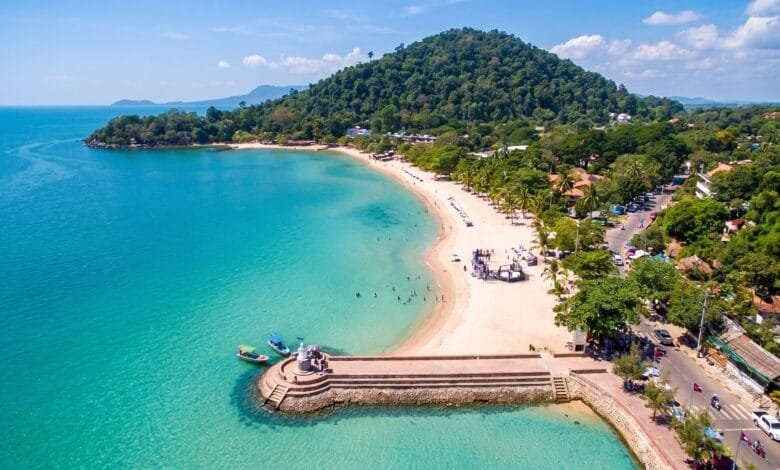
Kep is a small coastal town in southeastern Cambodia that once served as the country’s premier seaside resort during the French colonial period. Today, it offers a different kind of beach experience from Cambodia’s better-known island destinations. Kep Beach is a kilometer-long crescent of sand lined with palm trees and shaded picnic spots, backed by a road with seafood vendors and local stalls. It is not a large or dramatic beach, but it has a calm, unhurried character that appeals to travelers looking for a slower pace.
This guide explains where Kep Beach is, what to expect when you visit, how to get there, and what else there is to do in the surrounding area. It also covers the town’s famous crab market and the short boat trip to Koh Tonsay (Rabbit Island), which many travelers combine with a visit to Kep.
QUICK TRAVEL INFORMATION
Location: Kep Province, southeastern Cambodia, on the Gulf of Thailand coast
Province: Kep (Krong Kaeb)
Type: Coastal town with a public beach
Main Access Point: Kep is reached by road from Phnom Penh, Kampot, or Sihanoukville
How to Get There: Regular buses and minivans run from Phnom Penh (approximately 3–5 hours) and Kampot (approximately 30–45 minutes). Taxis are also available.
Best Time to Visit: The dry season, roughly November to March, generally offers the most comfortable conditions for beach time and island trips
Recommended Stay: 2–3 nights is a practical starting point for travelers who want to enjoy the beach, visit the crab market, and take a day trip to Rabbit Island
Main Activities: Relaxing on the beach, visiting the Crab Market, day trips to Koh Tonsay (Rabbit Island), hiking in Kep National Park
Accommodation: Guesthouses, boutique hotels, and resorts are available in Kep town and along the coast
Useful to Know: Kep Beach is busiest on weekends and public holidays with domestic visitors. Weekdays are often much quieter.
Where Is Kep Beach?
Kep Beach is located in Kep Province, a small coastal province in southeastern Cambodia, roughly 150 kilometers southwest of Phnom Penh and about 30 kilometers from Kampot. The beach sits near the tip of the Kep peninsula, along a coastal road that loops around the town and passes directly by the shore.
The beach is a single, kilometer-long crescent of sand. In recent years, it has been widened with sand transported from Otres Beach near Sihanoukville, and the shore now stretches roughly 50 meters wide in places. The water is generally calm and shallow, making it suitable for wading and swimming.
Behind the beach, the road is lined with dining platforms, seafood stalls, and local vendors. The Crab Market, Kep’s most famous food destination, is a short walk or tuk-tuk ride away.
What Is Kep Beach Like?
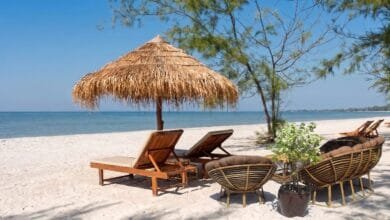
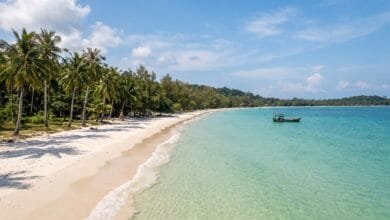
Kep Beach is not a long, sweeping stretch of coastline. It is a compact, well-maintained public beach that serves as the focal point of the town’s seafront. The sand is white and soft, and the beach is shaded in places by palm trees and concrete benches.
The atmosphere varies significantly depending on when you visit. On weekends and public holidays, the beach fills with Cambodian families, picnic groups, and children playing in the water. It can feel lively and crowded during these times. On weekdays, however, Kep Beach is often nearly deserted, and travelers who visit during the week frequently describe it as peaceful and relaxed.
The beach is open to the public at all hours. There are vendors renting deck chairs and inflatable rings, and local stalls sell fresh coconut juice and snacks. The water is calm and shallow — there is almost no surf — so it is better suited to wading and gentle swimming than to surfing or strong water sports.
Best Things to Do in Kep
Kep’s appeal lies in its variety of low-key activities. Most travelers spend their time between the beach, the Crab Market, and short trips to nearby attractions.
Relax on Kep Beach. The beach itself is the main draw. Rent a deck chair, swim in the calm water, or find a shaded spot under the palms. The beach is easy to walk along, and the coastal road is flat and pleasant for a stroll.
Visit the Kep Crab Market. The Crab Market (Phsar Kdam) is Kep’s signature experience. It is a working seafood market where local fisherwomen pull crab baskets directly from the sea. Vendors sell fresh blue crab, prawns, squid, and other seafood. You can buy crab and have it steamed or grilled on the spot, often seasoned with Kampot pepper. The market is located about 1.6 kilometers west of Kep Beach, near the town center.
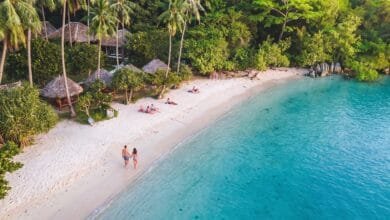
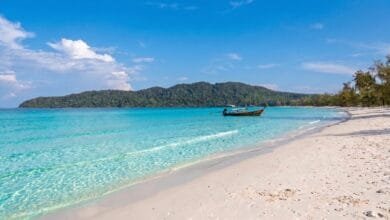
Take a boat to Koh Tonsay (Rabbit Island). Koh Tonsay is a small island just off the coast of Kep. Boats depart from Kep pier, near the Crab Market, and the journey takes roughly 20 to 30 minutes. The island has simple beaches and a laid-back atmosphere. It is a popular day trip from Kep, and some travelers choose to stay overnight in basic bungalows.
Hike in Kep National Park. Kep National Park occupies the interior of the Kep peninsula. It covers an area of approximately 11.52 square kilometers and was established in 1993. There is an 8-kilometer circuit trail that can be walked, cycled, or ridden by motorbike, beginning behind Veranda Natural Resort. The trail passes through forest and offers viewpoints over the coast and nearby islands. The park is Cambodia’s smallest national park.
See the Giant Crab Statue. A large crab statue stands along the coastal road past Kep Beach, a recognizable landmark and a popular photo stop.
Explore the abandoned villas. Kep was a fashionable resort town during the French colonial period, and the hillsides are dotted with the ruins of old villas. Many were destroyed or abandoned during the Khmer Rouge period and the subsequent civil war. Walking or riding through the area offers a glimpse into Kep’s layered history.
How to Get to Kep
Kep does not have its own airport. Travelers reach Kep by road from Phnom Penh, Kampot, or Sihanoukville.
From Phnom Penh: The road to Kep is paved and well signposted. Buses and minivans take approximately 3 to 5 hours, depending on traffic and stops. Prices vary by operator and departure point; check current fares when booking.
From Kampot: Kep is about 25 kilometers from Kampot, and the road is smooth and direct. The trip takes roughly 30 to 45 minutes by car, motorbike, or tuk-tuk. Many travelers base themselves in Kampot and visit Kep as a day trip.
From Sihanoukville: Minibuses connect Sihanoukville to Kep, usually departing in the morning. The journey takes around 2 hours.
From Siem Reap: There is no direct flight to Kep. Travelers typically fly or take a bus from Siem Reap to Phnom Penh first, then continue to Kep by road.
Once in Kep town, the beach is within a few minutes’ drive of most hotels and guesthouses. Motorbike rentals and tuk-tuks are available for getting around locally.
When Is the Best Time to Visit Kep?
The dry season, from roughly November to March, is generally considered the best time to visit Kep. During these months, the weather is warm and dry, and sea conditions are usually calmer, which is favorable for boat trips to Rabbit Island.
The hottest months are typically March and April, when temperatures can rise significantly. The rainy season runs from May to October, with higher humidity and more frequent rainfall. Seas can be rougher during the wet season, and boat services to Koh Tonsay may be affected by weather conditions.
Kep is a popular weekend destination for Cambodian travelers, especially during public holidays. If you prefer a quieter experience, visiting on a weekday is generally better.
How Long Should You Stay?
Two to three nights is a reasonable amount of time for most travelers. This allows for a day on the beach, a visit to the Crab Market, and a day trip to Koh Tonsay. Travelers who want to hike in Kep National Park or explore the area more thoroughly may prefer to stay longer.
Kep is also commonly combined with a stay in Kampot, which is about 30 minutes away by road. Many travelers spend a few nights in each town.
Where to Stay in Kep
Kep offers a range of accommodation options, from budget guesthouses to boutique hotels and resorts. Most accommodation is concentrated in Kep town and along the coastal road near the beach.
Guesthouses and smaller hotels are generally located close to the beach and the Crab Market, making it easy to walk or take a short tuk-tuk ride to the main attractions. Mid-range and higher-end resorts are often set slightly back from the beach, some with views over the coast or into the national park.
Because accommodation options and prices change, it is best to check current listings and reviews when planning your trip.
Food and Local Dining in Kep
Kep is known for its seafood, particularly crab. The Crab Market is the center of the local food scene. Vendors sell freshly caught blue crab, and nearby restaurants will cook your purchase — often steamed or fried with Kampot pepper, which is a local specialty.
Aside from crab, the market and surrounding restaurants offer prawns, squid, fish, and other seafood. There are also simple Khmer restaurants serving rice dishes, soups, and stir-fries. For travelers who want a break from seafood, a few Western-style options are available in town.
The food experience in Kep is straightforward and informal. Most dining is casual, and the focus is on freshness rather than elaborate presentation.
What Should Travelers Pack?
For a trip to Kep, pack light, breathable clothing suitable for warm, humid weather. A swimsuit, sunscreen, a hat, and sunglasses are essential for beach time. If you plan to hike in Kep National Park, bring comfortable walking shoes and insect repellent.
It is wise to carry cash in Cambodian riel or US dollars, as not all local vendors and small businesses accept card payments. A reusable water bottle is also useful; staying hydrated in the heat matters.
Travel Tips for First-Time Visitors
Cash is king. Many local businesses, market vendors, and tuk-tuk drivers prefer cash. US dollars are widely accepted, but you may receive change in Cambodian riel.
Weekdays are quieter. Kep Beach is significantly busier on weekends and public holidays. If you want a peaceful experience, plan your visit for a weekday.
Boat trips depend on weather. Services to Koh Tonsay operate subject to sea conditions. Check with the boat operators or your guesthouse on the day.
Respect the local pace. Kep is a small, laid-back town. Things move slowly, and that is part of its appeal. Plan for flexibility rather than a tightly packed schedule.
Sun protection matters. The Cambodian sun is strong year-round. Use sunscreen, reapply regularly, and take breaks in the shade during the hottest part of the day.
Responsible Beach and Island Travel
When visiting Kep Beach and Koh Tonsay, take your trash with you and avoid leaving plastic on the beach or in the water. Support local vendors and restaurants by buying food and drinks from them. If you visit Koh Tonsay, be mindful that it is a small island with limited infrastructure; follow any local guidance and respect the community that lives there.
Is Kep Beach Right for You?
Kep Beach suits travelers who value a quiet, low-key coastal experience over a busy resort scene. It is a good choice for couples, solo travelers, and families who want a relaxed base for exploring the area. The beach is calm and shallow, which makes it manageable for families with children.
Travelers looking for a long, lively beach with a strong nightlife scene may find Kep too quiet. The beach is relatively small and the town does not have a significant party atmosphere. Travelers seeking a more developed beach destination might prefer Sihanoukville or the islands of Koh Rong and Koh Rong Sanloem.
Kep works well as part of a broader Cambodia itinerary. It is often combined with Kampot, and it can be reached from Phnom Penh in a half-day of travel. It is also reasonably close to the Vietnamese border at Ha Tien, making it a possible first or last stop in Cambodia for travelers crossing overland.
Frequently Asked Questions
Is Kep Beach good for swimming?
The water is generally calm and shallow, making it suitable for wading and gentle swimming. There is little to no surf. Conditions can change, so check locally.
How do I get to Koh Tonsay from Kep?
Boats depart from Kep pier, near the Crab Market. The journey takes approximately 20 to 30 minutes. Tickets can be purchased at the pier or arranged through guesthouses. Schedules and prices vary, so confirm current details locally
What is the best time to visit Kep?
The dry season, roughly November to March, generally offers the most comfortable weather and calmer sea conditions for island trips
Is Kep Beach crowded?
Kep Beach is often busy on weekends and public holidays with domestic visitors. On weekdays, it is usually much quieter
Do I need to pay to access Kep Beach?
The beach itself is free to access. If you are driving a car or van on the coastal loop road, there is a small admission fee (approximately 2,500–5,000 Riel). Motorcycles and pedestrians enter for free
How long should I stay in Kep?
Two to three nights is a reasonable amount of time to enjoy the beach, visit the Crab Market, and take a day trip to Rabbit Island.
Can I visit Kep as a day trip from Kampot?
Yes. Kep is about 30 to 45 minutes from Kampot by road. Many travelers visit as a day trip, though staying overnight allows for a more relaxed experience.
Conclusion
Kep Beach is not Cambodia’s largest or most dramatic beach, but it offers something that many travelers value: a quiet, unhurried coastal experience with good food and easy access to a nearby island. The combination of a calm crescent of sand, the working Crab Market, and the short boat ride to Koh Tonsay gives Kep a distinct character that is different from the country’s island resorts.
Kep suits travelers who are willing to slow down, eat well, and explore at a relaxed pace. It works well as a two- or three-night stop on a longer Cambodia trip, especially when paired with nearby Kampot. For anyone curious about a side of Cambodia beyond the temples and the main beach destinations, Kep is worth considering.