What Neak Ta Spirit Beliefs Mean in Cambodian Culture
Walk down almost any street in Cambodia and you will notice them. Small wooden shrines, no bigger than a dollhouse, perched on posts outside homes, guesthouses, and shops. Tiny plates of fruit, glasses of water, and smoking incense sticks sit before them.
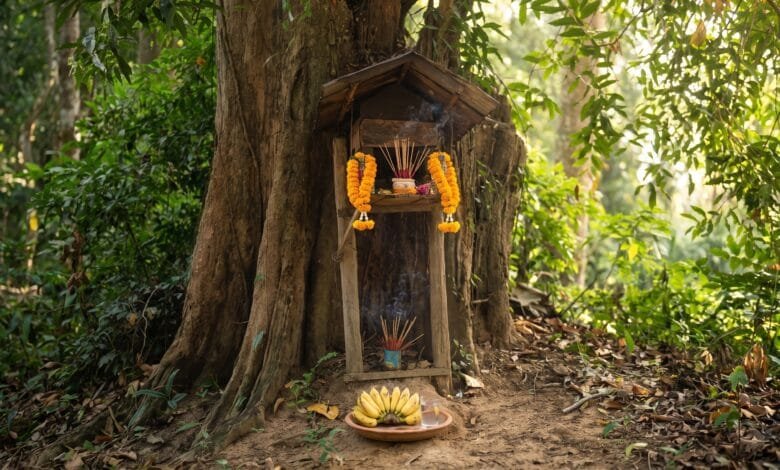
You might also spot larger shrines under ancient trees, or at crossroads in the countryside. Cambodians stop there. They bow their heads. They leave an offering.
These are shrines to the Neak Ta — guardian spirits of the land, the community, and the ancestors. Understanding who they are and why they matter opens a door into a part of Cambodian life that exists quietly alongside Buddhism.
What Is Neak Ta?
A neak ta (Khmer: អ្នកតា) is a guardian spirit. The word translates roughly as “grandfather” or “ancient one,” a respectful term for a powerful elder. These spirits are believed to watch over specific places — a village, a rice field, a stretch of forest, a river, even a crossroads.
Neak Ta can be male or female, and they often operate as a pair. Some are ancestral spirits — the founding figures of a community. Others are spirits of the land itself, predating human memory.
Think of them less as gods in the Western sense and more as local guardians who have always been there. They are not prayed to in the same way as the Buddha. Instead, they are acknowledged, respected, and given offerings — a relationship built on reciprocity.
Why Does It Matter in Khmer Culture?
Neak Ta beliefs are older than Buddhism in Cambodia. They are part of the animist foundation that existed before Hinduism and Buddhism arrived, and they have survived alongside those religions for centuries.
For many Cambodians, the spiritual world is not separate from daily life. Spirits inhabit trees, rivers, and land. This is not considered superstition in opposition to Buddhism — it is a parallel layer of understanding about how the world works.
When Buddhism was nearly destroyed during the Khmer Rouge period, many Cambodians turned back to Neak Ta traditions to fill the void left by the loss of monks and Buddhist teachers. Today, Neak Ta beliefs remain a living part of Khmer culture, especially in rural communities.
How Is the Tradition Practiced?
Neak Ta are honored through simple, consistent acts. A family might light incense at a household shrine each morning. A farmer might leave fruit at a field shrine before planting season.
Offerings typically include incense, fruit, food, soft drinks, and sometimes alcohol. The spirit is invited to partake. The relationship is maintained through regular attention — not grand gestures, but steady respect.
Larger rituals happen at key moments. The He Neak Ta ceremony, for example, is held in some villages before the monsoon rains. Villagers dress in traditional clothing, paint their faces, and process to the guardian spirit’s shrine. They offer food and pray for rain, prosperity, and protection from disease.
Spirit possession also plays a role in some traditions. During certain ceremonies, mediums may enter trance states to allow the Neak Ta to speak directly to the community. This is considered a way for the spirits to communicate guidance and healing.
What Does a Visitor See in Cambodia?
You will see Neak Ta shrines everywhere once you know what to look for. Small spirit houses outside homes and businesses are the most visible. These are often for the household spirit, called tevada, a related guardian of the family and property.
Larger Neak Ta shrines appear under old trees, at the edge of rice fields, and at crossroads. You might see a simple stone, a wooden post, or a small structure with garlands and incense.
Some of the most famous Neak Ta are at well-known sites. The Yeay Tep Shrine in Siem Reap, now located within the Royal Residence grounds, is highly venerated. Locals and visitors come to pray for health, success, and protection.
At Wat Phnom in Phnom Penh, a Neak Ta called Preah Chao has been worshipped for centuries. Over time, Chinese deities and practices have blended into the site, creating a unique mix of Khmer and Chinese traditions.
What Should Foreign Visitors Know?
The most important thing is simple respect. These are active places of worship, not tourist attractions. If you approach a shrine, do so quietly. Do not touch offerings or statues unless invited. If you want to take photos of people praying, ask first — or better yet, don’t.
If you wish to participate, you may light incense or leave a small offering. Incense sticks can be purchased at many shrines or nearby stalls. But do not feel obligated. Observing respectfully from a distance is perfectly acceptable.
Dress modestly if you plan to visit a shrine. Cover your shoulders and knees. Remove your shoes if you enter a shrine enclosure or a temple building.
One important cultural note: Neak Ta are believed to reward respect and punish disrespect. This is not a threat to visitors — it is simply a reminder that these are sacred spaces with real meaning to the people who maintain them.
How Has the Tradition Changed?
Neak Ta beliefs have proven remarkably resilient. They survived the Angkorian period, the arrival of Buddhism, colonialism, and the Khmer Rouge regime. But they are not frozen in time.
In modern Cambodia, Neak Ta traditions are adapting. Some communities have revived ancient ceremonies, like the communal fishing rite at Angkor, where the catch is offered to monks and the Neak Ta are honored through merit-making.
At the same time, modernization brings challenges. Land concessions and large development projects sometimes displace communities and their shrines. Some Neak Ta have been invoked in protests against dams and other projects that disrupt local ecologies.
There is also the influence of wealth and urbanization. At Wat Phnom, a Khmer Neak Ta has gradually seen its identity shift toward Chinese worship as economic and cultural influences change the community around it. These changes raise questions about what it means to preserve tradition in a rapidly changing country.
Frequently Asked Questions
Do I need to make an offering at a Neak Ta shrine?
No. Respectful observation is enough. If you wish to participate, you can light incense or leave a small fruit offering. But it is not expected of visitors.
Can I take photos of Neak Ta shrines?
You can photograph shrines from a respectful distance, especially if no one is actively worshipping. Avoid photographing people while they pray without asking permission first. Do not touch the shrine or its offerings while taking photos.
Is Neak Ta the same as Buddhism?
No. Neak Ta beliefs are animist and predate Buddhism in Cambodia. They coexist with Buddhism in most communities. Many Cambodians practice both — honoring Neak Ta for local, earthly concerns while following Buddhist teachings for spiritual development.
Are Neak Ta dangerous or evil spirits?
No. Neak Ta are generally seen as benevolent guardian spirits. They protect the community when they are respected. The idea that they punish disrespect is not about evil — it is about maintaining a proper relationship with the spiritual world.
Where can I see Neak Ta ceremonies?
Some ceremonies are large public events, like the He Neak Ta ritual held in villages before the monsoon. Others are quiet daily practices. The Yeay Tep Shrine in Siem Reap and Wat Phnom in Phnom Penh are accessible places to observe Neak Ta veneration.
Do younger Cambodians still believe in Neak Ta?
Yes, in many communities. Surveys and ethnographic research show that Neak Ta beliefs remain widespread, especially in rural areas. Young people participate in family and village rituals, though urban youth may relate to these traditions differently than their grandparents.
Conclusion
Neak Ta spirit beliefs reveal something essential about Cambodian culture: the deep connection between people, land, and the unseen world. These guardian spirits are not relics of a distant past. They are part of a living relationship that Cambodians maintain every day — through a stick of incense, a bowl of rice, a quiet prayer under a tree.
For visitors, understanding Neak Ta is a way to see beyond the surface of Cambodia. It explains the small shrines you pass on the street. It gives meaning to the offerings you see at crossroads and rice fields. And it offers a window into a spiritual worldview that has survived centuries of change.
You don’t need to believe in Neak Ta to appreciate what they mean. You only need to approach them with curiosity and respect. In doing so, you honor the people who hold these traditions — and you make your own journey through Cambodia richer and more meaningful.