Kun Lbokator: The Cambodian Martial Art That Teaches Peace, Not Violence
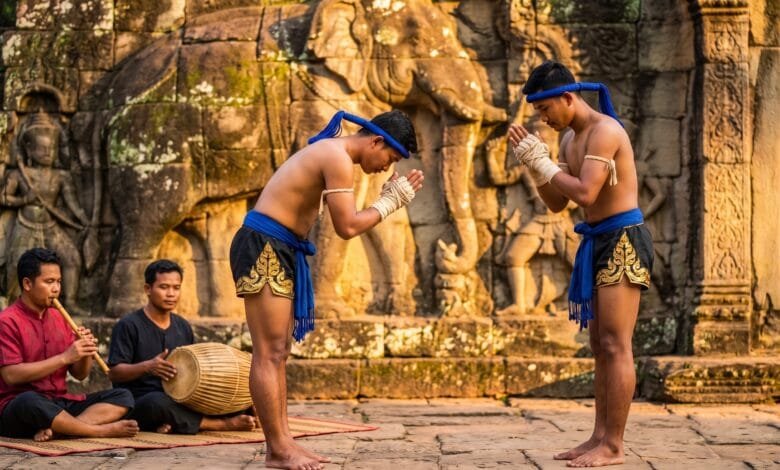
Imagine standing at the Terrace of the Elephants in Angkor Archaeological Park on a Friday afternoon. The sun is golden, and the ancient stone carvings behind you depict warriors in motion. Suddenly, drums and traditional pipes begin to play. Fighters in blue krama sashes step forward, their movements sharp and deliberate. But before they engage, they bow. They dance. They respect each other.
This is Kun Lbokator—and it is unlike any martial art you may have seen before.
For travelers from the United States and beyond, understanding Kun Lbokator opens a door into Khmer values of discipline, community, and peace. It is not just a fighting style. It is a cultural tradition that teaches people how to protect others, respect nature, and live with honor.
What Is Kun Lbokator?
Kun Lbokator is Cambodia’s traditional martial art. UNESCO describes it as a martial art dating back to the first century that aims to develop the mental and physical strength and discipline of its practitioners through self-defence techniques and a philosophy of non-violence.
The name itself carries meaning. “Kun” refers to the martial art of fighting, leaping, and confronting opponents, developed by warriors of the ancient Khmer Empire. “Lbokator” refers to all combat techniques involving the half-kneeling position.
But here is what makes it different from what you might expect: Kun Lbokator is not just about fighting. The training is also about mental discipline—how to respect nature and behave with decorum in society. Masters lecture their apprentices about their roles and responsibilities so that, once they have mastered the necessary skills, they can protect vulnerable communities and the natural environment and stand up for justice and peace.
Kun Lbokator is sometimes confused with Muay Thai, but they are distinct martial arts. Kun Lbokator includes weapons training, ground techniques, and animal-inspired movements such as bird, tiger, and horse. It also incorporates dance, music, natural medicine, sacred objects, and amulets as essential elements of practice.
Why Does It Matter in Khmer Culture?
In Khmer culture, Kun Lbokator is more than a sport or a self-defence system. It is a living expression of social, cultural, and religious values.
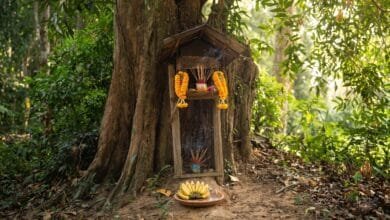
UNESCO states that Kun Lbokator is an embodiment of the country’s social, cultural, and religious values and is widely practiced among Cambodians regardless of age, gender, educational background, or status. It is performed as part of ritual offerings to local deities (Neak Ta) and at festive events. A number of bas-reliefs at Angkor temples depict martial arts performances during festivals or social gatherings, connecting the tradition to Cambodia’s ancient heritage.
The non-violence philosophy is not a contradiction of the fighting techniques. Instead, the combat skills exist to serve a protective purpose. As UNESCO explains, masters teach apprentices that once they have mastered the necessary skills, they can protect vulnerable communities and the natural environment and stand up for justice and peace. The training encourages individuals to develop self-confidence and pride in this centuries-old martial art.
Masters serve as mediators between apprentices and guardian spirits, introducing new apprentices to them and the surrounding nature. In return, practitioners are required to show respect to others and take a pledge to become good citizens.
How Is the Tradition Practiced?
Kun Lbokator training follows a structured path. Practitioners first train and master striking and defense techniques relying on their bare arms and legs. Only once a student can demonstrate proficiency is weapons training introduced.
Training involves disciplined routines with philosophical teachings and respect-based rituals. Practitioners wear traditional blue krama and sashes indicating level of skill. The masters, who have fully apprehended the history, knowledge, techniques, and skills through many years of practice—at least five years—transmit their knowledge to new generations.
Today, a few masters have established training schools in their homes where training spaces are secured. Training times are flexible to the availability of apprentices, who are generally students at local public schools. The Cambodia Kunbokator Federation, founded in 2004, plays an important role in facilitating trainings, workshops, and seminars at the national level and documenting Kun Lbokator techniques and skills.
Another essential aspect of Kun Lbokator is that it is practiced with an ensemble of elements including dance, music, natural medicine, sacred objects and/or amulets, tattoos, and weapons. This holistic approach means the martial art is inseparable from other Khmer cultural traditions.
What Does a Visitor See in Cambodia?
If you visit Cambodia, you may have the chance to see Kun Lbokator performances. Free weekly shows are held every Friday from 4:30pm to 5:30pm at the Terrace of the Elephants in the Angkor Archaeological Park in Siem Reap. Admission is free, and the location is symbolic—it allows martial artists to bring movements associated with Cambodia’s ancient carvings to life within the Angkor complex.
What will you see? The battle is set to live music with traditional pipes and percussion. Combatants often dance while waiting to launch their next attack. You will notice ostentatiously good sportsmanship—contestants hugging before and after rounds. As well as punches and kicks, the style deploys elbows and knees, locks and grapples.
The performers wear traditional clothing, including gilded shorts, arm ties, and headbands. The atmosphere is energetic but respectful. This is not a violent spectacle. It is a cultural demonstration.
Kun Lbokator is also performed at other festive events and as part of ritual offerings to local deities. You may encounter performances during Khmer New Year or other celebrations. The performances are often accompanied by traditional music and may include weapons demonstrations with staffs and large blades.
What Should Foreign Visitors Know?
When watching a Kun Lbokator performance, remember that you are observing a cultural tradition that carries deep meaning for Cambodians.
The performers are not simply athletes. They are practitioners of an art that teaches discipline, respect, and non-violence. The rituals and social practices observed in Kun Lbokator require that the practitioner possesses knowledge about nature and the universe. This spiritual dimension is central to the tradition.
If you are taking photos or videos, do so respectfully. The Cambodia Tourism Board encourages visitors to capture the moments, but be mindful that these performances are more than entertainment. They are living heritage.
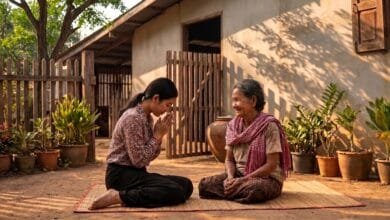
If you have the opportunity to visit a training school or watch a practice session, remember that masters are highly respected figures. In Khmer culture, showing respect to teachers and elders is important. You may see apprentices making offerings of traditional tokens—including white cloth, betel nut, and money—to their masters and spiritual guardians. This is a sacred ritual, not a performance for tourists.
The non-violence philosophy of Kun Lbokator is not just rhetoric. It is embedded in the training. If you are a martial arts practitioner yourself, you may find that Kun Lbokator’s emphasis on protection, community, and spiritual discipline offers a different perspective from combat sports you may know.
How Has the Tradition Changed?
Kun Lbokator nearly disappeared in the 20th century. During the Khmer Rouge regime in the 1970s, practitioners were targeted because the regime saw organized and trained fighters as a threat. Many masters were killed or forced to hide their practice.
San Kim Sean, widely known as the “Father of Modern Bokator,” survived the Khmer Rouge era and returned to Cambodia with a mission: to seek out surviving masters and codify ancestral techniques before they vanished forever. He founded the Cambodia Bokator Federation and the Bokator Academy. His greatest triumph was the inscription of Kun Lbokator on the UNESCO Intangible Cultural Heritage list in 2022.
Today, Kun Lbokator is experiencing a revival. It was included in the Inventory of Intangible Cultural Heritage of Cambodia in 2017. There are efforts to include it in the 2028 ASEAN University Games and the 2031 Asian Youth Games. The Cambodian government has integrated several Khmer martial arts, including Kun Bokator, into the military. Public performances and cultural exchanges, such as joint demonstrations with Chinese Shaolin martial arts, are raising its international profile.
Kun Lbokator is also adapting for modern audiences while maintaining its traditional values. The revival has been made possible “due to the unity, spirit, physical strength and national pride that is with us all,” according to San Kim Sean.
Frequently Asked Questions
Is Kun Lbokator the same as Muay Thai?
No. While both are Southeast Asian martial arts with some similar striking techniques, they are distinct. Kun Lbokator includes weapons training, ground techniques, and animal-inspired movements that differ from Muay Thai. Kun Lbokator also incorporates spiritual rituals, dance, and music as essential elements.
Can I watch Kun Lbokator performances in Cambodia?
Can foreigners learn Kun Lbokator?
Yes, some training schools accept foreign students. The Cambodia Kunbokator Federation facilitates training programs. However, you should approach training with respect for the traditions and rituals involved.
Why does a martial art teach non-violence?
What is the blue krama worn by practitioners?
Conclusion
Kun Lbokator is a paradox that makes perfect sense once you understand it. It is a martial art that teaches non-violence. It is a fighting system designed to protect, not to attack. It is a tradition that has survived centuries, nearly disappeared, and is now experiencing a remarkable revival.
For travelers to Cambodia, seeing Kun Lbokator is more than watching a performance. It is an opportunity to witness Khmer values in action—discipline, respect for elders, spiritual connection, and community responsibility. When you watch fighters bow to each other, dance before engaging, and embrace after competing, you are seeing a culture that values harmony even in the context of combat.
Understanding Kun Lbokator can make your visit to Cambodia more meaningful. It connects the ancient stone carvings at Angkor to living traditions practiced today. It reveals that Khmer culture is not just something in museums and temples—it is alive, evolving, and being passed down to new generations.
So when you see Kun Lbokator, don’t just watch the fighters. Watch the philosophy. Watch the respect. Watch a tradition that teaches peace through strength.