Pork with Taro Root Soup
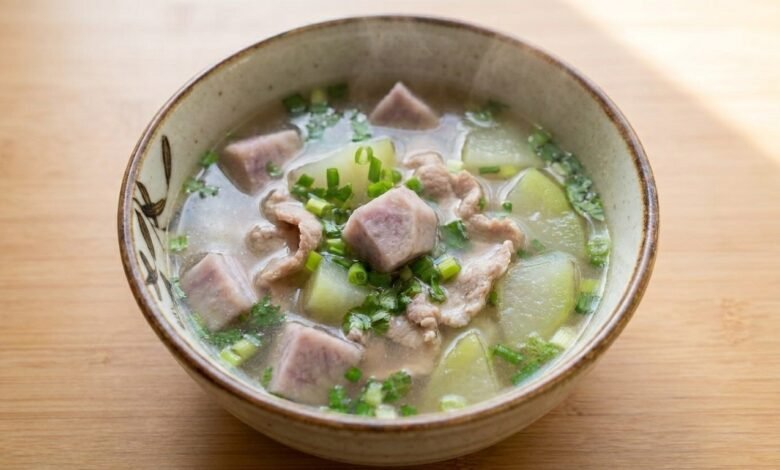
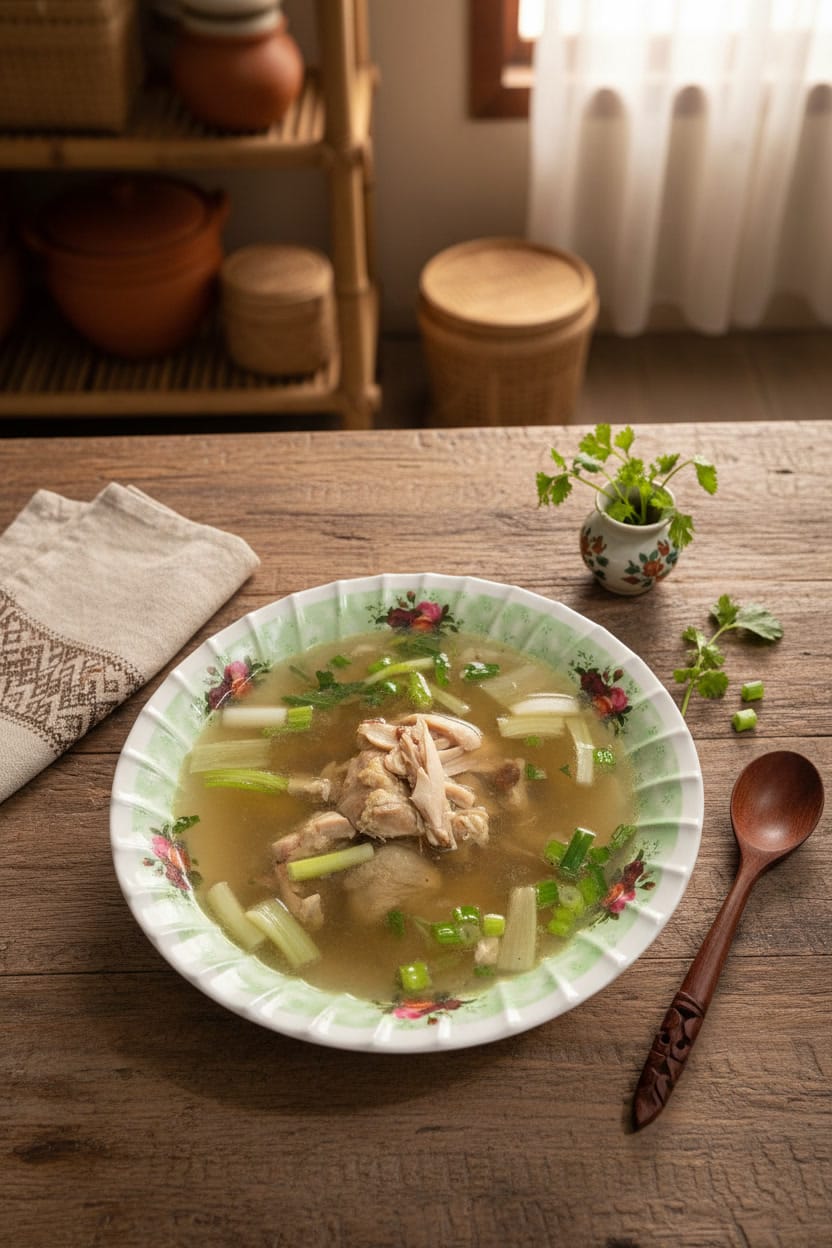
Some Cambodian soups are loud with lemongrass and chili. This one is not. Pork with Taro Root Soup, known in Khmer Krom kitchens as salor trao sach chrouk, is a quiet, country-style soup built on a clear broth, tender slices of pork, and starchy taro root that softens into the liquid. Chayote squash adds a gentle sweetness, while a handful of rice paddy herb goes in at the very end to wake everything up. It is the kind of pot that simmers without much fuss and lands on the table with steamed rice.
The ingredients are simple, but the texture is what makes it memorable. Taro root gives the broth a soft, slightly creamy body without any cream or thickener. The pork stays lean and tender, and the chayote keeps the bowl from feeling heavy. If you have never cooked with taro before, this soup is a forgiving place to start. You will just need to peel it carefully and let the pot do the rest.
What You Need
The backbone of this soup is taro root. Look for firm, heavy roots with dry skin and no soft spots. Once peeled and cubed, taro releases starch into the water, which is why the broth turns gently cloudy and satisfying. Chayote squash, sometimes called a vegetable pear, stays firm enough to hold its shape and brings a mild, clean sweetness. Rice paddy herb, also sold as Vietnamese coriander or rau ram, is the finishing herb. Its citrusy, cilantro-like aroma is strongest when added raw at the end, so keep it aside until the pot is off the heat.
You will also need thin-sliced pork, fish sauce, a little sugar, salt, and black pepper. Green onion goes in with the herb for a fresh, mild onion note. The full quantities are in the recipe card below.
Equipment
Soup pot: To bring the water to a boil and simmer the pork, taro, and chayote until tender.
Chef’s knife: To slice the pork thinly and cut the taro and chayote into bite-size cubes.
Cutting board: To prepare the pork and vegetables safely and keep the work area organized.
Vegetable peeler: To remove the thick skin from the taro root and the chayote squash before cutting.
Measuring cup: To measure the water for the broth.
Measuring spoons: To measure the fish sauce, sugar, salt, and black pepper.
Wooden spoon: To stir the ingredients and occasionally skim the surface of the broth.
Ladle: To transfer the finished soup and broth into serving bowls.
How to Make Pork with Taro Root Soup
Step 1: Bring the water to a boil
Pour 4 cups of water into a soup pot and set it over medium-high heat. Let the water come to a rolling boil. Starting with boiling water keeps the cooking simple and helps the pork and taro begin softening right away.
Step 2: Add the pork and taro
Add the thin-sliced pork and the cubed taro root to the boiling water. Stir once to separate the pork slices, then let the pot return to a gentle boil. Cook until the pork is tender and the taro is beginning to soften. You will see some foam rise to the surface as the pork cooks; use a spoon to skim it away so the broth stays clearer.
Step 3: Add the chayote squash
Add the cubed chayote squash to the pot. Continue cooking until the squash is tender but not falling apart. The taro should be soft enough to yield when pressed, and the pork should be cooked through. Skim the surface occasionally if more foam appears.
Step 4: Season the broth
Stir in the fish sauce, sugar, salt, and a dash of black pepper. Taste the broth and adjust only if needed. The fish sauce brings salty depth, the sugar rounds the edges, and the black pepper adds a warm, gentle bite. Keep the seasoning light so the natural sweetness of the taro and chayote stays visible.
Step 5: Finish with fresh herbs
Turn off the heat. Scatter the chopped green onion and fresh rice paddy herb over the top. Let the residual heat soften the herbs for a moment, then ladle the soup into bowls and serve hot.
Cooking Tips
Peel taro with care. Raw taro contains calcium oxalate crystals that can irritate skin. Wear gloves or hold the root with a paper towel while peeling, and rinse the peeled cubes well before adding them to the pot.
Skim the broth for clarity. The recipe asks you to remove the bubbles that form on top. This small step keeps the soup from turning cloudy and gives it a cleaner, more appetizing look.
Check pork doneness. Thin-sliced pork cooks quickly, but if you want to be certain, a digital food thermometer should read 145°F (63°C) for whole cuts of pork, followed by a three-minute rest, according to the USDA Food Safety and Inspection Service. In a boiling soup, the pork will continue cooking as it simmers, so avoid overcooking it.
Add the herbs off the heat. Rice paddy herb is delicate. Stirring it into a boiling pot dulls its fragrance. Add it after you turn off the burner and let the steam do the work.
How to Serve
Serve this soup hot with steamed jasmine rice on the side. The rice soaks up the savory broth, and the mild soup balances the rice nicely. For a fuller Cambodian meal, pair it with a simple stir-fry or a plate of fresh vegetables. The soup is also light enough to serve on its own as a comforting lunch or a gentle dinner.
If you enjoy pork-based Cambodian soups, our White Yam with Pork Soup is another quiet, home-style bowl built on a starchy root vegetable. And if taro is what brought you here, our Shrimp and Taro Root Soup shows how the same ingredient behaves with seafood instead of pork. You can find more comforting bowls in our Cambodian Soups & Stews collection.
Frequently Asked Questions
What does taro root taste like?
Taro has a mild, starchy flavor that sits somewhere between a potato and a chestnut. In this soup, it absorbs the savory broth and becomes soft and creamy, which is why it gives the soup body without making it heavy. The USDA FoodData Central lists taro as a source of carbohydrates and fiber, which helps explain its filling texture.
Can I prepare the taro ahead of time?
You can peel and cube taro a few hours ahead, but keep it submerged in cold water so it does not darken. Pat it dry before adding it to the boiling broth.
Is this soup gluten-free?
The recipe contains no wheat, but fish sauce brands can vary. Check the label on your fish sauce if you need a confirmed gluten-free dish. The soup is dairy-free as written.
What is rice paddy herb, and can I substitute it?
Rice paddy herb is a Southeast Asian herb with a citrusy, cilantro-like aroma. It is also called Vietnamese coriander or rau ram. If you cannot find it, a small handful of fresh cilantro or Thai basil can stand in as a finishing herb, though the flavor will be different. The UC Agriculture and Natural Resources describes it as an herb used widely in Southeast Asian soups and salads.
Final Thoughts
Pork with Taro Root Soup is a good reminder that a short ingredient list can still produce a bowl with real depth. The taro does the quiet work of thickening the broth, the pork keeps it savory, and the rice paddy herb lifts the whole pot at the last second. It is simple food, but it is not plain. Make it when you want something warm and steady, and serve it with rice so every spoonful of broth has somewhere to go.
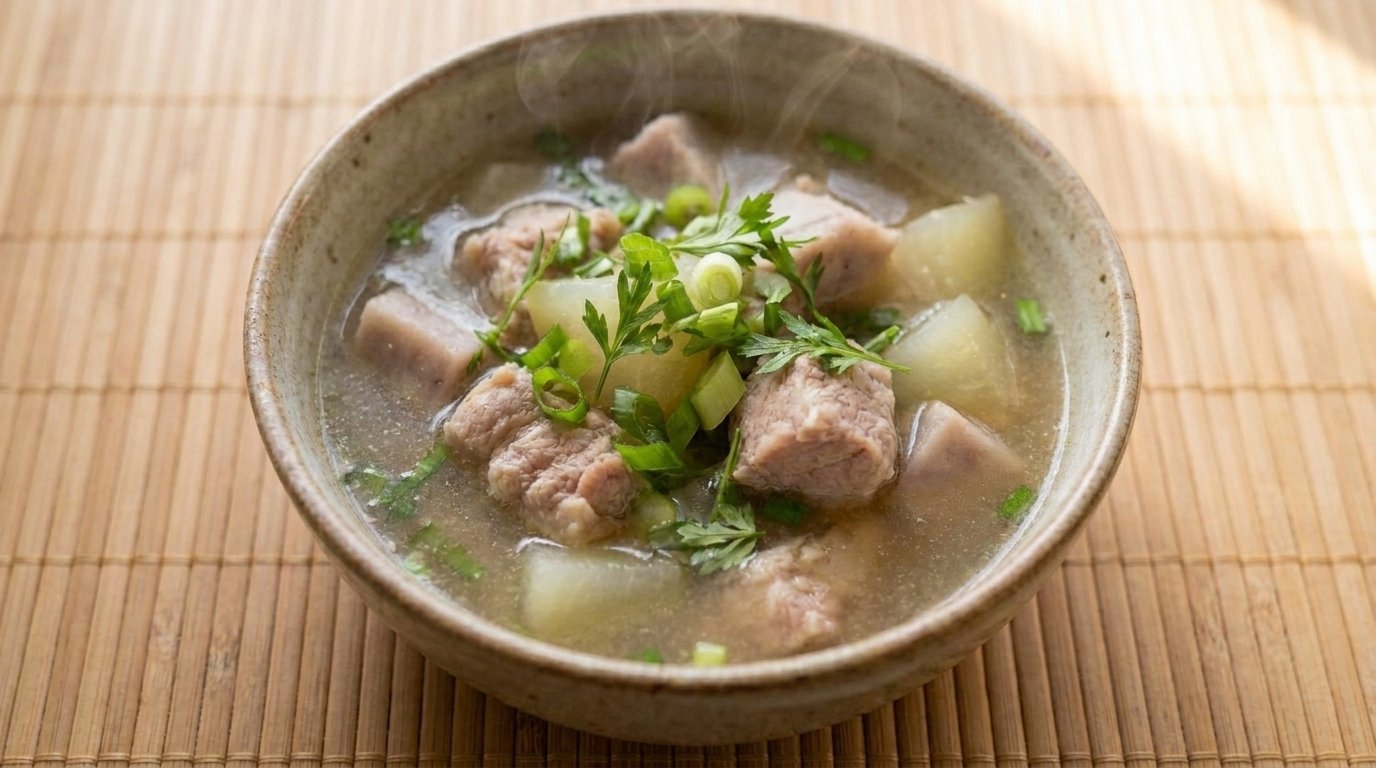
Pork with Taro Root Soup
4
servings15
minutes30
minutes231
45
minutesThis Khmer Krom country-style soup simmers thin-sliced pork with starchy taro root and mild chayote squash in a light, savory broth. Fish sauce and a touch of sugar season the pot, while chopped green onion and rice paddy herb go in at the end for a fresh, citrusy lift. Serve it hot with steamed jasmine rice.
Ingredients
4 cups water
1/2 lb (255 gram) of pork meat, slice thin
1 lb (450 gram) of taro root, peeled and cut bite sizes cubes
1 chayote squash, peeled, seeded and cut bite sizes cubes
1 tablespoon fish sauce
1/2 tablespoon sugar
1/4 teaspoon salt
A dash of black pepper
2 stalks green onion, chopped
1/2 cup fresh rice paddy herb, chopped
Directions
- Cook water in a soup pot till water bubbling.
- Add pork meat and taro root to boiling water, stirs, cook till meat tender.
- Add squash and cook till squash tender, occasionally removes bubbles that form on top of the stock to prevent cloudy soup.
- Seasoning with fish sauce, sugar, salt, and black pepper.
- Top with green onion and rice paddy herb.
Equipment
 Large Soup PotCheck product details

 Cutting boardCheck product details





Recipe Video
Nutrition Facts
- Serving Size: 1 g
- Total number of serves: 4
- Calories: 231kcal
- Fat: 2.1g
- Saturated Fat: 0.4g
- Cholesterol: 41mg
- Sodium: 687mg
- Potassium: 1039mg
- Carbohydrates: 36.6g
- Net Carbs: 30.4g
- Fiber: 6.2g
- Sugar: 2.8g
- Protein: 16.8g
- Vitamin A: 8.3mcg
- Vitamin C: 9.1mg
- Calcium: 76mg
- Iron: 1mg
- Vitamin E: 3.1mg
- Vitamin K: 15.2mcg
- Thiamin: 0.2mg
- Riboflavin: 0.1mg
- Niacin: 7.7mg
- Vitamin B6: 0.8mg
- Vitamin B12: 0.2mcg
- Folate: 70.5mcg
- Pantothenic Acid: 1.4mg
- Phosphorus: 258mg
- Magnesium: 73mg
- Zinc: 1mg
- Selenium: 25.3mcg
- Copper: 0.3mg
- Manganese: 0.6mg
Did you make this recipe?
Tag @cambodiarecipe on Instagram and hashtag it
Like this recipe?
Follow us @cambodiarecipe on Pinterest
Did you make this recipe?
Follow us on Facebook