Tonlé Sap Floating Fish Farms: From the Great Lake to the Cambodian Table
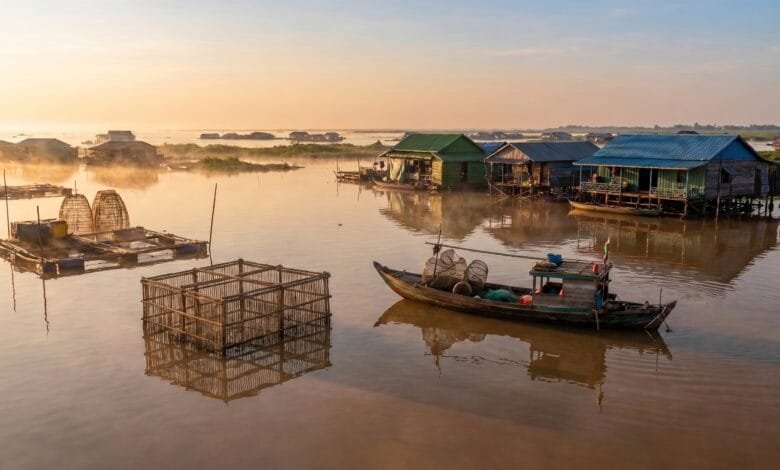
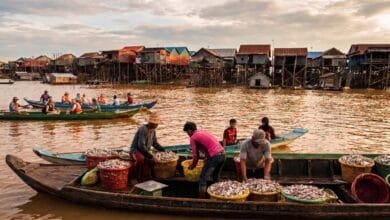
From the deck of a wooden boat, the floating village of Kampong Khleang emerges from the mist — hundreds of stilted houses, a floating school, a pagoda that rises and falls with the water. Below the surface, in bamboo cages tethered to the houses, thousands of fish are being raised to become tomorrow’s dinner.
This is the world of Tonlé Sap floating fish farms — a remarkable food production system that feeds millions of Cambodians and sustains one of the most unique communities on Earth.
Quick Facts
Where This Story Begins
Tonlé Sap — the “Great Lake” — is the beating heart of Cambodia. It is Southeast Asia’s largest freshwater lake and one of the most productive inland fisheries on the planet.
What makes Tonlé Sap so special is its flood pulse system. Every year, during the wet season (May–October), the Mekong River swells and pushes water back up the Tonlé Sap River, reversing its flow. The lake expands from roughly 2,500 square kilometres to as much as 18,000 square kilometres. When the water retreats months later, it leaves behind a landscape teeming with fish.
This annual rhythm has shaped life on the lake for generations. Entire communities — homes, schools, markets, even pagodas — float on the water, rising and falling with the lake’s seasonal changes. Boats are the only form of transport.
And at the heart of this floating world are the Tonlé Sap floating fish farms.
What Are Tonlé Sap Floating Fish Farms?
Tonlé Sap floating fish farms are aquaculture operations where fish are raised in bamboo cages or wooden pens that float on the lake’s surface. These cages are typically tethered to floating houses or stilted structures, allowing farmers to live and work directly above their fish.
The practice is not new. Fishers on Tonlé Sap have long stored surplus catch in bamboo pens or floating cages, keeping fish alive by feeding them. Over time, this evolved into a dedicated aquaculture system. Today, Cambodia has 4,942 fish cages nationwide, with approximately 43% located on the Tonlé Sap Great Lake. Over 70% of Cambodia’s freshwater aquaculture production comes from floating cage culture.
The cages vary in size — from 26 cubic metres to as large as 3,000 cubic metres. The most commonly raised species are catfish (Pangasius) and silver barb, which are well-suited to cage culture and ideal for smoked fish production. Other species include snakehead and Clarias catfish.
Meet the Farmers and Producers
Life on a floating fish farm is unlike any other farming experience. Families live on the water year-round, in floating houses that rise and fall with the lake. Men, women, and children all play a role in the daily work.
In the community of Toul Neang Sav Plov Loung in Kampong Thom province’s Kampong Svay district, 13 floating fish farms were established in June 2024 with support from NatureLife Cambodia and the Critical Ecosystem Partnership Fund (CEPF). Ten more farms are being added, supporting additional fishing families.
Community members contribute 30% of the total costs as part of a co-financing strategy that ensures their active involvement and commitment. They receive fish stock, feed, and extensive aquaculture training.
Perhaps most remarkable is the women-led enterprise that has emerged from this initiative. A group of 13 households launched a fish-processing business under the brand “Tonle Fish” , producing smoked fish for local and Phnom Penh markets. Over 70% of its members and leaders are women. The enterprise reinvests 5% of its profits into local conservation efforts.
In Kampong Khleang, over 85% of nearly 1,800 families depend on traditional fishing. Generations have maintained skills for large-scale fish processing, producing prahok (fermented fish paste), smoked fish, and dried fish.
In Chong Kneas, a floating village 16 kilometres south of Siem Reap city, about 40 stalls buy and distribute fish to Siem Reap and surrounding provinces. During peak season (December–February), 40 to 50 tonnes of fish are distributed daily.
These are not just farmers — they are knowledge holders, business owners, and community leaders who are preserving traditions while adapting to modern challenges.
How Fish Are Grown on Floating Farms
The process of raising fish on Tonlé Sap floating fish farms is fascinating in its simplicity and effectiveness.
1. Cage Construction
Farmers build cages from bamboo and wooden planks. The cages float on the water, held in place by anchors or tethers to floating houses. Cage sizes vary — smaller cages may be 48 cubic metres, while larger ones can reach 540 cubic metres for Pangasius catfish.
2. Stocking
Juvenile fish — often collected from the wild or purchased from hatcheries — are placed in the cages. The most common species are catfish and silver barb.
3. Feeding
Fish are fed with “trash fish” — smaller, low-value fish species — or commercial feed. Farmers feed their fish daily, often multiple times a day.
4. Growth and Monitoring
The fish grow in the cages for several months. Farmers monitor water quality, check for disease, and adjust feeding as needed. During the dry season, when water levels drop and quality declines, some farmers use recirculating systems to maintain conditions.
5. Harvest
When the fish reach market size, they are harvested. Peak harvest season aligns with December to February, when fish are abundant. Some fish are sold fresh; others are processed into smoked fish, dried fish, or prahok.
6. Transport
Fish are transported by boat to floating villages like Chong Kneas, which serve as trading hubs. From there, they are distributed to markets across Cambodia — Siem Reap, Phnom Penh, Battambang, and beyond.
The Season Behind the Product
The Tonlé Sap’s dramatic seasonal changes dictate everything about fish farming.
Wet Season (May–October) : The lake expands massively. Water levels rise, and the flooded forest becomes accessible. Migratory fish enter the lake from the Mekong. This is the time of abundance.
Dry Season (November–April) : The water retreats. Fish populations become concentrated. This is the peak fishing and harvest season, with December to February being the busiest months. It’s also when prahok production typically begins.
Best Time for Farming Activity: December–February (harvest season)
Best Time for Comfortable Travel: November–April (dry season, accessible)
The Fish — From Lake to Ingredient
The fish raised on Tonlé Sap floating fish farms are central to Cambodian cuisine. They appear in countless forms:
Fresh Fish
Sold at markets across Cambodia, fresh fish from Tonlé Sap is used in soups, curries, and grilled dishes. The lake provides around 60% of Cambodia’s freshwater fish catch.
Smoked Fish
The “Tonle Fish” enterprise produces smoked fish using catfish and silver barb. The smoking process preserves the fish and gives it a distinctive flavour.
Dried Fish
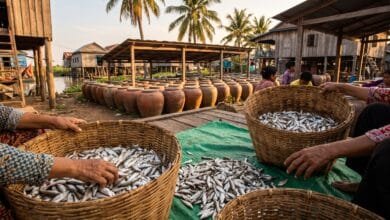
Sun-dried fish is a staple in Cambodian households. It keeps without refrigeration and adds savoury depth to many dishes.
Prahok (Fermented Fish Paste)
Prahok is Cambodia’s most iconic fish product — a salted, fermented freshwater fish paste that is a staple in Cambodian diets. It is primarily produced by women in fishing communities. The tiny mud carp called trey riel is commonly used. Prahok production typically begins in January, when receding water levels concentrate fish populations.
From Farm to Cambodian Table
The journey of fish from Tonlé Sap floating fish farms to the Cambodian table is a remarkable supply chain that sustains millions.
Step 1: The Farm
Fish are raised in floating cages on the lake. Farmers — often entire families — tend to the fish daily.
Step 2: The Harvest
During peak season (December–February), fish are harvested. Some are sold immediately; others are processed.
Step 3: The Trading Hub
Fish are transported to floating trading hubs like Chong Kneas, where about 40 stalls distribute 40–50 tonnes daily during peak season. Wholesalers come from Siem Reap, Kampong Thom, Battambang, and Banteay Meanchey.
Step 4: The Market
Fish reach local markets across Cambodia. In Phnom Penh, fresh fish from Tonlé Sap is sold alongside smoked and dried products.
Step 5: The Kitchen
In Cambodian kitchens, Tonlé Sap fish becomes:
- Prahok — fermented fish paste used as a seasoning in countless dishes
- Smoked fish — a savoury snack or ingredient
- Fish amok — Cambodia’s famous steamed fish curry
- Grilled fish — a street food favourite
- Fish soup — a comforting everyday dish
Step 6: The Table
From street stalls to family homes to fine dining restaurants, fish from Tonlé Sap floating fish farms feeds Cambodia.
Why This Product Matters
Tonlé Sap floating fish farms matter for reasons that go far beyond food.
Cultural Value
Fishing and fish farming are woven into the fabric of Cambodian identity. The lake has sustained communities for generations. Prahok, smoked fish, and dried fish are not just foods — they are cultural treasures.
Economic Value
The Tonlé Sap fishery generates several billion dollars annually. More than 1.2 million people depend on it for their livelihoods. In communities where 83% of residents live below the poverty line and 90% depend entirely on fishing, these farms are a lifeline.
Environmental Value
Floating fish farms help reduce pressure on wild fish stocks. By farming fish rather than catching them from the wild, communities can protect biodiversity and preserve the lake’s fragile ecosystem.
Culinary Value
Tonlé Sap fish are the foundation of Cambodian cuisine. Without them, the country’s food culture would be unrecognisable.
What a Visit to a Floating Fish Farm Is Like
Visitors can experience Tonlé Sap floating fish farms through community-based ecotourism. Several floating villages welcome travellers who want to understand this unique way of life.
Kampong Khleang
Located about 45 kilometres from Siem Reap city, Kampong Khleang is one of the largest floating villages on Tonlé Sap. Over 85% of families depend on fishing. Visitors can take canoe tours through the floating village and submerged forest, enjoy sunset boat excursions, experience homestays, and observe traditional fishing and fish-processing activities.
Mechrey
Mechrey is one of the least touristed floating villages, offering a more peaceful and authentic experience. About 300 families live here. Visitors can see floating houses, a school, restaurants, fish farms, and even a crocodile farm. The floating pagoda, Wat Mechrey, rises and falls with the changing water levels.
Prek Toal
Prek Toal is a floating village at the northwestern end of the lake. It is unique for being home to the largest freshwater bird sanctuary in Southeast Asia. Visitors can combine a visit to the floating village and fish farms with birdwatching.
Phat Sanday Ecotourism Community
Located in Kampong Thom province, Phat Sanday covers approximately 23,000 hectares. Established in 2019, it offers lodging, camping, food, and boat trips. About 90% of over 1,000 families are engaged in fishing. Visitors can view floating houses, climb an observation tower, and learn about fishing activities.
Best Time to Visit
Best Time for Travel: November to April (dry season)
- The weather is pleasant
- The lake is accessible
- Floating villages are easier to navigate
- You can walk around villages during low water
Best Time for Fishing Activity: December to February
- Peak harvest season
- Fish are abundant
- You can see the busiest fishing and trading activity
Avoid: May to October (wet season)
- Heavy rain
- Some areas may be inaccessible
- Boating can be challenging
How to Get There
To Kampong Khleang:
- From Siem Reap city, drive approximately 45 kilometres
- Boat tours depart from the Phnom Krom boat landing
- Full-day tours typically last about 6.5 hours
To Chong Kneas:
To Phat Sanday:
- From Kampong Thom provincial capital, travel about 50 kilometres
- Options: car, motorbike, or community ferry from the provincial capital along the Stung Sen River
- Or from Kampong Chhnang town to Kampong Touk (about 40 kilometres), then a 10–15 minute boat ride
Note: Tour availability and schedules vary. Visitors should confirm with local tour operators or community tourism offices before travelling.
What to Bring
- Water — stay hydrated in the tropical heat
- Sun protection — hat, sunglasses, sunscreen
- Comfortable shoes — for walking in villages during dry season
- Insect repellent — mosquitoes are common near water
- Camera — the scenery is spectacular
- Cash — for buying local products and supporting the community
- Respectful attitude — you are visiting people’s homes and workplaces
Responsible Farm Tourism
Visiting Tonlé Sap floating fish farms is a privilege. Here’s how to do it responsibly:
- Ask before entering private areas or homes
- Ask before photographing people — always seek permission first
- Do not damage crops or fishing equipment
- Do not pick or take anything without permission
- Buy directly from community members when possible
- Respect working spaces — farmers are working, not performing
- Follow local instructions from guides and community members
- Do not treat farmers as attractions — they are skilled professionals and community members
- Choose community-based tours that directly benefit local families
Nearby Food or Travel Experiences
Suggested Internal Article Topics:
- How to Make Prahok — Cambodia’s Fermented Fish Paste
- A Guide to Cambodian Fish Amok
- Floating Villages of Tonlé Sap — A Travel Guide
- Cambodian Smoked Fish — A Traditional Delicacy
- Kampong Khleang Ecotourism — What to Expect
- Cambodian Street Food — Fish Grilled to Perfection
Frequently Asked Questions
Q: Where can I visit Tonlé Sap floating fish farms in Cambodia?
Q: What season is best for visiting floating fish farms?
Q: Can travellers join the harvest?
A: This varies by community. Some ecotourism programmes may offer participatory experiences, but visitors should confirm in advance and respect that farming is work, not entertainment.
Q: What does Tonlé Sap fish taste like?
A: Fresh Tonlé Sap fish has a clean, mild flavour. Smoked fish is rich and savoury. Prahok has a strong, salty, umami flavour that is central to Cambodian cooking
Q: How is fish from Tonlé Sap used in Cambodian food?
A: Fish is used fresh in soups, curries, and grilled dishes; smoked or dried for preservation; and fermented into prahok, Cambodia’s iconic fish paste
Q: Are the floating fish farms open to visitors?
Q: How long does a visit take?
A: Half-day to full-day tours are common. Kampong Khleang tours typically last about 6.5 hours
Q: What should I bring when visiting?
A: Water, sun protection, comfortable shoes, insect repellent, camera, cash, and a respectful attitude.
Final Thoughts
The Tonlé Sap floating fish farms are more than a food production system. They are a way of life — a remarkable example of how people have adapted to one of the world’s most dynamic freshwater environments.
From the floating villages of Kampong Khleang to the smoked fish of the “Tonle Fish” enterprise, from the trading hub of Chong Kneas to the dinner tables of Phnom Penh, the journey of Tonlé Sap fish connects land to lake, farmer to table, tradition to future.
When you taste Cambodian fish — whether in a bowl of steaming fish soup, a plate of smoky grilled fish, or the pungent richness of prahok — you are tasting the lake itself. You are tasting generations of knowledge, the daily work of floating farmers, and one of the world’s most extraordinary food systems.
And if you’re lucky enough to visit, you’ll see it with your own eyes: the mist rising from the lake, the bamboo cages below the surface, the floating pagoda swaying gently on the water, and the families who call this incredible place home.
That is the story of Tonlé Sap floating fish farms — from the Great Lake to the Cambodian table.