Inside Steung Trang’s Durian Farms: Cambodia’s Rising King of Fruits
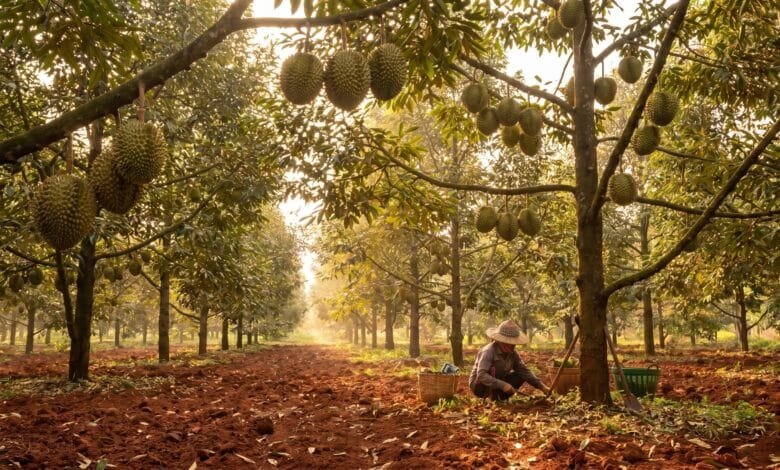
Just a few years ago, this corner of Kampong Cham province was known for rubber. Today, it’s at the center of Cambodia’s durian boom – a transformation so rapid that farmers are planting hundreds of new hectares each year. What changed? And what does it mean for the people who grow the fruit?
Welcome to Steung Trang, a district where the king of fruits has found a new kingdom. Here, amid the red soil and tropical heat, some of Cambodia’s finest durians are taking root – and the story of how they got there is as rich as the fruit itself.
Where This Story Begins
Steung Trang district lies in the northern part of Kampong Cham province, stretching along the Mekong River. The region’s red soil – fertile, well-draining, and rich in minerals – creates ideal conditions for durian cultivation. Combine that with Cambodia’s tropical climate, and you have a landscape perfectly suited for growing the world’s most polarizing fruit.
For decades, rubber was the district’s strategic crop. But as global demand for durian has skyrocketed – particularly from China – farmers have been pivoting. According to Steung Trang District Governor Ban Sreng, more than 2,000 hectares of land in the district are now under durian cultivation, with plans to expand to 2,500 hectares.
“The favourable geographical and climatic conditions here have made durian a new high-potential fruit,” Governor Sreng said.
What Makes Steung Trang Durian Farms So Special?
The answer lies in the soil, the climate, and the people. Steung Trang’s red earth is naturally rich and allows durian trees to develop deep root systems. The region’s distinct wet and dry seasons give the fruit time to mature slowly, concentrating its flavor.
But the real secret is the farmers. Durian is not a crop for the impatient. A durian tree takes five to seven years to bear fruit, and even then, it requires constant care – pruning, watering, pest management, and the careful timing of harvest. The farmers of Steung Trang have embraced this challenge, and their dedication is paying off.
The Baek Anloung Durian Agricultural Community is at the heart of this movement. Comprising 162 member orchards covering approximately 706 hectares, the community produces around 4,000 tonnes of durian per year. It has grown from 95 families and nearly 500 hectares in just one year – a testament to the speed of the boom.
Meet the Farmers
Behind every durian is a farmer with a story.
Phat Phanny, a farmer from Baek Anloung village, harvested more durian this year than last – enough to earn her farm over $100,000. Despite slightly lower prices, she’s planning to expand by another eight hectares next year.
Siv Tha operates one of the area’s largest plantations – 200 hectares in Steung Trang. He grows three varieties, including the popular Monthong, prized for its high yield, sweet taste, thick flesh, and long shelf life. Tha is already in contact with Chinese buyers and hopes to export soon.
“Durian requires capital at the beginning, but the return is worth it,” Tha said.
These are not subsistence farmers – they are entrepreneurs, building businesses that support families, employ workers, and contribute to Cambodia’s growing agricultural economy.
The Season Behind the Fruit
Durian season in Kampong Cham typically runs from May through July. The peak harvest arrives in late May and extends through June and July.
During these months, the orchards come alive. Farmers rise before dawn to check for fallen fruit – durians are harvested when they fall naturally or when the stem shows signs of ripeness. The work is intense but rewarding. Each tree can produce dozens of fruits, and each fruit can weigh several kilograms.
The rhythm of the season dictates everything: when families gather, when buyers arrive, when the community celebrates. For the people of Steung Trang, durian season is more than a harvest – it’s a way of life.
The Durian Itself: What Does Steung Trang Durian Taste Like?
Steung Trang durian – particularly the Bek Anloung variety – is known for its unique flavour and aroma. The Bek Anloung durian has been officially registered as a Collective Mark, protecting its name and reputation.
What does it taste like? Cambodian durians are notably larger than those found in Malaysia and Thailand, with a flavour profile that blends sweetness with a subtle bitter aftertaste. The flesh is creamy, the aroma intense, and the experience unforgettable.
The most common variety grown in Steung Trang is Monthong (also spelled Manthong), a Thai cultivar prized for its thick, sweet flesh and long shelf life. Some farmers also grow Chanee and other varieties.
From Farm to Cambodian Table
The journey from orchard to table is surprisingly direct in Steung Trang.
During harvest season, buyers come directly to the farms – from nearby provinces like Prey Veng, from Phnom Penh, and increasingly from international markets. Some travelers make the trip specifically to buy fresh, organic durians straight from the tree.
“People want to know that the durians they are eating are safe,” explains Siv Tha, who opened his farm to visitors for this exact reason.
In Cambodia, durian is eaten fresh, often as a dessert or snack. It appears in durian sticky rice, durian ice cream, and durian cakes. Some families enjoy it with sticky rice and coconut milk – a simple but luxurious treat.
The fruit also makes its way to local markets, where it’s sold whole or in portions. Prices during peak season range from 22,000 to 25,000 riel per kilogram (approximately $5.50–$6.25).
Why This Product Matters
Durian is more than a fruit in Steung Trang – it’s an economic engine.
For farmers like Phat Phanny, durian has transformed lives. Earning over $100,000 from a single harvest is life-changing money in rural Cambodia. It pays for children’s education, home improvements, healthcare, and future investments.
The durian boom has also created jobs – in orchards, in transport, in packing, and in sales. It has turned Steung Trang from a rubber district into an emerging fruit tourism destination.
And now, with Cambodia’s first official durian exports to China underway, the future looks even brighter. The government is supporting farmers with CamGAP certification (Cambodian Good Agricultural Practices), which uses QR codes to identify the source of farms and ensure quality standards.
What a Farm Visit Is Like
Yes – you can visit Steung Trang’s durian farms.
During harvest season (May–July), many farms welcome visitors. You can:
- Walk through the orchards and see durian trees up close
- Watch farmers at work – checking fruit, harvesting, sorting
- Buy fresh durian directly from the farm
- Taste the fruit at its peak ripeness
Siv Tha’s Boeung Ket durian farm is one example of a farm that opens its doors to visitors. Local consumers and travelers from across Cambodia come to buy fruit they know is safe and chemical-free.
However, farm visits are not organized tours with set schedules. You’ll need to make arrangements in advance, show respect for working spaces, and understand that these are working farms, not tourist attractions.
Best Time to Visit
| Purpose | Best Time |
|---|---|
| See durian trees in fruit | May – July |
| Experience harvest activity | Late May – July |
| Buy fresh durian | May – July (peak: June) |
| Comfortable travel weather | November – February (cooler dry season) |
If your primary goal is to see the orchards in full production, plan your visit between late May and July. The weather will be hot and humid – bring water, sun protection, and comfortable shoes.
How to Get There
Steung Trang district is in Kampong Cham province, approximately 120–130 kilometers northeast of Phnom Penh.
By road: Take National Road 6 or 7 towards Kampong Cham city, then continue to Steung Trang district. The journey takes roughly 2.5 to 3 hours by car, depending on traffic and road conditions.
By bus: Several bus companies operate services from Phnom Penh to Kampong Cham city. From there, you’ll need to arrange local transport (taxi or moto) to reach the farms.
Note: Specific farm locations vary. It’s advisable to contact the Baek Anloung Durian Agricultural Community or local authorities in advance for guidance on which farms are open to visitors during your travel dates.
What to Bring
- Water – the tropical heat is intense
- Sun protection – hat, sunglasses, sunscreen
- Comfortable shoes – you’ll be walking on uneven ground
- Insect repellent – mosquitoes are common
- Camera – the orchards are incredibly photogenic
- Cash – if you plan to buy durian, bring small denominations
Responsible Farm Tourism
- Ask before entering private orchard areas
- Ask before photographing farmers or their families
- Do not pick fruit without permission – durian harvesting requires skill
- Do not damage trees or crops
- Buy directly from farmers when possible – it supports the local economy
- Respect working spaces – these are livelihoods, not theme parks
- Follow local instructions – farmers know their land best
Nearby Food or Travel Experiences
While in Kampong Cham province, consider exploring:
- Kampong Cham city – colonial architecture, riverside promenade
- Mekong River islands – peaceful rural life and local food
- Local markets – try other tropical fruits like rambutan and mangosteen
- Suggested Internal Article: Cambodian Tropical Fruits: A Guide to the Kingdom’s Sweetest Bounty
Frequently Asked Questions
Can I visit durian farms in Steung Trang?
Yes, many farms welcome visitors during the harvest season (May–July). Advance arrangements are recommended.
When is durian season in Kampong Cham?
The durian harvest season in Kampong Cham runs from May through July, with peak production in June.
Can travelers join the harvest?
This depends on the farm. Some farmers may allow you to observe or participate under supervision. Always ask first.
What does Steung Trang durian taste like?
It’s known for its creamy texture, sweet flavour, and subtle bitter aftertaste. The Bek Anloung variety is particularly prized.
How is durian used in Cambodian food?
Durian is eaten fresh, used in desserts like durian sticky rice, and made into ice cream and cakes.
Is the farm open year-round?
Most farms are working orchards and do not operate as formal tourist attractions. Visits are best during harvest season.
How long does a farm visit take?
A typical visit might last 1–2 hours, depending on what you want to see and learn.
What should I bring to a farm visit?
Water, sun protection, comfortable shoes, insect repellent, and cash for purchases.
Final Thoughts
The story of Steung Trang’s durian farms is a story of transformation – of land, of livelihoods, and of a community finding its future in the king of fruits. It’s a reminder that behind every piece of fruit on a Cambodian table is a farmer who woke before dawn, walked through the red soil, and trusted the trees to deliver.
For travelers, a visit to Steung Trang durian farms offers something rare: a genuine connection to the people and places that produce Cambodia’s food. It’s not a polished tourist experience – it’s real, it’s working, and it’s deeply Cambodian.
And if you’re lucky enough to visit during harvest season, you’ll taste something you won’t forget – a fruit that carries the flavour of the red earth, the tropical sun, and the hands that grew it.