Nom Pang: The Cambodian Baguette Sandwich Travelers Should Try
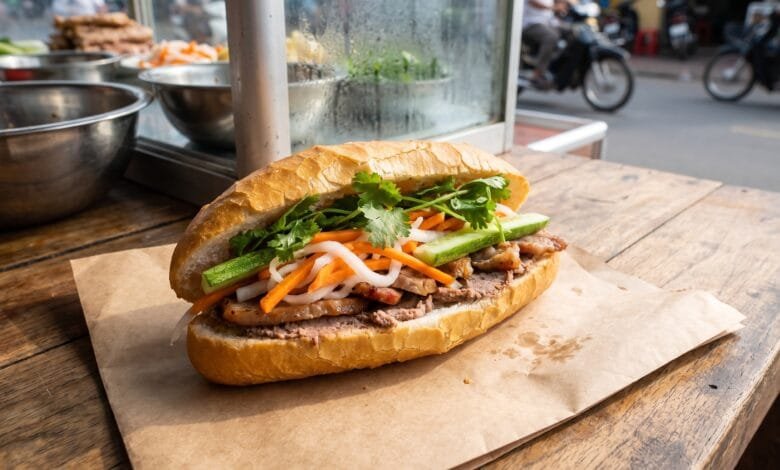
Walk through any Cambodian market in the morning and you will see them: short baguettes stacked in baskets, vendors spreading pâté on bread, the smell of grilled meat mixing with fresh herbs. This is nom pang, Cambodia’s own baguette sandwich, and it is one of the easiest and most rewarding street foods for a foreign traveler to try.
Nom pang is not simply a Cambodian version of Vietnam’s banh mi, though the two are often compared. It has its own character, its own fillings, and its own place in Cambodian daily eating. This guide explains what nom pang is, what it tastes like, what goes inside, and how you can order one with confidence.
What Is Nom Pang?
Nom pang (នំបុ័ង) is a Cambodian baguette sandwich. The name comes from the French word pain, meaning “bread,” which reflects the baguette’s introduction to Cambodia during the French colonial period. In Khmer, the full name for the meat-filled version is num pang sach (នំបុ័ងសាច់), which translates to “bread with meat”.
The bread itself is a short baguette with a thin, crisp crust and a soft, airy inside. Vendors often toast or grill it briefly before filling, which gives the crust a warm crunch. It is typically split lengthwise and packed with savory ingredients, much like a submarine sandwich.
You will find nom pang sold almost everywhere in Cambodia — from busy street corners in Phnom Penh to morning markets in Siem Reap and smaller provincial towns. It is most commonly eaten for breakfast, but many vendors sell it throughout the morning and into the early afternoon.
What Does Nom Pang Taste Like?
A good nom pang hits several flavors and textures at once. The crust is crisp and slightly chewy, while the inside of the bread stays soft. The fillings bring saltiness from the meat and pâté, a gentle sourness from pickled vegetables, freshness from cucumber and herbs, and a mild to moderate heat from chili sauce or fresh chilies.
The pâté adds a rich, savory depth. In Cambodia, the pâté used in nom pang is often a smooth, spreadable liver paste, sometimes with a slightly sweet note. Grilled pork is one of the most common fillings, bringing a smoky, salty character. Some vendors also offer beef, chicken, or fish versions.
Compared to Vietnamese banh mi, nom pang is sometimes described as having a slightly sweeter sauce profile and a different balance of textures. The pickled vegetables — usually carrot and daikon, and sometimes papaya — provide a clean, tangy contrast to the rich meat and pâté.
What Is Inside Nom Pang?
The core ingredients of a typical nom pang are consistent across most vendors, though the exact combination varies by stall, city, and region.
The bread: A short baguette, often made with a mix of wheat flour and sometimes a small amount of rice flour, giving it a lighter texture than a traditional French baguette.
Pâté: A smooth liver paste spread on the bread before the other fillings are added. This is one of the clearest legacies of French influence in Cambodian street food.
Mayonnaise: Often spread alongside or mixed with the pâté, adding creaminess.
Meat: Grilled pork is the most common choice. Beef skewers, chicken, or sardines in tomato sauce are also popular. The meat is usually marinated and grilled at the stall.
Pickled vegetables: Julienned carrot and daikon are standard. Some vendors use shredded green papaya instead of or in addition to daikon.
Cucumber: Thin slices of fresh cucumber add crunch and freshness.
Fresh herbs: Cilantro (coriander) is the most common herb, though some vendors use other fresh greens.
Chili and sauces: Sliced fresh chilies, chili sauce, soy sauce, or a hoisin-like sauce may be added. The heat level can vary significantly from vendor to vendor.
How Is It Prepared by Street Vendors?
Nom pang is made to order, and watching a vendor assemble one is part of the experience. The baguette is usually sliced lengthwise, leaving one side attached like a hinge. Some vendors press the bread on a hot grill or griddle for a few seconds to warm and crisp the crust.
The vendor then spreads pâté and mayonnaise on the inside. The grilled meat — often kept warm on a small charcoal grill or in a covered container — is added next. Pickled vegetables, cucumber slices, and fresh herbs follow. Finally, the vendor adds chili sauce or fresh chilies according to your preference.
Many vendors wrap the finished sandwich in paper or a thin sheet of rice paper, which makes it easier to hold and eat while walking. The whole process usually takes just a minute or two.
When and Where Do Cambodians Eat Nom Pang?
Nom pang is most strongly associated with breakfast. Morning markets and street corners fill with vendors selling nom pang from around 6:00 AM until the late morning. It is a quick, filling meal that people eat on the way to work or school, or sitting on a small plastic stool at a roadside stall.
That said, nom pang is not strictly a breakfast food. Some vendors sell it throughout the day, and in busy areas of Phnom Penh you can find nom pang stalls operating into the afternoon. It is less commonly eaten at night, though night market vendors may offer similar baguette sandwiches.
You will find nom pang at:
- Morning markets across the country
- Street corners in Phnom Penh and Siem Reap
- Busy local neighborhoods with high foot traffic
- Near schools and office areas during morning hours
The sandwich is portable and affordable, which makes it a natural fit for Cambodia’s street food culture. Vendors can set up with minimal equipment: a basket of bread, a small grill, containers of fillings, and a few sauces.
The Story and History of Nom Pang
The baguette arrived in Cambodia during the French colonial period, when Cambodia was part of French Indochina from 1863 to 1953. French colonizers and their households brought the bread with them, and local bakers began producing baguettes for both French and Cambodian customers.
Over time, Cambodians adapted the baguette into their own sandwich tradition. The result — nom pang — kept the French bread but filled it with distinctly Cambodian ingredients: local pâté, grilled meats marinated with Cambodian flavors, pickled vegetables, and fresh herbs.
The exact moment when nom pang became a distinct street food is not well documented. What is clear is that by the post-colonial period, baguette sandwiches were a common and affordable food sold by street vendors. Today, nom pang is considered one of Cambodia’s most recognizable street foods, and versions of it have spread to cities like New York, Washington, and Melbourne, where Cambodian diaspora communities have opened sandwich shops.
Regional and Vendor Variations
Nom pang varies meaningfully from vendor to vendor and from region to region.
In Phnom Penh, you are likely to find versions with a generous spread of pâté and a choice of grilled pork, beef, or sardines. Some Phnom Penh vendors are known for their pâté-heavy style, sometimes called nom pang pâté.
In smaller towns and rural areas, the sandwich may be simpler — often just grilled meat, pickled vegetables, and herbs, with less emphasis on pâté.
Some vendors offer additional fillings such as:
- Fried egg
- Climbing wattle frittata (a local green vegetable omelette)
- Shredded papaya instead of daikon
- Extra chili or a sweet-savory sauce
There is no single “authentic” version. Each vendor has their own approach, and that variety is part of what makes nom pang interesting to explore.
Where Can Travelers Try Nom Pang?
Nom pang is widely available across Cambodia, and you do not need to seek out a specific famous vendor to find a good one.
In Phnom Penh: Morning markets such as Phsar Thmei (Central Market) and surrounding streets have many nom pang vendors. Busy local neighborhoods and areas near office buildings are also reliable spots in the morning.
In Siem Reap: The area around Phsar Chas (Old Market) and nearby streets has morning vendors selling nom pang. Many are set up before 7:00 AM.
Elsewhere: Almost every provincial town in Cambodia has at least a few nom pang vendors operating in the morning. Asking at your guesthouse or hotel for the nearest morning market is usually enough to find one.
The practical rule is simple: if you see a vendor with a basket of baguettes, a small grill, and containers of fillings, you have found nom pang.
How to Order Nom Pang
Ordering is straightforward. The Khmer name to say is “nom pang” (នំបុ័ង). If you want to specify meat, you can say:
- Nom pang sach chrouk — pork baguette
- Nom pang sach koh — beef baguette
- Nom pang sach moan — chicken baguette
Most vendors will understand simple pointing if you are unsure. You can indicate whether you want chili by nodding or shaking your head when they gesture toward the chili container. The typical serving style is a wrapped sandwich that you eat with your hands.
What Foreign Travelers Should Know
Spice level: The chili sauce or fresh chilies can range from mild to quite hot. If you are sensitive to spice, ask for no chili by saying “ot sai mteh” (roughly, “no chili”) or simply gesture.
Fish sauce and pâté: Nom pang commonly contains pâté made from liver, which some travelers may want to avoid. Fish sauce may also be used in marinades or sauces. If you have dietary restrictions, ask the vendor or look for vendors who offer egg or vegetable-based versions.
Vegetarian options: Traditional nom pang is meat-based, but vegetarian versions exist. Some vendors offer a version with fried egg, tofu, or a herb frittata. In Phnom Penh, several vegetarian restaurants also serve nom pang-style sandwiches.
Portion size: A nom pang is a substantial snack or light meal. One sandwich is usually enough for breakfast.
Hygiene: Choose vendors with a steady flow of customers. High turnover means the food is being made fresh and ingredients are less likely to sit out for long.
Eating style: Nom pang is designed to be eaten with your hands. The paper or rice paper wrapping helps keep your hands clean.
How Much Does Nom Pang Cost?
Prices for nom pang in Cambodia typically range from about $0.75 to $2 for a standard sandwich from a street vendor, depending on the location and the fillings. In tourist areas or from delivery services, prices may be higher.
Prices can vary by location, portion, and vendor. As with any street food, the best way to know the current price is to look for a sign at the stall or ask the vendor directly before ordering.
Frequently Asked Questions
Is nom pang the same as banh mi?
No. Nom pang is Cambodian, while banh mi is Vietnamese. Both use a baguette and share some similar fillings, but the seasoning, sauce profile, and specific ingredients differ. Nom pang often has a sweeter sauce and a distinct Cambodian-style pâté
What does nom pang taste like?
It is savory and rich from the pâté and grilled meat, with tangy pickled vegetables, fresh herbs, and a mild to moderate chili heat. The bread is crisp outside and soft inside.
Is nom pang spicy?
It can be. Chili sauce and fresh chilies are common additions, but you can ask for no chili. The base sandwich without chili is not particularly spicy.
Where can tourists try nom pang in Cambodia?
Morning markets in Phnom Penh and Siem Reap are reliable places. In Phnom Penh, Central Market and surrounding streets have many vendors. In Siem Reap, the area around Old Market is a good starting point.
How do you eat nom pang?
It is eaten by hand, usually wrapped in paper or thin rice paper. There is no need for utensils.
Is nom pang suitable for vegetarians?
Traditional nom pang contains meat and pâté, so it is not vegetarian by default. However, some vendors offer egg or vegetable versions, and vegetarian restaurants in Phnom Penh may serve their own nom pang-style sandwiches.
Conclusion
Nom pang is one of Cambodia’s most accessible and satisfying street foods. It is a baguette sandwich with Cambodian character — crisp bread, rich pâté, grilled meat, tangy pickles, and fresh herbs, all assembled in front of you in under a minute.
For a foreign traveler, nom pang is a low-risk, high-reward introduction to Cambodian street food. It is easy to find, easy to order, and easy to eat. You do not need to speak Khmer or know the name of a famous vendor. Just look for the baguettes and the morning crowd.
Whether you try it on your first morning in Phnom Penh or your last morning in Siem Reap, nom pang gives you a genuine taste of how Cambodia eats every day. It is worth trying not because it is exotic, but because it is ordinary — in the best possible way.