The Island Communities of Cambodia: Life Beyond the Beaches
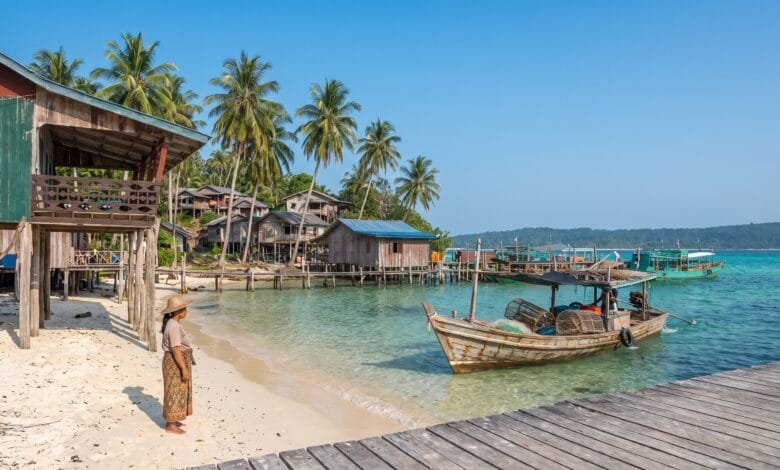
Most travelers who visit Cambodia’s islands remember the water. The clear shallows. The slow ferries. The quiet evenings on the sand. But there is another side to island life that is harder to see from a beach chair. It is the sound of a fishing boat leaving before sunrise. It is a mother repairing nets on her porch. It is a young man learning to guide mangrove tours instead of fishing trips. These are the people who make Cambodia’s islands more than a destination. They make them a home.
This article is about the island communities of Cambodia. It is not about which beach is best or where to stay. It is about the people who live on these islands all year round, how their lives are changing, and what travelers can learn from them.
Who Are Cambodia’s Island Communities?
Cambodia has more than 60 islands, but only a few are inhabited year-round. The most well-known are Koh Rong and Koh Rong Sanloem in Preah Sihanouk province, and Koh Sdach and Koh Sralau in Koh Kong province. Each has its own character and its own story. What they share is a deep connection to the sea.
For generations, island families lived by fishing. They knew the tides, the seasons, and the places where certain fish gathered. Fishing was not just a job. It was a way of life passed down through families. Many island residents today can trace their family history back to grandparents who fished the same waters.
These communities are small. Koh Rong Sanloem, for example, has a population of only a few hundred residents. Koh Sdach is home to families who have lived on the island for generations and who still rely heavily on fishing for food and income. On Koh Sralau, around 300 families depend on the surrounding mangroves and sea. These are not large cities. They are close-knit communities where everyone knows their neighbors.
Where Do They Live?
Cambodia’s island communities are scattered across the Gulf of Thailand and the Mekong River. The islands in the Gulf, such as Koh Rong, Koh Rong Sanloem, Koh Sdach, and Koh Sralau, are coastal communities. They are surrounded by warm, shallow water, coral reefs, and mangrove forests.
Koh Rong is the largest of these islands. It covers about 102 square kilometres and is home to around 1,350 families. Historically, the island had four fishing villages: Koh Touch, Deum Thkov, Prek Svay, and Sok San. Each village had its own fishing pier, and the piers were the center of local life.
Koh Rong Sanloem is smaller and quieter. It sits just south of Koh Rong and has a more relaxed pace. Koh Sdach is actually a small archipelago of about 12 islands in Koh Kong province, near Botum Sakor National Park. Koh Sralau is known for its dense mangrove forests and rich marine biodiversity.
There are also river island communities along the Mekong, such as Koh Trong in Kratie province and the islands near Kratie where Irrawaddy dolphins live. These communities have a different rhythm of life, shaped by the river rather than the sea.
How Do They Live?
Daily life on Cambodia’s islands follows the water. Fishermen leave early in the morning, often before sunrise. They return in the late afternoon with the day’s catch. Women often handle the shore work: repairing nets, preparing food, and selling fish at local markets. Children go to school when they can, though access to education can be difficult on remote islands.
On some islands, children must travel by boat to attend school. On Koh Thmey, for example, about twenty children cross five kilometers of water each day to reach their classroom. The journey takes thirty minutes each way. Some children do not know how to swim, which makes the daily crossing a real risk.
Housing on the islands is simple. Many families live in wooden houses raised on stilts, a design that works well in a place where the water rises and falls with the tides. Electricity can be limited. Koh Rong Sanloem, for instance, has historically lacked access to state electricity, relying instead on generators. Fresh water can also be scarce during the dry season.
Despite these challenges, island life has its own richness. Neighbors help each other. Families live close together. The sea provides food and income. And for many residents, the island is not a place to escape from. It is a place to belong to.
How Do They Make a Living?
Fishing has been the backbone of island life for generations. But fishing is changing. Fish stocks along Cambodia’s coast have declined, and illegal trawling has damaged marine habitats. Small-scale fishers often struggle to catch enough to support their families. For many island communities, this has meant looking for new ways to earn a living.
Tourism has become the most important alternative. On Koh Rong, only about 15 to 20 percent of residents still fish as their main occupation. The rest have shifted to tourism-related work: guiding, cooking, boat transport, and running guesthouses. On Koh Rong Sanloem, the change has been even more dramatic. In 2005, about 90 percent of the 139 families were fishermen. By 2017, only five families still fished, and none relied on it as their main livelihood.
This shift has brought new opportunities. A family working in tourism-related jobs can earn between $1,380 and $1,980 per year, according to a 2017 assessment. Some tourism service providers earn more, between $6,000 and $12,000 annually. Income from fishing, by contrast, ranged from $1,690 to $3,825 per year. Tourism has helped slow outward migration. Young people who once left the islands for work on the mainland are now staying to build businesses at home.
Not all island communities have followed the same path. On Koh Sdach, fishing remains central to daily life. The community has focused on protecting its fishery through a community fishery management system, established in 2013. Local fishers patrol their waters and have even dropped concrete blocks to snag the nets of illegal trawlers. This is a community defending its livelihood from the sea.
Koh Sralau is trying something different again. It has been selected to become Cambodia’s first carbon-neutral island, with a focus on eco-tourism, mangrove protection, and community-based homestays. The goal is to develop tourism that benefits residents directly while protecting the natural environment they depend on.
Family and Community Life
Island communities in Cambodia are tight-knit. Families live close to each other, often in the same village where their parents and grandparents lived. The village temple is a center of community life. Monks collect alms in the mornings, and religious festivals bring people together.
Community fisheries, known as CFi, play an important role on many islands. These are local organizations that manage fishing grounds and protect marine resources. Members patrol the waters, report illegal activity, and make decisions about how the fishery should be used. On Prek Svay, one of Koh Rong’s fishing villages, the community fishery covers 7,600 hectares of water. The CFi leader, along with a team of officers, patrols these waters to protect fish sanctuaries, turtle nesting areas, and seagrass beds.
These organizations are not just about fish. They are about community. When residents work together to protect their waters, they are also building trust and shared purpose. The community fishery is a place where people who live on the edge of the sea decide together how to take care of it.
Knowledge Passed Between Generations
On Cambodia’s islands, knowledge travels from parent to child, from grandparent to grandchild. Fishermen teach their children how to read the tides, where to find certain fish, and how to handle a boat. Mothers teach daughters how to repair nets, prepare fish for market, and cook the dishes that island families have eaten for generations.
This knowledge is practical. It is also deeply connected to place. Island fishers know the coral reefs, the seagrass beds, and the mangrove forests in a way that no map can capture. They know which areas are breeding grounds and which should be left alone. They know how the sea changes with the seasons.
But this knowledge is under pressure. As fishing declines and tourism grows, fewer young people are learning the old ways. Some families worry that their fishing traditions may not survive another generation. At the same time, new knowledge is being passed on. Young islanders are learning how to run guesthouses, guide tours, and manage conservation projects. They are becoming the bridge between the old life and the new one.
How Life Is Changing
Change is happening fast on Cambodia’s islands. The islands that were once quiet fishing communities are now connected to the mainland by fast ferries. Koh Rong was officially designated as a town in 2019, and a 40-kilometre concrete road now crosses the island. Tourists arrive by the thousands. New businesses open every year.
This change brings opportunities and challenges. Tourism has created jobs and income. It has allowed families to stay on the islands instead of migrating to the mainland. It has brought electricity, roads, and other infrastructure that improve daily life.
But tourism also brings pressure. Waste management is a growing problem. Solid waste generation on the islands has increased significantly with the rise in visitors. Fresh water supplies are strained during the dry season. And the natural environment that makes the islands special—the coral reefs, the seagrass, the mangroves—is under threat from pollution and overuse.
There is also a deeper change happening. Island communities are becoming less dependent on fishing and more dependent on tourism. This shift has been described by some as a transition from “subsistence fishing to tourism”. It is a transition that many families are making, but not all are making it in the same way, and not all are certain it is better.
Some communities are trying to balance the old and the new. The Prek Koang Kang Ecotourism Community on Koh Rong manages 400 hectares of mangrove forest as an ecotourism site. Visitors can walk on boardwalks made from recycled plastic and learn about the mangrove ecosystem. The project was started by a Phnom Penh law graduate who chose to work with the community instead of pursuing a conventional career. He asked residents what they wanted and what they could do. Together, they built a tourism project that protects the mangroves and creates local jobs.
This kind of community-led tourism is a model that some island communities are following. It keeps decision-making in local hands. It connects tourism to conservation. And it gives residents a reason to protect the natural environment instead of exploiting it.
What Travelers Can Learn
Travelers who spend time on Cambodia’s islands can learn something important. They can learn that a place is not just a beach. It is a community of people with a history, a livelihood, and a future that they are trying to shape.
When you take a boat to Koh Rong or Koh Rong Sanloem, you are not just arriving at a resort destination. You are arriving in someone’s home. The people who drive your boat, cook your food, and clean your room are part of a community that has lived on this island for generations. They have seen their island change more in the last ten years than in the previous fifty.
Travelers can also learn about the value of community-led conservation. The fishing families who patrol their waters, the women who upcycle fishing nets on Koh Sdach, the young people who guide mangrove tours—these are people who are taking care of their environment because their lives depend on it. They are not waiting for someone else to solve the problem. They are solving it themselves.
Visiting Respectfully
If you visit Cambodia’s islands, there are simple ways to travel with respect.
Support local businesses. Choose guesthouses, restaurants, and tour operators that are owned and run by island residents. This keeps money in the community.
Ask before you photograph. Fishermen and market sellers are not tourist attractions. If you want to take someone’s picture, ask first.
Learn a few words of Khmer. A simple suostei (hello) and aw kun (thank you) go a long way. Island residents appreciate the effort.
Be mindful of waste. Bring a reusable water bottle. Avoid single-use plastics. The islands have limited waste management systems, and every piece of trash matters.
Respect the environment. Do not touch coral, do not litter on beaches, and follow the rules of any protected area you visit.
Be patient. Island infrastructure can be limited. Ferries can be delayed. Electricity can go out. This is part of island life. Accept it with a smile.
Frequently Asked Questions
Can travelers visit Cambodia’s island communities?
Yes. Koh Rong and Koh Rong Sanloem are open to visitors, and ferries run regularly from Sihanoukville. Koh Sdach and Koh Sralau are less developed for tourism but can be visited with advance planning. Always travel with a local guide when visiting smaller communities.
What is the best way to learn about island life?
Stay longer than a few days. Spend time in the villages, eat at local restaurants, and talk to residents. The longer you stay, the more you will understand.
Are the island communities welcoming to tourists?
Generally, yes. Island residents are used to visitors and are often happy to share their culture. Respect and curiosity go a long way.
What challenges do island communities face?
Declining fish stocks, limited access to education and healthcare, waste management, and the pressure of rapid tourism development are the main challenges.
How can travelers help?
Support community-owned businesses, respect local customs, minimize your environmental impact, and learn about the communities you visit.
Is it appropriate to visit fishing villages?
Yes, but do so respectfully. These are working communities, not tourist attractions. Dress modestly, ask before entering areas, and avoid disrupting daily activities.
Conclusion
Cambodia’s island communities are places of transition. They are fishing villages becoming tourism hubs. They are traditional livelihoods meeting new economies. They are families holding on to their heritage while adapting to a changing world.
For travelers, these communities offer a chance to see Cambodia beyond the beaches. They offer a chance to understand how people live, work, and care for their environment. They offer a chance to learn from people who know what it means to live on the edge of the sea.
The next time you visit a Cambodian island, take a moment to look beyond the water. Watch the fishing boats return in the afternoon. Notice the women repairing nets on their porches. Listen to the stories of the people who live there. You will find that the island is not just a beautiful place. It is a human place, full of history and hope and change. And it is worth understanding.