Fried Rice Noodles with Pork and Shrimp
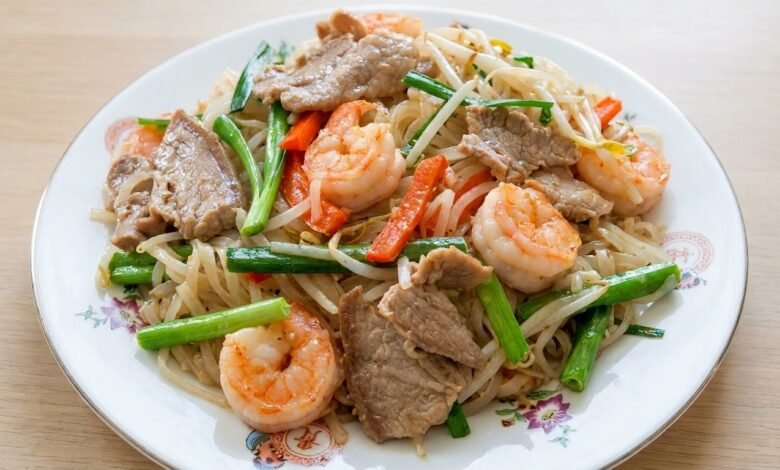
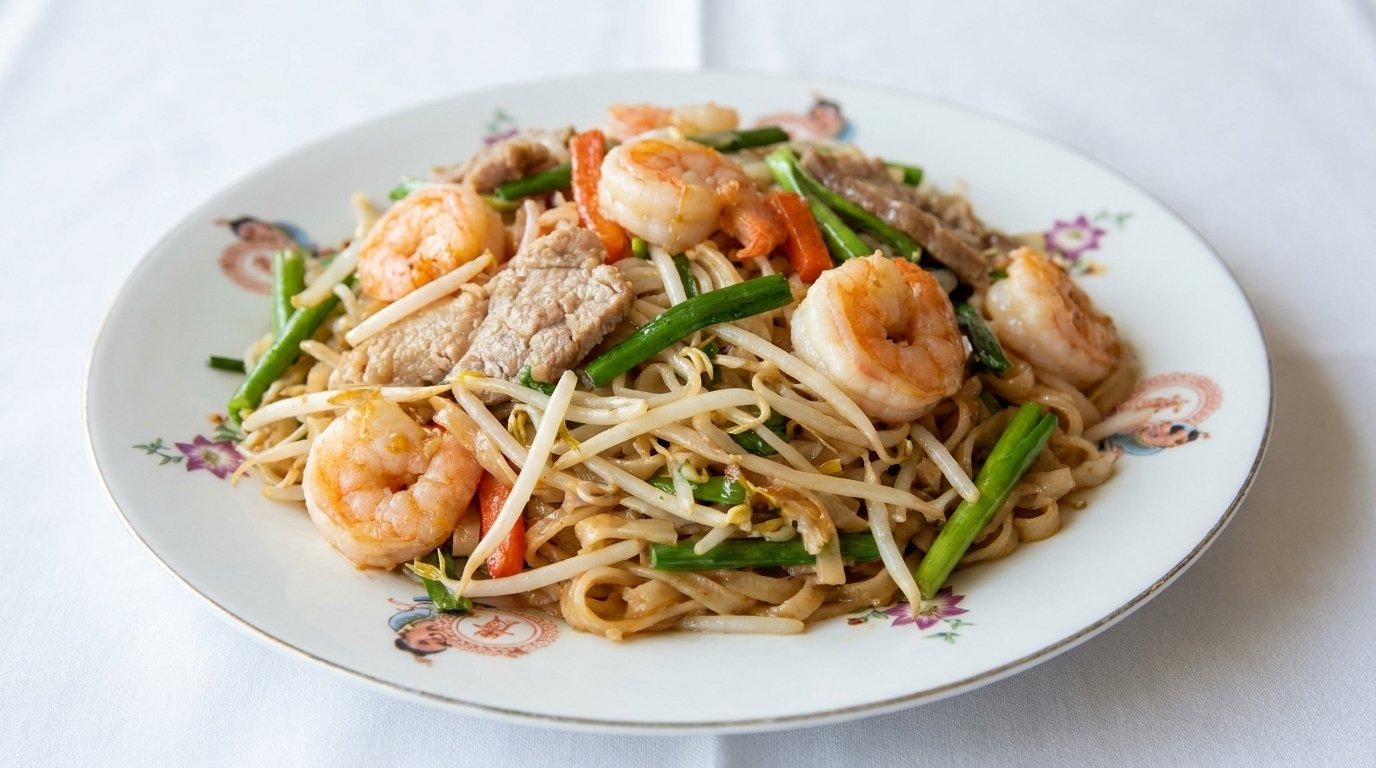
Fried rice noodles with pork and shrimp is a Khmer stir-fry that comes together quickly in one wok. The noodles soak up a simple sauce of fish sauce, soy sauce, and sugar, while pork belly and shrimp give every bite a savoury, satisfying finish.
This is the kind of dish you can make on a weeknight without a long ingredient list. Fresh rice noodles, everyday vegetables, and a hot pan do most of the work. If you enjoy Cambodian stir-fries, this one fits right into your rotation.
What You Need
The recipe uses fresh rice noodles, often sold as katiev or kuy teav noodles in Cambodian markets. If you cannot find fresh noodles, dried rice noodles work too. The sauce is a simple mix of fish sauce, soy sauce, and a little sugar. Pork belly and shrimp provide the main protein, while bean sprouts, carrot, chives, and onion add crunch and freshness.
For more noodle inspiration, browse our Cambodian rice and noodle recipes.
Equipment
- Large pot: To boil the rice noodles until tender.
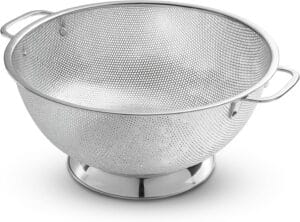
- Colander: To drain and rinse the cooked noodles under cold water.
- Small bowl: To mix the fish sauce, soy sauce, sugar, and water.
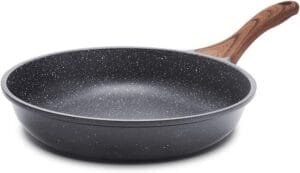
- Wok or large skillet: To stir-fry the pork, shrimp, vegetables, and noodles over high heat.
- Chef’s knife: To slice the pork belly, onion, and carrot, and to cut the chives.
- Cutting board: To prepare the ingredients safely before cooking.
- Measuring cups: To measure the water for boiling and the sauce.
- Measuring spoons: To measure the fish sauce, soy sauce, and sugar.
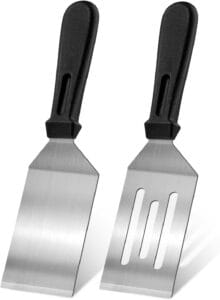
- Wooden spoon or spatula: To stir the ingredients as they cook.
- Serving plate or bowl: To transfer the finished noodles for serving.
How to Make Fried Rice Noodles with Pork and Shrimp
Step 1: Cook the Rice Noodles
Bring 6 cups of water to a boil in a large pot. Add the rice noodles and cook until tender. Fresh noodles take about 10 minutes, and dried noodles take about 20 minutes. Do not overcook them.
Pour the cooked noodles into a colander and rinse them with cold water. Set them aside to drain well.
Step 2: Mix the Seasoning Sauce
In a small bowl, combine the water, fish sauce, soy sauce, and sugar. Stir until the sugar dissolves. Set the bowl aside.
Step 3: Stir-Fry the Pork and Aromatics
Heat a wok or large skillet over medium-high heat. When it is hot, add the oil, garlic, and sliced pork belly. Stir well.
Season the pork with salt and black pepper. Keep stirring until the pork is tender and cooked through.
Step 4: Add the Vegetables and Shrimp
Add the sliced onion and julienned carrot to the wok. Stir for a moment, then add the shrimp. Cook until the shrimp turn a darker pink colour and their flesh is opaque.
For safe shrimp cooking cues, the USDA food safety chart notes that shrimp should be cooked until the flesh is pearly or white and opaque.
Step 5: Add the Noodles and Finish
Add the drained noodles to the wok and stir until they are hot. Pour in the prepared sauce and stir well so the noodles are evenly coated.
Add the bean sprouts, chives, and green onion. Stir everything together for another minute, then turn off the heat.
Cooking Tips
- Rinse the cooked noodles with cold water to stop the cooking and remove excess starch. Drain them well so the stir-fry does not become watery.
- Have all the ingredients cut and measured before you turn on the wok. Stir-frying moves quickly, and you will not have time to chop vegetables once the pan is hot.
- Keep the heat at medium-high. A hot wok helps the noodles heat through without turning soft and sticky.
If you like quick Khmer stir-fries, you may also enjoy this Cambodian stir-fry rice pin noodles with pork. It uses a similar noodle stir-fry approach with a different cut of rice noodle.
How to Serve
Serve the noodles hot, straight from the wok. They work as a main dish on their own, or you can pair them with a light soup on the side. A simple cucumber or tomato salad also adds a fresh contrast to the savoury noodles.
For more quick stir-fry ideas, explore our Cambodian stir-fry recipes collection.
Frequently Asked Questions
What are katiev noodles?
Katiev is a Cambodian name for flat rice noodles, closely related to the noodles used in kuy teav soup. They are made from rice flour and have a soft, slightly chewy texture that works well in stir-fries.
Can I use dried rice noodles instead of fresh ones?
Yes. The recipe already gives both options. Dried rice noodles need about 20 minutes in boiling water, while fresh noodles need about 10 minutes. Cook them just until tender and drain well before stir-frying.
How do I stop the noodles from sticking to the wok?
Use a hot wok and enough oil to coat the surface. Stir the noodles gently but continuously once they go in. Also, drain the noodles well after rinsing so excess water does not cool the pan.
Final Thoughts
This fried rice noodle dish is a straightforward way to bring Khmer stir-fry flavours into your kitchen. The pork belly gives it richness, the shrimp adds sweetness, and the vegetables keep each bite fresh. Once the noodles are drained and the sauce is mixed, the whole dish comes together in minutes.
Fried Rice Noodles with Pork and Shrimp
2
servings15
minutes25
minutes1086
kcal40
minutesFried rice noodles with pork and shrimp is a Cambodian stir-fry made with fresh or dried rice noodles, tender pork belly, shrimp, and crisp vegetables. The dish is seasoned simply with fish sauce, soy sauce, and a little sugar, then finished with bean sprouts and chives.
Ingredients
6 cups water
1 package fresh rice noodles (katiev), or ½ package dried rice noodles
1 teaspoon fish sauce
1 teaspoon soy sauce
1 teaspoon sugar
3 tablespoons vegetable oil
2 cloves garlic, minced
4 oz (113 g) pork belly, sliced thin
½ teaspoon salt
¼ teaspoon black pepper
1 yellow onion, sliced
1 carrot, peeled and julienned
8 oz (230 g) shrimp, peeled and deveined
8 oz (230 g) bean sprouts, washed and drained
4 oz (113 g) chives, cut into 2-inch lengths
1 stalk green onion, chopped
Directions
- Bring 6 cups of water to a boil in a large pot. Add the rice noodles and cook until tender, about 10 minutes for fresh noodles or 20 minutes for dried noodles. Do not overcook. Drain in a colander, rinse with cold water, and set aside to drain.
- In a small bowl, mix the water, fish sauce, soy sauce, and sugar. Stir well and set aside.
- Heat a wok or large skillet over medium-high heat. Add the oil, garlic, and pork belly. Stir well. Season with salt and black pepper and cook until the pork is tender.
- Add the sliced onion and carrot. Stir, then add the shrimp. Cook until the shrimp turn a darker pink colour and are opaque.
- Add the cooked noodles and stir until hot. Pour in the prepared sauce and stir well.
- Add the bean sprouts, chives, and green onion. Stir well, then turn off the heat. Serve hot.
Equipment
 Chef’s KnifeCheck product details
 Cutting boardCheck product details
 Dinner PlatesCheck product details
 Large Soup PotCheck product details
 Measuring Spoons & CupsCheck product details
 SkilletCheck product details
 Small bowlCheck product details
 SpatulaCheck product details
 StrainerCheck product details
 Wooden SpoonCheck product details




Recipe Video
Recipe Notes
- Rinse the cooked noodles with cold water to stop the cooking and prevent sticking. Drain them well before stir-frying.
Nutrition Facts
- Serving Size: 2 g
- Total number of serves: 2
- Calories: 1086kcal
- Fat: 52.4g
- Saturated Fat: 14.5g
- Cholesterol: 226mg
- Sodium: 1414mg
- Potassium: 1006mg
- Carbohydrates: 115.3g
- Net Carbs: 107.9g
- Fiber: 7.4g
- Sugar: 11.9g
- Protein: 39.3g
- Vitamin A: 382.4mcg
- Vitamin C: 56.1mg
- Calcium: 221mg
- Iron: 4mg
- Vitamin E: 2.4mg
- Vitamin K: 212.9mcg
- Thiamin: 0.5mg
- Riboflavin: 0.4mg
- Niacin: 4.7mg
- Vitamin B6: 0.4mg
- Vitamin B12: 0.5mcg
- Folate: 155.7mcg
- Pantothenic Acid: 1mg
- Phosphorus: 613mg
- Magnesium: 129mg
- Zinc: 4mg
- Selenium: 23.9mcg
- Copper: 1mg
- Manganese: 1.3mg
Did you make this recipe?
Tag @cambodiarecipe on Instagram and hashtag it
Like this recipe?
Follow us @cambodiarecipe on Pinterest
Did you make this recipe?
Follow us on Facebook