Thai Rice noodle with Peanut Sauce
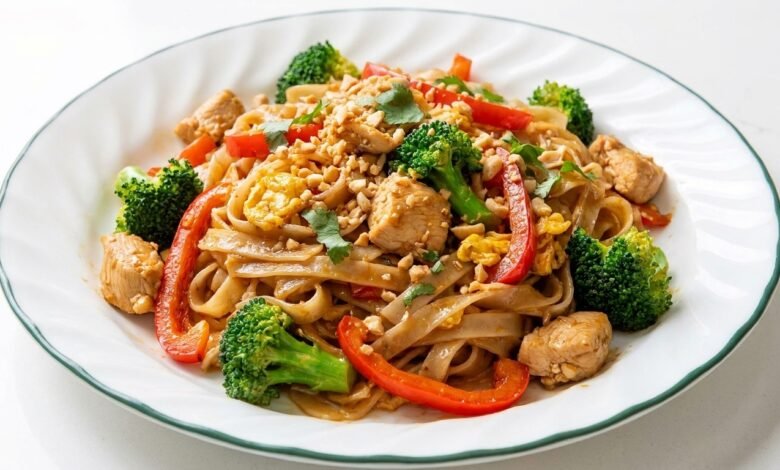
This noodle stir-fry brings together slippery rice noodles, tender chicken, and crisp vegetables in a creamy peanut sauce that balances sweet, savory, and tangy notes. It is a Thai-style dish often compared to Pad Thai, and it comes together in one wok on a busy weeknight.
The sauce gets its depth from peanut butter, tamarind, and a little coconut milk, while fish sauce and soy sauce add the salty backbone. Crushed peanuts and fresh bean sprouts go on at the end so every bowl has a little crunch.
What You Need
The ingredient list is straightforward, but a few items do most of the heavy lifting. Peanut butter makes the sauce creamy, tamarind concentrate brings the tang, and coconut milk softens the edges. Dried rice noodles work well here; just soak and boil them briefly so they stay separate in the wok.
For the vegetables, broccoli and bell pepper add color and texture without overpowering the sauce. Green onions, cilantro, and bean sprouts are finishing garnishes, so keep them ready before you start stir-frying.
Equipment
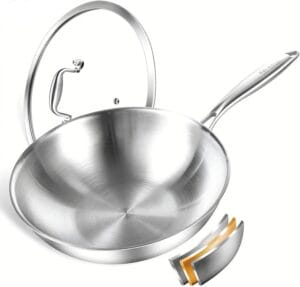
- Wok or large frying pan: To stir-fry the garlic, meat, vegetables, noodles, and egg over high heat.
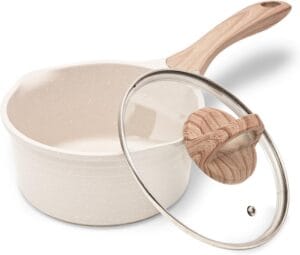
- Saucepan: To warm the peanut sauce ingredients until the peanut butter melts.
- Chef’s knife: To slice the chicken, broccoli, bell pepper, and onion.
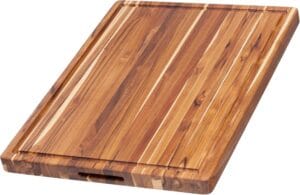
- Cutting board: To prepare the vegetables and meat safely.
- Measuring cups: To measure the chicken broth, vegetables, and noodles.
- Measuring spoons: To measure the soy sauce, fish sauce, coconut milk, tamarind, sugar, and curry powder.
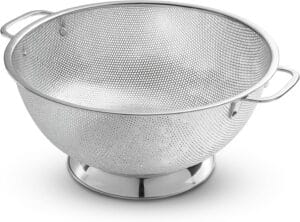
- Colander or strainer: To drain the soaked and boiled rice noodles.
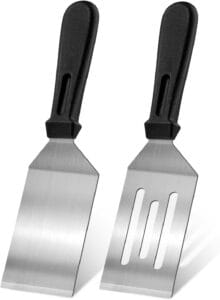
- Wooden spoon or spatula: To stir the sauce and toss the noodles in the wok.
- Small bowl: To hold the beaten egg and the prepared garnishes.
How to Make Thai Rice Noodle with Peanut Sauce
Step 1: Soak and Cook the Rice Noodles
Soak the dried rice noodles in warm water for 15 minutes. Drain them, then cook in boiling water for 1 minute.
Drain again and rinse under cool running water. If the noodles stick together as they cool, rinse them once more under cold water to separate them before stir-frying.
Step 2: Make the Peanut Sauce
In a saucepan, combine the chicken broth, peanut butter, soy sauce, fish sauce, coconut milk, tamarind concentrate, brown sugar, crushed chili (if using), and curry powder or red curry paste.
Warm over medium heat, stirring, until the peanut butter melts and the sauce is hot. Turn off the heat and let the sauce cool slightly.
Step 3: Stir-Fry the Aromatics and Meat
Heat 2 tablespoons of vegetable oil in a wok or large frying pan over medium-high heat. Add the minced garlic and stir-fry until it turns light brown and fragrant.
Add the sliced chicken, pork, or shrimp. Cook, stirring, until the meat is almost done. It will finish cooking with the vegetables and noodles.
Step 4: Add the Vegetables and Noodles
Add the broccoli, sliced bell pepper, and onion to the wok. Stir-fry for about 2 minutes, until the vegetables start to soften but still have some bite.
Add the drained rice noodles and toss until they are hot and coated with the oil in the pan.
Step 5: Add the Egg and Sauce
Push the noodles and vegetables to one side of the wok. Crack the egg into the empty space and scramble it lightly, then mix it through the noodles and vegetables.
Pour in about half of the peanut sauce first and toss to coat. Taste and add more sauce if the noodles seem dry; you may not need every drop. Turn off the heat.
Step 6: Finish with Garnishes
Add the sliced green onions, chopped cilantro, and bean sprouts. Toss well so the fresh garnishes warm through but stay crisp. Serve right away with extra crushed peanuts on top.
Cooking Tips
- Keep the noodles loose. Rinsing cooked rice noodles under cold water stops the cooking and washes away surface starch that makes them clump. Shake off excess water before they go into the wok.
- Warm the sauce gently. Peanut butter can scorch if the heat is too high. Stir constantly and pull the pan off the heat as soon as the sauce is smooth and hot.
- Add sauce in stages. The amount of sauce you need depends on how dry the noodles are. Start with half, toss, and add more only if the noodles look dry rather than glossy.
How to Serve
Serve the noodles hot, with lime wedges on the side if you like a brighter finish. The dish is a complete one-bowl meal, but a simple cucumber salad or pickled vegetables makes a nice contrast.
If you enjoy Cambodian-style noodles, you might also like this Cambodian stir-fry rice pin noodle with pork, which uses a similar stir-fry approach with a savory sauce. For another peanut-forward option, this Khmer Krom peanut sauce is a creamy dip that shows how peanuts are used in the region.
Recipe Notes
Rice noodle texture: Dried rice noodles can vary by brand. If yours are thicker, they may need an extra minute in the boiling water. Check the package directions and taste one noodle before draining.
Leftovers and food safety: Cooked rice noodles should be refrigerated promptly. According to USDA food safety guidance on leftovers, refrigerate leftovers within 2 hours and use them within 3 to 4 days. Reheat until steaming hot.
Frequently Asked Questions
Can I use a different protein?
Yes. The supplied recipe uses sliced chicken, pork, or shrimp. Cubed firm tofu can also be stir-fried in the same way if you want a meatless version, though you may want to add a little extra fish sauce or soy sauce to season it.
Is this recipe gluten-free?
Not automatically. Soy sauce and some curry pastes can contain wheat. Check the labels on your soy sauce, fish sauce, and curry powder or paste if you need a strictly gluten-free dish.
Can I make the sauce ahead of time?
Yes. The peanut sauce can be made up to 2 days ahead and kept in a covered container in the refrigerator. Warm it gently on the stovetop or in short bursts in the microwave, stirring often, before tossing it with the noodles.
Final Thoughts
This Thai rice noodle stir-fry is the kind of dinner that feels generous without being complicated. The peanut sauce does most of the work, and the fresh garnishes at the end keep each bowl lively. Once the noodles are soaked and the sauce is warm, the whole stir-fry moves quickly, so have everything within reach before you turn on the wok.
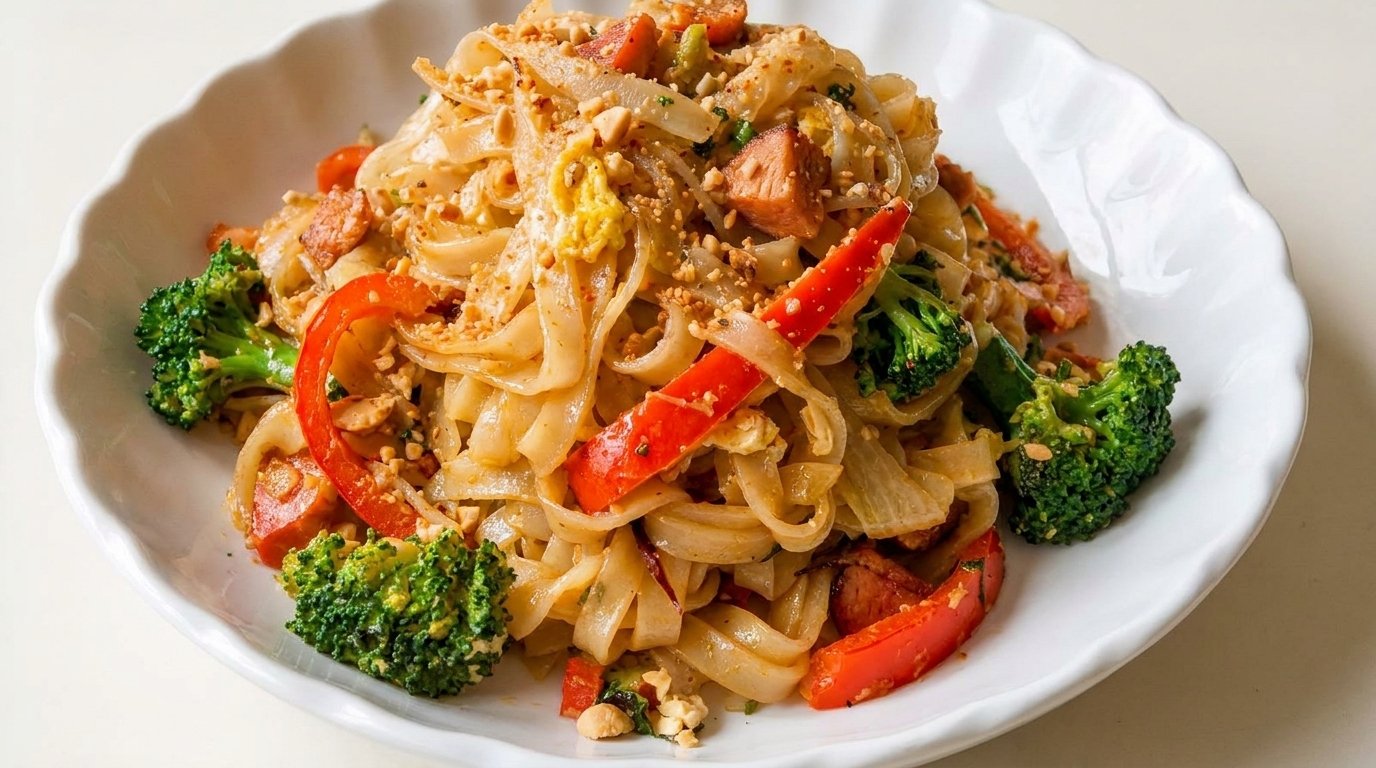
Thai Rice noodle with Peanut Sauce
4
servings20
minutes15
minutes828
kcal35
minutesThis one-wok noodle dish pairs slippery rice noodles with a sweet-savory peanut sauce. Broccoli and bell pepper add color, while crushed peanuts and bean sprouts bring crunch at the end.
Ingredients
8 oz (230 g) dried rice noodles
1 cup sliced chicken, pork, or shrimp
1 cup broccoli florets
1 cup sliced bell pepper
½ onion, sliced
1 tbsp minced garlic
1 egg
2 green onions, sliced (for garnish)
Bean sprouts and crushed peanuts (for garnish)
- Peanut Sauce:
¼ cup chicken broth
2 tbsp peanut butter
2 tbsp soy sauce
1 tbsp fish sauce
2 tbsp coconut milk
2 tbsp tamarind concentrate
2 tbsp brown sugar
1 tsp crushed chili (optional)
½ tsp curry powder or 1 tbsp red curry paste
2 tbsp chopped cilantro (for garnish)
Directions
- Soak rice noodles in warm water for 15 minutes. Drain, boil for 1 minute, then drain and rinse under cool water. Rinse again if noodles stick together.
- In a saucepan, combine all sauce ingredients. Warm over medium heat, stirring, until peanut butter melts and sauce is hot. Turn off heat and cool slightly.
- Heat 2 tbsp oil in a wok. Add garlic; stir-fry until light brown. Add meat; cook until almost done.
- Add broccoli, bell pepper, and onion; stir-fry about 2 minutes.
- Add noodles; toss until hot. Push noodles aside, crack in egg, scramble lightly, then mix through.
- Add half the sauce; toss. Add more sauce only if noodles seem dry. Turn off heat.
- Add green onion, cilantro, and bean sprouts; toss. Serve with crushed peanuts.
Equipment
 Chef’s KnifeCheck product details
 Cutting boardCheck product details
 Measuring Spoons & CupsCheck product details
 Small bowlCheck product details
 Small potCheck product details
 SpatulaCheck product details
 StrainerCheck product details

 Wooden SpoonCheck product details




Recipe Video
Recipe Notes
- Dried rice noodles vary by brand; check package directions. Refrigerate leftovers within 2 hours and use within 3–4 days.
Nutrition Facts
- Serving Size: 1 g
- Total number of serves: 4
- Calories: 828kcal
- Fat: 58.6g
- Saturated Fat: 18g
- Cholesterol: 85mg
- Sodium: 1081mg
- Potassium: 389mg
- Carbohydrates: 67.9g
- Net Carbs: 64.2g
- Fiber: 3.7g
- Sugar: 13g
- Protein: 8.3g
- Vitamin A: 77.7mcg
- Vitamin C: 73.2mg
- Calcium: 63mg
- Iron: 2mg
- Vitamin D: 2.7mcg
- Vitamin E: 3.1mg
- Vitamin K: 39mcg
- Thiamin: 0.1mg
- Riboflavin: 0.2mg
- Niacin: 2.5mg
- Vitamin B6: 0.3mg
- Vitamin B12: 0.1mcg
- Folate: 58.9mcg
- Pantothenic Acid: 0.6mg
- Phosphorus: 201mg
- Magnesium: 58mg
- Zinc: 1mg
- Selenium: 14.2mcg
- Copper: 0.2mg
- Manganese: 0.7mg
Did you make this recipe?
Tag @cambodiarecipe on Instagram and hashtag it
Like this recipe?
Follow us @cambodiarecipe on Pinterest
Did you make this recipe?
Follow us on Facebook