Bamboo Shoots Yucca Soup
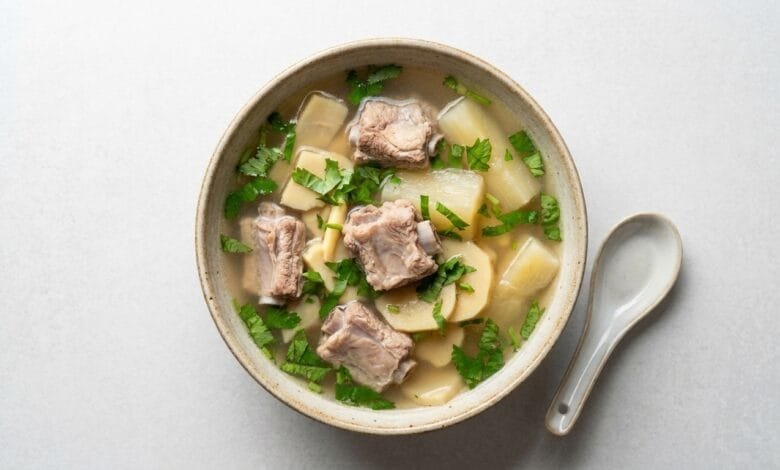
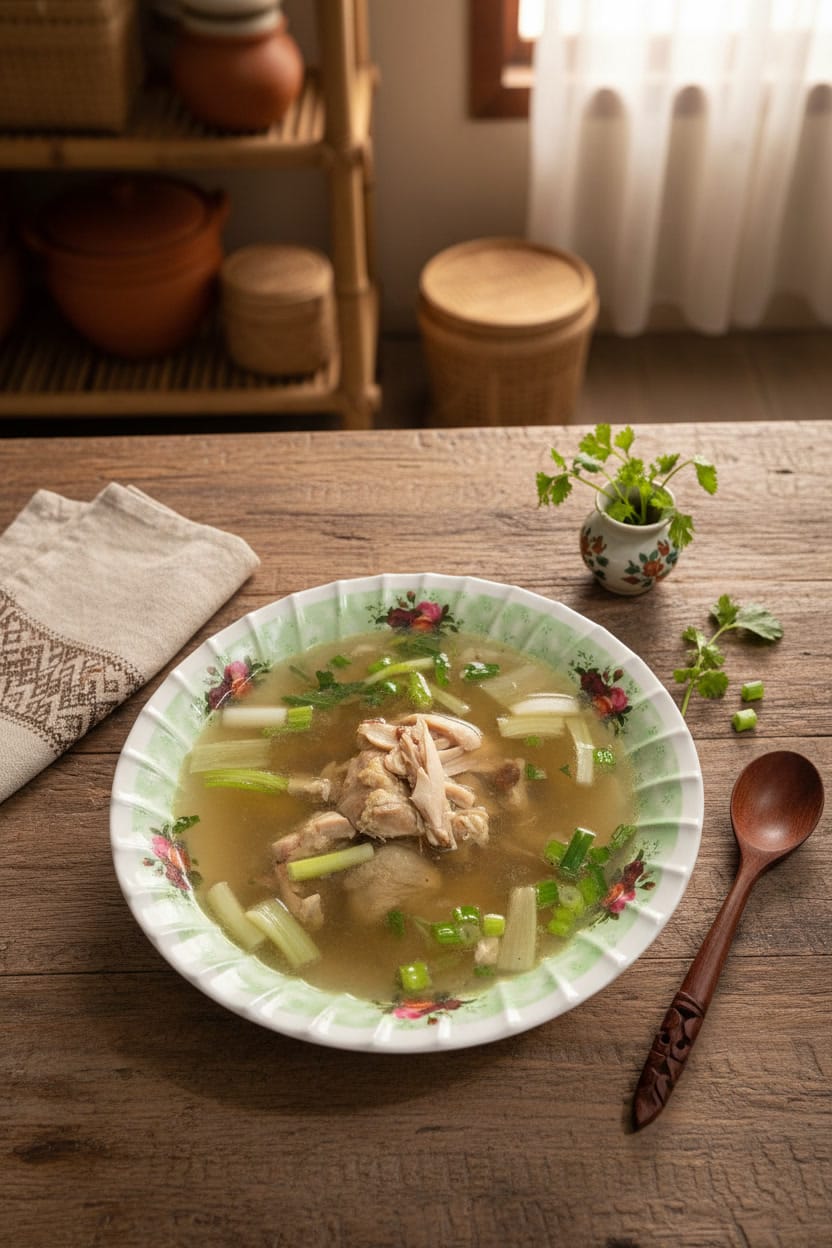
Some Cambodian soups are built on clear, delicate broths. This one goes the other direction. Pork ribs simmer slowly with yucca root until the liquid turns lightly cloudy and sweet, while sliced bamboo shoots add a gentle crunch that keeps each spoonful interesting. It is a Khmer Krom home-style soup — the kind of pot that stays on the stove and gets better as the afternoon goes on.
The seasoning is deliberately simple: fish sauce for salt and depth, a touch of sugar to round things out, and black pepper for warmth. Fresh saw leaf herb goes in at the very end, so its strong, grassy-citrus aroma stays intact. Serve it hot with steamed rice and you have a complete meal that tastes like it took more effort than it did.
What You Need
Pork ribs form the base of the broth, so choose riblets or ribs with a good ratio of meat to bone. Yucca root — also sold as cassava — gives the soup its body and a subtle sweetness. Canned bamboo shoots are convenient and work well here; just drain them before adding. Saw leaf herb, sometimes labeled culantro or long coriander, is the finishing herb. Look for it at Southeast Asian markets, fresh or frozen.
Equipment
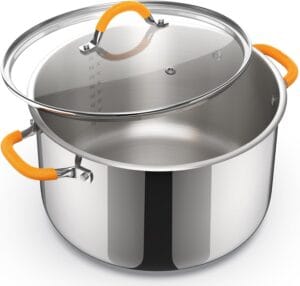
- Soup pot: To simmer the pork ribs, bamboo shoots, and yucca until everything is tender.
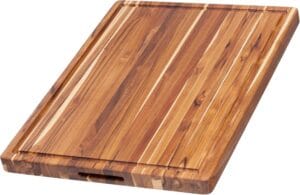
- Cutting board: To safely cut the pork into bite-size pieces and chop the onion.
- Chef’s knife: To portion the ribs, peel and chunk the yucca, and prepare the saw leaf.
- Measuring cups and spoons: To measure the water, fish sauce, sugar, and black pepper accurately.
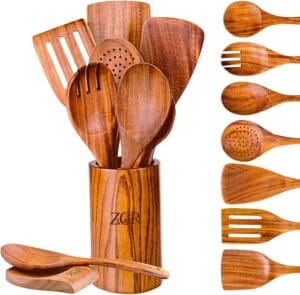
- Wooden spoon: To stir the soup occasionally and keep the ingredients from sticking.
How to Make Bamboo Shoots & Yucca Soup
Step 1: Combine the base ingredients
Put the pork ribs, drained bamboo shoots, yucca chunks, chopped onion, and water into a soup pot. Set it over medium-high heat and bring it to a boil.
Step 2: Simmer until tender
Once boiling, reduce the heat to a gentle simmer. Cook until the pork ribs are tender and the yucca is soft enough to pierce easily with a fork. Stir occasionally so nothing settles at the bottom.
Step 3: Season the broth
Stir in the fish sauce, sugar, and black pepper. Taste the broth and adjust if needed — different brands of fish sauce vary in saltiness.
Step 4: Finish with saw leaf
Turn off the heat. Scatter the chopped saw leaf herb over the top and let it wilt into the hot broth for a minute before serving.
Cooking Tips
- Canned bamboo shoots are already cooked, so they do not need extra prep. Just drain and add them with the other ingredients.
- If you use fresh bamboo shoots, they must be boiled first to remove bitterness and natural toxins.
- Yucca root has a thick, waxy skin and a fibrous core. Peel it deeply enough to remove the pinkish layer just under the skin, and cut around the tough center.
- The soup thickens slightly as it sits because of the starch from the yucca. If you prefer a looser broth, add a splash of hot water when reheating.
How to Serve
Ladle the soup into bowls, making sure each portion gets some pork, bamboo shoot, and yucca. Serve hot with steamed jasmine rice on the side. A small plate of extra saw leaf or fresh herbs on the table lets everyone add more to their own bowl.
Frequently Asked Questions
What does this soup taste like?
The broth is lightly sweet from the yucca and pork, savory from the fish sauce, and fragrant from the saw leaf. The bamboo shoots add a mild crunch and a slightly nutty flavor.
Can I use frozen yucca instead of fresh?
Yes. The recipe works with frozen peeled yucca. Defrost it first, then cut it into chunks. The texture will be slightly softer than fresh yucca but still good.
Can I make this soup ahead of time?
Yes. It keeps well in the refrigerator for up to three days. The flavor deepens overnight. Reheat gently on the stove and add the saw leaf fresh after reheating.
Can I substitute the saw leaf herb?
Saw leaf has a distinct flavor that is hard to replace exactly. Cilantro or culantro can work as a substitute, but the aroma will be different. Add it at the end, just like the saw leaf.
Final Thoughts
This soup is a good example of how Cambodian cooking can turn a short ingredient list into something deeply satisfying. The pork and yucca do most of the work, creating a broth that tastes rich without being heavy. The saw leaf is the one element that makes it unmistakably Khmer. If you can find it, use it — it is worth the trip to a Southeast Asian market.
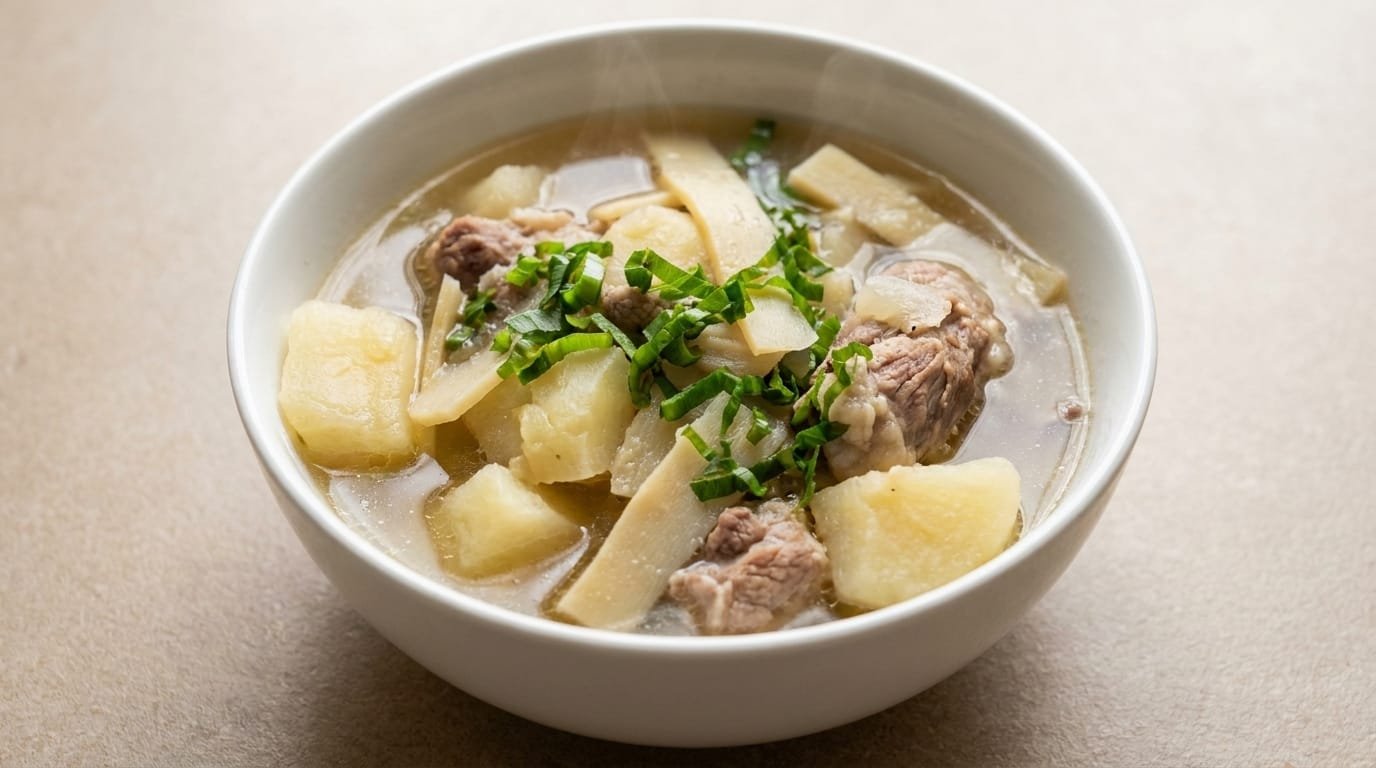
Bamboo Shoots & Yucca Soup
4
servings15
minutes45
minutes4008
kcal1
hourPork ribs and yucca root simmer together in a light, slightly sweet broth. Sliced bamboo shoots add texture, while fish sauce and saw leaf give the soup its Cambodian character. Serve hot with rice.
Ingredients
1 lb (4500 gram) of pork rib lets or pork ribs, cut to bite sizes
1 small canned, 5 oz (150 gram) sliced bamboo shoot, drained
1 lb (4500 gram) of Fresh yucca root, peeled and cut chunks or ½ lb frozen peeled yucca, defrosted and cut chunks
1 small yellow onion, chopped
5 cups water
2 tablespoons fish sauce
1/2 tablespoon Sugar
1/4 teaspoon black pepper
5 fresh saw leaf herb, chopped
Directions
- Put pork ribs, bamboo shoots, yucca, onion and water in a soup pot, cook till ribs and yucca tender.
- Seasoning with fish sauce, sugar and black pepper.
- Top with saw leaf.
Equipment
 Large Soup PotCheck product details
 Cutting boardCheck product details
 Wooden SpoonCheck product details


Recipe Video
Nutrition Facts
- Serving Size: 1 g
- Total number of serves: 4
- Calories: 4008kcal
- Fat: 187.7g
- Saturated Fat: 60.2g
- Cholesterol: 630mg
- Sodium: 1520mg
- Potassium: 5053mg
- Carbohydrates: 433.8g
- Net Carbs: 412.2g
- Fiber: 21.6g
- Sugar: 22.5g
- Protein: 138.5g
- Vitamin A: 8.7mcg
- Vitamin C: 233.5mg
- Calcium: 338mg
- Iron: 11mg
- Vitamin D: 18.1mcg
- Vitamin E: 5.5mg
- Vitamin K: 29.4mcg
- Thiamin: 3.5mg
- Riboflavin: 2.5mg
- Niacin: 46.7mg
- Vitamin B6: 5.6mg
- Vitamin B12: 3mcg
- Folate: 315.8mcg
- Pantothenic Acid: 6.2mg
- Phosphorus: 1431mg
- Magnesium: 388mg
- Zinc: 24mg
- Selenium: 182.3mcg
- Copper: 1.9mg
- Manganese: 4.6mg
Did you make this recipe?
Tag @cambodiarecipe on Instagram and hashtag it
Like this recipe?
Follow us @cambodiarecipe on Pinterest
Did you make this recipe?
Follow us on Facebook