What Happens at a Cambodian Buddhist Funeral? A Traveler’s Guide
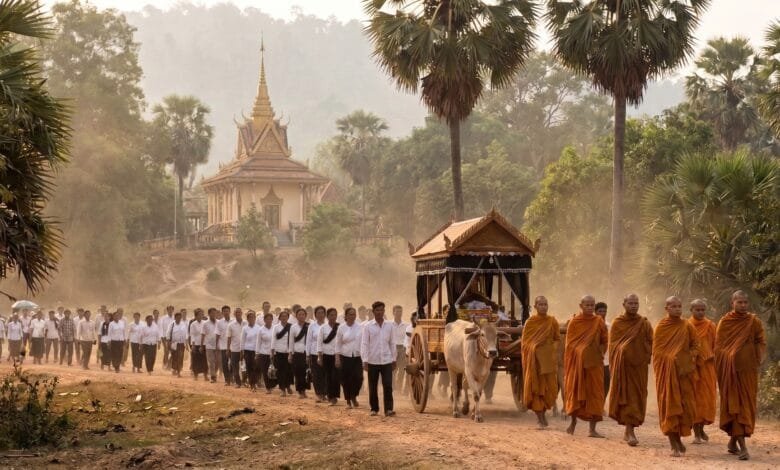
If you spend any time in Cambodia, you may notice something: a house draped in white cloth, a slow procession winding toward a pagoda, or the sound of rhythmic chanting drifting through the night. Cambodian funerals are not hidden away. They are part of public life, and understanding them opens a window into some of the deepest beliefs in Cambodian culture.
Most Cambodians are Theravada Buddhists, and death is understood not as an ending but as a transition. The funeral rituals are designed to help the deceased move on to a better rebirth and to help the living cope with their loss. Whether you are simply curious about what you see or have been invited to attend a funeral by a Cambodian friend, here is what you need to know.
What Happens Immediately After a Death
In traditional Cambodian practice, the care of the body is a family matter. When someone dies, relatives wash and perfume the body, then dress it in white cloth. The body is placed in a wooden coffin and kept at home — traditionally for seven days — while friends and relatives visit to pay their respects.
The body is not embalmed, and all organs are left intact. Cambodian Buddhists believe that any deviation from these practices could affect the deceased’s rebirth.
During this period, the coffin may be opened so the deceased can “listen” to the chanting, though the face remains covered with a white cloth. The family keeps incense burning and receives a steady stream of visitors.
The Role of Monks and Chanting
Shortly after death, monks are invited to the home. Their chanting — known as smot — is believed to calm the spirit of the deceased, which Buddhists believe is thrown into a state of fright and confusion after leaving the body.
The chanting is not just a formality. It is considered essential for guiding the soul and helping it attain an auspicious rebirth. Monks may chant through the night, and their presence is understood as a form of protection and comfort for both the deceased and the grieving family.
Alongside the chanting, traditional funeral music called kantoaming may be performed. This music features gongs, drums, and a reed instrument called the srolai. Cambodians believe it is the only music that can be played as the soul leaves the body — a kind of lullaby that coaxes the spirit onward. Without it, some believe the dead cannot find their way to the afterlife.
The Seven-Day Vigil
The seven-day period is the heart of the traditional Cambodian funeral. During this time, family members and friends gather at the home. Some male relatives may temporarily become monks in a practice called bueh muk phleung, or “becoming a monk before the fire”. They shave their heads, wear monk’s robes, and live at the temple for a few days. The merit from this act is shared with the deceased to promote a better rebirth.
Each morning, relatives and friends give donations to the monks in a ritual called bangsoekool, or the gift-bestowal ritual. These offerings — usually food, but sometimes money or clothing — are meant to make merit for the deceased. The monk may announce to the deceased, “Go be reborn to a new life, don’t hang around here with your relatives”. This is not harshness; it is encouragement. The living want the dead to move forward, not linger.
Cremation at the Pagoda
On the day of cremation, the body is carried in procession from the home to a pagoda, or wat. This is the most public part of the funeral, and you may see a long line of people dressed in white walking slowly behind a funeral cart.
At the pagoda, the cremation takes place. The family collects the ashes afterward, cleaning them with coconut juice, which symbolizes purity. The ashes are placed in an urn, ideally kept in a small stupa built next to the temple, though many families store the urn at the temple because building a stupa is expensive.
For many Cambodians, attending the cremation is an important act of respect. A relative who cannot be present may later say, with real emotion, “I was unable to see the smoke of the cremation fire”.
The 100-Day Ceremony and Remembrance
The funeral does not end with cremation. On the seventh day after death, and again on the hundredth day, families hold remembrance ceremonies. These are called “crossing merit” rituals (bon cheulâng).
The 100-day ceremony is considered especially important. In Buddhist belief, the deceased may not realize they have died until the seventh day. The 100-day ceremony marks the completion of the mourning period and is believed to help the soul move on to its next life. If someone dreams of the deceased after 100 days, it may be interpreted as a sign that the person has not yet been reborn and needs more merit from the living.
What Travelers Should Understand
Funerals in Cambodia are deeply meaningful, but they are also community events. If you are staying in a Cambodian neighborhood, you may hear chanting late at night or see white-clad mourners in the street. This is normal, and it is not considered private in the way a Western funeral might be.
If you are invited to attend a funeral, your presence is a sign of respect. You do not need to perform any religious rituals. A simple, quiet presence is enough. Dress conservatively in white or black — white is the traditional mourning color in Cambodia. Avoid bright colors, especially red, which is associated with celebration.
If you wish to give a gift, cash in an envelope is customary and appreciated. It helps the family cover the cost of the funeral, which can be significant. Even a small amount is received with gratitude.
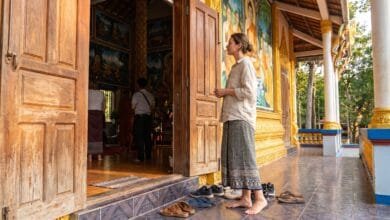
If you are simply observing from a distance, be respectful. Do not photograph mourners without permission. Do not interrupt the procession. If you are near a pagoda during a cremation, keep your voice low and avoid behavior that draws attention to yourself.
Frequently Asked Questions
Can tourists attend a Cambodian funeral?
Only if invited. Funerals are open to members of the community, but tourists should not show up uninvited. If a Cambodian friend invites you, it is appropriate to accept and to follow their guidance.
What should I wear to a Cambodian funeral?
What is the seven-day ceremony?
What happens at the cremation?
Do I need to bring a gift?
Why do Cambodians shave their heads at funerals?
Close relatives, especially sons and grandsons, may shave their heads and wear white as a sign of mourning. Some may temporarily become monks for a few days before the cremation. This is a way of making merit for the deceased.
Conclusion
A Cambodian Buddhist funeral is not just a farewell. It is a series of careful, meaningful acts designed to help the deceased move on to a better life and to help the living process their grief. The seven-day vigil, the chanting of monks, the music that guides the spirit, the cremation at the pagoda, and the remembrance ceremonies at 100 days — each step reflects deep beliefs about death, rebirth, and the bond between the living and the dead.
For a traveler, understanding these rituals makes Cambodia richer. You may never attend a funeral, but you will almost certainly see signs of them — the white cloth, the procession, the chanting from a pagoda at night. Now you will know what they mean.