What Does Cambodian Durian Taste Like? A Traveler’s Guide to the King of Fruits
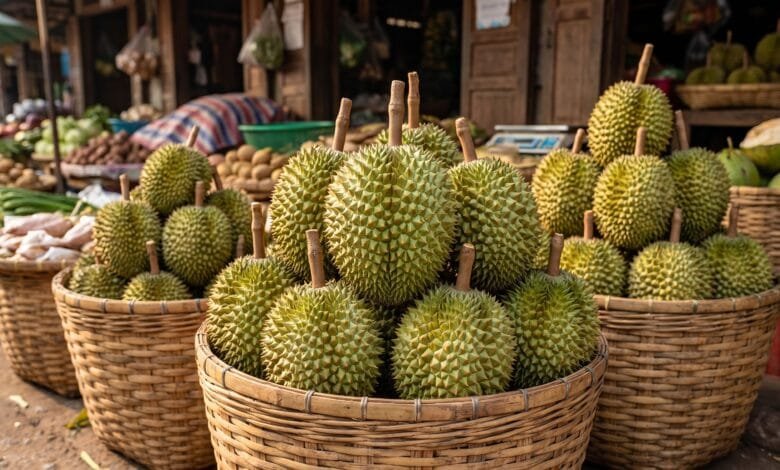
Durian is called the “king of fruits” across Southeast Asia, and in Cambodia it earns that title every year between roughly May and August. The fruit is large, heavily spiked, and famous for an aroma so strong that hotels, buses, and airlines across Asia ban it from enclosed spaces. Yet those who get past the smell often discover a rich, creamy flesh that tastes like nothing else in the tropical fruit world. If you are traveling to Cambodia and want to understand what durian is, when to find it, and how to try it, this guide will walk you through everything a first-time visitor needs to know.
What Is Cambodian Durian?
Durian is the fruit of several tree species in the genus Durio, with the most common commercial variety being Durio zibethinus. In Cambodia, it is known as thouren (ធុរេន) or turèn (ទុរេន) in Khmer. The fruit grows on tall tropical trees and is harvested when ripe, usually after it falls naturally to the ground. Cambodian durian is primarily cultivated in the provinces of Kampot, Kampong Cham, Battambang, Pursat, and Tboung Khmum, with additional production in Koh Kong and Ratanakiri. The Kampot variety, in particular, has a strong local reputation for sweetness and creamy texture.
Durian is a fruit, not a vegetable. It is eaten fresh, used in desserts, and occasionally cooked into curries early in the season. It is not the same as jackfruit, which is another large tropical fruit with a very different texture and flavor.
What Does Cambodian Durian Look Like?
A durian looks like a heavily armored rugby ball. The outer husk is covered in hard, conical spikes that range from green to yellowish-brown as the fruit ripens. A single durian can weigh between one and three kilograms, and some larger specimens grow even heavier. The shape varies from round to slightly oblong, and the husk is thick and difficult to open without a knife.
Inside, the husk is divided into compartments. Each compartment holds pale yellow to golden-yellow segments of flesh wrapped around large, smooth brown seeds. The flesh is soft, custard-like, and sometimes slightly fibrous depending on the variety. When the fruit is very ripe, the segments become even softer and more fragrant.
What Does Cambodian Durian Taste Like?
The flavor of ripe durian is rich, sweet, and creamy, with a complex undertone that some describe as slightly savory or even faintly bitter. The texture is often compared to thick custard or soft cheese. It is not juicy like a mango or crunchy like an apple. Instead, it coats the tongue with a dense, smooth richness.
The smell is the part that divides people. Ripe durian releases sulfur compounds that some noses interpret as rotting onions or overripe cheese. Others perceive a sweet, fruity aroma underneath. In Cambodia, a common saying is that you should eat durian with your mouth, not your nose. The flavor itself is far more pleasant than the smell might suggest, and many first-time tasters are surprised by how much they enjoy it once they take the first bite.
Cambodian durian, especially from Kampot, tends to be sweeter and less pungent than some Thai varieties. The flesh is often described as creamy and delicate, with a sweetness that lingers on the palate.
When Is Durian in Season in Cambodia?
Durian season in Cambodia generally runs from May to August, with the peak months falling between June and July. The exact timing depends on the weather. In some years, early durians appear in late April, and a late-season wave can extend into September or October. The season begins after the traditional Khmer New Year celebrations, when the rains return and the trees start to bloom.
Kampot producers often start harvesting first, sometimes as early as late April, while other provinces follow in May and June. The season is relatively short, which helps explain why durian is one of the more expensive fruits on the Cambodian market. Outside the main season, fresh local durian is difficult to find, though imported durian from Thailand and Vietnam is available year-round.
Where Does Durian Grow in Cambodia?
Cambodian durian is not grown everywhere in the country. It requires a hot, humid climate and well-drained soil, and the trees take several years to begin producing fruit. The main growing regions are:
- Kampot Province — The most famous durian-growing province in Cambodia, known for sweet, creamy fruit.
- Kampong Cham Province — A major production area with rich red soil.
- Battambang Province — Particularly the Samlot district, which produces a distinctive local variety.
- Pursat Province — Another significant durian-growing area.
- Tboung Khmum Province — Increasingly recognized for local durian production.
- Koh Kong and Ratanakiri — Smaller production areas in select locations.
Durian is not grown around Siem Reap, so any durian sold in Siem Reap markets has been brought in from other provinces or imported.
How Do Cambodians Eat Durian?
Durian is most commonly eaten fresh. When you buy it at a market or roadside stall, the seller will usually open the fruit for you and remove the edible segments. These are often placed in a foam box or plastic container for easy carrying. Many vendors also sell pre-packaged durian flesh, though the quality and freshness can vary.
Beyond eating it fresh, Cambodians use durian in several ways:
- With sticky rice and coconut milk — A popular dessert combination, especially during the season.
- Durian ice cream — A common treat sold by vendors and in dessert shops.
- Dried durian chips — A shelf-stable snack available in some markets.
- Durian paste — Used as a filling or flavoring in sweets and desserts.
- Durian curry — Early in the season, when the flesh is firmer, it is sometimes cooked into a curry similar to how jackfruit is used.
Some Cambodians also eat durian with hot ginger tea, which is believed to balance the fruit’s rich, creamy sweetness.
Ripe vs Unripe Durian
Durian is almost always eaten ripe. Unlike mango or papaya, unripe durian is not commonly consumed as a sour fruit. However, very early in the season, when the flesh is still firm, it may be cooked into curries. Once the fruit is fully ripe, the flesh becomes soft, creamy, and intensely aromatic. Overripe durian can become mushy and develop a stronger, more fermented flavor that some people find unpleasant.
For travelers, the key distinction is between fresh ripe durian and durian that has been sitting too long. A freshly opened ripe durian has a clean, sweet aroma and firm-but-soft flesh. If the smell is overwhelmingly sharp or the flesh looks watery, it may be past its best.
How to Choose Durian
Choosing a good durian is a skill that many Cambodians develop over years. For a traveler, a few basic tips can help:
- Look for a golden-yellow or yellowish-green husk — Very dark green husks may indicate the fruit is not fully ripe.
- Tap the husk gently — A slightly hollow sound suggests the fruit is ripe and the flesh has separated from the shell. A dull thud may mean it is underripe or overripe.
- Smell the fruit — A ripe durian has a strong but not overwhelming aroma. If the smell is faint, it may need more time. If it is aggressively pungent, it may be overripe.
- Ask the vendor — Cambodian durian sellers are usually happy to help you choose a good fruit, and many will open it for you on the spot.
Do not worry about finding the “perfect” durian on your first try. The experience is part of the adventure.
Where Can Travelers Find Durian in Cambodia?
During the season, durian is widely available in Cambodia. You will see it at:
- Local markets — Most provincial markets have durian stalls during the season.
- Roadside fruit stands — Particularly along highways leading out of Kampot, Kampong Cham, and Battambang.
- Street vendors — In Phnom Penh and Siem Reap, vendors sell durian from carts or temporary stalls.
- Supermarkets — Some larger supermarkets sell durian, though it is less common because of the smell.
- Durian farms — In Kampot and Kampong Cham, some farms allow visitors to buy fruit directly during harvest season.
Prices vary by season, location, and variety. In 2025, local durian was reported at around 20,000 riel (about US$5) per kilogram in some areas, with prices ranging higher for premium Kampot fruit. Imported Thai durian is often cheaper but may lack the sweetness and creaminess that Cambodian durian is known for.
How Should a First-Time Traveler Try Durian?
If you have never tried durian before, here is a simple approach:
- Buy a small amount first — You do not need to commit to a whole fruit. Many vendors sell individual segments or small containers of flesh.
- Try it fresh, not processed — Fresh durian gives you the truest sense of its flavor and texture.
- Eat it outdoors — Because of the smell, durian is best enjoyed in an open-air setting, not in a hotel room or enclosed space.
- Use the provided gloves or a fork — The smell can linger on your hands, so many vendors provide plastic gloves.
- Do not eat the seeds — The large brown seeds inside the flesh are not edible raw, though they can be boiled or roasted until soft.
- Start with a small bite — The flavor is intense and unfamiliar. Give yourself time to adjust.
Many travelers find that their first durian experience is better when they try it with someone who knows the fruit, such as a local guide or a vendor who can help them choose a good one.
How Is Durian Different From Jackfruit?
Durian and jackfruit are both large tropical fruits with spiky or textured exteriors, and they are sometimes confused by first-time visitors. However, they are very different:
- Durian has large, hard, conical spikes and a strong, distinctive smell. Its flesh is soft, creamy, and sweet-savory.
- Jackfruit has smaller, softer bumps on its skin and a milder, sweeter aroma. Its flesh is firm, fibrous, and often described as tasting like a combination of banana, pineapple, and mango.
Jackfruit is also much larger than durian and can weigh up to 30 kilograms or more. In Cambodia, jackfruit is commonly eaten fresh or used in salads and desserts, while durian is prized as a seasonal luxury fruit.
Can You Find Durian Outside Cambodia?
Yes, durian is available in many countries outside Southeast Asia, primarily in Asian grocery stores and specialty markets. However, the durian sold abroad is often imported from Thailand, Malaysia, or Vietnam, and may be frozen or chilled rather than fresh. The flavor and texture can differ from what you would taste in Cambodia.
In the United States, durian is most commonly found in Asian supermarkets, usually frozen or as durian paste. Fresh durian is occasionally available in areas with large Southeast Asian communities, but it is expensive and may be imported from Thailand or Malaysia. Cambodian durian itself is rarely exported in fresh form outside the region.
Cultural and Regional Importance
In Cambodia, durian is more than just a fruit. It is a seasonal event. Families gather to share durian during the harvest months, and markets overflow with the fruit from May through July. In Kampot, durian is a point of regional pride, and the province has applied for protected geographical indication status for its durian, alongside its more famous Kampot pepper. Durian is also used in traditional medicine in Cambodia, where different parts of the tree — leaves, skin, roots, and fruit — are used to treat various ailments. Modern research is exploring durian’s nutritional properties, but for most Cambodians, the fruit’s value is simple: it is delicious, and it only comes once a year.
What Should Foreign Travelers Know?
Before you try Cambodian durian, here are a few practical things to keep in mind:
- Do not bring durian into hotels, buses, or airplanes. The smell is strong enough that it is banned in most enclosed public spaces across Asia. Even locals are not allowed to carry it into hotel rooms.
- The smell is part of the experience. You may not like it at first. That is normal. Many people who dislike the smell end up enjoying the taste.
- The seeds are not edible raw. They must be cooked before eating.
- Buy from reputable vendors. During the season, durian is widely available and generally safe to eat. If you are buying pre-cut fruit, choose a vendor with a clean stall and fresh-looking produce.
- Expect to pay more than for other fruits. Durian is one of the most expensive fruits in Cambodia. Prices can range from US$3 to US$10 per kilogram depending on the variety, season, and location.
- Try it with an open mind. Durian is not for everyone, but it is one of the most memorable food experiences you can have in Cambodia.
Frequently Asked Questions
What is durian called in Khmer?
Durian is called thouren (ធុរេន) or turèn (ទុរេន) in Khmer.
What does Cambodian durian taste like?
Cambodian durian is sweet, creamy, and rich, with a texture similar to custard. The flavor is complex, with a sweet base and a slightly savory undertone.
When is durian season in Cambodia?
The main season runs from May to August, with peak availability in June and July. Early durians may appear in late April, and the season can extend into September in some years.
How do Cambodians eat durian?
Durian is most commonly eaten fresh. It is also used in sticky rice desserts, ice cream, dried chips, and occasionally curries.
Where can travelers find durian in Cambodia?
Durian is available at local markets, roadside stands, and street vendors during the season. It is most commonly found in Kampot, Kampong Cham, Battambang, and Phnom Penh.
Can I bring durian to my hotel?
No. Most hotels in Cambodia and across Asia ban durian from their premises because of the strong smell. It is also banned on buses and airplanes.
Conclusion
Cambodian durian is one of the most distinctive fruits you can encounter in Southeast Asia. It is large, heavily spiked, and famous for an aroma that inspires strong opinions. But underneath the smell is a rich, creamy, sweet flesh that has earned durian its title as the king of fruits. The season is short — roughly May to August — and the best fruit comes from provinces like Kampot, Kampong Cham, and Battambang. For travelers, trying durian is more than a taste test. It is a way to connect with Cambodian food culture at its most seasonal and celebratory. Whether you love it or not, it is an experience you will not forget.