Cambodian Mango: What It Tastes Like and How to Eat It in Cambodia
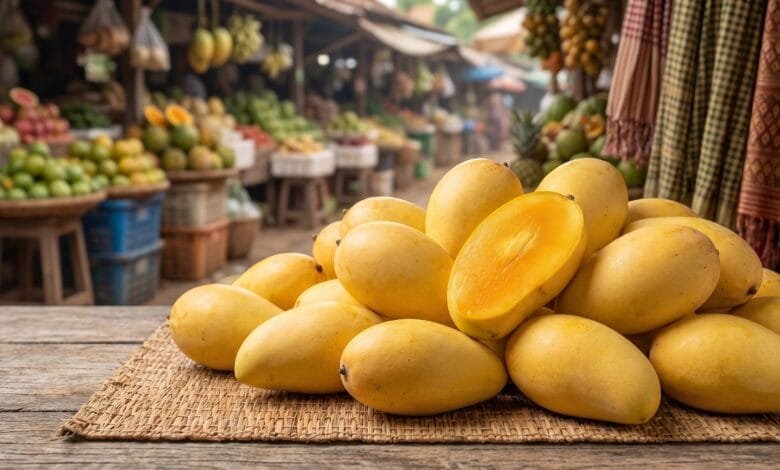
Mango season is one of the most anticipated times of year in Cambodia. From February through June, markets, roadside stalls, and family tables fill with golden fruit that many Cambodians consider the country’s most beloved tropical treat. If you are traveling through Cambodia, you will likely see mangoes sold everywhere — sliced on sticks, piled in baskets, or shredded into tangy salads.
This guide explains what Cambodian mangoes taste like, when they are in season, which varieties matter most, and how locals eat them at every stage of ripeness. Whether you are curious about the famous Keo Romeat or wondering how to try green mango the Cambodian way, this article will help you understand what you are looking at and what to expect.
What Is a Cambodian Mango?
In Khmer, mango is called svay (ស្វាយ). The scientific name for the mango is Mangifera indica. Cambodia is one of many tropical countries where mangoes grow, but the country has its own distinct varieties and food traditions built around the fruit.
Mango is classified as a stone fruit (drupe) and is grown throughout Cambodia’s lowland regions, especially along the fertile Mekong plain. Around 15 mango varieties are cultivated in the country, but two stand out for their importance to local agriculture and cuisine: Keo Romeat and Keo Chen.
Keo Romeat dominates roughly 80 percent of Cambodia’s mango production. It is a native Cambodian variety with bright orange flesh and a balanced sweet flavor. Keo Chen is a premium variety with much lower production, known for a subtle coconut aroma that makes it a favorite for desserts.
What Do Cambodian Mangoes Look Like?
Cambodian mangoes vary by variety, but most share recognizable features. A typical ripe Keo Romeat mango is oval-shaped with smooth, thin skin that shifts from green to golden-yellow as it ripens. The flesh inside is bright orange and relatively fiberless, with a large, flat white seed in the center.
Keo Chen mangoes tend to be smaller and are sometimes described as having a more aromatic, perfumed quality. The Khmer name Keo is used across several mango variety names and generally refers to a type of mango with sweet, firm flesh.
Green (unripe) mangoes are firm and pale green to yellowish-green on the outside, with crisp, pale flesh inside. They are harvested before the sugars develop and are prized for their tartness and crunch.
Ktish mango, a rare native variety from Battambang, is small in size and unusual because it retains a naturally sweet flavor even when unripe. It is now rare, with few new trees being cultivated.
What Does a Cambodian Mango Taste Like?
The taste of a Cambodian mango depends heavily on the variety and ripeness.
A ripe Keo Romeat mango is sweet with a mild tang. Some tasters describe a slight coconut note in the background. The flesh is juicy and soft, almost melting, with very little fiber. The aroma is floral and honeyed — the kind of fragrance that fills a room when a basket of ripe mangoes sits on a table.
Keo Chen has a more pronounced coconut flavor and a distinctive aroma that has made it a preferred ingredient in high-end Khmer desserts. It is less common in everyday markets because production is limited.
Green mango is a completely different experience. It is sour, crisp, and refreshing. Some varieties, like Phum Sen, are described as very sour when green but sweet when ripe. The tartness of green mango is what makes it so useful in Cambodian salads and dipping snacks.
The Ktish mango from Battambang is notable because it is naturally sweet even before it fully ripens — a rare trait that contributes to its high market price and its status as a heritage variety.
When Is Mango Season in Cambodia?
Cambodia’s mango season is long compared to many countries. Thanks to a subtropical climate and the fertile soil of the Mekong plain, mangoes can be cultivated almost year-round. However, the main season runs from February to June, with peak harvest and export activity during those months.
There is also an off-season harvest from roughly June to February, though yields are lower and production costs are higher. Some farmers manage two crops per year using floral manipulation techniques.
In practice, this means travelers visiting Cambodia between February and June will see mangoes at their most abundant and affordable. During other months, mangoes are still available but may be more expensive or imported from other regions.
The Khmer New Year in mid-April often coincides with the first major mango harvest, and mangoes are a common gift and celebration fruit during this time.
Where Do Mangoes Grow in Cambodia?
Mangoes are grown in many provinces across Cambodia, but some regions are especially associated with specific varieties.
Keo Romeat grows mainly in Kampong Speu province, known for its sandy, fertile soil along the Mekong. Keo Chen is cultivated in Kandal province, often by families living on small islands in the Mekong River.
The rare Ktish mango is traditionally grown in Battambang province in northwestern Cambodia. Other mango-growing areas include Kampong Thom, Siem Reap, Preah Vihear, and Oddar Meanchey in the north and northwest.
Cambodia’s mango industry has grown significantly in recent years. The country produced about 2.25 million metric tonnes of fresh mango in a recent year and exported roughly 245,000 metric tonnes worth about US$115 million in the first ten months of that year.
How Do Cambodians Eat Mangoes?
Cambodians eat mangoes in many ways, and the choice often depends on whether the fruit is green or ripe.
Green (unripe) mango is eaten as a snack with a dipping mixture of salt, chili, and sometimes sugar. Street vendors slice green mango into thin strips or wedges, and customers dip the pieces into a small bag of chili-salt. The combination of sour, salty, and spicy is a classic Cambodian flavor contrast.
Green mango is also the main ingredient in chruok svay (ជ្រក់ស្វាយ), a Cambodian green mango salad. The shredded mango is tossed with a dressing of lime juice, fish sauce, and palm sugar, then mixed with dried shrimp, peanuts, shallots, and herbs. It is typically eaten as an appetizer or side dish with grilled meats and rice.
Ripe mango is eaten fresh, often simply peeled and sliced. During mango season, families may buy mangoes by the kilogram and eat them throughout the day. Ripe mango is also used in desserts and drinks.
Mango sticky rice is a popular dessert made with sweet coconut sticky rice topped with slices of ripe mango and a drizzle of coconut cream. It is especially common during the hot season when mangoes are at their peak.
Dried mango is another common way to enjoy the fruit outside of season. Cambodian dried mango is made from Keo Romeat and other varieties, producing chewy, intensely flavored slices that retain a pleasant tartness.
How Is Mango Used in Cambodian Food?
Mango appears in Cambodian cooking at both the green and ripe stages.
Green mango is used primarily in salads, such as chruok svay, and as a dipping snack. The tartness cuts through rich, fatty foods and provides a refreshing contrast to grilled meats and fish.
Ripe mango is used in desserts, smoothies, and sometimes in savory dishes. Beef curry with mango is a Khmer Krom dish where the mango adds a soft sour note that melts into the broth. Mango smoothies are a popular drink sold at markets and juice stalls, often blended with ice, lime, and a little sugar.
The CambodiaRecipe site has several mango recipes, including Mango Salad with Dried Shrimp and Mango Smoothie, which show how the fruit is used in everyday Cambodian cooking.
Ripe vs Unripe Mango in Cambodia
The difference between green and ripe mango is central to Cambodian mango culture.
| Stage | Appearance | Taste | Texture | Common Uses |
|---|---|---|---|---|
| Green (unripe) | Pale green skin, firm | Sour, tart | Crisp, crunchy | Salad, dipping snack |
| Ripe | Golden-yellow skin, soft | Sweet with mild tang | Juicy, soft, low fiber | Fresh eating, dessert, smoothie |
| Ktish (special) | Small, green | Sweet even when unripe | Firm | Fresh eating |
In Cambodia, green mango is not considered unripe or “not ready” in a negative sense. It is a distinct food category with its own culinary purpose. Many Cambodians prefer green mango for snacking and salads, while ripe mango is more often eaten as a dessert or treat.
How to Choose a Cambodian Mango
If you want to buy mangoes at a Cambodian market, here are some practical tips.
For ripe mango, look for golden-yellow skin with a slight give when gently pressed. The fruit should feel heavy for its size and have a sweet, floral aroma near the stem. Avoid mangoes with soft dark spots or a fermented smell.
For green mango, choose fruit that is firm and pale green, with no soft spots. The skin should be smooth and the fruit should feel solid. Green mango should be crisp when sliced, not rubbery.
If you are unsure, ask the vendor. Cambodian market sellers are usually happy to help you choose the right stage for what you want to eat.
Where Can Travelers Find Mangoes in Cambodia?
Mangoes are sold almost everywhere in Cambodia during the season. You will see them at:
- Local markets — piles of ripe and green mangoes at fruit stalls
- Roadside stands — especially along highways in mango-growing provinces
- Street vendors — selling sliced green mango with chili-salt in small bags
- Juice stalls — offering fresh mango smoothies and shakes
- Supermarkets — in Phnom Penh, Siem Reap, and other cities, where mangoes are sold alongside other imported and local fruits
During peak season (February–June), mangoes are abundant and affordable. Outside the main season, you may still find them, but they are more likely to be imported from Thailand or Vietnam.
How Should a First-Time Traveler Try Cambodian Mango?
If you have never tried a Cambodian mango, here is a simple approach.
Start with a ripe Keo Romeat mango from a market or fruit stall. Ask the vendor to choose a ripe one for you. Eat it fresh, sliced, without any seasoning. This is the purest way to taste what makes Cambodian mangoes special.
Next, try green mango with chili-salt. Many street vendors sell small bags of sliced green mango with a dipping packet. The sour-salty-spicy combination is a classic Cambodian snack and a good introduction to how the country uses unripe fruit.
Finally, try green mango salad at a restaurant or market stall. Chruok svay is a signature Cambodian dish that shows how mango functions as a savory ingredient, not just a sweet fruit.
If you are in Cambodia during mango season, do not miss the chance to try a mango smoothie from a juice stall. It is cold, refreshing, and made with fresh local fruit.
How Is Cambodian Mango Different From Other Mangoes?
Cambodian mangoes differ from the varieties commonly sold in US supermarkets in several ways.
Most mangoes in American grocery stores are varieties like Tommy Atkins, Ataulfo, or Kent, which are bred for shipping durability. They tend to have more fiber and a milder flavor. Cambodian Keo Romeat is softer, juicier, and more aromatic, with a flavor that many travelers describe as more complex and floral.
Thai mangoes, such as Nam Dok Mai, are also sweet and aromatic, but Cambodian green mango salad has a different flavor profile from Thai green mango salad. Cambodian chruok svay is less spicy than the Thai version and uses a dressing that balances sour, sweet, and savory without overwhelming heat.
Indian mangoes like Alphonso are known for intense sweetness and deep orange flesh. Cambodian Keo Romeat has a similar richness but with a lighter, more delicate texture.
Can You Find Cambodian Mangoes Outside Cambodia?
Yes, but availability depends on where you live.
Fresh Cambodian mangoes are exported to regional markets, including Vietnam, Thailand, and China. In recent years, Cambodia has also expanded mango exports to higher-value markets. Processed mango products from Cambodian companies have reached shelves in the United States, Japan, the United Kingdom, and the European Union, including under Costco’s Kirkland Signature brand.
Dried Cambodian mango is increasingly available in international markets, including in Australia and Japan. If you live in a city with Asian grocery stores, you may find Cambodian dried mango or frozen mango products. Fresh Cambodian mangoes are less common outside Asia, but they do appear in specialty markets during the export season.
Cultural and Regional Importance
Mango season is a significant time in Cambodia’s food calendar. The arrival of the first ripe mangoes in February and March is something many Cambodians look forward to each year. During Khmer New Year in April, mangoes are often shared with family and offered to guests.
In Battambang, the rare Ktish mango holds a special place in local food identity. Some residents actively preserve old Ktish trees to protect the variety from disappearing. The fruit’s high price — around 8,000 to 12,000 riel (US$2–3) per kilogram — reflects both its scarcity and its cultural value.
Mango is also a household fruit in rural Cambodia. Many families have a mango tree or two in their yard, and the fruit is shared with neighbors during the season. The tree provides shade, fruit, and a connection to the land that has been part of Cambodian life for generations.
What Should Foreign Travelers Know?
Here are a few practical things to keep in mind when trying Cambodian mangoes.
Green mango is supposed to be sour. If you bite into a green mango expecting sweetness, you will be surprised. The sourness is the point — it is meant to be eaten with salt, chili, or a sweet-savory dip.
Ripe mangoes are messy but worth it. Cambodian mangoes are juicy, and eating one without a plate can be sticky. Vendors will often slice the fruit for you if you ask.
Chili-salt is not optional — it is part of the experience. The combination of sour green mango and salty-spicy dip is one of Cambodia’s most accessible street snacks. Give it a try even if you are not usually a fan of spicy food; you can control how much dip you use.
Mango season is the best time to visit if you love fruit. If you are planning a trip and want to experience Cambodian mangoes at their peak, aim for February through June. The Khmer New Year period in April is especially lively, with markets full of fruit.
Dried mango makes a good souvenir. If you want to take a taste of Cambodia home, look for locally produced dried mango at markets or airports. It is lightweight, shelf-stable, and captures the flavor of Keo Romeat mango.
Frequently Asked Questions
What is mango called in Khmer?
Mango is called svay (ស្វាយ) in Khmer.
What does a Cambodian mango taste like?
Ripe Keo Romeat mango is sweet, juicy, and slightly tangy, with a floral aroma and sometimes a hint of coconut. Green mango is sour and crisp.
When is mango season in Cambodia?
The main season runs from February to June, with a smaller off-season harvest from June to February.
How do Cambodians eat green mango?
Green mango is eaten as a snack with chili-salt, shredded into salads like chruok svay, or used as a souring ingredient in cooking.
Where can travelers find Cambodian mangoes?
Mangoes are sold at local markets, roadside stands, street vendors, and juice stalls throughout Cambodia, especially during the main season.
Is Cambodian mango available outside Cambodia?
Fresh Cambodian mangoes are mainly exported within Asia. Dried and processed mango products from Cambodia are increasingly available in the United States, Japan, the UK, and Australia.
Conclusion
Cambodian mangoes are more than just a tropical fruit — they are a seasonal event that shapes markets, family meals, and street snacks across the country. From the sweet, aromatic Keo Romeat to the rare Ktish of Battambang, Cambodia’s mango varieties reflect the country’s agricultural heritage and its love of bold, contrasting flavors.
For travelers, trying a Cambodian mango is one of the simplest and most rewarding food experiences you can have. Whether you eat a ripe mango fresh from the market, dip green mango slices into chili-salt, or order a plate of chruok svay, you are tasting something that matters deeply to Cambodian food culture. If your visit falls between February and June, consider yourself lucky — that is when the mangoes are at their best.