Cambodian Rambutan: What It Tastes Like and How to Eat It in Cambodia
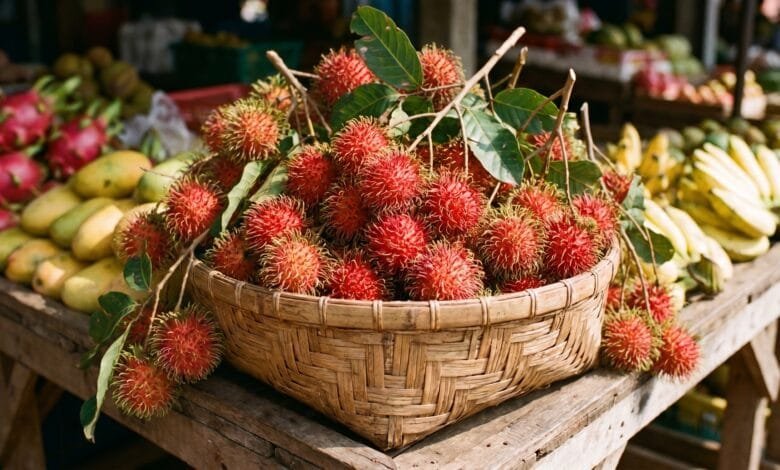
If you walk through a Cambodian market or drive along a rural road during the rainy season, you will almost certainly notice clusters of bright red, hairy fruit hanging from stalls. That fruit is rambutan, one of Cambodia’s most beloved seasonal treats. Known in Khmer as saomao (សៅម៉ៅ) or sav mav (សាវម៉ាវ), rambutan is a small, sweet fruit with a soft, spiky exterior and juicy, translucent flesh inside.
For foreign travelers, rambutan is worth getting to know. It is easy to eat, widely available, and offers a gentle introduction to Southeast Asia’s tropical fruit culture. This guide explains what Cambodian rambutan is, what it tastes like, when it is in season, how Cambodians eat it, and how you can recognize and try it during your visit.
What Is Rambutan?
Rambutan (Nephelium lappaceum) is a tropical fruit native to Southeast Asia, particularly the Malay-Indonesian region. It belongs to the Sapindaceae family, making it a close relative of lychee, longan, and pulasan. The name comes from the Malay word “rambut,” which means “hair,” referring to the soft, hair-like spines that cover the fruit.
In Cambodia, rambutan is known by several names. The most common Khmer names are saomao (សៅម៉ៅ) and sav mav (សាវម៉ាវ). You may also hear saaw maaw, which is a romanized version of the Khmer pronunciation. The fruit grows on medium-sized evergreen trees that can reach 10 to 12 meters in height.
Rambutan is classified as a fruit and is eaten primarily as a fresh snack. It is not a vegetable, though it sometimes appears in salads and desserts in Cambodian cuisine.
What Does Cambodian Rambutan Look Like?
A rambutan is about the size of a small egg or a golf ball, roughly one to two inches in diameter. The most distinctive feature is its outer shell, which is covered in soft, flexible spines that range from green to red to brownish as the fruit matures.
The shell itself is thick and leathery, typically bright red or yellow when ripe, though some varieties lean toward orange. Beneath the shell, the flesh is translucent white or slightly pink, surrounding a single brown seed. The spines, sometimes called “spinterns,” are soft enough to touch but firm enough to give the fruit its distinctive appearance. They are not sharp like a durian’s spikes.
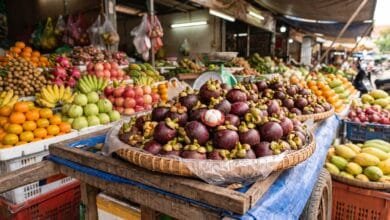
When you see rambutan at a Cambodian market, it is often sold in bunches still attached to the branch, which helps keep the fruit fresh. The bright red color and hairy texture make it one of the easiest tropical fruits to recognize.
What Does Cambodian Rambutan Taste Like?
The flesh of a ripe rambutan is juicy, sweet, and slightly tangy. Many people describe the flavor as similar to a sweet green grape with floral undertones. Some compare it to a pineapple-cherry combination with a subtle tart edge, while others say it tastes like a less fragrant, slightly firmer lychee.
The texture is soft and jelly-like, similar to a grape but slightly firmer. Some rambutan varieties have creamier, less juicy flesh, while others are more succulent. The flavor is gentle and refreshing, not overpowering. It is sweet enough to feel like a treat but light enough to eat several at once, which is exactly what many Cambodians do.
Rambutan does not have a strong aroma the way durian does. It is mild and pleasant, which makes it approachable even for travelers who are cautious about unfamiliar fruits.
When Is Rambutan in Season in Cambodia?
Rambutan season in Cambodia generally runs from June to September, coinciding with the rainy season. The fruit begins appearing at street stalls and markets from June onwards, with peak availability typically in July and August.
The exact timing can vary depending on rainfall and region. Rambutan trees begin flowering during the dry months, but the fruit ripens as the rains arrive. In some years, an early-season drought followed by storms can affect the harvest, leading to lower yields or uneven ripening.
Unlike some tropical fruits that are available year-round, rambutan is genuinely seasonal in Cambodia. If you visit during the dry season, you are unlikely to find fresh local rambutan. However, canned or frozen rambutan may be available in some shops.
Where Does Rambutan Grow in Cambodia?
Rambutan is cultivated in several provinces across Cambodia. Battambang province, particularly Samlot district, is one of the most well-known rambutan-growing areas. Farmers in communes such as Sung and Samlot cultivate rambutan alongside durian and other fruit trees. From Samlot, rambutan is distributed to Phnom Penh and other provinces across the country.
Other provinces where rambutan thrives include Kampong Cham, Kampot, and Koh Kong, where the warm, humid climate provides ideal growing conditions. The fruit also grows in parts of Pailin and Preah Vihear, according to Cambodia’s Ministry of Agriculture, Forestry, and Fisheries.
Rambutan grows best in tropical climates with consistent rainfall and well-drained soil. In Cambodia, it is often grown in home gardens and small orchards rather than large commercial plantations. A single mature tree can yield between 100 and 250 kilograms of fruit per season, making it a valuable crop for smallholder farmers.
How Do Cambodians Eat Rambutan?
The most common way Cambodians eat rambutan is fresh and raw. You simply peel the shell with your fingers or a small knife, remove the flesh, and eat it. The seed inside is not eaten, though it is not harmful if accidentally swallowed.
Rambutan is a popular snack throughout the rainy season. Families often buy it by the kilogram at markets and share it at home after meals or during gatherings. In some households, a plate of rambutan is served alongside other seasonal fruits as a simple dessert.
Beyond eating it fresh, Cambodians also use rambutan in a few other ways. It can be added to fruit salads, served with sticky rice and coconut milk, or included in sweet desserts. Some people make rambutan juice or syrup, though this is less common than eating the fruit fresh. In restaurants, rambutan occasionally appears in salads, such as a prawn and lotus root salad with rambutan.
For most travelers, the fresh version is what you will encounter. Look for rambutan at fruit stalls in markets, roadside stands, and sometimes from vendors carrying baskets on motorbikes.
How Is Rambutan Used in Cambodian Food?
Rambutan is primarily a fresh-eating fruit in Cambodia, but it does have a place in Cambodian cooking and desserts. One traditional dessert combines rambutan with coconut milk, sugar, and pineapple for a simple tropical fruit dessert. The fruit can also be used in fruit salads or served alongside sticky rice as a sweet treat.
In modern Cambodian cooking, rambutan sometimes appears in savory salads. A notable example is a prawn, rambutan, and lotus root salad, which combines the sweet fruit with seafood and crunchy lotus root in a tangy dressing. This reflects a broader trend in Cambodian cuisine where sweet tropical fruits are used to balance savory and sour flavors.
However, it is important to note that rambutan is not a staple ingredient in Cambodian cooking the way mango, coconut, or banana are. It is primarily enjoyed as a seasonal fruit, and its culinary role is more limited than its role as a fresh snack.
Ripe vs Unripe Rambutan
Rambutan is almost always eaten ripe. Unlike mango or papaya, which have distinct culinary uses at different ripeness stages, rambutan is not commonly consumed unripe in Cambodia.
A ripe rambutan has bright red or yellow skin and soft, flexible spines. The flesh inside is translucent white and juicy. An unripe rambutan will have green skin and green spines, and the flesh will be firm and less sweet. An overripe rambutan may have dark or blackened spines and dull skin, and the flesh may become mushy or develop an off-flavor.
If you are buying rambutan at a market, choose fruits with vivid, bright skin and firm but slightly yielding flesh. Avoid fruits with blackened or shriveled spines, as these are past their prime.
How to Choose Good Rambutan
Choosing good rambutan is straightforward once you know what to look for. Here are the key signs:
- Color: Look for bright red or yellow skin, depending on the variety. A little orange or yellow mixed with red is fine, but green skin means the fruit is unripe.
- Spines: The spines should be firm but not brittle. Green or slightly red tips are normal. Black or shriveled spines indicate overripeness.
- Feel: A good rambutan should feel firm but give slightly when gently pressed. It should not be rock hard or mushy.
- Weight: The fruit should feel heavy for its size, which usually means it is full of juice.
- Smell: A fresh rambutan has a mild, pleasant aroma. A fermented or sour smell is a sign the fruit has gone bad.
At Cambodian markets, rambutan is often sold in bunches still attached to the branch. This is a good sign of freshness, as the fruit stays hydrated and protected when left on the stem.
Where Can Travelers Find Rambutan in Cambodia?
During rambutan season (June to September), you will find the fruit in many places across Cambodia. Local markets are the best place to start. In Phnom Penh, markets such as Central Market and Russian Market sell rambutan from vendors who source it from provinces like Battambang. In provincial towns, the local market is often the center of fruit trade during the season.
Roadside fruit stalls are another common place to find rambutan. If you are traveling between cities by bus or car, you may see vendors selling rambutan from baskets or from the back of trucks. These roadside stands often offer fresh, locally grown fruit at good prices.
Street vendors in cities and towns also sell pre-cut fruit, including rambutan. You may find rambutan in a mixed fruit platter served with a chili-salt dipping mix. This is a convenient way to try rambutan alongside other Cambodian fruits.
Rambutan is less commonly found in restaurants, though some upscale Khmer restaurants may include it in salads or desserts. Your best bet is to buy it fresh from a market or street stall and eat it wherever you like.
How Should a First-Time Traveler Try Rambutan?
Trying rambutan for the first time is easy. Here is what to do:
- Buy a small bunch. You do not need to buy a whole kilogram. A small bunch of five to ten fruits is enough to try.
- Peel the shell. Use your fingers or a small knife to cut through the thick outer shell. It should come away easily.
- Remove the flesh. The white, translucent flesh surrounds a single brown seed. Pop the flesh into your mouth and discard the seed. Do not eat the seed.
- Taste it slowly. Notice the sweet, slightly tangy flavor and the juicy, grape-like texture.
- Try it chilled. Some Cambodians prefer rambutan chilled, especially on hot days. If you have access to a refrigerator, chill a few fruits before eating.
If you are buying rambutan from a street vendor, you can ask for “saomao” (សៅម៉ៅ) or simply point to the fruit. Most vendors will understand what you want. Prices vary by season and location, but during peak season, rambutan is generally affordable. In 2025, farm-gate prices in Battambang started around 8,000 Riel (about US$2) per kilogram and dropped to around 5,000 to 6,000 Riel (US$1.25 to US$1.50) per kilogram as the harvest peaked. Market prices may be slightly higher.
How Is Rambutan Different From Similar Produce?
Rambutan is often confused with lychee and longan, which are close botanical relatives. Here is how they differ:
Rambutan vs Lychee: Lychee has a smooth, bumpy, pinkish-red skin with no spines. Rambutan has a hairy, spiky exterior. Rambutan flesh is slightly firmer and creamier than lychee, with a more floral and less intensely sweet flavor.
Rambutan vs Longan: Longan is smaller than rambutan, with smooth, brownish skin. The flesh of longan is more tart and musky compared to rambutan’s sweeter, more grape-like flavor.
Rambutan vs Pulasan: Pulasan is a close relative of rambutan but lacks the hairy spines. Its skin is more like a thick, leathery shell. Pulasan flesh is generally sweeter than rambutan and its seed is edible raw, unlike rambutan’s seed.
If you see a fruit with red, hairy skin in a Cambodian market, it is almost certainly rambutan. The distinctive appearance makes it one of the easiest tropical fruits to identify.
Can You Find Rambutan Outside Cambodia?
Yes, rambutan is available outside Cambodia, though availability varies by country and season. In the United States, rambutan is sold fresh in Asian grocery stores, specialty produce markets, and sometimes in mainstream supermarkets with well-stocked international sections. It is most commonly imported from Thailand, Vietnam, and Mexico.
Frozen and canned rambutan are also available in many Asian grocery stores year-round. Canned rambutan in syrup is a common product and can be used in desserts and drinks. Frozen rambutan is often sold whole and can be thawed for eating or used in smoothies.
In Europe, rambutan is less common but can be found in Asian markets and specialty fruit shops, particularly in cities with large Southeast Asian communities. In Australia, rambutan is grown in tropical regions and is available seasonally in markets.
If you are traveling from the US and want to try rambutan before your trip, check your local Asian grocery store. The flavor will be similar to what you find in Cambodia, though fresh Cambodian rambutan has the advantage of being locally grown and picked at peak ripeness.
Cultural and Regional Importance
Rambutan holds a special place in Cambodian food culture as a symbol of the rainy season. When the rains come and the fruit trees begin to bear, rambutan appears at markets, roadside stalls, and family tables across the country. It is a fruit that many Cambodians associate with childhood, with the simple pleasure of peeling a fresh rambutan and sharing it with family.
In Battambang province, particularly in Samlot district, rambutan cultivation is an important source of income for farming families. Rambutan farmers often sell their fruit directly to traders who transport it to Phnom Penh and other provinces. The fruit is easier to sell than some other crops, and a single mature tree can generate significant income for a smallholder farmer.
While rambutan is not tied to a specific festival or religious tradition in Cambodia, it is deeply woven into the everyday rhythm of the rainy season. For many Cambodians, the taste of rambutan is the taste of the wet season itself—juicy, sweet, and fleeting.
What Should Foreign Travelers Know?
If you are a first-time visitor to Cambodia, here are a few practical things to keep in mind about rambutan:
- It is easy to eat. You do not need any special tools. Your fingers are enough to peel the shell.
- The seed is not edible. The brown seed inside the flesh should be discarded. It is not poisonous, but it is bitter and hard.
- The spines are soft. Unlike durian, rambutan’s spines will not hurt you. You can handle the fruit freely.
- It is seasonal. If you visit Cambodia between June and September, you are likely to find fresh rambutan. Outside these months, it may be harder to find fresh local fruit.
- Buy from markets and street stalls. This is where rambutan is freshest and most affordable.
- Try it chilled if you can. On a hot Cambodian day, chilled rambutan is especially refreshing.
- Do not be afraid to ask. If you are not sure how to eat it or which fruit to choose, ask a vendor. Most will be happy to help.
Rambutan is one of the most approachable tropical fruits in Cambodia. It is sweet, mild, and easy to enjoy. Whether you buy a small bunch at a market or try it in a fruit platter, rambutan is a fruit that will give you a taste of Cambodia’s rainy season.
Frequently Asked Questions
What is rambutan called in Khmer?
Rambutan is known in Khmer as saomao (សៅម៉ៅ) or sav mav (សាវម៉ាវ). You may also hear it called saaw maaw.
What does rambutan taste like?
Rambutan tastes sweet and slightly tangy, similar to a sweet green grape with floral notes. The flesh is juicy and jelly-like.
When is rambutan in season in Cambodia?
Rambutan season in Cambodia generally runs from June to September, during the rainy season.
How do Cambodians eat rambutan?
Most commonly, Cambodians eat rambutan fresh and raw as a snack. It is also used in fruit salads, desserts, and occasionally in savory salads.
Where can travelers find rambutan in Cambodia?
You can find rambutan at local markets, roadside fruit stalls, and from street vendors, especially during the rainy season.
Is rambutan available outside Cambodia?
Yes, rambutan is available in Asian grocery stores and specialty markets in many countries, including the United States, though it may be imported or frozen.
Conclusion
Cambodian rambutan is a small, sweet fruit with a big personality. Its bright red, hairy shell and juicy, translucent flesh make it one of the most recognizable and enjoyable tropical fruits in Cambodia. During the rainy season, from June to September, rambutan appears at markets, roadside stalls, and family tables across the country.
For travelers, rambutan is an easy fruit to love. It is simple to eat, gentle in flavor, and widely available during its season. Whether you buy a small bunch from a market vendor or try it in a fruit platter, rambutan offers a taste of Cambodia’s rainy season that is sweet, refreshing, and memorable. If you visit Cambodia during the wet months, do not miss the chance to try this beloved fruit. It is one of the simple pleasures of Cambodian food culture, and it is waiting for you at the nearest market stall.