Kep Crab Market Guide: Fresh Seafood, Kampot Pepper & What to Expect
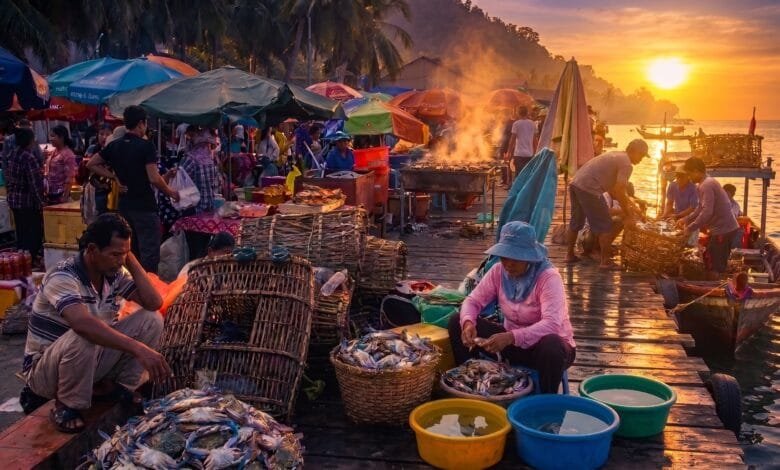
The first thing that hits you is the smoke.
Not the gentle smoke of a restaurant kitchen. This is thick, fragrant smoke rising from small stalls along the water. It mixes with the salty sea breeze and the sharp aroma of Kampot Pepper sizzling with fresh seafood.
Then you hear the market come alive. Vendors call out prices in Khmer. Fishermen bring in baskets of live blue swimming crabs, while seafood sellers sort the day’s catch along the waterfront.
This is Kep Crab Market, known locally as Phsar Kdam.
For seafood lovers, it is one of the most memorable food experiences in Cambodia.
Kep Crab Market at a Glance
| Location | Kep, Cambodia |
| Famous for | Fresh crab and seafood |
| Must-try | Crab with Kampot Pepper |
| Opening hours | Approximately 5:00 AM–5:30 PM |
| Entrance fee | Free |
| Payment | Bring cash |
| Recommended visit | 30 minutes–2 hours |
| From Kampot | About 22–26 km |
Opening hours and local conditions can change, so it is a good idea to check locally before your visit.
Why Visit Kep Crab Market?
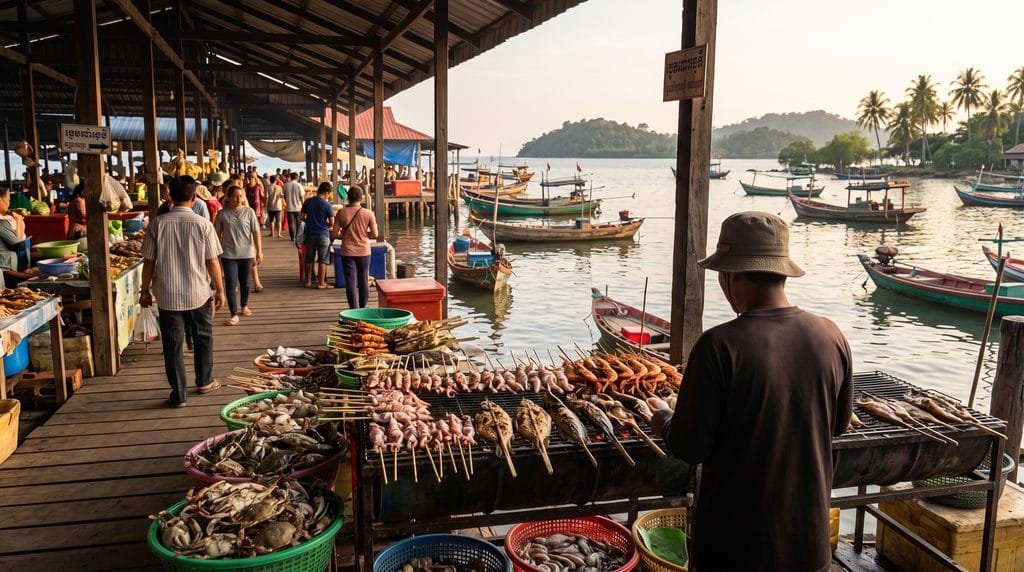
Kep Crab Market is more than a place to buy seafood.
It is a chance to see part of Cambodia’s coastal food culture up close. You can watch seafood vendors work, choose fresh crab or other seafood, and have your purchase cooked nearby.
The market sits beside the sea, so you can enjoy your meal while watching fishing boats and taking in the coastal atmosphere.
If you enjoy seafood and want to experience something local rather than a formal restaurant, this is a great stop in Kep.
A Market in a Town with a Long History
Kep is a small seaside town in southern Cambodia. It developed as a coastal retreat during the French colonial period and later became known for its relaxed seaside atmosphere.
The town was heavily affected during the Khmer Rouge period. Many buildings were abandoned, damaged, or left to nature.
Over time, Kep began to recover as visitors returned to the coast. Seafood, especially crab, became an important part of the town’s identity.
Today, the famous blue crab statue near the waterfront is one of the symbols visitors associate with Kep.
You do not need to know all of Kep’s history to enjoy the market. But knowing a little about the town makes the experience more meaningful.
Crab and Kampot Pepper: A Famous Southern Cambodian Pair
Two local products are closely associated with the food of Cambodia’s southern coast: Kep crab and Kampot Pepper.
Kampot Pepper is a protected geographical indication product. It received geographical indication status in Cambodia in 2010 and was registered as a Protected Geographical Indication (PGI) in the European Union in 2016.
An important detail is that the protected production area covers designated parts of both Kampot and Kep provinces.
At the market, one of the dishes visitors often look for is crab cooked with Kampot Pepper.
The combination is simple: fresh crab, fragrant pepper, seasoning, and heat. The result is a dish that lets the seafood and pepper do most of the work.
What Makes Kampot Pepper Special?
Kampot Pepper is known for its distinctive aroma and different flavor profiles depending on how the pepper is harvested and processed.
The protected Kampot Pepper varieties include:
- Black pepper
- Red pepper
- White pepper
- Green pepper
Prices can vary by variety, quality, seller, and season.
According to figures reported for 2025, prices associated with Kampot Pepper included approximately:
- Black pepper: $17 per kg
- Red pepper: $27 per kg
- White pepper: $30 per kg
- Green pepper: $10 per kg
These are reported 2025 figures, not guaranteed current market prices. If you are buying pepper during your trip, always check the price with the seller.
What to Eat at Kep Crab Market
Crab is the star, but it is not the only seafood you will find.
Depending on the day’s catch and individual vendors, you may see:
- Fresh crab
- Prawns
- Squid
- Octopus
- Oysters
- Clams
- Fish
Availability changes from day to day, so part of the fun is seeing what is available when you arrive.
For a first visit, crab cooked with Kampot Pepper is an obvious choice.
How to Buy and Eat Seafood at the Market
The process is fairly simple.
Step 1: Walk around the stalls
Take a little time to see what is available before choosing your seafood.
Step 2: Choose your seafood
You may see live crab and other seafood displayed by the vendors.
Ask the price before you buy and confirm how the seafood will be weighed.
Step 3: Agree on the price
If bargaining is appropriate, do it politely. Most importantly, make sure you understand the price before the seafood is prepared.
Step 4: Have it cooked
Depending on the seller, you may be able to take your seafood to a nearby restaurant or food stall and have it cooked for you.
Ask about the cooking charge before ordering.
Step 5: Enjoy your meal
Find a place to sit and enjoy your seafood near the waterfront.
There is nothing complicated about the experience. Fresh seafood, simple cooking, Kampot Pepper, and the sea are the main attractions.
What Is the Best Time to Visit?
For the best market atmosphere, go early in the morning.
The market starts early, and morning is a good time to see seafood sellers at work and find a wide selection.
Recommended time
Around 5:00 AM–8:00 AM
You do not have to arrive at exactly 5:00 AM. If you are not an early riser, arriving later in the morning can still be worthwhile.
For weather, Cambodia’s generally drier months from November to April can be a comfortable time for a coastal trip. However, morning is the most important factor if your main goal is to experience the market.
Practical Tips for First-Time Visitors
Bring cash
The market is largely cash-based. Bring Cambodian Riel and some small US dollar notes.
Payment options can vary between individual businesses, so do not rely on a credit card.
Check your US dollar bills
If you use US dollars, bring clean notes without tears or heavy damage. Cambodian businesses can be reluctant to accept damaged US currency.
Wear comfortable shoes
The market is a working seafood area. Floors and walkways can be wet, so shoes with good grip are a smart choice.
Ask before taking photographs
The market is a great place for photography, but remember that vendors are working. Be respectful when photographing people, especially close-up.
Ask about the total cost
Before buying seafood, confirm:
- The seafood price
- The weight
- The cooking charge
- Any additional charges
This avoids surprises when you receive the bill.
How to Get to Kep Crab Market
From Phnom Penh
Kep is roughly 170 km from Phnom Penh, depending on the route. By road, the journey usually takes several hours.
You can travel by bus, taxi, private car, or van.
From Kampot
Kep is about 22–26 km southeast of Kampot town.
The journey usually takes around 20–30 minutes by road, depending on traffic and your transportation.
A taxi, tuk-tuk, or motorbike can be convenient for the trip.
From Kep Beach
The crab market is only a short trip from Kep Beach and can be reached by tuk-tuk, bicycle, motorbike, or on foot, depending on where you are staying.
How Long Should You Spend at the Market?
For a quick look around, 30 minutes may be enough.
If you want to choose seafood, have it cooked, and enjoy a meal by the water, allow 1–2 hours.
I recommend taking your time. The market is not somewhere you need to rush through.
Walk around. Look at the seafood. Watch the vendors. Enjoy the view.
The atmosphere is part of the experience.
Where to Stay: Kep or Kampot?
Both options can work.
Stay in Kep if you want:
- A quiet seaside atmosphere
- Easy access to the crab market
- A slower pace
- A coastal getaway
Stay in Kampot if you want:
- More accommodation choices
- More cafes and restaurants
- More evening activities
- A larger selection of places to stay
Many travelers choose Kampot as their base and visit Kep as a day trip.
If you have more time, staying in Kep for a night or two gives you a chance to enjoy the coast without rushing.
Is Kep Crab Sustainable?
Blue swimming crab populations face pressure from fishing and environmental changes.
Cambodia is supporting community-based efforts to protect and rebuild crab stocks.
In 2026, 340,000 blue swimming crab crablets were released in the Angkol and Kep community fisheries in Kep Province. Later, another 850,000 crablets were released across five community fisheries in Kampot Province as part of efforts to support coastal fisheries and restore crab populations.
As a traveler, you can help by respecting local fishing rules and asking vendors about the seafood you are buying.
Sustainable fishing is important not only for the environment but also for the local communities whose livelihoods depend on the sea.
Things to Do Near Kep Crab Market
You can easily combine the crab market with other things to see around Kep.
Consider visiting:
- Kep Beach for a relaxing break by the sea
- Kep National Park for walking and nature
- Koh Tonsay (Rabbit Island) for a beach escape
- Kampot for more food, cafes, and sightseeing
This makes the crab market an easy part of a larger Kep or southern Cambodia itinerary.
Frequently Asked Questions
What are the Kep Crab Market opening hours?
The market is generally listed as open daily from approximately 5:00 AM to 5:30 PM. Hours can change, so check locally before visiting.
What is the best time to visit Kep Crab Market?
Early morning is the best choice if you want to experience the market at its liveliest and see seafood activity along the waterfront.
What seafood can I eat at Kep Crab Market?
Crab is the main attraction, but you may also find prawns, squid, octopus, oysters, clams, fish, and other seafood depending on the day’s catch.
Is Kep Crab Market free to enter?
Yes. There is generally no entrance fee to visit the market.
Can I pay by credit card?
The market is largely cash-based, so bring Cambodian Riel and some US dollars. Some larger restaurants may offer other payment options, but it is best not to rely on cards.
How far is Kep from Kampot?
Kep is approximately 22–26 km from Kampot town, and the trip usually takes around 20–30 minutes by road, depending on traffic and transportation.
Can I bargain at the market?
You can ask about the price and, where appropriate, bargain politely. Always confirm the final price before buying or having seafood cooked.
Is Kep crab sustainable?
Cambodia is supporting community fisheries and crab-restoration programs, including the release of blue swimming crab crablets in Kep and Kampot. Availability and sustainability can vary, so asking local vendors about their seafood is a good practice.
Final Thoughts
Kep Crab Market is not fancy.
The tables are simple. The seafood stalls are busy. The floor can be wet. The smoke rises from small cooking fires, and the smell of the sea is everywhere.
And that is part of its charm.
Here, you can see seafood being sold, choose what you want to eat, have it cooked nearby, and enjoy it beside the water.
Come for the crab.
Stay for the smoke, the sea breeze, the Kampot Pepper, and the experience of seeing Cambodia’s coastal food culture up close.
Planning a trip to Cambodia? Save this guide for your visit to Kep, and leave room for a plate of fresh crab with Kampot Pepper.
Have you visited Kep Crab Market? Tell us what you tried in the comments.